Economic Insider

Single Pass Kronos Electrocautery Device: A Paradigm Shift in Safe Biopsy Procedures

Biopsies are an integral part of determining a patient’s condition. Just like any other medical treatment, there are risks that can cause patient apprehension, such as bleeding complications and concerns regarding percutaneous needle biopsies (PNB) of solid organs. Ultrasound-guided percutaneous liver and kidney biopsies, for example, while pivotal for diagnosis and staging of hepatic and renal diseases, have been associated with complications such as pain, pneumothorax, bile peritonitis, and, notably, bleeding. 

In response to this challenge, a team of researchers has conducted a clinical investigation spanning two countries, which uncovered the safety and efficacy of the Single Pass Kronos Electrocautery Device—a disposable biopsy device designed to mitigate bleeding complications and enhance patient safety during solid organ biopsy procedures.

The study enrolled 60 patients across two continents, aiming to assess the performance of the Kronos Electrocautery Device in reducing or preventing bleeding during liver, kidney, and other solid tissue biopsies. The primary objective was to evaluate optimal withdrawal parameters, ensuring rapid cessation of bleeding and minimal blood loss. The Kronos device, equipped with electrocautery capabilities, was employed to coagulate tissue around the core biopsy channel during withdrawal, potentially revolutionizing the safety and efficacy of biopsy procedures, especially for patients at risk of bleeding complications.

The investigation spanned two sites—one in Riga, Latvia, and the other in Long Beach, California, USA. The study adhered to rigorous ethical and regulatory standards, aligning with ISO 14155:2020, Good Clinical Practice, and the Declaration of Helsinki. The subjects, enrolled after providing informed consent, underwent ultrasound or CT-guided percutaneous biopsies utilizing the Kronos Electrocautery Device to assess its safety, performance, and usability.

Results from the feasibility study yielded promising outcomes. In Latvia, all 30 participants underwent biopsy procedures without any reported adverse events, showcasing the device’s safety and effectiveness in controlling bleeding; similarly, in the US study, which included 30 participants, no clinically relevant bleeding complications were observed during the procedures. Although five adverse events were reported during follow-up, they were assessed as unrelated or unlikely to be related to the biopsy procedure or the use of the Kronos device.

The Kronos Electrocautery Device demonstrated optimal withdrawal parameters, rapid bleeding cessation, and negligible blood loss, with a mean bleeding time of 12 seconds across both study sites. The device’s usability received high ratings from operators, emphasizing its potential to seamlessly integrate into biopsy procedures.

This pioneering device aims to address a critical concern in solid organ biopsies and hopes to offer a potential game-changer in patient safety and procedural efficiency. The reduction of bleeding complications could have far-reaching implications, from minimizing the need for extended patient observation and follow-up imaging to averting potential hospitalization.

While this feasibility study focused on safety and usability, future research may delve into the device’s efficacy in reducing clinically significant hemorrhage post-biopsy. If proven effective, the Kronos Electrocautery Device could usher in a new era in solid tissue biopsy procedures, enabling early patient discharge, safely accommodating coagulopathic patients, and potentially improving sample adequacy.

The Kronos Electrocautery Device represents a significant stride in the field of percutaneous needle biopsies, promising enhanced safety and efficiency. This innovative solution has the potential to redefine the landscape of solid organ biopsy procedures, offering a safer alternative for patients and a more streamlined process for healthcare providers. As research progresses, the Single Pass Kronos device could become a cornerstone in the evolving narrative of biopsy technologies, marking a pivotal moment in patient care and procedural outcomes.

Published by: Martin De Juan
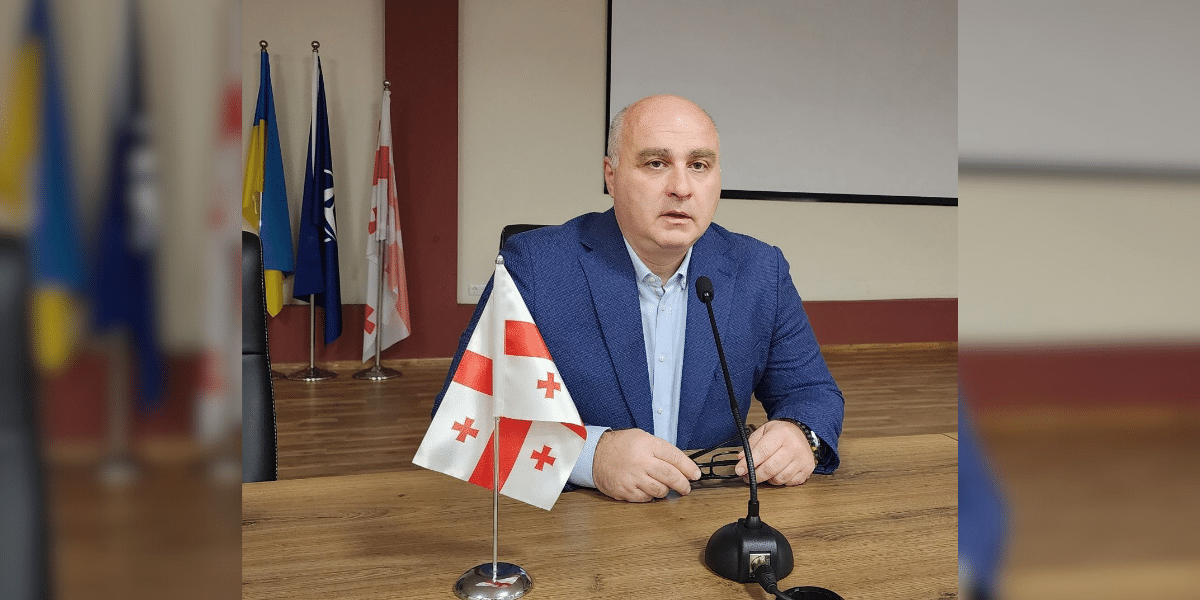
Contribution to the Georgian Education System and Bringing Business To a Leading Position: Career Challenges of Financial Expert Mamia Moralishvili

By: Amelia Sterling 

In business, a lot of things depend on the person who manages the financial system and cash flows.The position of the enterprise in the market and its financial stability depend on his decisions.

Mamia Moralishvili, a financial expert and specialist in business administration with more than 20 years of experience, is exactly such a person. During his career, he held important positions in the public sector of Georgia and was the financial director of a large company, collaborated with prime ministers and implemented many projects in the field of education, banking, and financial sector.

In this article, Mamia Moralishvili talks about his career path, work in the public and private sector, and his plans for the future.

From Financial Management in the Public Sector To Working in a Private Company: the Career Path of Mamia Moralishvili

Mamia Moralishvili always knew exactly what he wanted to achieve and used to walk towards his goals with confidence. In 1997, he successfully completed his studies in the specialty “Finance and Accounting” at Kutaisi State University named after Akaki Tsereteli.

In 2002, just a few years after receiving his higher education, he headed the foreign exchange operations department. His responsibilities were the following: monitoring foreign exchange departments and cash accounts. Over the course of several years, his leadership qualities led to him becoming the chief accountant of the Kutaisi branch in 2005. That period in his career provided important experience and became a platform for his further success.

In 2008, Mamia changed the vector of his work and moved to the private sector, becoming the financial director of Beer Master LLC. Thanks to his strategic planning skills and financial literacy, the company grew into the LTD “GRM” holding, which united various enterprises throughout Georgia by 2014.

In subsequent years, he held important positions in the fields of technological development, project management, and financial management. Not limited to one industry, Mamia has demonstrated a unique ability to successfully solve a variety of issues.

So, in 2016, he took the position of head of the economic department at the LEPL Technological Development Fund, appointed by the Tbilisi City Hall. Later in 2017, he became the financial manager of Cableway Development Group, whose responsibilities included overseeing planning, project execution, and government procurement.

Since 2017, he has served as Deputy Director of the Education and Science Infrastructure Development Agency LEPL, managing financial resources and procurement departments. Thanks to his developed skills and ability to navigate complex environments, he successfully coordinated the agency’s relations with international, donor and other organizations.

During his work, Mamia Moralishvili interacted with many prominent people of the Georgian establishment. Thus, among those with whom he collaborated were the former mayor of Tbilisi David Narmania, the current mayor of Tbilisi Kakha Kaladze, the former Prime Minister of Georgia Giorgi Gakharia and the former Prime Minister Mamuka Bakhtadze, the former mayor of Kutaisi Shota Murgulia and the current mayor Ioseb Khakhaleishvili.

In the field of education, Mamia worked with former education ministers Mikheil Chkhenkeli and Alexander Dzhedzhelava. He also collaborated with well-known figures in the financial and banking sector, including former presidents of the National Bank of Georgia Nodar Javakhishvili and Irakli Managadze, as well as former CEO of TBC Bank Mamuka Khazaradze.

This unique experience not only increased his professional knowledge, but also provided a unique opportunity to participate in important projects and initiatives together with influential individuals at both the local and national levels.

What Is Next: Plans and Professional Development

Despite impressive career achievements, Mamia does not stop there. Today, he strives to use his accumulated knowledge and experience to make a significant contribution to the US economy.

His goal is to create a company that will not only prosper on its own, but also have a positive impact on the local economy. Mamia plans to actively implement innovative solutions, create jobs, and participate in the formation of a common economic space.

In addition to his own business, Mamia Moralishvili continues to work on professional development. He regularly attends seminars, conferences and educational programs in order to stay aware of the latest trends and innovations in the sphere of finance and management. He is also actively studying issues of ethics and environmental responsibility to ensure that in the future his business meets all modern standards.

Mamia Moralishvili is a professional with unique work experience. His story inspires the pursuit of knowledge, the desire to improve, and the firm belief that hard work and dedication are the key to success in any field.

Author: Amelia Sterling 

Amelia Sterling is an author, recognized for her insightful perspectives on corporate innovation and leadership. With a background in finance and a decade of experience advising companies, Sterling offers practical guidance for navigating the evolving landscape of business in the 21st century. Her expertise lies in decoding complex economic trends and providing actionable strategies for organizations to thrive in an era of rapid change.

Published by: Martin De Juan

Commitment to Sustainability: Jettly Reviews How Eco-Friendly Practices are Taking Flight in Private Aviation

Image commercially licensed from: Unsplash

In recent years, the private aviation industry has been increasingly embracing sustainability as a core value. Recognizing their responsibility towards the environment, companies like Jettly are leading the charge in implementing eco-friendly practices. This commitment to sustainability reflects a broader trend in the aviation sector, where environmental consciousness is becoming as essential as luxury and comfort.

The Drive Towards Sustainable Aviation Fuels (SAFs)

Innovations in Fuel Technology

One of the most significant steps towards reducing aviation’s environmental impact is the development and adoption of Sustainable Aviation Fuels (SAFs). These fuels, derived from renewable resources, can significantly reduce carbon emissions compared to traditional jet fuels. Pioneers in private aviation are actively exploring the use of SAFs in their fleets. This move not only demonstrates a commitment to the planet but also aligns with the increasing demand from eco-conscious travelers.

Enhancing Aircraft Efficiency

Design and Technological Advancements

Another crucial aspect of eco-friendly aviation is the focus on designing more efficient aircraft. Modern private jets are being equipped with advanced engines, lighter materials, and aerodynamic designs, all aimed at reducing fuel consumption. Jettly, among others, is investing in such next-generation aircraft, understanding that the future of aviation lies in balancing luxury with sustainability.

Carbon Offsetting Initiatives

Balancing Out Emissions

Carbon offsetting has emerged as a practical solution to balance out emissions from flights. By investing in environmental projects like reforestation or renewable energy, private jet companies can negate the impact of their carbon footprint. Jettly, for instance, offers its clients the option to participate in carbon offsetting programs, making it possible to fly privately while still contributing positively to the environment.

Eco-Conscious Operations and Maintenance

Reducing Environmental Impact on the Ground

Sustainability in aviation is not just about the flights themselves; it extends to ground operations too. Efficient use of resources in maintenance, reducing waste, and optimizing operational procedures are all ways in which companies are minimizing their environmental impact. Commitment to eco-friendly practices is evident not just in the air but also in its approach to maintaining and operating its fleet.

Technology in Sustainable Aviation

Leveraging Digital Solutions

Technology plays a pivotal role in achieving sustainability goals. From route optimization software that ensures the most fuel-efficient paths to digital tools for reducing paper use, technology is at the heart of eco-friendly aviation. Jettly, leveraging its tech-driven approach, is at the forefront of integrating these digital solutions, further solidifying its position as a leader in sustainable private travel.

Educating Passengers and Crew

Spreading Environmental Awareness

An important aspect of sustainable practices is education. Informing passengers and crew about the importance of sustainability and the measures being taken can foster a culture of environmental responsibility. Through its various channels, Jettly actively educates its stakeholders about their role in promoting eco-friendly aviation.

Looking to the Future: Electric and Hybrid Aircraft

The Next Frontier in Eco-Friendly Flying

The future of sustainable aviation also includes the development of electric and hybrid aircraft. While still in the early stages, these technologies promise to revolutionize the industry with their potential for zero-emission flights. Many forward thinking companies are closely monitoring advancements in this area, preparing to integrate these technologies as they become viable.

The commitment to sustainability in private aviation is a positive and necessary evolution of the industry. It;s becoming more common to not just offer a luxurious and convenient way to travel; but a way to ensure that this mode of travel is sustainable for future generations. As eco-friendly practices continue to take flight in private aviation, the sector is poised to make a significant contribution to protecting our planet, proving that luxury and environmental responsibility can coexist harmoniously.

Published by: Aly Cinco