
Economic Insider

Opportunity in Tennessee: Gene Slade’s Biggest Sales Training Event Yet!


By: Maria Williams

Get ready for an extraordinary opportunity in Gatlinburg, Tennessee. From September 29 to October 3, 2024, the newly-built Great Elkmont Lodge Mansion will host the largest Lead Ninja Sales Retreat ever. This event is a unique chance for salespeople and technicians to enhance their skills in a beautiful setting in nature.

Why Tennessee is Special

Gene Slade, the mastermind, founder, and CEO behind Lead Ninja System and Lead Ninja AI, is bringing his quarterly event to the Great Elkmont Lodge Mansion, an 18,000 square foot space nestled in the mountains of Tennessee.

The mansion offers a huge theater that seats up to 70 people, allowing for more attendees than ever before. The size of the venue means more networking opportunities, plus a special pricing advantage.

“We’re able to offer the king suite for three people at $10k,” says Slade. “That’s almost half the price per person of our previous training. We’re super excited about being able to host more sales professionals who want to take their techniques to the next level.”

The Exciting New Location

Hosting the event at the Great Elkmont Lodge Mansion provides a structured, immersive learning environment.

Slade is thrilled about the location, stating, “Hosting the retreat at such a cool location makes it so we can provide a structured, immersive learning environment. The space and facilities there will help us deliver Lead Ninja training to more people than ever before. I hope this means our network will grow and new relationships within the industries will be made.”

Slade’s tactics are useful for pest control, garage doors, carpet cleaners, roofers, solar, HVAC, plumbing, electrical, and all other service trades. Students will have the opportunity to refine their skills with Slade’s proven five-step EGSPA method, a versatile strategy that enhances sales across all areas, including indoor air quality, water treatment, and more.

“The EGSPA method is one of the basics that takes my students farther than they imagined they could go,” Slade explains. “It works for handling price objections, overlapping multiple services in one interaction, and genuinely improving the relationship you have with your clients, which is one of the most important things if you want results.”

Don’t Miss Out

This event is expected to be the only one at this location until spring 2025. After this one in Tennessee, the next retreat will be at the Grandhalla Mansion in Orlando in December.

“Putting two or three times as many people in a room means more ideas, more inspiration, and more connections,” says Slade. “This is a rare chance, for now, to experience the new location and benefit from the unique pricing.”

Continued Learning and Networking

This event is designed for seasoned ‘Lead Ninjas’ and newcomers alike, many of whom choose to continue their education with Slade through the Lead Ninja Mastermind program after attending their first mansion event, which holds virtual sessions every Tuesday and Thursday at 9 AM EST. These virtual training sessions can be purchased anytime, however, mansion attendees get a discounted rate.

“Continuing education is vital,” Slade says. “The Mastermind program keeps my students updated, inspired, and sharp.”

The Great Elkmont Lodge event marks a significant milestone for Slade and the Lead Ninja community.

“This new location represents our commitment to growth and excellence,” Slade says. “We’ve come so far, and we’re going to keep growing, keep helping guys get home on time for dinner, with fat pockets.”

If you’re looking to elevate your sales game and take advantage of this unique opportunity, now is the time to secure your spot.

About Gene Slade

Gene Slade, CEO of Lead Ninja System and Lead Ninja AI, is a pioneering force in the realm of sales training, conversational AI, and business development in the HVAC, plumbing, and electrical industry. With a steadfast commitment to empowering professionals in the trades, Gene offers transformative coaching experiences that revolutionize the way business owners approach sales and growth through personalized guidance, community support, and access to exclusive resources. For more information, call or text Gene himself at (239) 848-6533 or visit https://leadninjasystem.com/ and http://leadninjaai.com

Published by: Martin De Juan
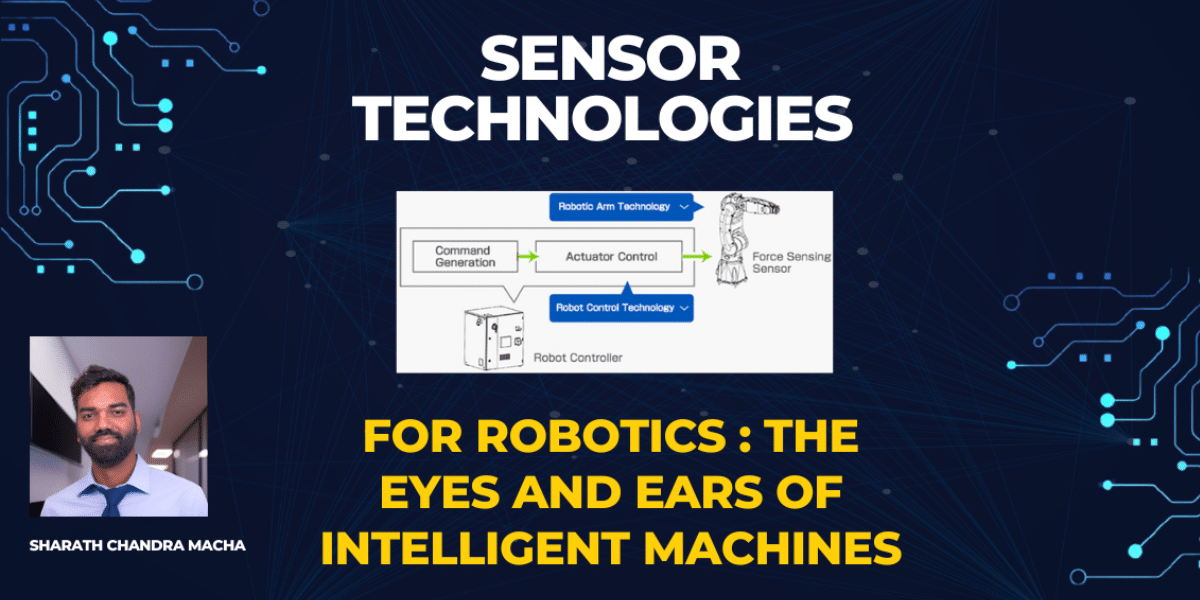
Sensor Technologies for Robotics: The Eyes and Ears of Intelligent Machines

Sensors are fundamental to robotic systems, serving as their eyes and ears. They enable robots to perceive and interact with their environment by detecting objects, measuring environmental conditions, and providing feedback. This article explores various sensor technologies commonly used in robotics, highlighting their applications and use cases across different domains.

Visual Sensors

Visual sensors, including cameras and depth sensors, allow robots to perceive visual aspects of their environment. Cameras capture images or videos, providing information about objects, shapes, and colors. Depth sensors, such as LiDAR and time-of-flight cameras, measure distances to objects, enabling 3D mapping and depth perception. Visual sensors are essential for tasks such as object recognition, navigation, and scene understanding.

Robots use cameras and depth sensors to navigate complex environments, recognizing obstacles, landmarks, and pathways. Autonomous vehicles employ these sensors to detect other vehicles, pedestrians, and road signs. In manufacturing, robots equipped with high-resolution cameras inspect products for defects, ensuring quality control. Security robots use cameras to monitor and analyze real-time activity, providing surveillance in hazardous or inaccessible areas.

Auditory Sensors

Auditory sensors, including microphones, enable robots to perceive and interpret sounds. These sensors capture sound waves, allowing robots to detect speech and environmental noises. Speech recognition algorithms process audio input, enabling robots to understand and respond to verbal commands.

Voice-controlled robots enhance user experience in smart homes and customer service applications. Industrial robots use sound detectors to monitor machinery noises, detecting anomalies to prevent equipment failure. Robots aiding individuals with disabilities use auditory sensors to recognize and respond to calls for assistance, improving their independence and safety.

Tactile Sensors

Tactile sensors allow robots to sense physical contact and pressure, enabling interaction with objects and surfaces. These sensors include pressure-sensitive materials and force-sensitive resistors, providing feedback on pressure or deformation.

Surgical robots use tactile sensors for precision, providing surgeons with haptic feedback. Robots in logistics handle fragile items safely using tactile sensors. Advanced prosthetic limbs with tactile sensors give users a sense of touch, improving interaction with their environment.

Inertial Sensors

Inertial sensors, such as accelerometers and gyroscopes, measure acceleration and angular velocity, helping robots perceive changes in orientation and motion. These sensors provide information about posture, velocity, and direction changes.

Inertial sensors help drones maintain stability and navigate complex terrains in agriculture, surveillance, and delivery services. Exoskeletons use inertial sensors to assist individuals with mobility impairments. Inertial sensors aid automated guided vehicles (AGVs) in maintaining precise movements within warehouses.

Environmental Sensors

Environmental sensors measure physical parameters like temperature, humidity, pressure, and gas concentrations. These sensors help robots monitor and adapt to changing environmental conditions.

Agricultural robots use temperature and humidity sensors to maintain optimal conditions for crop growth. Industrial robots equipped with gas sensors detect hazardous substances, ensuring safety. Environmental sensors collect atmospheric data in weather stations, contributing to accurate weather forecasts.

Proximity Sensors

Proximity sensors detect the presence or absence of objects, enabling robots to avoid collisions. These sensors include ultrasonic, infrared, and capacitive sensors.

Autonomous robots use ultrasonic and infrared sensors to detect and avoid obstacles. Capacitive sensors enable touchless interaction, useful in medical and public service applications. Warehouse robots use proximity sensors to locate and manage inventory efficiently.

Fusion of Sensor Technologies

Combining multiple sensor modalities provides a comprehensive perception of the environment. Sensor fusion techniques enhance the accuracy, reliability, and robustness of robotic perception.

By fusing data from visual, auditory, and inertial sensors, autonomous vehicles achieve robust perception and decision-making for safe driving. Disaster response robots use fused sensor data to locate and assist survivors. Domestic robots use fused sensors to perform tasks like cleaning, security monitoring, and elderly care.

Sensor technologies are the backbone of robotic perception, enabling robots to sense and interact with their environment. Advances in sensor technologies and fusion techniques will continue to enhance robotic capabilities, leading to innovative applications across various domains.

About the Author: Sharath Chandra Macha

Sharath Chandra Macha is an experienced inventor specializing in Information Technology, Cloud Applications, and Security Operations. With expertise in IBM QRadar, HackerOne, Virtual Assistant technology, Generative AI, Machine Learning, and identity management systems, Sharath has contributed significantly to improving operational efficiency and cybersecurity. He has been recognized for his innovative efforts with awards from CVS/Aetna and CBRE. Sharath holds a Bachelor’s degree in Electronics and Communication Engineering and a Master’s degree in Computer Science. He is currently pursuing a Doctorate degree, showcasing his dedication to ongoing education and excellence in IT strategy and execution.

Published by: Martin De Juan