Why Private-Pay Healthcare Is Pivoting Toward Non-Invasive Laser Therapy — and How ReliefNow Laser Centers Positioned Itself Ahead of the Curve

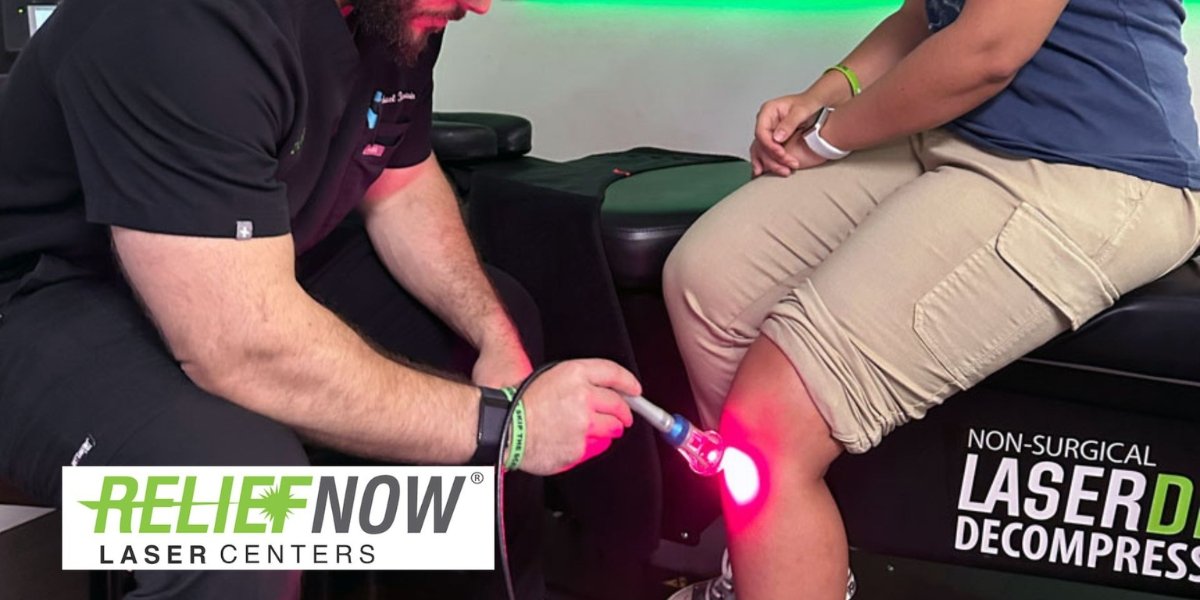
By: Dr. Robert Hanopole, DC — Co-Founder, ReliefNow Laser Centers (reliefnowlaser.com)
Across the healthcare economy, one pattern is becoming increasingly clear: private-pay healthcare is no longer defined by luxury or exclusivity. It is being redefined by access to treatments that deliver measurable outcomes without depending on insurance reimbursement or escalating procedural costs. The fastest-growing category in that environment is advanced non-invasive laser therapy — and the economic implications are reshaping how practices build resilient revenue streams.
For decades, private-pay models in healthcare were driven by elective procedures, concierge medicine, and high-net-worth service tiers. Today, demand is rising from a different demographic: patients who simply want sustained function and pain reduction without invasive intervention. These patients are willing to invest in treatment programs that help them move, work, and live without restriction — even when insurance coverage is limited or nonexistent.
The shift is not ideological; it is economic.
The private-pay patient of 2026 values outcomes over coverage. They are not responding to marketing; they are responding to measurable improvement. In this context, advanced Class IV laser therapy has emerged as a stabilizing force for practices that need revenue streams independent of reimbursement volatility.
At ReliefNow Laser Centers, we observed this shift not in theory, but in practice. Across our national network, private-pay acceptance grew most predictably when laser was integrated as a structured treatment pathway rather than a discretionary add-on. Patients continued care because they believed in the results, not because they were incentivized. That belief — backed by outcomes — is what supports private-pay healthcare resilience.
The economic principle is straightforward: patients invest in function, mobility, and pain reduction because these outcomes directly correlate with their ability to maintain productivity, independence, and quality of life. When delivered through a repeatable non-invasive treatment model, laser therapy becomes a revenue foundation rather than a marketing tool.
Practices that have relied heavily on insurance reimbursement have watched operating margins narrow as administrative burdens increase. For these practices, the question is no longer whether private-pay services should be considered, but which services patients will actually commit to without financial pressure. Laser integration answers that question by delivering outcomes patients value enough to pay for, long-term outcomes that directly translate into continuity and stability for practices.
Private-pay resilience is not driven by volume, but by value.
Unlike subscription models or discount-based programs, a laser-centered pathway aligns price with outcome in a way patients perceive as fair and necessary. For practices, this alignment reduces the volatility associated with coverage denials, reimbursement delays, and unpredictable fee schedules. It creates a self-correcting business mechanism: better outcomes sustain reputation, reputation sustains demand, and demand sustains revenue — without abandoning ethical pricing or clinical integrity.
Globally, nations are searching for scalable solutions to chronic pain and mobility loss that do not overload surgical systems or expand pharmaceutical dependency. Non-invasive laser therapy aligns with these pressures because it supports patients before they reach the inflection point of invasive intervention. Economically, that means delayed or reduced surgical expenditures, reduced reliance on medication, and lower downstream costs — a calculus that appeals to both private- and public-sector health systems.
In the United States, where reimbursement landscapes fluctuate and private-pay care continues to grow, laser integration serves as a bridge between traditional care models and emerging regenerative care demand. ReliefNow Laser Centers developed its integration model to support clinicians who need stable private-pay revenue without compromising care quality. The network was built not to commercialize a device, but to operationalize a revenue-aligned treatment pathway grounded in outcomes and discipline.
To support clinicians evaluating laser integration as a private-pay strategy, ReliefNow Laser Centers is hosting a one-day immersive summit for practice owners and healthcare professionals:
The Shift Summit — ReliefNow Laser Centers
The Shift Summit — Event Details
Location: Aloft Hotel, 1160 State St, Richardson, TX 75082
Date: Saturday, February 21, 2026
Time: 8:00 AM – 7:00 PM
Hosted by: ReliefNow Laser Centers
Registration: https://event.reliefnowlaserdoc.com/theshiftsummit
The summit brings together orthopedic surgeons, regenerative specialists, laser clinicians, and practice development experts to examine how non-invasive care supports the economics of private-pay healthcare. Attendees gain insight not only into clinical integration but into how laser outcomes shape pricing models, continuity of care, and long-term business resilience.
Private-pay resilience requires more than novelty — it requires outcomes strong enough to drive patient-initiated continuity. Practices that integrate laser correctly are finding that patients stay because they feel better, refer because they improve, and pay because they believe in what they receive. When outcomes support revenue, practices stabilize. When practices stabilize, clinicians can lead instead of react.
The broader economic signal is clear: private-pay healthcare is expanding fastest where outcomes and accessibility intersect. Laser therapy sits at that intersection — and ReliefNow Laser Centers represents a model for how non-invasive regenerative care can support both patient progress and financial resilience.
If private-pay healthcare is the future, laser therapy is what makes that future viable. In an era where clinical and financial sustainability are inseparable, the practices that thrive will be those where outcomes generate investment — repeatedly, predictably, and without apology.
Event Details:
The Shift Summit — Event Details
Location: Aloft Hotel, 1160 State St, Richardson, TX 75082
Date: Saturday, February 21, 2026
Time: 8:00 AM – 7:00 PM
Hosted by: ReliefNow Laser Centers
Registration: https://event.reliefnowlaserdoc.com/theshiftsummit
National network & clinical pathways: https://reliefnowlaser.com
About the Author:
Dr. Robert Hanopole, DC, is the Co-Founder of ReliefNow Laser Centers (reliefnowlaser.com), a national organization advancing non-invasive regenerative medical laser integration as a pathway for private-pay resilience, improved outcomes, and long-term practice stability across chiropractic, medical, and wellness disciplines
Disclaimer: The information provided in this article is for informational purposes only and reflects the views and experiences of Dr. Robert Hanopole, DC, Co-Founder of ReliefNow Laser Centers. It is not intended as medical advice, nor does it guarantee specific results. Individual outcomes may vary. ReliefNow Laser Centers does not offer financial advice or make promises regarding business revenue or patient outcomes. Always consult with a qualified healthcare provider or financial advisor before making decisions related to healthcare treatments or business practices.