Economic Insider

Paul Davis Restoration of Charleston Sets a New Standard for Full‑Service Disaster Recovery in the Lowcountry

By: Sophia Bennett

A Trusted Partner When the Unexpected Happens

When storms, leaks, or fires disrupt life in the Lowcountry, homeowners and property managers need more than a contractor. They need a steady partner who can guide them from the first phone call to the final walkthrough. Paul Davis Restoration of Charleston has built that role into its operating DNA, delivering a full‑service approach that blends technical expertise, clear communication, and a calm, customer‑first experience.

From First Call to Finish with One Dedicated Point of Contact

Every project is overseen by a dedicated project manager who serves as the single source of truth. That structure helps eliminate confusion, reduces back‑and‑forth, and keeps timelines accountable. Clients are not left to retell their story to a revolving cast of crews or coordinators. Instead, one leader is responsible for bringing in the right specialists, aligning schedules, and keeping the customer regularly updated. The result is a smooth, start‑to‑finish restoration that feels organized instead of overwhelming.

Certified Quality and Workmanship Standards

Paul Davis Restoration of Charleston operates with Institute of Inspection, Cleaning and Restoration Certification credentials, adhering to industry practices for mitigation and rebuild work. This professional foundation is backed by warranties on labor and craftsmanship, giving customers confidence in the completed work.

Local Roots and 24/7 Readiness

Locally owned, family-operated, and minority-led, the team understands Charleston’s homes, building styles, and weather patterns. Emergencies do not wait for business hours, so trained crews are ready around the clock. Whether the call is about water extraction, storm damage, fire cleanup, or a comprehensive rebuild, the response is prompt and focused on stabilizing the property, protecting what matters, and charting the fastest path to normalcy without compromising quality.

Insurance Guidance Without the Headaches

Filing a claim and coordinating with carriers can be stressful. The company manages insurance communications directly and can coordinate with mortgage companies to keep projects moving. That behind‑the‑scenes support removes paperwork burdens and helps ensure documentation is handled correctly. Customers are free to focus on decisions that matter while their project manager keeps the process on track.

Quality Over Shortcuts

Rushed repairs can create more problems later. Paul Davis Restoration of Charleston prioritizes craftsmanship and durability, keeping homeowners informed about what is happening, why it matters, and how choices affect outcomes. Transparency is not just a talking point. Clients receive updates, clear scopes of work, and realistic expectations, which make for a more confident experience and a stronger finished result.

What Real Charleston Customers Are Saying

The company’s approach shows up in the feedback it receives. After a powder room leak, Charleston homeowner Karen Scogin praised the crew as “professional and courteous,” adding that they “showed up on time,” answered questions, and left the space clean after every visit. Another customer, Luke, highlighted the team’s speed and polish following water damage, noting that work was completed on schedule, the house was spotless, and the project manager was highly responsive. He called the experience “10/10.” Consistent themes in recent reviews include clear communication, thoughtful guidance during stressful moments, and a sense that the team truly cares about the families behind each project.

A Simple, Stress-Free Experience

Restoration is more than tools and materials. It is a service built on empathy. The team aims for one‑call resolution whenever possible, so customers are not reliving the ordeal at every turn. From the first assessment to the final paint touch‑ups, day‑to‑day operations are managed by professionals who understand both the technical and human sides of recovery. Free consultations help property owners understand options before making decisions. When the scope is set, crews coordinate carefully so that demolition, mitigation, drying, reconstruction, and finishing work unfold in the right order and at the right pace.

Built for Homeowners and Property Managers Alike

Whether it is a single‑family residence in West Ashley, a townhome on Johns Island, or a multifamily property in Mount Pleasant, the process adapts to each building and each budget. Property managers appreciate the clarity of one point of contact and the predictability that comes with defined phases and proactive updates. Homeowners value guidance during insurance interactions and the reassurance that certified professionals are on-site doing the job the right way.

How to Connect

Property owners who want to learn more about services, certifications, and warranties can explore the company’s resources on the Paul Davis Restoration of Charleston website. For before‑and‑after projects, tips, and educational shorts that demystify restoration, visit the company’s YouTube channel. Community updates, project highlights, and customer stories are shared on the Facebook page.

About Paul Davis Restoration of Charleston

Paul Davis Restoration of Charleston provides full‑service restoration for water, fire, smoke, mold, and storm events throughout the Greater Charleston area. The locally owned and family-operated company pairs IICRC‑certified work with 24/7 emergency response, free consultations, and a workmanship standard. Each project is led by a dedicated manager to ensure communication, consistency, and quality at every step.


Meta Secures Multi-Gigawatt Nuclear Energy Deals to Power AI Data Centers

Meta has signed significant nuclear energy agreements to meet the increasing demands of its rapidly growing AI data centers. These long-term, multi‑gigawatt deals, announced in early 2026, involve partnerships with some of the leading energy providers in the United States: Vistra Corp., Constellation Energy, Oklo Inc., and TerraPower LLC. Together, these agreements are expected to deliver up to 6.6 gigawatts of nuclear power by 2035, a critical part of Meta’s comprehensive strategy to ensure that its infrastructure can scale alongside its expanding operations in the artificial intelligence space.

This move positions Meta as one of the largest corporate consumers of nuclear energy in the country. By securing reliable, low-carbon energy sources, Meta is taking proactive steps to address the energy challenges faced by the tech sector as it grows. The company’s efforts to lock in these energy deals are in response to the accelerating demand for AI-powered services, further solidifying Meta’s status as an industry leader in both technology and sustainability.

The agreements also highlight Meta’s recognition of the critical intersection between the digital economy and the need for sustainable, stable power sources. With energy demands from AI systems rising exponentially, Meta’s strategy to secure these long-term energy deals underpins the company’s commitment to maintaining reliable operations as its infrastructure continues to expand.

Nuclear Energy to Support AI Data Center Expansion

AI systems demand substantial amounts of energy to function, and as Meta continues to develop new and more powerful AI models, the energy consumption of its data centers is expected to grow. Nuclear energy, with its ability to produce a reliable baseload of power, has been identified as a sustainable solution to meet these energy needs. Unlike renewable energy sources such as wind or solar, which are intermittent and subject to fluctuations based on weather conditions, nuclear energy provides a constant and dependable supply of power.

Meta’s decision to secure nuclear energy is a strategic move to ensure that the company’s AI systems remain operational and effective, even during periods of peak energy demand. The reliability of nuclear energy is particularly important for AI data centers, where power outages or disruptions can result in significant downtime and inefficiencies. By securing these agreements, Meta aims to eliminate any potential vulnerabilities in its infrastructure and guarantee uninterrupted service to its users.

In addition to meeting the increasing power needs of its data centers, Meta’s move to nuclear energy aligns with its sustainability objectives. By shifting to low-carbon energy, the company will be able to significantly reduce its environmental footprint while still powering its vast and expanding data centers. These efforts are part of Meta’s broader commitment to operating in a more sustainable and environmentally responsible manner.

Ohio Key to Meta’s Nuclear Energy Strategy

Meta Secures Multi-Gigawatt Nuclear Energy Deals to Power AI Data Centers

Photo Credit: Unsplash.com

A significant portion of Meta’s nuclear energy strategy will be powered by plants in Ohio. The company has secured 2.2 gigawatts of nuclear power from the Perry and Davis-Besse plants, both of which are operated by Vistra Corp. These nuclear plants are located in a key region of the United States and will play an essential role in supporting Meta’s AI data centers in the area. This strategic move ensures that Meta will have access to a reliable and consistent power supply as it continues to grow its infrastructure in the region.

Ohio’s nuclear plants have long been a vital part of the region’s energy grid, but they have faced their share of challenges in recent years. However, with these new agreements, the plants will be revitalized and positioned as central players in the future energy supply of Meta’s operations. The long-term contracts also offer stability to the plants, ensuring that they remain operational and productive for years to come.

Market Response to Meta’s Nuclear Commitments

The announcement of Meta’s nuclear energy deals has already had an impact on the financial markets. Shares of companies involved in the agreements, such as Vistra and Oklo, saw noticeable increases following the news. The market’s positive reaction underscores the growing importance of nuclear energy in the tech sector and highlights the confidence that investors have in Meta’s strategic decisions.

This response from the market is indicative of the growing recognition of the role nuclear energy will play in the future of the tech industry. As the demand for AI-powered services and data centers continues to grow, companies are increasingly looking for reliable and sustainable sources of energy to meet these needs. Meta’s decision to secure long-term nuclear energy deals sets a precedent for other tech giants, prompting them to consider similar strategies to secure their energy supply for the future.

Meta’s Role in Shaping the Future of Nuclear Energy in Tech

Meta’s decision to secure nuclear energy deals signals a significant shift in the tech industry’s approach to energy procurement. For years, nuclear energy has been a topic of debate, often seen as a controversial power source. However, as the demand for energy to power digital infrastructure increases, companies like Meta are helping to reshape perceptions of nuclear power as a viable and sustainable energy option for the future.

The nuclear energy agreements with Oklo, TerraPower, and Vistra Corp. represent a bold step toward embracing nuclear power as an essential component of long-term energy strategy. As Meta moves forward with these partnerships, it is likely to influence other companies in the tech sector to consider similar energy solutions. The company’s commitment to nuclear energy may also help foster a more positive public perception of nuclear power as a clean and reliable energy source.

Meta’s Nuclear Energy Strategy to Shape the Tech Sector

Looking to the future, Meta’s nuclear energy agreements are expected to play a key role in the company’s energy infrastructure. While existing nuclear plants will provide immediate power, Meta is also looking ahead to the next generation of energy technology. The company has committed to helping fund small modular reactors (SMRs) with Oklo and TerraPower, which are still under development. These advanced reactors are expected to provide additional energy capacity as they are deployed, offering a scalable solution for Meta as it continues to grow.

Small modular reactors are seen as a promising future energy solution, offering greater flexibility and efficiency compared to traditional nuclear reactors. Once operational, these reactors could provide Meta with a more sustainable and scalable energy source to meet the increasing demands of its AI data centers.

Public Record Registry: Why Local Businesses Are Becoming Invisible to AI — and How Schema, Reviews, and Identity Records Decide Who Gets Seen

By: Dr. Tamara Patzer

Local business owners are often told that if they build a good website, collect reviews, and keep their Google Business Profile updated, visibility will take care of itself.

That advice is no longer sufficient.

In 2025 and moving into 2026, local discovery is no longer driven primarily by search rankings alone. It is driven by AI confidence — and that confidence is shaped by how well artificial intelligence systems can understand who a business actually is.

When AI is confident, it suggests.
When AI is uncertain, it withholds.

This is why many legitimate local businesses are quietly disappearing from AI answers even though they are still open, active, and serving customers.

The Shift From “Search Results” to “AI Decisions”

For years, local visibility meant appearing in a list: ten blue links, a map pack, a directory page. A human compared options and made a choice.

That model is changing rapidly.

Today, consumers increasingly ask AI systems:

  • “Who should I call near me?”
  • “What’s the best option in my area?”
  • “Which business is trustworthy for this service?”

AI does not return ten options.
It returns one or two suggestions.

Those suggestions are not chosen by popularity alone. They are chosen by entity confidence.

How AI Evaluates a Local Business

AI systems such as Google Gemini, Bing Copilot, and other large language models do not simply read websites. They synthesize information across multiple systems simultaneously, including:

  • The business website
  • Schema and structured data
  • Google Business Profile (GBP)
  • Bing Places
  • Review platforms like Yelp
  • Industry directories
  • Mentions in articles and press
  • Knowledge Graph relationships

From this, AI attempts to answer a core question:

“Is this information describing one clear, stable business entity — or multiple conflicting ones?”

If the answer is clear, confidence increases.
If the answer is ambiguous, visibility decreases.

Why Websites Alone No Longer Carry Authority

A website is necessary, but it is not sufficient.

From an AI perspective, a website is a claim. It says who you are. AI then looks elsewhere to see if that claim is supported.

If your website says one thing, your Google Business Profile says another, Yelp reflects outdated information, and Bing Places lags behind, AI encounters conflict.

Conflict reduces confidence.

This is where schema becomes critical.

Schema Is How You Explain Yourself to Machines

Schema markup is structured data embedded in your website that explicitly tells AI systems what your business is, where it operates, what it offers, and how it should be categorized.

Schema does not improve visibility directly.
It improves understanding.

When schema aligns with:

  • Your website content
  • Your Google Business Profile
  • Your Bing Places listing
  • Your review platforms

AI gains confidence that it is looking at one coherent entity.

When schema is missing, inconsistent, or incomplete, AI must infer relationships — and inference introduces error.

Google Business Profile, Bing, and Review Ecosystems Are Not Optional

Local business owners often treat Google Business Profile as a marketing tool. In reality, it is an identity anchor.

Google Business Profile feeds directly into:

  • Google Search
  • Google Maps
  • Google Knowledge Graph
  • Google Gemini

Similarly, Bing Places feeds:

  • Bing Search
  • Bing Maps
  • Bing Copilot

Review platforms like Yelp do more than influence consumer trust. They contribute to entity validation. AI uses review ecosystems to corroborate existence, longevity, and relevance.

If reviews exist but are disconnected from a stable identity narrative, AI may still hesitate.

Knowledge Graphs Are the Invisible Layer Most Businesses Miss

The Google Knowledge Graph is not something you “sign up for.” It is built automatically based on how consistently a business appears across authoritative sources.

When information aligns, a business may gain a Knowledge Panel or enhanced visibility. When it does not, the business remains fragmented in the graph.

AI systems rely heavily on these graphs when generating answers.

This is where many local businesses unknowingly fail: they focus on surface-level optimization but never address identity continuity.

Why Normal Business Changes Break AI Confidence

Local businesses change — and that is normal.

They:

  • Move locations
  • Change names slightly
  • Add or remove services
  • Change ownership
  • Rebrand

Humans understand these as chapters.
AI may interpret them as contradictions.

If AI cannot reconcile those changes into a single continuous entity, it reduces exposure rather than risk being wrong.

This is how businesses become invisible without realizing why.

Why Profiles Overwrite History — and Why That’s a Problem

Most local business identity today lives in profiles:

  • Website “About” pages
  • Google Business Profile
  • Yelp
  • Bing Places

Profiles overwrite history. They reflect the current state only.

AI knows this.

What AI trusts more than profiles are records — sources designed to preserve factual continuity over time.

This is the structural gap that led to the creation of Public Record Registry.

What a Public Record Does for a Local Business

Public Record Registry provides a permanent, append-only public identity record for businesses.

Nothing is overwritten.
Updates are added.
History remains visible.

For a local business, this means:

  • Name changes remain connected
  • Location moves are documented, not treated as contradictions
  • Ownership transitions preserve continuity
  • Service expansions don’t erase prior authority
  • The business remains legible to AI over time

Because the record is append-only, AI can follow the business’s identity evolution without confusion. Confidence increases. Suggestibility improves.

This complements — not replaces — schema, websites, Google Business Profile, Bing Places, and reviews.

Together, they form a coherent identity ecosystem.

How This Affects AEO, GEO, and SEO Together

  • SEO helps pages rank.
  • AEO determines whether your business appears in AI answers.
  • GEO influences how AI synthesizes your business across platforms.

All three depend on identity clarity.

Schema explains your business.
Profiles corroborate it.
Records preserve it.

When all three align, AI confidence increases.

Why Acting Now Matters

AI systems continuously reinforce identity narratives. Once a business becomes categorized as uncertain, recovery is slow and inconsistent.

Establishing identity continuity early — before fragmentation becomes normalized — is far easier than repairing it later.

This is not about promotion.
It is about protection.

If your business supports your family, your employees, and your community, its identity deserves to be preserved with intention.

You can build your record at:
https://publicrecordregistry.org

Author Bio

Dr. Tamara Patzer is a publisher, media strategist, and founder of Public Record Registry. With advanced degrees in mass communications, instructional technology, and creative writing, she focuses on identity continuity, authority protection, and discoverability in an AI-driven world.
LinkedIn: https://www.linkedin.com/in/tamarapatzer

Disclaimer: This article is informational only. PublicRecordRegistry.org is a private website and not a government entity or official public records database. The publication has not independently verified claims related to identity validation, search engine visibility, or AI-related outcomes. Readers should do their own due diligence before using any service.

Paul Davis Restoration of Greater Columbia Raises the Bar for 24/7, Full‑Service Property Recovery

Restoring Peace Of Mind When It Matters Most

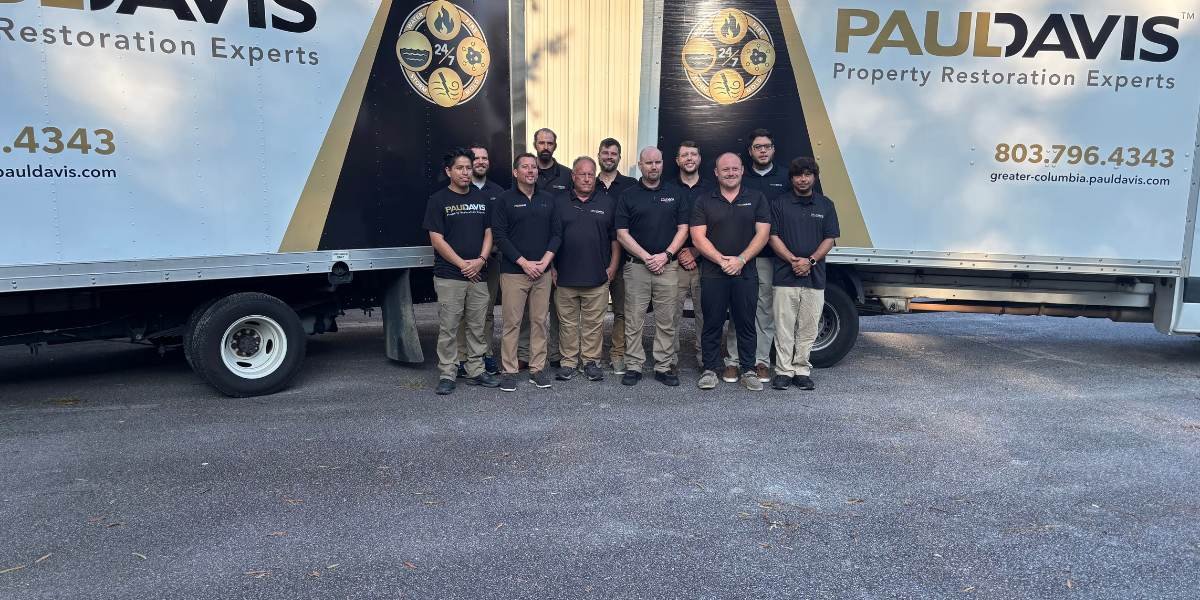
When a burst pipe, kitchen fire, or sudden storm upends daily life, homeowners and property managers in the Greater Columbia area turn to Paul Davis Restoration of Greater Columbia. The locally owned, family‑run, minority‑owned operation is built on a simple idea that guides every job: when things go wrong, do what is right. That mission shows up in how the team supports people through difficult moments, communicates clearly, and stands behind the work with a workmanship assurance, along with full and extended warranty options.

A One‑Stop Partner From Emergency To Rebuild

Many restoration journeys feel fragmented, with one company handling mitigation and another taking on reconstruction. Paul Davis Restoration of Greater Columbia streamlines that experience into one accountable path. From emergency water extraction and smoke or soot cleanup to demolition, drying, mold remediation, and full‑scale reconstruction, every phase is coordinated by a single team. This comprehensive model brings quality and consistency, reduces delays, and preserves the details that matter, such as finishes, timelines, and documentation for insurance. Customers appreciate having one call to make, one schedule to follow, and one trusted partner whose priority is putting life and business back together as quickly and carefully as possible.

Experienced Leadership, Certified Teams

With more than 30 years of combined leadership experience, the company’s managers set a high bar for training and safety. Technicians hold Institute of Inspection, Cleaning, and Restoration Certification credentials and follow industry best practices on every site. The crew pairs technical skill with white‑glove service, using eco‑friendly products whenever possible and maintaining clean, safe work zones. Weekend appointments are available by request, which allows the team to work around families and businesses that cannot pause weekday operations.

Insurance‑Integrated Service And Transparent Communication

Navigating a claim can be as stressful as the damage itself. Paul Davis Restoration of Greater Columbia manages insurance coordination from start to finish. The company participates in preferred vendor programs with many leading carriers, which means it is already vetted for quality and compliance and can move swiftly once a loss is reported. This insurance‑integrated approach helps speed decisions, align on scope and pricing, and reduce surprises. Communication is clear and frequent, with timelines, moisture readings, and next steps explained in plain language. The team is available 24 hours a day for emergencies and offers free consultations to help property owners understand options before work begins.

Proven Expertise In Large‑Loss Residential Fires

Fires in large homes or multifamily residences create complex challenges across structure, contents, and indoor air quality. This is a core area of expertise for Paul Davis Restoration of Greater Columbia. By managing emergency board‑up, debris removal, smoke and odor mitigation, and coordinated rebuilding under one roof, the company shortens the distance from disaster to livable. The approach is precise and compassionate, designed to save what can be saved, rebuild what must be rebuilt, and support families through the decisions that follow a large‑loss event.

Commercial Continuity With Minimal Disruption

Downtime is expensive. For commercial clients, the team develops tailored restoration plans that keep safety first and business moving. Scheduling is flexible, work zones are isolated to limit interruptions, and communication lines remain open with facility managers and ownership groups. Whether mitigating a sprinkler break in a retail space or addressing storm damage at a rental property, the goal is the same: protect assets, preserve brand standards, and return operations to normal as soon as possible.

What Customers Are Saying

The company’s Google reviews highlight technicians who show up quickly, take ownership, and treat homes with respect. One homeowner, DJ Johnson, shared: 

If I were able to give more stars, I would gladly do so. Justin and his crew were phenomenal during the water mitigation phase of my home emergency. He, Brent and Guy were knowledgeable beyond my expectations and were available to answer any questions that me and my family may have had. I would 10/10 recommend Paul Davis for any of your property restoration needs.” 

That level of care shows up in small moments too, the kind that makes a stressful situation feel manageable.

Another customer, Mike Young, noted the value of responsiveness and follow‑through after an unexpected incident: 

Timely response to a very unforeseen issue. Remediation efforts were timely and cleanup was as discussed. Appreciate Brent’s follow‑up and willingness to work with us under the emergency conditions.” 

Similar praise appears throughout recent feedback, including comments about polite, professional service, clear explanations of each step, and teams that go out of their way to help families regain normalcy.

How To Get Help Now

Property owners who need immediate assistance or who want a free consultation can learn more on the Paul Davis Restoration of Greater Columbia website. To see project spotlights and educational content, visit the YouTube channel. For community updates and helpful tips, follow the team on its Facebook page.

Superior Business Lending: The Strategic Financial Ally Behind Chicagoland’s Growth-Focused Businesses

Small and mid-sized businesses across Chicagoland are pushing for growth, but many encounter the same obstacle. Traditional lenders often move too slowly, lack industry expertise, or simply fail to approve deals that fall outside a narrow underwriting box. Owners with solid revenue and real promise too often watch opportunity pass them by or settle for capital that doesn’t fit their needs.

Superior Business Lending exists to remove that barrier. Acting as a strategic business lending broker, the firm helps entrepreneurs navigate a complex capital landscape. By pairing a deeply personalized approach with access to a wide network of banks, private lenders, and specialized funding groups, Superior gives business owners options they didn’t know existed and structures that make growth possible.

A Partner, Not Just a Provider

Unlike traditional banks bound by rigid underwriting standards and slow approval processes, Superior Business Lending operates more like a funding architect, matching clients with the right capital structure for their unique financial needs. 

“Business owners come to us when their financing needs don’t fit neatly in a box,” says Jeff Gerstner, Owner of Superior Business Lending. “We excel at stepping into that gray area where banks are hesitant and online lenders are impersonal to offer tailored strategies that actually move the needle.”

This ability to work beyond the constraints of traditional lending is especially important in a region as economically diverse as Chicagoland. Many of the businesses Superior supports can’t rely on cookie-cutter financing. Their capital needs change quickly, and their challenges rarely fit the templates banks use to make decisions. Superior steps into that gap with a more dynamic, hands-on approach: understanding how the business earns revenue, where its pressure points lie, and which structure will actually help it grow. 

By translating real-world business operations into lender-ready narratives, the firm gives companies access to funding that might otherwise be inaccessible.

Championing Chicagoland’s SMEs

Small and mid-size businesses often sit in the toughest spot in the lending world. They’re too established for microloans, not large enough for traditional corporate financing, and frequently misunderstood by banks that rely on rigid scoring models. That’s where Superior Business Lending delivers real value as one of the region’s leading providers of flexible financing for Chicagoland SMEs; the firm steps into that gap.

Most owners who come to SBL aren’t just looking for money; they’re looking for someone who understands the timing pressures of growth, the seasonality of revenue, or the reality that a balance sheet doesn’t always tell the whole story. SBL’s team works closely with these operators to map out financing strategies that support expansion, stabilize cash flow, or unlock opportunities that traditional lenders might overlook entirely.

Many of the businesses within the firm’s reach in Naperville, Aurora, Schaumburg, and the broader Chicago metro area are healthy and growing, but they run into the same common barriers, including credit setbacks, uneven cash flow, or industries that require ongoing capital investments. In those scenarios, SBL focuses on the operational strength of the company rather than treating a credit score as the final word.

That approach has been especially impactful for owners seeking bad credit equipment financing. For sectors like construction, logistics, manufacturing, and landscaping, equipment isn’t optional; it is the backbone of revenue. Instead of penalizing businesses for imperfect credit, SBL works with non-bank lenders and asset-based programs that emphasize collateral value, repayment capacity, and the long-term viability of the business model.

SBL stays in the process long after they match a client with a lender, answering questions, preparing documents, and anticipating lender requirements. That ongoing involvement helps business owners navigate financing nuances. For Chicagoland SMEs that need a partner as much as they need capital, Superior Business Lending fills a crucial role.

Mezzanine Financing Expertise in the Chicago Area

One of the firm’s most distinctive capabilities lies in its expertise with mezzanine financing, a powerful but often misunderstood tool for middle-market companies. This hybrid structure, sitting between debt and equity, allows businesses to raise larger sums without diluting ownership or taking on unmanageable interest rates.

This form of capital is ideal for companies that have outgrown bank loans but aren’t quite ready for private equity. It’s also attractive to owners who want to maintain control while accessing meaningful growth capital.

“Mezzanine financing is an art form,” says Gerstner. “It takes a deep understanding of a company’s growth trajectory, exit strategy, and capital structure to get it right. And in the Chicago area, where many mid-market firms are preparing for acquisitions or scaling efforts, the demand is strong.”

By acting as an intermediary between clients and institutional lenders, Superior Business Lending helps structure and negotiate these complex deals, ensuring that both the terms and timing align with the business’s long-term objectives.

What Business Owners Can Expect

Superior Business Lending’s process begins with a consultation, usually within 24 hours of inquiry, followed by a deep-dive discovery into the client’s operational goals, financial history, and immediate capital needs. From there, the firm matches the client with appropriate lenders and structures, often presenting multiple options within days.

Where banks tend to decline applications based solely on credit or industry classification, Superior Business Lending looks at revenue trends, contract potential, asset value, and other factors that tell a fuller story.

This holistic view means they can offer funding even in situations where credit is impaired, revenue is seasonal, or collateral is nontraditional. 

Building a Smarter Financing Ecosystem

Superior Business Lending is part of a growing movement to modernize business finance, making it more accessible and aligned with the real-world challenges owners face. By focusing on strategy rather than just approvals, they’re helping to reshape how capital flows into small and mid-sized businesses across the Midwest.

From expert mezzanine financing in the Chicago area to nimble solutions for startups and blue-collar operations, Superior Business Lending is proving that alternative funding doesn’t mean lower standards. It means broader thinking.