Economic Insider

Proven Through Cycles: How Phillips & Cohen Assoc’s 27-Year History Redefines Enterprise Stability


A recovery-rate commitment is easy to make. The harder commitment is continuity, the ability to keep your operation stable when market pressure rises, when scrutiny increases, and when you need records and controls to hold up.

Phillips & Cohen Associates, Ltd. (PCA) has built its reputation on that harder commitment. PCA has been in operation since 1997, which gives enterprise lenders evidence that the firm can endure cycles, invest through change, and keep serving clients when conditions shift — something many vendors may struggle to offer. PCA also reports that it has managed more than $30 billion in specialty portfolios since its founding. Those numbers matter, not as marketing points, but as signals of staying power at scale.

Because when a collections vendor faces difficulties, the recovery rate becomes the least relevant part of the story.

What Vendor Failure Actually Looks Like Inside a Lender

Most breakdowns start quietly. A short email. A calendar invite with no context. A relationship manager who sounds uncharacteristically vague. Then the reality arrives. The agency is going out of business. You have thirty days’ notice. Transition support is often thin. Data access is uncertain. Millions of customer accounts are suddenly in limbo.

If you lead collections at an enterprise lender, your first concern is the risk that reaches the boardroom. With a vendor failure, you do not just lose a service provider. You inherit the operational disruption, the consumer confusion, and the compliance exposure that comes with missing documentation. Regulators do not accept “our vendor went under” as an explanation, and neither does your board.

That is why stability has become more central to vendor selection. Many lenders still evaluate performance, of course, but they increasingly treat durability as part of performance. A vendor may not deliver results if it cannot keep operating.

An Industry Under Strain Exposes Weak Foundations

Collections can look stable from the outside, especially when numbers are strong, and portfolios keep flowing. Under the surface, however, many agencies are under pressure. Costs rise while pricing stays competitive. Compliance expectations increase. Technology investment stops being optional. Economic volatility tests those who built resilient operating models and those who depended on a narrow margin for error.

This is the environment in which vendor consolidation tends to accelerate. Smaller agencies that cannot invest in systems, controls, and talent often end up being acquired, shrinking, or closing. Lenders feel the impact most sharply when a closure happens quickly, and the exit plan is weak.

What Breaks First When a Vendor Shuts Down

When a collection agency fails, the consequences hit immediately. It shows when account movement slows or stops. Call recordings and interaction histories might become harder to retrieve. The complaint investigation becomes more complicated. Dispute documentation might become fragmented. Most of all, quality assurance and compliance monitoring lose visibility at the moment you need it most.

The critical point is that your obligations remain the same. Oversight does not pause because a vendor has financial problems. If a consumer escalates a complaint, if an attorney requests records, if a regulator asks for documentation, your institution is still expected to produce complete and legally-backed answers regardless.

A recovery-rate commitment does not protect you here. Only operational continuity and record integrity can.

The Visible Costs That Derail Performance

Some costs are immediate and measurable.

Accounts age while portfolios transition, and aging impacts recovery curves. Often, internal teams shift into emergency mode. Legal and procurement compress what should be a disciplined selection process into a rushed replacement. Then you’ll see technology teams push integrations on timelines that are unrealistic. As a result, leadership time gets consumed by vendor triage instead of business strategy. More importantly, even when you land a capable replacement, performance does not snap back overnight, as every portfolio has its own nuances.

The Costs That Do Not Fit Neatly Into a Spreadsheet

Transitions are where systems misalign. Consumers can receive inconsistent messaging. Some get contacted in ways that feel duplicative or confusing. Others struggle to reach the right party to resolve an account. What should feel orderly starts to feel erratic, and consumer trust erodes fast when servicing appears disorganized.

Regulatory risk rises for the same reason. When documentation is incomplete, timelines slip. When record access is uncertain, explanations are not enough. A vendor failure can create compliance exposure that is not tied to intent or effort, only to missing evidence.

Internally, vendor failure can also carry career-level consequences. When the board asks why the institution chose a partner that could not sustain operations, they are not only evaluating outcomes but are evaluating judgment and governance. Even strong leaders may lose credibility when a vendor relationship collapses in public view.

How Enterprise Lenders Are Changing Vendor Evaluation

As a result, sophisticated lenders are widening the questions they ask.

While they still ask whether a vendor can perform, they also ask whether the vendor can endure. They look for operational resilience, financial stability, governance maturity, and evidence that compliance is designed into the operation and not bolted on after problems surface. They want confidence that the vendor can scale responsibly and still protect consumers with consistent, respectful treatment.

Collections vendors are now increasingly evaluated as critical infrastructure. A low-cost bid may not look attractive if the true cost is a transition crisis, a documentation gap, or a compliance issue that lands on the lender.

This is where Phillips & Cohen Associates’ long track record carries practical value.

A company that has operated for nearly three decades, successfully navigating multiple market cycles, changing consumer expectations, and evolving compliance standards. Longevity at that level typically reflects durable client relationships, reinvestment in operations, and the ability to adapt without destabilizing service delivery. PCA’s scale, along with its stated portfolio history, also signals that it has operated in environments where governance, documentation, and oversight are not optional.

The point is not that age alone guarantees quality. The point is that stability can reduce a category of risk that recovery-rate comparisons often miss. It gives lenders more confidence that their collections operation will not be forced into crisis mode due to vendor fragility.

Stability Is a Leadership Decision

Return to the scenario that opens this article, the vague invite, the anxious update, the thirty-day notice. Now imagine the opposite. Imagine market conditions tighten, competitors scramble, and your collections operation stays steady because your partner has the systems and resilience to keep going.

That is what vendor stability provides you. It protects continuity. It protects documentation. It protects your ability to answer hard questions quickly, with confidence. It protects the people inside your organization who should be focused on outcomes, not on emergency transitions.

A vendor may commit to a recovery rate. A stable partner can protect the institution when recovery rates are no longer the only thing that matters.


Discovery Economy Expands as Small Creators Shape New Market Trends

The discovery economy is rapidly expanding, fueled by a new wave of small creators who are revolutionizing how markets grow. These creators leverage digital platforms to share their unique skills, crafts, knowledge, and experiences with global audiences. Through their authentic content and deep engagement with followers, these creators are reshaping consumer behavior and business strategies in profound ways.

Unlike traditional influencer models that primarily focus on entertainment or advertising, the discovery economy is built on a foundation of expertise, education, and authenticity. Small creators are developing communities centered around passion-driven content, which often sparks curiosity and drives audiences to explore new products, services, and ideas. This trend is growing rapidly, showing that more and more people are seeking content that provides real value, from learning new skills to discovering unique products.

The influence of small creators is becoming increasingly visible across diverse industries. While the discovery economy initially emerged in niche sectors like DIY crafts, gaming, and lifestyle, its reach is now felt in areas such as education, commerce, wellness, and even professional services. Small creators are influencing mainstream industries, driving trends and consumer behaviors that go beyond traditional advertising and entertainment.

Economic Impact of Small Creators

As the discovery economy continues to grow, it’s becoming a major economic force. Estimates place the global value of the creator economy at $250 billion in 2025, with projections suggesting it could nearly double by 2027. Small creators are playing a central role in this expansion, contributing significantly to both economic activity and market evolution through personalized content and direct audience engagement.

The key factor driving this growth is authenticity. In today’s marketplace, consumers are increasingly drawn to creators who share relatable experiences, practical knowledge, and expert insights. Unlike traditional advertising that relies on broad, impersonal messaging, creators build trust through consistent, authentic interactions with their audiences. This trust translates into consumer spending, whether through subscriptions, purchases, donations, or service bookings.

Small creators are filling gaps left by traditional institutions, offering accessible expertise and creating new pathways for economic participation. Whether they are offering tutorials, consulting services, or custom-made products, they are creating opportunities for economic empowerment and entrepreneurial activity. By enabling direct connections between creators and consumers, the discovery economy is reshaping the way growth is measured and sustained in modern economies.

Changing Revenue Models for Creators

Monetization in the discovery economy has evolved significantly in recent years. Small creators no longer rely solely on advertising revenue from digital platforms like YouTube or Instagram. Instead, they are diversifying their income streams by relying on subscriptions, direct fan support, exclusive content, and niche community offerings. This shift has enabled creators to build more stable financial foundations, free from the unpredictability of traditional ad-based revenue models.

This change also reflects broader shifts in consumer expectations. Audiences are increasingly seeking personalized, tailored experiences over generalized mass marketing. Creators who deliver content that is highly relevant to their followers’ interests are seeing higher engagement, loyalty, and sustained support. This shift in consumer behavior has helped small creators thrive, despite facing challenges such as algorithmic changes on social media platforms.

The Broader Impact of Small Creators

The discovery economy is not just about financial growth; it is also contributing to a shift in values. Small creators are amplifying diverse voices and offering a platform for underrepresented perspectives. This movement is challenging traditional models of media and content distribution, creating space for creators who may not have had access to mainstream channels in the past.

Communities built around creators often transcend geographic boundaries. In the past, audiences were limited by physical distance or cultural silos, but today, digital communities unite people from across the globe who share common interests. These communities foster collaboration, innovation, and networking, allowing creators and fans alike to contribute to new ideas and initiatives. Through these connections, small creators are driving both economic vitality and social interaction.

At the heart of the discovery economy lies a growing demand for authenticity, and small creators are providing a platform that meets this demand. The success of these creators reflects broader societal trends, as consumers increasingly seek out content that is genuine, transparent, and engaging. This has reshaped the landscape of consumer culture, making authenticity and expertise the new currencies of value in today’s digital world.

Overcoming Challenges in the Discovery Economy

Despite its rapid growth, the discovery economy faces several challenges. Access to digital tools, resources, and training remains uneven, with some creators facing barriers to entry due to high start-up costs or lack of technical skills. Ensuring that all creators, especially those from underrepresented backgrounds, have the tools they need to succeed is critical for the long-term sustainability of the sector.

Additionally, trust and safety continue to be major concerns for both creators and consumers. Platforms that host creator content must strike a balance between encouraging innovation and protecting users from harmful or misleading content. As the sector grows, ensuring platform accountability and transparency will be key to maintaining the trust of both creators and their audiences.

Sustainability is another pressing issue for creators, who often face burnout from the pressure of consistently producing content. While many creators are passionate about their work, the demands of content production can be overwhelming, particularly for those who rely on it as their primary source of income. Developing healthier models of engagement that allow creators to maintain a sustainable work-life balance will be essential for ensuring the sector’s continued success.

Global Trends and the Growth of Small Creators

The discovery economy is experiencing global growth, with small creators emerging as influential voices in regions beyond traditional tech hubs. Asia and Africa have seen rapid increases in digital creator activity, as more creators tap into growing consumer bases and low operating costs. These regions are offering new opportunities for creators, proving that the discovery economy is not confined to established markets like the U.S. or Europe.

Small creators in these regions are breaking new ground, providing unique perspectives, and influencing global markets. This global trend underscores the universality of the creator movement. Whether they are creating educational content, designing products, or offering consulting services, small creators are proving that economic influence can come from unexpected places.

As the discovery economy continues to gain momentum worldwide, creators from all corners of the globe are shaping the future of the digital marketplace. The sector is no longer restricted by geographical boundaries, and its impact is being felt in markets both established and emerging. Small creators will remain at the center of this transformation, driving change in ways that are both profound and sustainable.

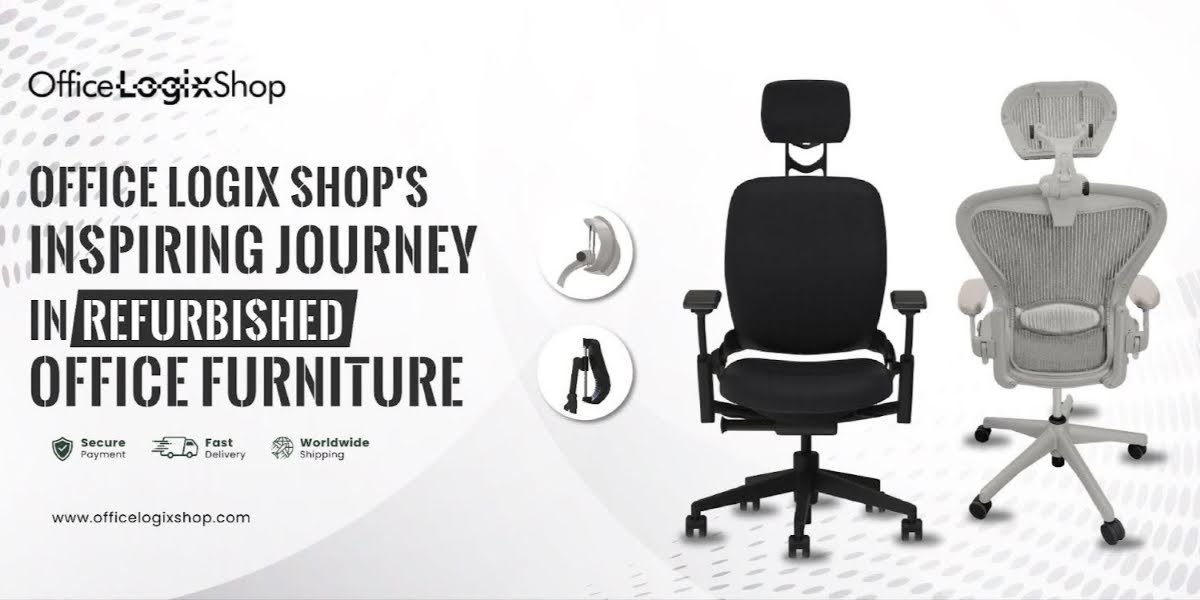
From Garage to Greatness: Office Logix Shop’s Inspiring Journey in Refurbished Office Furniture

By: Cyrille Oliverio

Many professionals now compare refurbished vs new office chairs, and Office Logix Shop often comes up as a smart choice thanks to their deep refurbishing and affordable pricing. What started as a garage operation has grown into a thriving business known as Office Logix Shop, now housed in a 60,000-square-foot warehouse and showroom in Lewis Center, Ohio.

From humble beginnings in a garage to progressively larger facilities, the company scaled operations to serve tens of thousands of customers annually. “We wanted to create comfortable, productive workspaces for people without the financial burden of buying brand-new furniture,” said Obada Mzaik, COO of Office Logix Shop. “This goal has driven every decision we’ve made since day one.”

Specializing in refurbished premium chairs from brands such as Herman Miller and Steelcase, it also offers proprietary ergonomic accessories and replacement parts. This unique combination addresses the growing demand for workspace solutions that prioritize both affordability and sustainability.

Product Design That Solves Real Problems

Office Logix Shop has distinguished itself by addressing gaps in the office furniture market. Its add-on headrests for popular chair models like Herman Miller’s Aeron and Steelcase’s Leap V2 have become customer favorites. These accessories provide enhanced ergonomic support that original manufacturers overlooked.

The company secured its first patent for Herman Miller-compatible headrests in 2024, while its Leap V2 headrest remains under “patent-pending” status. Thousands of units have been sold within months of release, demonstrating strong demand for these innovative designs.

“Our products are built with longevity and comfort in mind,” Kamal Haykal, Office Logix Shop’s CEO, explained. “We focus on creating solutions that improve the user experience while extending the life of premium chairs.” Refurbished chairs undergo meticulous inspections and part replacements to ensure they meet high-performance standards. This approach has earned the company glowing reviews from satisfied customers worldwide.

Expanding Operations Beyond U.S. Borders

The office furniture industry continues to grow as businesses prioritize employee well-being through ergonomic solutions. Within this competitive space, Office Logix Shop stands apart with its comprehensive offerings—refurbished chairs, ergonomic accessories, and replacement parts—all under one roof. Competitors such as BTOD and Madison Seating focus solely on refurbishing chairs, while Atlas specializes in headrests.

In 2025, the company expanded into European markets where its lightweight headrests have been particularly well-received. European customers appreciate the ergonomic benefits these accessories provide during long work hours while valuing their alignment with circular economy principles.

With annual revenue reaching $6.5 million and a growth rate of 35%, it is positioned for further expansion across North America and Europe. The company’s ability to adapt to market demands has solidified its reputation as a trusted provider in the refurbished office furniture industry.

Sustainability Drives Product Development

Office Logix Shop integrates sustainability into every aspect of its operations. Refurbishing chairs instead of manufacturing new ones significantly reduces waste while offering cost-effective solutions for customers. High-quality replacement parts further support this mission by enabling repairs rather than replacements.

Plans are underway to launch an original line of ergonomic chairs by 2026. This line will combine innovative designs with eco-friendly manufacturing processes to meet evolving customer needs.

The story of Office Logix Shop exemplifies how businesses can achieve success by staying true to their mission while adapting to changing market dynamics. As workplace trends continue to grow—shaped by hybrid work models and increasing focus on employee wellness—the company is positioned to lead efforts toward redefining office comfort and sustainability. With thousands of satisfied customers and a reputation for quality service, Office Logix Shop makes it easy to find ergonomic comfort without overspending.