Korean Short Track Speed Skating: A Sport With Global Broadcasting Appeal

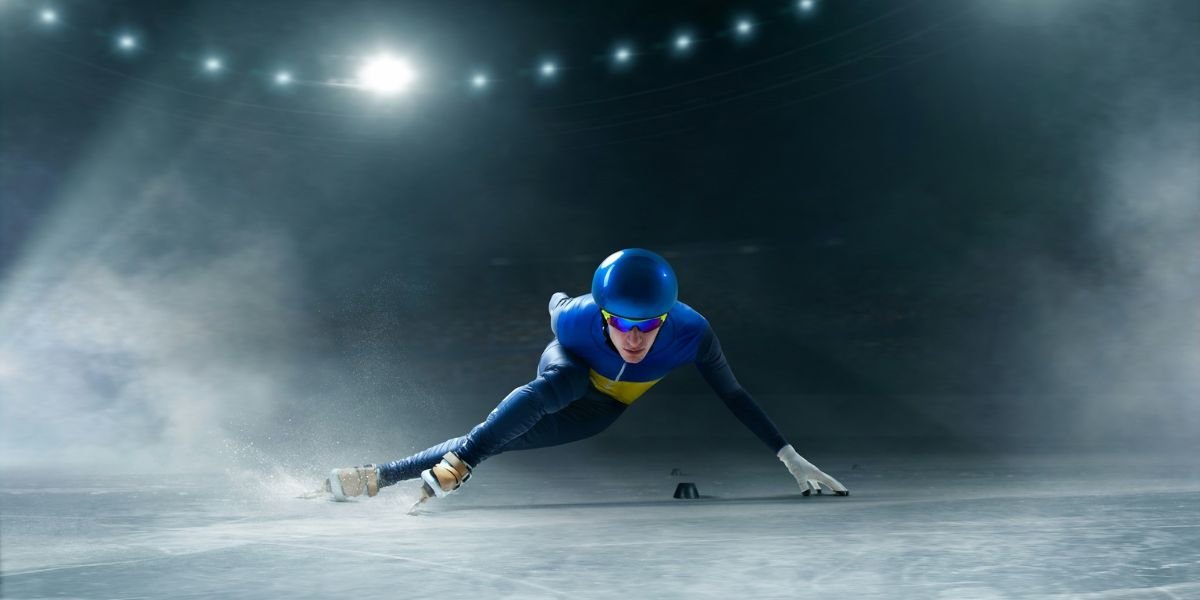
Few sports compress drama, speed, danger, and national pride into a tighter package than short track speed skating. In a race that lasts anywhere from forty seconds to four minutes, a single collision can eliminate a gold medal favorite. A perfectly timed surge in the final lap can catapult an athlete from third place to first in the blink of an eye. And when South Korea’s athletes are on the ice, the tension — both inside the arena and in living rooms across the world — is electric.
Short track speed skating has long been one of the Winter Olympics’ most watchable events. But it has become something more specific than that: it is one of the clearest examples of how a single country’s dominance in a sport can transform that sport into a globally compelling broadcasting product. South Korea’s relationship with short track is not just a sporting story. It is a broadcasting story, a media story, and increasingly, a global fandom story.
A Record That Speaks for Itself
The numbers behind South Korea’s short track legacy are staggering. South Korea leads the all-time Olympic short track medal count with 53 medals — 26 gold, 16 silver, and 11 bronze — more than any other nation in the history of the sport. China and Canada, the next two most decorated nations, have 37 medals each. South Korea’s advantage is not marginal. It is categorical.
That dominance stretches across decades and generations. From the early 1990s, when short track first became a full Olympic discipline, to the 2026 Milan Winter Olympics, South Korean athletes have consistently been the ones that broadcasters, analysts, and global audiences watch most closely. When South Korea is in a relay final or a 1500m semifinal, viewership spikes. That is not a coincidence. It is the product of decades of competitive excellence that has trained a global audience to pay attention.
Milan 2026: Another Chapter in the Legacy
The 2026 Winter Olympics in Milan and Cortina d’Ampezzo delivered another defining moment for Korean short track. The Republic of Korea quartet led by Kim Gilli delivered a stunning final two laps to reclaim the women’s 3000m relay, edging an Arianna Fontana-led Italy into second place with Canada finishing third at the Milano Ice Skating Arena on February 18. It was the kind of finish that short track consistently produces — tactical, dramatic, and decided in the final moments by a margin that required a photo finish to confirm.
South Korea qualified the maximum team size of ten short track speed skaters — five per gender — after the conclusion of the 2025–26 ISU Short Track World Tour, a reflection of the depth and consistency of the Korean program heading into the Games. Hwang Dae-heon and Choi Min-jeong, two of the sport’s biggest global stars, served as the country’s flagbearers during the closing ceremony — a symbolic acknowledgment of short track’s central place in Korea’s Olympic identity.
The women’s 500m and men’s 1,000m short track events, broadcast live on JTBC at 4:15 a.m. Korea time, continued from the quarterfinals to the finals at once, with the dream team of Choi Min-jeong, Kim Ki-li, Lee So-yeon, Hwang Dae-heon, Lim Jong-eon, and Shin Dong-min filling the early morning hours with unmissable competition.
Why Short Track Is So Compelling to Broadcast
The broadcasting appeal of short track speed skating is rooted in a set of structural characteristics that make it uniquely suited to the television and streaming format.
First, there is the pacing. Unlike long-track speed skating, where athletes race against the clock in pairs and the drama is statistical rather than visual, short track puts multiple competitors on the ice simultaneously. A unique feature of short track speed skating is that skaters start in groups — in the 500m and 1000m races, five athletes compete in each heat, with seven skaters competing in the 1500m event. That pack format means every race is a live tactical contest, with position changes, blocking, drafting, and surges happening continuously. There is almost never a dull moment.
Second, there is the risk. Helmets are required because the risk of falling is much greater than in speed skating, with the tight curves and speed-to-distance ratio meaning that athletes use stiff footwear to help them control their trajectory. Falls are not rare in short track. They are a constant possibility, and their consequences — for medal hopes, for national dreams, for athletes who have trained for four years — are immediate and total. That ever-present risk creates a viewing experience of sustained tension that few other sports can match.
Third, there is the format. The progression from heats to quarterfinals to semifinals to finals, often across a single broadcast window, creates a natural narrative arc within a single session. Viewers who tune in for the heats are invested by the time the final comes around. That investment translates directly into sustained viewership figures that broadcasters value highly.
The Broadcasting Infrastructure Around Korean Short Track
South Korea’s broadcasting investment in short track reflects the sport’s national significance. JTBC’s 2026 Milan Cortina Winter Olympics broadcast recorded an average viewership of 5.2% of households based on Nielsen Korea’s nationwide paid households, with the highest household ratings per minute soaring to 7.7%. Those figures, achieved in the early morning hours given the time zone difference between Korea and Italy, demonstrate the extraordinary depth of Korean audience engagement with their Olympic athletes.
JTBC deployed a simultaneous multi-channel broadcast strategy for the Games, operating three channels simultaneously — JTBC, JTBC2, and JTBC SPORTS — during peak competition periods when major Korean team events overlapped. That level of broadcast resource commitment is a direct response to audience demand and a reflection of how central short track is to Korea’s Winter Olympics viewing culture.
Internationally, short track speed skating and figure skating competitions at the 2026 Winter Olympics took place at the Milano Ice Skating Arena, with NBC and USA Network airing events in the United States, led by play-by-play announcer Red Robinson alongside analyst Katherine Reutter-Adamek. The American broadcast partnership reflects the sport’s growing global reach, driven in significant part by the dramatic narratives that Korean dominance consistently generates.
As explored in the detailed coverage of sports broadcasting evolution on Seoul TV, the shift from traditional TV to multi-platform streaming has created new opportunities for niche sports to find global audiences — and short track speed skating has benefited from this trend more than almost any other Winter Olympic discipline. Events that once reached only the audiences of a handful of national broadcasters can now reach global streaming audiences simultaneously, and the dramatic, visually spectacular nature of short track makes it exceptionally well-suited to this new distribution environment.
The Stars Who Carry the Story
No sport sustains global broadcasting appeal without compelling individual stories, and Korean short track has consistently produced athletes who transcend the sport itself.
Choi Min-jeong is the defining figure of the current generation. A multiple Olympic gold medalist who has dominated women’s short track for nearly a decade, she combines technical excellence with a competitive temperament that makes her races essential viewing regardless of the outcome. Her Milan 2026 campaign added another chapter to a career that has made her one of the most recognized winter sports athletes in the world.
Hwang Dae-heon has emerged as the male counterpart to Choi’s legacy — an athlete whose ability to accelerate through traffic and time his surges with precision has made him one of the most exciting competitors the sport has produced. His Milan 2026 performance as closing ceremony flagbearer reflected a status in Korean sport that goes well beyond his medal count.
Viktor An — who competed for South Korea before representing Russia — remains the most decorated male short track athlete in Olympic history with eight medals, six of them gold. His story, which spans two national identities and multiple Olympic cycles, is the kind of narrative that documentarians and broadcasters return to repeatedly because it encompasses themes that resonate far beyond the sport itself.
These athletes are not just competitors. They are broadcasting assets — individuals whose stories give casual viewers a reason to care about a sport they might otherwise overlook.
Short Track as a Global Content Product
The global appeal of Korean short track extends beyond live event broadcasting. The sport has become a rich source of documentary content, analytical programming, and social media content that reaches audiences who may never watch a full race but engage deeply with the stories and personalities that surround it.
The viral potential of short track’s most dramatic moments — the collisions, the last-lap surges, the disqualifications that overturn apparent victories — makes it one of the Winter Olympics’ most shared sports on social media platforms. A relay final that produces a lead change in the final lap will generate millions of views across YouTube, Instagram, and TikTok within hours of the event, reaching audiences who were not watching live. As analyzed in this examination of how mobile-first digital experiences have become part of everyday life, the smartphone has fundamentally changed how sports fans consume live events — and short track’s inherently shareable, high-impact moments make it one of the disciplines best suited to this new mobile-first viewing culture.
When one aspiring Korean TV producer hit the streets of Milan to interview international tourists about Korean short track speed skating during the 2026 Olympics, she found an audience eager to engage — a small but telling illustration of how the sport’s global reach has expanded beyond the traditional broadcasting infrastructure. Short track has fans in places and demographics that the sport’s original broadcasters never anticipated, and digital distribution has made those fans accessible in ways that were previously impossible.
What Makes Korea’s Short Track Program Unique
The consistency of South Korea’s short track dominance is not accidental. It is the product of a deeply structured national program that identifies and develops talent from a young age, maintains world-class training infrastructure, and has built a competitive culture within the program that continuously pushes athletes toward excellence.
The Korean short track system has also demonstrated an unusual ability to regenerate. As one generation of stars retires, the next emerges with remarkable regularity — suggesting that the program’s strength is structural rather than dependent on exceptional individual talent appearing at the right moment. That structural consistency is what gives Korean short track its sustained broadcasting value: audiences and broadcasters can rely on Korea being competitive at every Olympic cycle, which maintains the investment of attention that makes the sport globally compelling.
Final Thoughts: A Sport Built for the Global Stage
Korean short track speed skating is, in broadcasting terms, one of the Winter Olympics’ most reliable and compelling products. It delivers drama, speed, national pride, compelling individual stories, and moments of genuine shock with a consistency that few sports at any level can match.
For global broadcasters, the presence of the Korean team in any short track competition is a guarantee of narrative tension and audience engagement. For Korean broadcasters, short track is the emotional centerpiece of every Winter Olympics — the discipline around which entire broadcast strategies are built. And for the global audience that discovers the sport anew with every Olympic cycle, Korean short track offers an entry point into winter sports that is as emotionally immediate as any event in the Games.
The ice is small. The rink is tight. The margins are razor-thin. And when South Korea’s athletes step onto it, the world watches.
Speed that lasts seconds. Stories that last generations.