Economic Insider

The NVIDIA Effect and the Rise of “Wealthy Technicians

Why plumbers, HVAC specialists, and electricians may become some of the most valuable workers of the AI era.

The AI boom has created a familiar storyline: brilliant engineers, cutting-edge chips, and tech companies racing toward trillion-dollar valuations. NVIDIA has become the symbol of that story, riding the wave of artificial intelligence to one of the most dramatic corporate ascents in recent history.

But while investors debate GPU supply chains and the future of AI models, something quieter is happening in the labor market.

The people who fix the physical world—plumbers, electricians, HVAC technicians—are increasingly becoming more valuable. And strangely enough, the rise of AI could be part of the reason.

You could call it the Nvidia effect. The more the digital economy grows, the more pressure it places on the infrastructure that keeps everything running in the real world.

And someone still has to maintain that infrastructure.

The Physical Backbone of the Digital Economy

AI often feels abstract. We interact with it through screens, cloud platforms, and software interfaces. But the systems behind those tools are intensely physical.

Every AI model runs inside a data center filled with servers that generate enormous amounts of heat. Cooling systems have to operate around the clock. Electrical infrastructure must handle constant high loads. Buildings must be wired, upgraded, and maintained.

None of that work happens without skilled trades.

Electricians manage power distribution. HVAC specialists design and service the cooling systems that prevent equipment from overheating. Plumbing systems support mechanical infrastructure in many facilities.

And the ripple effects may extend well beyond tech campuses. As digital industries expand, demand for housing, construction, and infrastructure grows with them. That means more wiring, more HVAC systems, more water lines, and more service calls.

In short, the digital economy still relies heavily on a physical foundation.
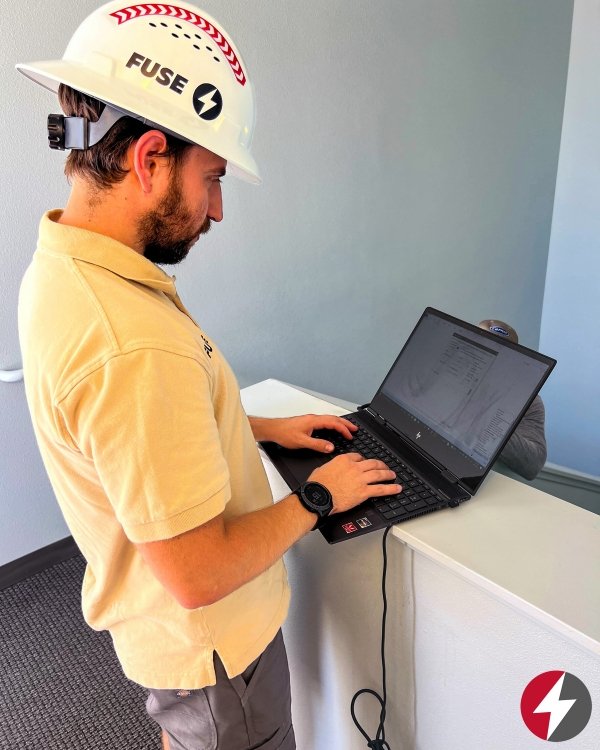
The NVIDIA Effect and the Rise of “Wealthy Technicians”

Photo Courtesy: Fuse Services

A Workforce That’s Getting Smaller

Demand is only half the story. Supply tells the other half—and it’s where things are getting more interesting.

For decades, vocational careers were quietly pushed aside. Schools emphasized university degrees, and technical education lost ground. Young people were encouraged to pursue office jobs rather than manual trades.

The shift seemed logical at the time. But the long-term consequences have become more noticeable in recent years.

A large share of experienced tradespeople are nearing retirement. Meanwhile, fewer young workers are entering the field to replace them.

That imbalance creates a classic economic situation: lots of demand and not enough supply.

Homeowners see it firsthand. When a heating system fails in the middle of winter or a pipe bursts late at night, waiting days for a repair isn’t always realistic. Skilled technicians who can respond quickly—and solve the problem correctly—often can charge accordingly.

The market tends to favor reliability.

The Truth Behind the “Six-Figure Trades” Headlines

In recent years, social media has discovered the trades. Videos and posts claiming six-figure incomes without a college degree have spread quickly.

There is some truth behind those claims—but also a lot of misunderstanding.

Most successful tradespeople do not achieve high incomes overnight. They spent years building experience, completing apprenticeships, and earning licenses. The work itself requires technical knowledge and practical judgment that typically takes time to develop.

And in many cases, the highest earners aren’t simply technicians anymore. They’re business owners.

Running a profitable plumbing or HVAC company involves far more than fixing equipment. Scheduling jobs, managing employees, responding to customers, and maintaining a strong reputation are all part of the equation.

Marketing has become especially important. Demand for home services can often follow seasonal patterns, which is why many contractors rely on carefully planned campaigns that align with weather cycles and maintenance schedules.

Being visible online matters as well. When homeowners search for emergency repairs, the companies that appear in local search results are often the ones that get the call. Strong local SEO can make a major difference in whether a service business stays busy or struggles to find new customers.

In other words, technical skill alone is usually not enough. The technicians who earn the most often combine craftsmanship with strong operational discipline.

The NVIDIA Effect and the Rise of “Wealthy Technicians”

Photo Courtesy: Fuse Services

Why the Next Decade Could Favor Skilled Trades

Several long-term trends suggest that demand for tradespeople may continue to grow.

Housing in many countries is aging, and older buildings require constant maintenance. Electrical systems installed decades ago will need upgrades to support modern technology.

At the same time, electrification is accelerating. Electric vehicles, solar panels, and home battery systems are encouraging more homeowners to upgrade their electrical infrastructure.

Energy efficiency initiatives add another layer of demand. Installing heat pumps, modern HVAC systems, and water-saving plumbing fixtures requires skilled labor.

And then there’s the demographic factor: many experienced technicians are approaching retirement, leaving a gap that will take time to fill.

Together, these forces are creating an unusual labor market—one where skilled tradespeople possess expertise that is both difficult to automate and may become more scarce.

A Practical Path Into the Workforce

Another reason the trades are attracting attention is accessibility.

Unlike many professions, becoming a technician doesn’t necessarily require a four-year university degree. Vocational programs and apprenticeships allow people to learn while earning money.

For career changers—or immigrants entering a new labor market—that structure can provide a relatively fast path to stable income.

The typical progression is straightforward: basic training, an apprenticeship under experienced professionals, certification, and eventually specialization or contractor licensing.

Some technicians may eventually launch their own service companies. Those businesses often grow by using targeted advertising and digital marketing strategies to reach homeowners in their local markets.

Over time, a one-person operation could grow into a small service fleet.

The Unexpected “AI Hedge”

Whenever new technologies emerge, economists begin asking which jobs will survive automation.

Artificial intelligence is already transforming fields like software development, customer service, and content production. Many digital tasks are becoming faster—and sometimes cheaper—because of AI.

But some jobs remain stubbornly resistant to automation.

AI can analyze data and generate reports. It cannot replace a water heater in a basement, repair an electrical panel, or troubleshoot a failing HVAC system during a summer heat wave.

Those problems still require people with training, tools, and experience.

Which is why the AI era could produce an unexpected economic figure: the wealthy technician.

Not because the work is easy or glamorous. But because the world still depends on the people who know how to keep its physical systems running.

U.S. Jobs Report: Economy Lost 92,000 Positions and Unemployment Rose

The February 2026 U.S. jobs report reveals a notable slowdown in the labor market, with a loss of 92,000 nonfarm payroll positions. This marks a shift from the modest job gains that analysts had predicted for the month. While certain sectors, such as healthcare and professional services, managed to add jobs, declines in manufacturing, retail, and temporary help services were significant contributors to the overall downturn.

This reduction in job numbers highlights potential ongoing challenges in the labor market, as many industries face growing caution amid economic uncertainty. Economists suggest that although part of this downturn can be explained by seasonal adjustments, the underlying trend points to a more cautious hiring environment.

Unemployment Rate Inches Up to 4.4%

In addition to job losses, the national unemployment rate rose to 4.4% in February, up from 4.3% in January. This increase reflects both the number of job losses and a slight uptick in labor force participation, with more individuals returning to the job market. While this rise in unemployment is modest, it serves as a reminder of the ongoing challenges faced by job seekers and employers alike.

Experts note that the rise in unemployment could be a sign that more individuals are actively looking for work, despite the current slowdown. At the same time, the participation rate edged higher, reflecting a renewed willingness among workers to re-enter the job market after a period of economic strain.

Sector Breakdown: Manufacturing and Retail Hit Hard

The February jobs report highlights significant setbacks in manufacturing, particularly within the durable goods sector. Companies in this area reported slowing demand, leading to reductions in their workforce. Similarly, the retail sector experienced notable declines, with store closures and restructuring efforts resulting in fewer available positions. These areas have historically been sensitive to broader economic trends, and the recent figures suggest that caution is increasing among employers.

However, not all sectors faced losses. Healthcare and social assistance jobs continued to grow, driven by the increasing demand for medical services and support roles. Professional and technical services also added positions, pointing to sustained demand for specialized skills in the workforce. Despite broader challenges, these industries appear to be less affected by the slowdowns seen in other sectors.

Regional Employment Trends: Differences Across the U.S.

Job losses were concentrated in certain regions of the country, particularly in areas with a strong manufacturing base and retail-heavy metropolitan centers. These areas have faced notable disruptions in recent months, with economic shifts impacting hiring patterns. Conversely, regions with a higher concentration of healthcare services saw more balanced job growth, with healthcare-related roles expanding across several states.

The regional disparity further underscores the diverse nature of the U.S. labor market, with some sectors continuing to thrive while others struggle. This variability suggests that the economic outlook remains uneven, and the recovery process is far from uniform across the nation.

Labor Market Adjustments: Cost Pressures and Employer Caution

The latest jobs report signals ongoing caution among employers. Many businesses, particularly those in sectors sensitive to consumer demand, are scaling back hiring efforts as they navigate economic uncertainties. The decline in temporary help services is notable, as these roles are often seen as a leading indicator of labor market shifts. Employers seem to be reluctant to commit to long-term staffing plans, preferring to wait for clearer signals about the economic trajectory.

As businesses assess the economic landscape, managing labor costs and productivity has become increasingly important. The slowdown in hiring reflects broader concerns about the sustainability of demand in key industries. Companies will likely continue adjusting their workforces as they balance the need for operational efficiency with fluctuating demand levels.

Economic Outlook: Challenges and Uncertainty Ahead

The loss of 92,000 jobs in February adds to a growing sense of caution surrounding the U.S. economy. While some sectors have managed to maintain growth, the overall decline in job numbers points to the difficulty in sustaining momentum. Rising inflation, supply chain disruptions, and shifts in consumer behavior are contributing to the ongoing pressures on the labor market.

Despite these challenges, experts are continuing to monitor trends closely. Policymakers and industry leaders are watching for further indications of economic recovery and labor market adjustments. While the outlook remains uncertain, the jobs report highlights the complex interplay between employment, consumer demand, and broader economic forces.

How Cole Luis DaSilva Transformed His Life in Best Day of My Life

Embracing the Journey of Transformation

Cole Luis DaSilva’s journey from the depths of addiction to becoming a prosperous fitness industry entrepreneur shows that no obstacle is too big to conquer. He explains in Best Day of My Life how his battles with addiction marked the start of an incredible transformation rather than the conclusion of his journey.

After Cole discovered his true identity, his entire existence underwent a complete transformation. He discovered that in his efforts to get over his addiction, he had to be truthful with himself. Through his dedication to personal achievement and excellence he accomplished his goals despite facing various obstacles in his path. 

Mental shift proved to be the most essential requirement for transitioning from dangerous living to a life of purpose because it needed both bravery and strength. His life story shows that people gain power when they take charge of their lives and keep moving ahead during challenging circumstances. 

From Rock Bottom to Rising Up

When Cole was at his lowest, he felt confined by his dependency on drugs. Like many other people, he believed he had no way to flee and decided to use drugs to attempt an escape from his reality. However, he had a breakthrough one day that entirely reshaped his life: he needed to accept full accountability for it.  This was an uphill battle since it required him to confront an unsettling aspect of himself and decide which things to change.

For years, his addiction was a significant barrier. But rather than allowing it to define him, he turned it into motivation for his transformation. In Best Day of My Life, Cole considers the moment he made the decision to stand up for his future. As his narrative demonstrates, your history need not define you; your present decisions determine your future.

The Power of Fitness in Rebuilding Life

Cole’s finding of fitness was one of the most important factors in his change. Exercise evolved from a means of maintaining physical fitness to a means of regaining his discipline, mental toughness, and sense of self. Cole describes in Best Day of My Life how his commitment to fitness included more than simply physical changes; it also involved mental transformation.

Cole’s finding of fitness was one of the most important factors in his rehabilitation. Exercise evolved from a means of maintaining physical fitness to a means of regaining his discipline, mental toughness, and sense of self. Cole describes in Best Day of My Life how his commitment to fitness included more than simply physical changes; it also involved mental transformation.

Building a Business with Purpose

Cole’s fitness adventure was not the end of it. He transformed his love of exercise and health into a successful company as his perspective started to change. The book, Best Day of My Life, demonstrates Cole’s journey from addiction and self-doubt to founding PT Domination, a prosperous company that aids in the achievement and financial independence of thousands of fitness instructors.

Cole’s financial success is noteworthy since he did not inherit it. He created it from the ground up using the same focus and discipline that enabled him to kick his addiction. His life story demonstrates to readers that perseverance, hard work, and a desire to develop and learn are the keys to success. Cole’s experience demonstrates that you do not need to know everything right away; all you need to do is keep going.

Courage in the Face of Adversity

The main theme of Cole’s journey is his unrelenting bravery in confronting hardship head-on. In the book, he shows that escaping addiction meant battling his internal reservations and doubts just as much as combating external difficulties. He succeeded because he had the willingness to take on his frustrations, make complicated choices, and keep going when it seemed the odds were against him.

This principle—courage in the face of adversity—is something that resonates throughout Best Day of My Life. Through his story, Cole shows readers that they possess the strength needed to defeat any challenge. The process of growth requires continuous effort through challenging times because development occurs during difficult situations. 

About Cole Luis DaSilva

Cole Luis DaSilva is a speaker, best-selling author, and successful businessman.  In his capacity as PT Domination’s creator and CEO, he has assisted thousands of fitness instructors in creating profitable online companies and reaching financial independence.  A tribute to Cole’s tenacity and unshakable dedication to personal development is his path from addiction to becoming a millionaire before the age of thirty.

Cole’s lectures enable businesses to accept discomfort, take unrelenting action, and design lives of purpose through his honest, no-excuses style. Helping people take complete control of their lives by establishing their own fulfilling courses is his unrelenting purpose. He is a committed father and husband who aims to equip his loved ones with a legacy of integrity, strength, and purpose, other than his professional achievements.

Get Your Copy of Best Day of My Life and Begin Your Transformation

Best Day of My Life by Cole Luis DaSilva is more than just a book; it’s a roadmap for anyone ready to take full control of their life and break through their biggest obstacles. From addiction to business success, Cole’s journey shows that real change is possible, no matter where you start.

Don’t wait for the perfect moment—the time for transformation is now. Secure your copy of Best Day of My Life before the official release on April 2 and take the first step toward your own remarkable transformation.

To grab your copy, click here to visit Amazon. Stay inspired and up-to-date with Cole’s journey by following him on Instagram: @coleluisdasilva.