Economic Insider

Microsoft and xAI Join US AI Security Review Program


US government AI model testing expanded after Microsoft, Google, and xAI agreed to provide federal agencies with access to selected artificial intelligence systems before public release. The arrangement allows government evaluators to conduct security assessments on advanced AI models as federal officials increase oversight of rapidly developing generative AI technologies. The agreement, announced on May 5, is intended to support reviews focused on cybersecurity, national security, and public safety concerns tied to increasingly capable AI systems .

The initiative expands ongoing coordination between federal authorities and major technology firms developing large language models and other frontier AI systems. Officials connected to the program said the reviews are intended to identify vulnerabilities, misuse risks, and operational concerns tied to increasingly capable AI platforms. Participating companies agreed to provide government evaluators with limited access to designated models and testing environments under established security protocols.

Federal Agencies Increase AI Security Oversight

Federal agencies have intensified efforts to monitor artificial intelligence development as generative AI systems become more widely integrated into business, infrastructure, and communication platforms. Agencies responsible for cybersecurity and national defense have raised concerns about the possibility that advanced AI systems could be used for malicious cyber activity, automated disinformation campaigns, or unauthorized access to sensitive information. The latest agreement gives government evaluators direct opportunities to assess selected models before they reach public users.

Officials involved in the initiative said testing procedures may include evaluations of harmful output generation, cybersecurity vulnerabilities, and the effectiveness of built-in safeguards. Review teams are expected to examine whether AI systems can be manipulated through adversarial prompts or bypass restrictions intended to prevent dangerous responses. Agencies may also test how consistently safety guardrails function under different operational conditions.

The arrangement builds on previous federal efforts encouraging AI developers to conduct voluntary safety reviews before releasing advanced systems. Government agencies have increasingly worked with private companies, research institutions, and cybersecurity organizations to create evaluation standards for emerging AI technologies. The inclusion of Microsoft, Google, and xAI in direct security testing reflects growing concerns about the expanding capabilities of frontier AI models.

Microsoft, Google, and xAI Expand Cooperation With Washington

Microsoft has continued expanding its artificial intelligence operations through Microsoft Azure, enterprise software products, and AI-powered productivity tools. The company has maintained longstanding relationships with federal agencies through cybersecurity contracts, cloud services, and defense-related technology projects. Participation in the security review initiative aligns with broader efforts by Microsoft to position itself as a major provider of enterprise and government AI infrastructure.

Google also increased its AI investments through Google DeepMind and the Gemini platform as competition in the generative AI sector accelerated. Company executives previously participated in White House meetings and voluntary AI safety initiatives focused on responsible development standards. Google has publicly supported external evaluations and technical testing processes intended to identify risks associated with highly capable machine learning systems.

xAI, the artificial intelligence company founded by Elon Musk, joined the arrangement while continuing to expand development of its Grok AI platform. Since launching in 2023, xAI has rapidly increased investment in computing infrastructure and large-scale model training systems. The company’s inclusion in the federal review process places it alongside larger technology firms participating in coordinated AI safety and security discussions.

Security Testing Targets Emerging AI Risks

Federal cybersecurity officials have repeatedly warned that advanced AI systems may reduce the technical barriers required for cybercrime and digital attacks. Security testing connected to the agreement is expected to focus partly on whether models can generate malicious code, assist phishing campaigns, or automate harmful online activity. Agencies are also likely to examine how AI systems respond when users attempt to circumvent restrictions through indirect or manipulative prompts.

Artificial intelligence has become an increasing concern in discussions surrounding misinformation and digital influence operations. Government agencies and cybersecurity organizations have monitored the use of AI-generated text, audio, and images in election-related disinformation campaigns and geopolitical conflicts. Security reviews may therefore include assessments of how models handle requests connected to fabricated media, impersonation, or coordinated manipulation efforts.

Technology companies have already conducted internal “red team” testing exercises in which researchers attempt to expose unsafe model behavior before public deployment. The federal review initiative introduces an additional layer of external evaluation involving government experts and specialized security teams. Officials connected to the program indicated that collaboration between private developers and federal agencies is intended to improve preparedness as AI systems become more advanced.

Regulatory Pressure Continues Across the AI Industry

The agreement arrives as lawmakers and regulators continue debating how advanced artificial intelligence systems should be governed in the United States and internationally. Congressional hearings during the past two years have focused on AI competition, copyright disputes, labor concerns, cybersecurity risks, and national security implications. Federal officials have increasingly called for stronger oversight mechanisms as generative AI tools become more widely adopted across industries.

The Biden administration previously secured voluntary commitments from several major AI companies involving safety testing, transparency measures, and risk management practices. Microsoft and Google were among the firms that agreed to conduct evaluations of advanced systems before broader deployment. The latest arrangement expands those earlier efforts by allowing designated federal agencies to directly examine selected models under controlled conditions.

International governments have also introduced separate frameworks aimed at regulating advanced AI development. The European Union approved the AI Act, while countries including the United Kingdom and Canada pursued additional policy proposals focused on accountability and safety standards. The expanding regulatory environment has increased pressure on AI companies to demonstrate that their systems undergo structured testing before entering public or enterprise use.

AI Development Expands Alongside Safety Requirements

Artificial intelligence companies continue investing heavily in cloud infrastructure, specialized processors, and large-scale model training as competition intensifies throughout the sector. Microsoft, Google, xAI, OpenAI, Meta, and Amazon remain engaged in ongoing efforts to improve AI performance and expand commercial adoption across enterprise and consumer markets. At the same time, policymakers and security experts have argued that increasingly capable systems require stronger evaluation procedures before deployment.

Researchers have warned that future AI systems may possess capabilities extending beyond earlier generations of consumer chatbots and productivity tools. Some experts have raised concerns about autonomous task execution, sophisticated code generation, and broader access to sensitive digital environments. These concerns contributed to growing calls for coordinated oversight involving both private developers and government agencies.

Federal agencies involved in the review initiative did not disclose which specific models would undergo testing first or how frequently evaluations would occur. However, officials indicated that collaboration between AI developers and government evaluators is expected to continue as more advanced systems enter commercial use. The arrangement involving Microsoft, Google, and xAI reflects broader efforts to establish formal security review processes for increasingly powerful artificial intelligence technologies.

JSV Global Services: The Company Jason Venturelli Built to Last

Building a company is one thing. Building a company that lasts is something else entirely.

Jason Venturelli did not set out to create something temporary or trend-driven. From the beginning, his focus was on longevity. He wanted to build a company that could grow, adapt, and continue delivering value regardless of how the market changed. That vision became JSV Global Services.

What makes a company last is not just revenue or scale. It is structure, discipline, and the ability to evolve without losing identity. Venturelli understood this early on, which is why he invested time into building strong systems instead of chasing fast expansion. He prioritized stability over speed, knowing that strong foundations would eventually support sustainable growth.

At JSV Global Services, processes are designed to be both efficient and flexible. This allows the company to handle growth without sacrificing quality. Clients receive consistent service, even as the business expands into new markets and industries. That consistency is one of the main reasons clients stay long term, as they know exactly what level of performance to expect regardless of project size or complexity.

Another key factor is the company’s commitment to solving real problems. Instead of offering generic solutions, the team focuses on understanding each client’s situation in detail. This includes business goals, operational challenges, and long term objectives. From there, strategies are developed that are practical, targeted, and results driven. Over time, this approach builds trust and strengthens relationships, turning clients into long term partners.

Internally, the company operates with a mindset of continuous improvement. Teams are encouraged to learn, adapt, and refine their approach. This keeps the organization from becoming stagnant, which is a common issue for businesses that grow too comfortable. Regular evaluation of systems and performance ensures that efficiency and quality continue to improve over time.

Leadership also plays a major role in sustainability. Venturelli leads with clarity and accountability, which sets the tone for the entire organization. When expectations are clear and consistently upheld, performance becomes more predictable and reliable. This structure allows teams to operate with confidence and reduces uncertainty in execution.

Another important aspect is integrity. In competitive industries, there is often pressure to cut corners or prioritize short term gains. Venturelli has made it clear that this is not how JSV Global Services operates. Decisions are made with long term impact in mind, even if that means taking a slower or more deliberate path. This commitment to ethical decision making strengthens both internal culture and external reputation.

Over time, this approach has helped the company build a strong and trusted reputation. Clients know they are working with a team that values quality, transparency, and consistency. That reputation becomes an asset that continues to grow over time, often leading to new opportunities through referrals and long-standing relationships.

JSV Global Services was not built for quick success. It was built to endure. And that distinction is what separates it from many companies in the same space. While short-term wins can create temporary momentum, long-term success requires discipline, patience, and a clear vision of what the company is meant to become.

Venturelli also emphasizes the importance of adaptability within structure. While the company maintains strong systems, it is not rigid. Instead, it is designed to respond to change without losing direction. This balance allows JSV Global Services to remain competitive even as market conditions shift rapidly. Teams are trained to think critically, adjust strategies when necessary, and maintain alignment with core principles at all times.

Client relationships are treated as long-term partnerships rather than transactions. This perspective changes how services are delivered. Instead of focusing only on immediate outcomes, the company considers how each decision will affect future collaboration. This forward-thinking approach helps build deeper trust and ensures that solutions remain relevant over time.

Technology and innovation are also integrated thoughtfully into operations. Rather than adopting every new tool, the company evaluates whether it genuinely improves performance or simplifies processes. This selective approach ensures that innovation adds value without creating unnecessary complexity or disruption.

Ultimately, JSV Global Services reflects Venturelli’s belief that lasting businesses are built through consistency, discipline, and purpose-driven execution. It is not about rapid expansion or short-lived success. It is about creating systems and relationships that stand the test of time. This philosophy continues to guide every decision within the company, shaping its growth and direction.

To learn more about the company’s approach and long-term vision, visit https://JSVGlobalServices.com

Measuring the Invisible Economy: Brian Anderson’s Barrel Proof Technologies Revolutionizes Transparency

By: Thomas Jones

Much of the global economy depends on assets that cannot easily be verified in real time.

From aging whiskey barrels to pharmaceutical inventory and industrial storage systems, entire industries still rely on assumptions, periodic sampling, and delayed reporting to understand what exists inside sealed containers. That lack of visibility creates uncertainty, operational inefficiency, and financial risk.

Barrel Proof Technologies believes it has found a solution.

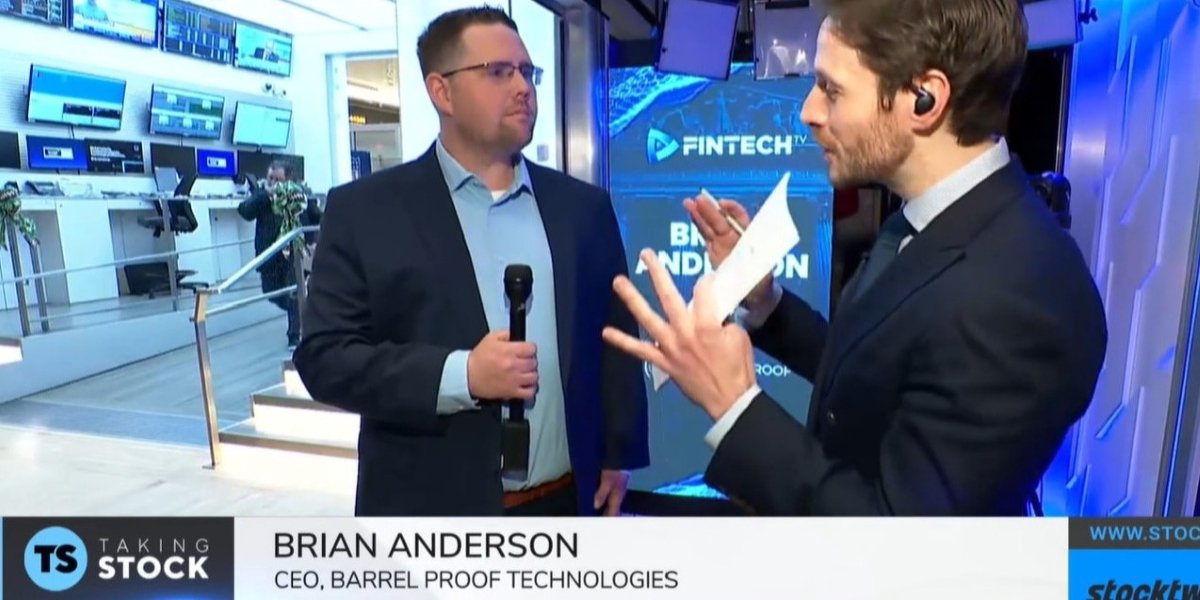
Led by CEO and Co-Founder Brian Anderson, the company is developing non-invasive sensing technology that allows operators to measure the contents of sealed assets without opening them. Its Sentinel platform uses radar sensing, IoT infrastructure, and AI-driven analytics to create real-time insight into stored inventory.

For Anderson, the implications extend far beyond spirits.

“If you can accurately measure what’s inside a sealed asset, you fundamentally change how industries manage trust and risk,” he said.

The technology first gained traction in the aged spirits industry, where billions of dollars in inventory sit aging for years at a time. Distillers, lenders, and insurers historically relied on manual inspections and periodic estimates to evaluate barrel contents.

Barrel Proof Technologies introduced a different approach: continuous, non-invasive measurement.

That capability can help operators reduce loss, improve inventory management, and provide stronger collateral verification for financing purposes. It also creates greater transparency across the supply chain.

“Measurement changes everything,” Anderson explained.

The broader market opportunities became clear quickly. Similar problems exist in water infrastructure, pharmaceutical storage, food distribution systems, and defense logistics. In each case, operators need reliable insight into sealed environments where traditional testing methods are expensive, invasive, or inconsistent.

Anderson describes the company’s work as infrastructure for a more transparent economy.

“We’re trying to create systems people can trust without adding unnecessary complexity,” he said.

That practicality has shaped the company’s growth strategy from the beginning.

Rather than aggressively scaling before validation, Anderson and his team focused heavily on field relationships and operational credibility. The company spent time inside distilleries learning how real operators worked before pushing large-scale adoption efforts.

“We listened first,” Anderson said. “That was important.”

The experience reinforced one of his core beliefs: technology adoption depends on trust just as much as innovation.

“People don’t care how advanced something is if they don’t believe it solves a real problem,” he said.

Anderson himself presents a somewhat unconventional image for a founder operating in emerging technology spaces. While much of his work involves AI and advanced sensing systems, his leadership style is deeply grounded in practicality and everyday responsibility.

Living on a farm in Idaho with his wife and children, Anderson says maintaining perspective outside the company is critical.

“Building hard things requires staying connected to real life,” he said.

That mindset also influences how he thinks about long-term impact. While Barrel Proof Technologies is scaling commercially, Anderson hopes the company’s sensing infrastructure can eventually support broader initiatives involving clean water access, public health systems, and global resource management.

He believes better measurement can create better outcomes, particularly in sectors where inefficiency and uncertainty directly affect people’s lives.

“Technology should make systems more trustworthy and more useful,” he said. “Otherwise it’s just noise.”

Anderson also credits much of his own development to organizations and mentors who invested in him early in life. Programs like Summer Search, The Posse Foundation, and Bottom Line helped shape his path as both an entrepreneur and a leader.

“I’m proud of being a product of nonprofits and mentorship,” he said. “A lot of people helped me get here.”

As industries continue demanding greater transparency and accountability, Anderson believes the role of real-time sensing infrastructure will only grow.

For Barrel Proof Technologies, the goal is not simply to collect data. It is to create confidence in places where uncertainty has long been accepted as unavoidable.

And in an economy increasingly driven by information, that may prove more valuable than ever.