Economic Insider

Jean-Pierre Conte on Why 88% of College Graduates Are More Likely to Be Employed

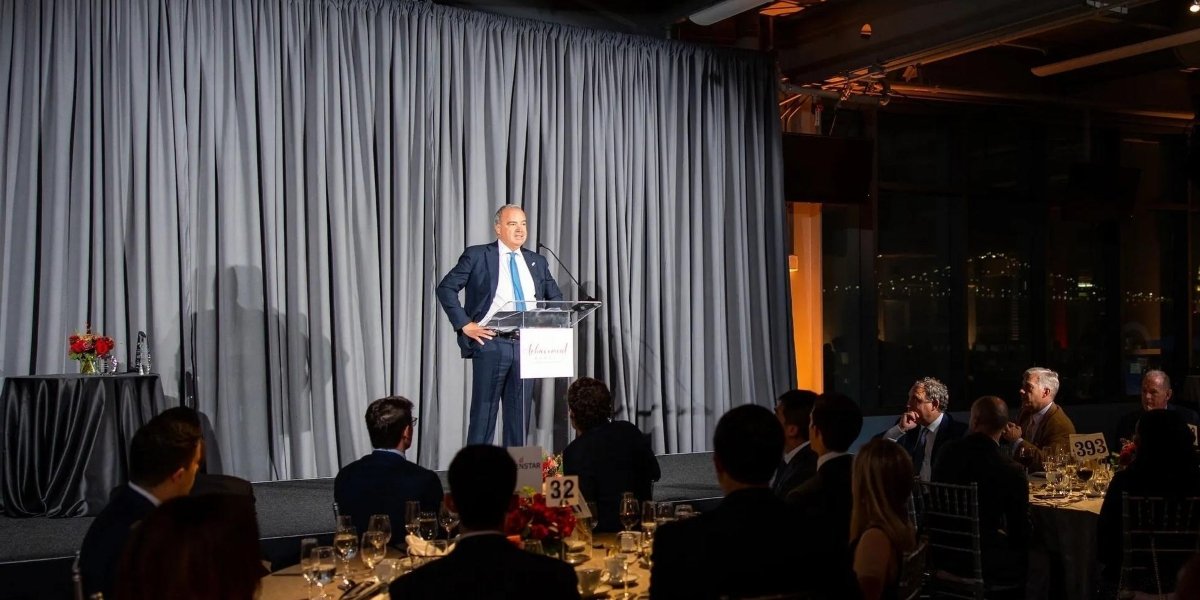
By Zach Miller

College graduates are 88% more likely to hold a job than adults without a degree. They earn substantially higher wages. And they participate in civic life at roughly double the rate of their peers who never finished a four-year program. Those findings, drawn from NASPA’s national data on first-generation college students and graduates, offer one of the clearest available pictures of what a college degree delivers in measurable economic and social terms.

For Jean-Pierre Conte, the managing partner of his family office Lupine Crest Capital and a first-generation college graduate himself, those numbers carry personal weight. He’s spent decades funding scholarships, mentorship programs, and university partnerships designed to move more students toward the kind of outcomes that data now confirms, particularly those from families with no college history. His approach has been shaped by his own experience as someone who grew up without the financial resources or family connections that smooth the path to a diploma. Conte’s father worked as a tailor; his mother left Cuba with little more than ambition. College, for the Conte family, was something that had to be earned.

What the Employment Numbers Show for Jean-Pierre Conte and Other Education Advocates

The 88% employment advantage reported by NASPA sits alongside a broader pattern documented by federal agencies. According to the U.S. Bureau of Labor Statistics, workers with a bachelor’s degree earned median weekly wages of $1,543 in 2024, compared with $930 for those whose highest credential was a high school diploma. That gap amounts to more than $31,000 per year before accounting for benefits, retirement contributions, or career advancement.

Unemployment tells a similar story. Bachelor’s degree holders faced a 2.5% jobless rate in 2024; high school diploma holders faced 4.2%. Workers without any diploma fared worse, at 6.2%. The pattern has been tracked by the BLS for more than a decade, and it hasn’t shifted: more education, lower unemployment, higher earnings.

The wage data also shows a steep gradient across other credential levels. Workers with a doctoral degree earned a median of $2,278 per week; those with a professional degree earned $2,363. An associate’s degree brought median weekly earnings to $1,099. Each additional credential moved the needle, but the single largest jump occurred between a high school diploma and a bachelor’s degree, where weekly earnings rose by more than 65%.

For someone who grew up without wealth or family connections to the professional world, those numbers aren’t abstractions. They describe the difference between the life Conte’s parents had and the one he was able to build after attending Colgate and Harvard.

Civic Engagement and the College Effect

Employment and wages account for only part of the picture. NASPA’s research also found that college graduates are twice as likely to be civically engaged as non-graduates, a category that includes volunteering, community leadership, and participation in local and national institutions.

College graduates vote at higher rates, volunteer more frequently, and contribute more to charitable causes than adults who didn’t complete a four-year program. The connection runs deeper than income alone. Networks formed during college, sustained work on difficult problems, and regular exposure to unfamiliar viewpoints all appear to play a role. None of that is easily replicated outside a campus setting.

The civic engagement finding matters partly because it suggests the returns on a college degree aren’t purely individual. Graduates don’t just earn more. They tend to participate more actively in the communities where they live, whether through local organizations, nonprofit boards, or voter turnout. That has downstream effects on the quality of civic institutions themselves, and it creates a cycle where educated communities attract further investment and engagement over time.

For Jean-Pierre Conte, who grew up in Brooklyn, New York, and New Jersey as the son of immigrants, the civic dimension of education holds particular significance. His father, Pierre, fled France following the Nazi occupation and built a career as a tailor and clothing salesman with Wall Street clientele. His mother, Isabel, left Cuba seeking independence and a life of greater possibility. Both modeled a form of civic participation rooted in gratitude and hard work long before their son attended college.

Jean-Pierre Conte’s Path From First-Generation Student to Education Funder

Conte was the first member of his family to attend college. He earned his degree from Colgate University and later attended Harvard Business School. “I remember being a student at Colgate and being the first in my family to go to college,” he recalls.

That experience shaped his understanding of the barriers first-generation students encounter. Many arrive on campus without the professional networks, institutional knowledge, or financial safety nets that their continuing-generation peers take for granted. A student whose parents went to college knows, almost by osmosis, how office hours work, when to talk to an adviser, and what a resume should look like. A student whose parents didn’t go to college has to figure all of that out in real time, often while also working to cover expenses.

“I grew up in a pretty modest household that had big dreams, big aspirations, and lots of love, but we didn’t have a lot of resources,” Conte says. “We had a lot of love and a good family, and people helped me along the way.”

Those early experiences led to the creation of the Conte First Generation Fund, which supports students at several major American universities, including Colgate and Harvard. Support is offered through the fund to students who are the first in their families to pursue a four-year degree. The fund was designed to address the specific kinds of gaps that Conte encountered during his own time as a student, where financial support alone wasn’t always enough to close the distance between first-generation students and their peers.

How Jean-Pierre Conte Supports Students Before They Reach Campus

Conte’s work extends beyond the university level. Through partnerships with organizations like Sponsors for Educational Opportunity and 10,000 Degrees, he supports programs that reach students in middle school and high school, well before the college application process begins.

“A light went off, and I came to the conclusion that I need to start supporting students sooner, in high school or earlier, to really help change the trajectory to help them succeed,” Conte says.

Sponsors for Educational Opportunity, where Conte has been involved for years, runs an intensive program that requires students to commit to after-school classes, Saturday sessions, and summer coursework on top of their regular public school schedules. 10,000 Degrees, based in the San Francisco Bay Area, provides mentoring and college preparation for students from low-income backgrounds. Both programs operate on the premise that the pipeline to a degree begins long before a student ever submits an application. And the data supports that premise: students who receive structured academic mentoring and college preparation during their high school years are more likely to enroll, persist, and graduate.

These programs provide mentoring, academic preparation, and exposure to professional environments that many first-generation students wouldn’t otherwise encounter. The logic isn’t complicated. If a college degree produces an 88% employment advantage, then the barriers to finishing matter as much as the degree itself.

“It’s about closing the information gap and giving students the tools they need to succeed,” Conte notes.

Why First-Generation Students Face Steeper Odds

First-generation college students face steeper odds than their continuing-generation peers at every stage of the pipeline, from application to enrollment to graduation. They’re more likely to attend under-resourced high schools, less likely to receive guidance on college admissions, and more likely to leave before earning a diploma. When they do finish, the payoff is often larger precisely because they started further behind.

The information gap that Conte frequently references extends to knowing which questions to ask, whom to ask them of, and when to ask, and it can matter as much as tuition assistance. A first-generation student who doesn’t know that unpaid research positions can lead to graduate school recommendations, or that summer programs run by professional organizations can open doors to careers in finance or technology, will miss those opportunities entirely. The cost of that missing knowledge compounds quietly over years. And it’s one of the reasons Conte’s philanthropic model prioritizes mentorship and information access alongside financial aid.

The Conte First Generation Fund, Jean-Pierre Conte’s partnerships with high school mentoring organizations, and his own years of involvement on university boards all address different points along the same path.

“Keeping that American dream alive is incredibly important for society and for the economy,” Conte says.


Why Property Maintenance Is the Next Frontier of Operational Software

By Eleanor Marsh · Senior Contributor, Property & Operations · April 2026

Revoscape, the property maintenance operating system founded by McCain Crow, argues that the industry’s biggest cost center has been hiding in plain sight. The data suggests they may be right.

There is a problem in commercial real estate that almost nobody talks about publicly. Property managers, the people charged with running portfolios of buildings on behalf of owners, spend a significant portion of their operating budget on a line item that is famously difficult to verify: vendor labor.

A landscaper bills for four hours. A plumber says he showed up to fix the leak. A janitorial crew claims they cleaned all three floors before the corporate inspection. Most of the time, the work happens. Sometimes it does not. The property manager, working from a desk in a different city or a different state, almost never has the evidence to tell the difference.

Industry observers have long noted that vendor invoice inaccuracies represent a meaningful share of commercial property operating budgets. On a midsize portfolio, that gap can run into the hundreds of thousands of dollars per year. Most of it is absorbed silently, accepted as the cost of doing business in an industry that runs on relationships and handshakes.

A new generation of property technology companies is betting that the era of the handshake is ending. Among them, Revoscape, founded by entrepreneur McCain Crow, has emerged as one of the more pointed answers to the question of what a fully digitized property maintenance operation should look like.

From Ticketing to Operating System

Most property management software treats maintenance as a workflow problem. A tenant reports an issue. A ticket gets opened. A vendor gets called. The ticket gets closed. The cycle assumes everyone in the chain is operating in good faith and that documentation is something to be added if anyone asks for it later.

Revoscape’s framing is structurally different. The company calls itself an operating system for property maintenance, and the distinction matters. Where ticketing tools optimize for closing the loop, Revoscape optimizes for the evidence trail underneath the loop. Every job carries a GPS log of when the vendor arrived and left. Every photo of completed work is geo-tagged and timestamped at capture. Every certificate of insurance is tracked against its expiration date, and any vendor whose coverage lapses is automatically blocked from accepting new work orders.

These details, individually, are not radical. What is unusual is that they have been bundled into a single platform alongside the more conventional workflow tools: work order assignment, vendor communication, document storage, invoicing, calendar scheduling, and team-role management. The pitch is that property managers no longer have to stitch together a half-dozen point solutions to run a maintenance operation. Revoscape replaces the patchwork with a single set of rails.

“Other platforms treat maintenance as a ticket to close. We built a full operating system, with field evidence wired into every layer.”

— From Revoscape’s stated product philosophy

The Vendor Side of the Equation

Any platform that proposes to verify vendor work runs into an immediate adoption problem. The vendors themselves have to participate, and history suggests they will not cooperate with a system that feels like surveillance.

Revoscape’s approach is to give vendors a free mobile app and treat their participation as a reputation play, not a compliance burden. Crews check in with GPS when they arrive at a property, log their work with photos, and submit invoices through the same interface. Over time, their verified job history becomes a portable reputation score that follows them across property managers in the network. The vendors with the strongest documentation track records get the most assignments. The ones with the weakest records get filtered out of the system.

This inverts the usual dynamic between vendor management software and the vendors it manages. Rather than imposing documentation as a cost, Revoscape makes it the asset. For high-quality crews who already do good work, the platform becomes a way to prove it to the operators paying the invoices. For property managers, the same system reduces the friction of switching from a low-trust vendor to a high-trust one, because both arrive with verifiable track records.

A Category That Has Been Waiting

Commercial and hospitality property maintenance represents one of the last major categories of operational spend that has resisted digital transformation. Unlike marketing, sales, accounting, or even fleet management, the maintenance function in most portfolios still runs on email threads, spreadsheets, and the institutional memory of whoever has been at the company longest.

The cost of that under-digitization shows up in three places. First, in the invoice leakage that nobody can prove or recover. Second, in the legal exposure created when documentation is incomplete: an expired vendor insurance certificate that surfaces during a slip-and-fall lawsuit, for example, can shift liability in ways that bankrupt smaller operators. Third, and most quietly, in the operational burden carried by property managers themselves, who spend evenings and weekends chasing documents, photos, and signatures that should have been captured automatically.

Revoscape is not the only company trying to fix this. But its emphasis on field-truth infrastructure, the phrase the company uses to describe the GPS, photo, and timestamp evidence layer, represents one notable attempt to define what comes after the era of ticketing tools. If the company is right, the property maintenance category over the next five years will mirror the trajectory of accounting software in the 1990s and customer relationship management in the 2000s: a slow, then sudden, migration from spreadsheets to systems.

Founder as Operator

Crow himself is part of the story. He runs Revoscape with an operator’s instinct for the unglamorous parts of the business: vendor relationships, documentation workflows, invoice mechanics. His framing of the company is unusually grounded for a software founder. Revoscape is not, in his telling, a technology company that happens to serve property managers. It is an infrastructure company built around the field-level realities of how maintenance actually gets done.

His public writing on LinkedIn, where he posts regularly about leadership, operating principles, and the realities of building a company in an emerging software category, has become a regular reference point for property managers who want to understand where the maintenance industry is heading. His posts read less like marketing and more like a founder thinking out loud about an industry he is working to reshape.

Whether Revoscape becomes the dominant operating system in property maintenance or one of several players in a newly defined category, the underlying argument is hard to dispute. An industry that has run on trust for fifty years is starting to run on evidence. The companies that build the rails for that transition are going to look very different from the ticketing tools that came before. They will be infrastructure, not features, and the operators who adopt them early will spend the next decade explaining to their peers why they no longer pay for work they cannot prove.

The handshake era is not over yet. But for the property managers paying for work they cannot verify, it cannot end soon enough.

Eleanor Marsh writes on commercial real estate technology and operational software. To learn more about Revoscape and McCain Crow, visit revoscape.com or connect on LinkedIn.

Sovereign Luxury Travel and the Changing Shape of Specialist Tour Operations in the United Kingdom

For about 20 years now, the specialist travel industry in the UK has been evolving to meet changes in how people book travel, mergers between airlines, and stricter consumer protection regulations. While package travel still remains regulated by organizations like ATOL and ABTA, the industry trend has moved towards creating tailor-made holidays rather than typical itineraries that you would see on a standard package tour. Several trade organizations have reported that long-haul leisure travel is seeing a rebound since 2022, whereas the highest volume category for UK domestic holidaymakers has continued to be short-haul European Travel. Many traditional tour operators have found themselves needing to address scale issues, regulatory matters, and customer service support, whilst simultaneously competing with online platforms that offer direct-to-consumer booked flights and price comparison services.

Sovereign Luxury Travel, founded in 1971, was one of the many companies that came into existence during a period when charter flights and package holidays to the Mediterranean were rapidly expanding from the UK. Over the subsequent decades, the company grew in line with the increasing demand for long-haul leisure travel and more luxurious holiday products. The company has been identified by industry sources as part of the Specialist Holidays Group and, subsequently, as under the ownership of TravCorp Holdings following portfolio changes involving Travelopia. These changes are indicative of the broader restructuring of the specialist travel market, where ownership changes have become the norm as private equity groups aim to consolidate niche brands under common operating platforms while maintaining their consumer-facing identities.

In terms of day-to-day operations, the company very much behaves like a luxury tour operator offering tailor-made holidays as opposed to fixed package schedules. The destinations that come out through their booking model are mainly European, like Italy, Greece, Spain, Croatia, Portugal, and Turkey, but also include longer-haul regions such as the Caribbean, Mexico, the Maldives, Mauritius, and a few parts of the Middle East, namely Dubai, Abu Dhabi, and Ras al Khaimah. Their commercial organization revolves around commissioned Personal Travel Planners whose primary role is to create itineraries, select accommodations, and handle travel arrangements. Such a model is very much in line with the general trend in the industry towards more personalized travel planning, especially in the upmarket leisure segments.

Supplier relationships represent another essential component of the company’s operating framework. The company uses long-term contracts with hotel groups and airline partners to guarantee room allocations and flight capacity, as well as to secure the ancillary benefits that can be included in customer bookings. In the UK travel market, such agreements are usually required by tour operators in order to have a consistent inventory during the travelling peaks, especially in the case of resort locations where the availability is often seasonal and limited. These relationships allow the company to offer various formats of holidays, such as all-inclusive resorts, adults-only stays, family-focused travel, and villa-based accommodation.

Regulatory compliance constitutes a major part of the UK tour operator business model, and Sovereign Luxury Travel operates under the protection of both the ATOL and ABTA schemes. The ATOL, which is managed by the Civil Aviation Authority, is a guarantee given to passengers that would be applicable in the case of the failure of the holiday company to carry out the flight component. ABTA sets additional consumer safeguards that relate to regulatory standards and conflict resolution. Operators who sell certain holiday products in the UK market are required to be members of these schemes. This membership is also a good indication of compliance to consumers who are comparing providers in a very competitive leisure travel market.

Leadership and strategic oversight are operated at the group level via TravCorp Holdings. Andy Freeth is Group Chief Executive, Ross Wehrle is responsible for commercial operations and finance, and Erin Johnson leads group marketing functions. Customer engagement continues to be brand-specific; however, corporate strategy, investment planning, and supplier negotiations are done centrally. This governance model is an example of a general trend in the specialist travel sector, where individual brands keep their distinct identities while their operations are integrated into larger corporate systems that are intended to manage risk and scale effectively.

The brand has met industry recognition through service and consumer voting programs. In 2025, the company was awarded the Feefo Platinum Trusted Service Award, which is a customer feedback-based award through verified reviews. Also, that year it got the recognition in the British Travel Awards, including a Gold award for Best Travel Company to Iberia and Macaronesia, plus Silver awards in categories covering winter sun, all-inclusive holidays, and adult-only travel. Although such awards are not a measure of market share, they are widely used in the industry as indicators of customer satisfaction and service delivery standards.

Trade coverage has also linked the brand’s performance to broader portfolio adjustments within Specialist Holidays Group and TravCorp Holdings. Reports discussing management restructuring and brand repositioning have highlighted how tour operators are responding to rising operational costs, airline capacity constraints, and changing consumer booking behavior. Within this context, Sovereign Luxury Travel has been described as part of a collection of specialist brands that target higher-value segments rather than volume-driven mass tourism. This positioning reflects a wider industry pattern in which operators focus on defined niches rather than competing directly with large online travel agencies.

More than five decades after it was founded in 1971, Sovereign Luxury Travel is still a player in a sector that has seen a number of structural changes. Its transformation into a multi-brand group division marks the industry consolidation trend, which has drastically changed the UK travel industry since the early 2000s. The company’s development is a reflection of the general path of specialist tour operators that have changed in accordance with regulatory, technological, and consumer shifts, while at the same time preserving brand continuity.

Joint Pain Care for Active Adults in Hollywood, Florida

By: Dr. Bruce Mark, DC | Hollywood Laser Pain Center | Hollywood, Florida

South Florida’s climate invites an active lifestyle year-round, and the residents of Hollywood, Hallandale Beach, Aventura, Fort Lauderdale, and Broward County take full advantage of it. Cyclists, paddleboarders, golfers, tennis players, swimmers, and dedicated gym-goers populate this coastline in every decade of life. For the growing population of active adults over 50, joint pain has become a recurring concern that often leads to activity restriction and clinical evaluation. Hollywood Laser Pain Center offers the Regenerative Medical Laser™ protocol as part of a non-surgical, tissue-level care approach for joint conditions in active adults.

Joint pain in active adults is not simply an inevitable consequence of aging. It is associated with specific tissue-level processes that are increasingly understood through clinical research. Addressing joint conditions earlier in their course is generally associated with better outcomes than waiting until degeneration is advanced.

At Hollywood Laser Pain Center, I have treated active adults across Broward County for more than 27 years. As a former collegiate football player at Wake Forest University, I bring familiarity with what athletes and active adults often look for in clinical care: targeted interventions calibrated to specific activities and specific tissues.

Why Do Active Adults Over 50 Face a Distinct Clinical Challenge?

Active adults over 50 often experience a widening gap between the activity level they want to maintain and the recovery capacity their bodies provide. Cartilage becomes less hydrated and more brittle with age. Tendons lose collagen density. The inflammatory response that once resolved in days can linger for weeks. The result is a cycle: activity produces joint stress, joint stress produces inflammation, inflammation produces pain, pain produces activity restriction, and activity restriction can accelerate further changes in tissue quality.

Research from the Global Burden of Disease Study has documented that musculoskeletal conditions are the largest contributor to years lived with disability among adults aged 50 and over. For Broward County’s active retirement and middle-aged population, this represents a meaningful consideration for the lifestyle they have built in one of the most activity-friendly regions of the country.

What Are the Most Common Joint Conditions Limiting Active Broward County Adults?

Knee osteoarthritis, hip osteoarthritis, rotator cuff tendinopathy, Achilles tendinopathy, patellar tendinitis, plantar fasciitis, and lumbar facet arthritis are among the most frequent presentations I see in active adults over 50. These conditions share a common pattern: accumulated tissue changes that passive rest does not fully reverse and that anti-inflammatory medication may manage symptomatically without addressing the underlying tissue.

How Is the Regenerative Medical Laser™ Protocol Used for Active Adult Joint Conditions at Hollywood Laser Pain Center?

At Hollywood Laser Pain Center, the Regenerative Medical Laser™ protocol uses FDA-cleared, Class IV near-infrared laser energy directed at the symptomatic joint and surrounding tissue as part of a non-surgical care plan. Photobiomodulation has been studied for its cellular-level effects, with published research examining its relationship to local inflammation, connective tissue, microcirculation, and cellular metabolism.

Research published in Arthritis Research and Therapy, including a 2022 meta-analysis, has examined photobiomodulation across multiple joint osteoarthritis presentations, reporting outcomes consistent with a favorable safety profile. Research published in Lasers in Medical Science has also examined photobiomodulation in tendinopathy presentations, with multiple studies reporting reductions in pain and improvements in function. Treatment sessions typically run 20 to 30 minutes. Each treatment plan is developed on an individual basis following clinical evaluation.

What Does Graston Technique Add for Active Adult Joint Care?

Active adults can accumulate areas of disorganized collagen in tendons and fascial structures subjected to high repetitive loading. These are tissue changes associated with micro-tears that healed incompletely. In cyclists, this commonly appears in the iliotibial band and quadriceps tendon. In golfers and tennis players, it can develop in the forearm extensors and rotator cuff. In runners, the Achilles tendon and plantar fascia are frequent areas of concern.

Graston Technique is an instrument-assisted soft tissue mobilization method designed to address the structural quality of soft tissue at a different level than laser therapy alone. Acupuncture is sometimes incorporated for patients who experience central sensitization, where pain processing in the nervous system can persist beyond tissue healing. Combining modalities is a common element of multidisciplinary treatment planning for active adult joint conditions.

What Is the Long-Term Strategy for Active Adults in Broward County?

My clinical approach distinguishes between acute intervention and longer-term care: periodic evaluation that supports tissue health, identifies developing problems before they become limiting, and helps maintain the physical infrastructure that supports an active lifestyle. For patients who plan to stay active for decades on Broward County’s waterways, golf courses, and trails, proactive, tissue-level care can be a useful component of a longer-term plan.

Visit reliefnowlaser.com/providers/hollywood/ to learn more. Patient education content is available at youtube.com/@ReliefNowNation. Contact Hollywood Laser Pain Center at 2607 Polk Street, Hollywood FL 33020 | 954-925-7333.

About the Author

Dr. Bruce Mark, DC | Hollywood Laser Pain Center | 2607 Polk Street, Hollywood FL 33020 | 954-925-7333 | reliefnowlaser.com/providers/hollywood/

Dr. Mark earned his Doctor of Chiropractic from Logan College of Chiropractic with honors and has practiced for more than 27 years in Hollywood, Florida. A former collegiate football player at Wake Forest University, he holds certifications in Graston Technique and acupuncture and practices at Broward Medical and Rehab. He is a provider in the national ReliefNow® network.

Disclaimer: The information provided in this article is for general informational purposes only and should not be construed as medical advice. Effectiveness of treatments may vary depending on individual circumstances. Consult a qualified healthcare professional to discuss your specific medical needs and treatment options.