Economic Insider

Strong Law, P.C. Strengthens Its Commitment to Injured Clients Across the St. Louis Region

By: Ethan Parker

A Trial Firm With Deep Missouri Roots Expands Its Presence in Eastern Missouri

When a serious injury upends a family’s life, the path forward can feel uncertain and overwhelming. For residents across the St. Louis region, Strong Law, P.C. continues to stand as a steady, experienced advocate, bringing nearly five decades of trial results to clients throughout eastern Missouri.

From its office in the city’s Daggett Avenue corridor, the firm serves injured clients across St. Louis, Columbia, St. Charles, and the surrounding communities. The location places a major Missouri trial firm within reach of the people who need it most: those facing the aftermath of a serious accident, a defective product, or the loss of a loved one.

By pairing the resources of a nationally recognized firm with genuine accessibility for St. Louis-area families, Strong Law aims to ensure that no injured person feels they must work through the legal system or the insurance process alone.

Serving the St. Louis Region’s Roads, Workplaces, and Families

The St. Louis metropolitan area presents a distinct set of risks for residents. Heavy interstate traffic along corridors such as I-70, I-44, I-64, and I-270 makes the region a frequent site of serious car and semi-truck collisions. Active construction, industrial work, and a dense population add further layers of risk.

Strong Law’s St. Louis office handles cases that reflect those realities, including semi-truck and car accidents, motorcycle crashes, construction site injuries, gas explosions, brain and spinal cord injuries, slip and fall accidents, wrongful death, and medical malpractice.

The firm also represents clients in product liability matters and in disputes involving bad faith insurance and commercial litigation, giving St. Louis-area residents access to a broad and experienced bench of attorneys regardless of how their injury occurred.

A Track Record Built on Decades of Trial Experience

What distinguishes Strong Law is its long courtroom record. Since its founding in 1976, the firm has built a substantial record of verdicts and settlements for injured clients and their families across Missouri.

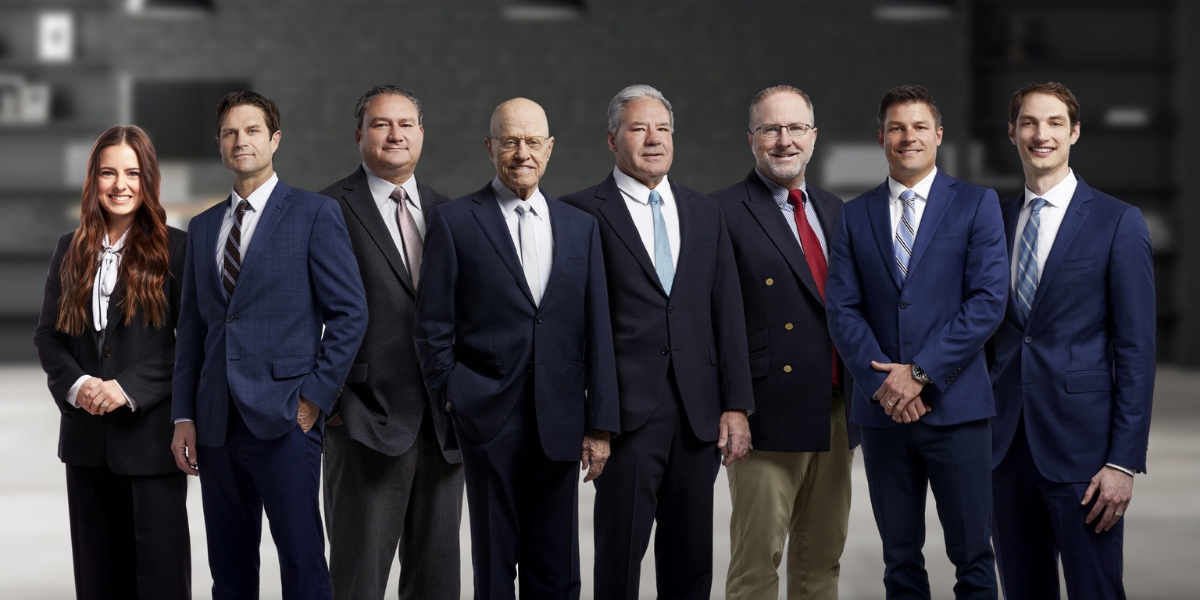
The firm employs 7 nationally acclaimed lawyers whose work has earned recognition from The Inner Circle of Advocates, Martindale-Hubbell AV Preeminent, and Best Lawyers in America. Its attorneys have also received Super Lawyers recognition, including rankings among the Top 10 in Missouri and Kansas and multiple Lawyer of the Year selections.

That standing reflects decades of courtroom experience taking on negligent drivers, corporations, and insurance companies, the kind of opponents who count on injured people not having strong representation.

Communication and Care That St. Louis Clients Can Count On

While the firm’s courtroom record is built on aggressive advocacy, its reputation with clients rests on something quieter: clear communication and genuine care during one of the hardest periods of a person’s life.

Strong Law has earned consistently positive reviews from the clients it has represented. As one recent client shared:

“I cannot say enough wonderful things about Strong Law Firm, P.C. and the outstanding representation I received. From the very beginning, they treated me with professionalism, compassion, and genuine care throughout every step of the process. Their communication was exceptional. They kept me informed, answered my questions thoroughly, and always made me feel like my case truly mattered.”

That level of attentiveness reflects the firm’s broader philosophy. Injured clients are not treated as case numbers. They are neighbors who deserve clarity, respect, and consistent support from the first phone call through the final resolution.

No Fee Unless the Firm Recovers Compensation

A common concern for injured people is whether they can afford experienced legal representation while facing medical bills and lost income. Strong Law addresses that concern directly.

All injury cases are handled on a contingency fee basis, meaning clients pay no attorney fees unless and until the firm recovers compensation for them. Consultations are free, and there is no obligation to move forward.

This approach ensures that the quality of a person’s legal representation is not determined by the size of their bank account, but by the strength of their case.

About Strong Law, P.C.

Founded in 1976, Strong Law, P.C. is a personal injury and product liability law firm with more than 45 years of trial experience. The firm has secured significant verdicts and settlements for injured clients and their families and is known for consistently positive client reviews.

From offices in St. Louis and Springfield, the firm serves clients across Missouri and Northwest Arkansas in cases involving semi-truck, motorcycle, and car accidents, product liability, gas explosions, construction site injuries, brain and spinal cord injuries, slip and fall accidents, wrongful death, boating accidents, bad faith insurance, commercial litigation, and medical malpractice.

Learn More About Strong Law, P.C. in St. Louis

Residents across St. Louis, Columbia, St. Charles, and the surrounding communities seeking experienced personal injury representation can learn more by visiting the firm’s official website or by contacting the St. Louis office directly. You can also stay up to date by checking out their YouTube channel.

The St. Louis office is located at 5100 Daggett Ave STE B, St. Louis, MO 63110, and can be reached at (314) 940-8300. The firm can also be reached by email at injury@stronglaw.com.

With a commitment to clear communication, decades of trial experience, and a focus on holding negligent parties accountable, Strong Law, P.C. continues to stand between injured clients and the corporations and insurers responsible for their harm.


US Factory Output Grows as Manufacturing Jobs Decline

US manufacturing activity expanded in June as factories reported stronger output and higher order volumes, while hiring conditions weakened across the sector. The latest S&P Global flash PMI survey showed that production continued to improve, but its employment measure fell below the growth threshold and reached its lowest reading since May 2020.

The data presented a mixed view of the US industrial economy. Manufacturers increased production to meet stronger demand and respond to earlier purchasing activity, but many companies also reduced headcounts as they managed costs and remained cautious about the outlook.

According to S&P Global, the US Manufacturing PMI rose to 55.7 in June from 55.1 in May. That marked the highest reading since May 2022. A reading above 50 signals growth, while a reading below 50 signals contraction.

The survey’s Manufacturing Output Index also increased, rising to 57.7 from 56.6 in May. S&P Global said the reading marked a 59-month high and reflected the fastest production growth since July 2021.

Factory employment moved in the opposite direction. Reuters reported that S&P Global’s manufacturing employment index fell to 47.0 in June from 51.6 in May. That was the lowest reading since May 2020 and indicated contraction in manufacturing headcounts.

US Factory Output Records Increase In June

The June data showed stronger activity across US manufacturing as production and new orders improved. S&P Global said manufacturing output grew at the fastest rate since July 2021, supported by the largest rise in new orders since April 2022.

The increase reflected stronger demand from customers as well as purchasing decisions made earlier than usual. Some businesses appeared to bring forward orders to protect against possible supply disruptions, transportation delays, or higher costs.

This strategy, often referred to as front-loading, can temporarily increase demand for manufactured goods. When customers place orders earlier than planned, factories may raise production schedules to meet delivery needs and maintain inventory availability.

Input buying also increased sharply. S&P Global said factory purchasing rose at the fastest pace since September 2021, while input inventories recorded one of the largest increases in the survey’s history.

Those figures suggest that manufacturers and their customers were focused on securing materials and finished goods before potential disruptions affected availability or pricing.

Manufacturing Hiring Falls Despite Stronger Production

While production improved, employment conditions weakened. The manufacturing employment index dropped to 47.0, below the 50 level that separates expansion from contraction.

This does not mean official government payroll data showed the same decline. The figure comes from S&P Global’s survey of manufacturing companies, which measures whether firms are reporting higher or lower employment levels compared with the prior month.

The drop still matters because it shows a clear shift in hiring sentiment among manufacturers. Companies reported lower headcounts even as production increased, suggesting that businesses were trying to meet demand without adding labor.

Several factors may explain the split between output and employment. Manufacturers may be relying on existing staff, productivity improvements, automation, or tighter scheduling to manage higher production. Companies may also be cautious about hiring if they believe the recent increase in demand could be temporary.

S&P Global’s report said employment fell for a second straight month across the private sector. Manufacturing headcounts were cut at the fastest rate since the early 2020 lockdown period.

New Orders And Inventory Planning Support Activity

New orders played a major role in the stronger manufacturing reading. S&P Global said factory new orders rose at the fastest pace in more than four years.

That increase helped support production and purchasing activity across the sector. When order books improve, manufacturers often increase output, buy more inputs, and adjust schedules to meet customer demand.

However, the report also noted that part of the increase may have been driven by precautionary stock building. Businesses may have placed orders earlier to reduce exposure to supply issues or price increases.

This distinction is important. Stronger orders can signal better underlying demand, but front-loaded purchasing can also pull future demand into the current period. If customers already bought goods earlier than planned, factories may not see the same level of order growth in later months.

For that reason, the June figures show both strength and uncertainty. Manufacturing output improved, but some of the increase may reflect temporary inventory strategies rather than a broad and lasting acceleration in demand.

Price Pressures Remain Elevated

The June survey also showed continued price pressure within manufacturing, though some cost measures eased from May.

Reuters reported that S&P Global’s index of prices paid by factories for inputs fell to 71.2 in June from 75.3 in May. The decline suggested that input cost inflation cooled slightly, but the reading remained high.

Manufacturers also continued to raise selling prices. The output prices index eased to 61.0 from 63.1 in May, showing that companies were still passing higher costs to customers, but at a slower pace.

Elevated input and output prices remain important for manufacturers because they affect margins, purchasing decisions, and customer demand. If costs stay high, companies may limit hiring even when production rises.

Cost control appeared to be one reason employment weakened in June. Manufacturers may have chosen to protect margins by reducing labor expenses or avoiding new hiring commitments.

Industrial Sector Shows Mixed Signals

The June manufacturing data showed a sector with stronger production but weaker labor conditions. Output and new orders improved, while the employment index fell into contraction.

This split creates a more complex picture than a simple manufacturing rebound. Factories were busier, but they were not necessarily adding workers. In some cases, they were reducing staff.

That matters because manufacturing is often viewed as a signal for broader economic activity. Rising factory output can point to stronger demand for goods, materials, components, and transportation services. Falling employment, however, can suggest that companies remain cautious about future demand or cost conditions.

The latest figures also show how inventory planning can influence manufacturing activity. Businesses that expect supply disruptions or higher prices may place orders earlier, giving factories a near-term boost. But that boost may fade if future orders slow after inventory needs are met.

Trent Harrison’s The Diet-Proof Body: A Balanced Approach to Fitness and Wellness

Trent Harrison, the founder and head coach of Ransomed Bodies Training, is preparing to release his upcoming book, The Diet-Proof Body: 5 Simple Habits to Lose Fat, Keep It Off, and Escape Diet Prison for Good. With years of experience in the fitness industry, Trent has developed a coaching methodology that encourages individuals to focus on creating sustainable fitness habits without relying on extreme diets or rigorous workout routines. This book offers a fresh perspective on achieving long-term health by emphasizing the importance of balance and flexibility in everyday life. At its heart is a simple commitment: Eat What You Love. Lose What You Don’t.

Embracing Consistency Over Perfection

In a world where fitness trends often focus on quick fixes and perfection, Trent Harrison’s approach stands out. For many people, fitness can feel like being trapped in diet prison, with unrealistic expectations leading to burnout. In his new book, Trent aims to provide a more achievable path by focusing on building lasting habits that are adaptable to the challenges of real life. His strategy is about finding consistency, not perfection, in fitness and lifestyle choices.

The Diet-Proof Body is built on five simple habits: Mindset, Meals, Muscle, Movement, and Mission. These principles guide readers in creating a well-rounded and sustainable approach to fitness, focusing on both physical and mental well-being.

Understanding the Core of the 5M Strategy

Each of the five components of the 5M Strategy plays a critical role in helping individuals achieve balanced health:

Mindset serves as the first step in the process. Trent encourages readers to shift their focus away from perfection and extreme willpower. Instead, the emphasis is on developing a resilient mindset that allows individuals to bounce back from setbacks without losing sight of their long-term goals. This mindset shift is crucial in maintaining consistency, even when life becomes hectic.

Meals focus on the idea that food should fuel the body without guilt or restriction. Reflecting the book’s core philosophy of Eat What You Love. Lose What You Don’t, Trent advocates for a more flexible approach to meals that aligns with individual preferences and needs. By eliminating the pressure of “perfect” eating, the strategy promotes a healthier, more sustainable relationship with food.

Muscle emphasizes the importance of strength training in maintaining overall health. While fitness goals vary from person to person, Trent believes that building muscle not only improves body composition but also supports overall health as people age. Strength training is presented as a crucial part of a balanced fitness routine that can have lasting benefits for physical well-being.

Movement encourages staying active throughout the day, even outside of structured workouts. Trent promotes daily movement habits like walking, stretching, and reducing sedentary behavior. These small changes add up and contribute to long-term health without the need for intense exercise sessions.

Mission is about having a deeper purpose behind fitness. Trent suggests that having a clear personal mission or reason for pursuing health and fitness can provide the motivation needed to stay on track over the long term. By focusing on a mission beyond just appearance, individuals are more likely to maintain their fitness habits and see them as part of a larger life purpose.

Trent Harrison’s Approach to Coaching

Before becoming a full-time fitness coach, Trent Harrison worked as a Physician Assistant specializing in orthopedic surgery. His medical background gave him a strong understanding of the body and its mechanics, but he soon realized that his true passion was helping people build sustainable habits that would improve their overall health. This led him to leave the medical field and transition into fitness coaching.

Trent’s coaching style is built around combining evidence-based fitness principles with a mindset-driven approach. He believes that true success in fitness comes from creating small, consistent changes rather than pursuing quick fixes. Trent encourages his clients to adopt a balanced perspective that integrates physical health with mental well-being.

The Importance of Sustainable Fitness

Trent Harrison’s 5M Strategy promotes a more balanced approach to fitness by focusing on sustainable habits that can be maintained over time. Instead of encouraging extreme workouts or restrictive diets, Trent’s strategy offers a flexible framework that can adapt to individual needs and lifestyle changes. The goal is to help readers lose fat, keep it off, and escape diet prison for good.

The book is designed to help individuals build fitness habits that don’t require drastic lifestyle changes or unrealistic expectations. By focusing on mindset, balanced meals, strength training, regular movement, and a clear mission, The Diet-Proof Body offers a comprehensive approach to health that aligns with the realities of everyday life.

What to Expect from The Diet-Proof Body

Trent Harrison’s The Diet-Proof Body: 5 Simple Habits to Lose Fat, Keep It Off, and Escape Diet Prison for Good is set to be released on [date]. As the launch date approaches, Trent will be sharing more information, updates, and sneak peeks into the book’s content. The book is set to be a valuable resource for anyone looking to build lasting fitness habits in a way that fits their lifestyle.

This approach to fitness is grounded in Trent’s years of experience coaching clients, helping them develop habits that are both practical and sustainable. Readers can look forward to a book that provides not only fitness strategies but also insights into the mental and emotional aspects of creating lasting change. Because at the end of the day, you really can Eat What You Love and Lose What You Don’t.

For more information about the upcoming book or to stay updated on its release, follow Trent Harrison on Instagram at @trizzlemanfitness.


Disclaimer: The information provided in this article and the upcoming book The Diet-Proof Body is for educational purposes only. It is not intended as medical, nutritional, or therapeutic advice. Always consult with a qualified healthcare professional before making changes to your diet, exercise routine, or lifestyle, especially if you have a medical condition, are pregnant, or are taking medication. Individual results will vary, and the strategies discussed are based on general principles and personal coaching experience.