Economic Insider

US S&P Composite PMI Flash Reaches Eight-Month High in July


The US S&P Composite PMI Flash rose to 53.6 in July 2026, exceeding expectations and marking the strongest pace of private-sector business expansion in eight months. The latest survey from S&P Global showed stronger services activity, continued manufacturing expansion, and higher inflation pressures, offering an updated assessment of economic conditions for businesses and financial markets.

Key Takeaways

  • The US S&P Composite PMI Flash increased to 53.6 in July, above forecasts and June’s reading.
  • Stronger services activity drove overall private-sector growth.
  • Manufacturing remained in expansion territory, although output growth slowed.
  • Business confidence improved while employment returned to modest growth.
  • Input costs and selling prices accelerated, indicating renewed inflation pressures.


The latest US S&P Composite PMI Flash showed that private-sector business activity strengthened in July as services firms reported faster growth and manufacturers maintained expansion despite moderating output. The preliminary survey reading of 53.6 exceeded market expectations of 52.2 and improved from June’s 51.9, signaling a faster pace of economic activity.

A Purchasing Managers’ Index (PMI) reading above 50 indicates expansion, while a reading below 50 signals contraction. July’s increase represented the strongest composite reading since late 2025 and suggested improved business conditions across much of the U.S. economy.

The survey also indicated that the pace of activity was consistent with approximately 2% annualized gross domestic product growth during the third quarter, based on S&P Global’s assessment of the data. This outlook complements recent analysis of inflation data delaying Federal Reserve rate cuts as policymakers continue evaluating incoming economic indicators.

US S&P Composite PMI Flash Reaches 53.6 in July

The composite index combined results from both the manufacturing and services sectors to provide an early measure of overall private-sector activity.

July’s reading of 53.6 reflected stronger demand across service-oriented businesses while manufacturers continued to report expansion despite slower production growth. The result exceeded economists’ forecasts and represented a noticeable improvement from the previous month’s level.

The preliminary survey was conducted between July 9 and July 23, covering approximately 650 manufacturing companies and 500 service providers across the United States.

Business confidence also improved during the survey period, reaching its highest level in eight months as firms reported improved expectations for future activity.

The latest figures provide one of the earliest monthly indicators of business conditions before many official government economic reports become available.

Services Activity Drives Overall Business Expansion

Services Business Activity Index Records Stronger Growth

The services sector accounted for most of the improvement in the July composite reading.

The Services Business Activity Index increased to 53.6 from 51.2 in June, indicating stronger expansion across industries including professional services, finance, transportation, hospitality, healthcare, and other consumer-facing businesses.

Higher business activity within services offset slower momentum in manufacturing production and lifted the overall composite index to its highest level in eight months.

Service providers also reported stronger incoming business, supporting increased activity throughout July.

The survey showed that business expectations improved alongside higher activity levels, suggesting firms remained optimistic about near-term operating conditions.

Because services represent the largest share of the U.S. economy, stronger performance in this sector had a significant influence on the composite PMI reading. The latest business survey also adds context to ongoing discussions surrounding Kevin Warsh’s Federal Reserve task forces and proposals affecting central bank policy and operations.

Manufacturing Output Moderates While Employment Improves

Manufacturing Output Slows Despite Continued Expansion

Manufacturing continued to expand during July, although growth moderated compared with the previous month.

The Manufacturing PMI registered 53.8, remaining largely unchanged from June’s reading of 53.9.

Output growth slowed more noticeably. The Manufacturing Output Index declined to 53.6 from 56.2 in June, marking a four-month low while remaining above the expansion threshold.

The figures indicated that manufacturers continued increasing production, although the pace eased compared with earlier in the summer.

The survey did not indicate a contraction in factory activity, but it showed that manufacturing contributed less to overall business growth than the services sector during July.

Employment Returns to Growth

Employment conditions also improved modestly.

Businesses reported a slight increase in hiring, marking the first expansion in employment after three consecutive months without workforce growth.

Although the pace remained limited, the improvement suggested that firms responded to stronger business activity by adding staff where needed.

The employment component formed part of a broader improvement in business sentiment recorded during the survey period.

Inflation Pressures Strengthen Across the Private Sector

Input Costs Reach a 14-Month High

While business activity strengthened, companies also reported faster increases in operating costs.

Input cost inflation reached its highest level in 14 months, indicating that businesses faced higher expenses for materials, supplies, transportation, and other operating inputs.

The survey identified supply-chain pressures linked to geopolitical developments in the Middle East as one factor contributing to longer supplier delivery times.

Higher operating costs affected both manufacturers and service providers during July.

The increase in business expenses added another data point for assessing inflation conditions within the private sector. Fiscal conditions also remain part of the broader economic picture, including recent reporting on rising federal deficit interest costs that continue to influence long-term budget discussions.

Selling Price Inflation Accelerates

Companies also reported raising prices charged to customers at a faster pace.

Selling price inflation accelerated to its strongest level since August 2022, according to the survey.

The combination of stronger demand and higher operating costs contributed to increased pricing activity across surveyed businesses.

The data suggested that inflation pressures remained present even as overall economic activity strengthened during July.

Price measures within PMI surveys are closely monitored because they provide an early indication of inflation trends before broader consumer price reports become available.

Market Implications Following the Latest PMI Data

The July PMI figures presented a combination of stronger business activity and firmer inflation pressures.

The composite reading pointed to faster private-sector expansion, while higher input costs and selling prices indicated continued pricing pressure across the economy.

S&P Global stated that the survey results were consistent with approximately 2% annualized GDP growth during the third quarter.

The survey also noted that temporary factors may have influenced July activity, including spending associated with the FIFA World Cup and celebrations connected with the USA 250 bicentennial.

Final PMI results are scheduled for release in early August after additional survey responses are incorporated into the completed monthly reports.

The flash release serves as an early snapshot of business conditions and is widely followed by businesses, economists, policymakers, and financial market participants because it provides timely information on output, employment, demand, and inflation before many official economic indicators become available.

Frequently Asked Questions

What is the US S&P Composite PMI Flash?

The US S&P Composite PMI Flash is a preliminary monthly indicator produced by S&P Global that measures business activity across the manufacturing and services sectors. A reading above 50 indicates expansion, while a reading below 50 indicates contraction.

Why did the US S&P Composite PMI Flash rise in July 2026?

The index increased primarily because services activity strengthened during July, while manufacturing remained in expansion territory despite slower output growth.

How did the services sector contribute to the latest PMI reading?

The Services Business Activity Index rose to 53.6 from 51.2 in June, providing the largest contribution to the stronger composite PMI result.

What does the July PMI report indicate about US economic growth?

According to S&P Global, the July survey is consistent with approximately 2% annualized GDP growth during the third quarter based on current business activity.

What inflation signals were reported in the latest PMI survey?

The survey reported that input cost inflation reached a 14-month high and selling price inflation accelerated to its strongest pace since August 2022, indicating higher cost pressures across the private sector.

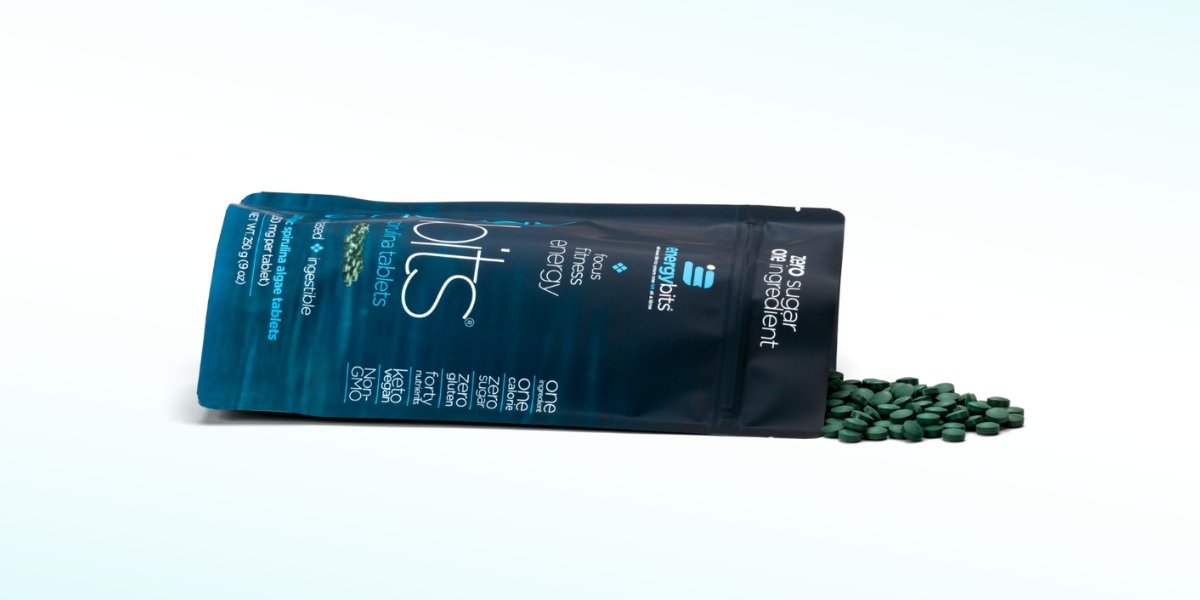
How Boston-Based ENERGYbits Entered the Expanding Market for Spirulina and Chlorella Nutrition Supplements

Over the past ten years, the international market for dietary supplements has been growing steadily due to the increasing popularity of plant-based nutrition, functional foods, and alternative sources of protein. Spirulina and chlorella, which are types of algae tablet form, are included in that trend. International market research companies estimated the market value of spirulina at several hundred million dollars in 2024. They projected its growth for the next decade. The growth of the market was associated with the rising need for vegan protein sources, clean-label supplements, and nutrient-rich products. Pills containing algae have become increasingly popular among online stores focused on wellness in the US and Asia.

Within that market, ENERGYbits Inc. emerged as a niche American brand focused on algae-based whole-food nutrition products sold directly to consumers. The company was founded in Boston, Massachusetts, in 2010 by Catharine Arnston, a former marketing executive who later entered the health and wellness sector. ENERGYbits produces spirulina and chlorella tablets that are marketed as whole food algae, not dietary supplements. The company’s products are sold primarily online through its own website and e-commerce channels. Over time, the business developed a following among consumers interested in fitness, plant-based nutrition, endurance sports, and wellness trends connected to algae products.

The idea for ENERGYbits emerged after a family health issue in 2008. Arnston has stated that her younger sister was diagnosed with breast cancer and advised by doctors to follow an alkaline-focused diet during treatment.

While researching foods associated with that diet approach, Arnston focused on spirulina and chlorella. These are types of microalgae that are grown and processed for human consumption in several regions worldwide. That research became the starting point for her later work on developing a consumer product built around algae-based nutrition.

She later described algae as a largely overlooked food category in North America despite decades of commercial production in Asia. Arnston subsequently left her corporate marketing career and began researching algae cultivation, nutritional studies, and consumer supplement markets before launching the business.

ENERGYbits entered the market at a time when algae supplements remained relatively specialized in the United States. Spirulina products had existed for years through health food retailers. However, very few brands have focused solely on algae tablets for creating an identity. ENERGYbits created its business model around single-ingredient compressed tablets without any use of binders or fillers. The firm released several brand lines based on either spirulina or chlorella. ENERGYbits became the brand line based on spirulina, while RECOVERYbits was based on chlorella. Later product extensions included VITALITYbits and BEAUTYbits. VITALITYbits brought spirulina and chlorella together in a single tablet. BEAUTYbits used spirulina as its base and positioned around appearance-related nutrition.

In November 2016, Arnston appeared on Season 8, Episode 9 of Shark Tank to present ENERGYbits. She asked for $500,000 in exchange for 5 percent equity. That implied a $10 million valuation. The investors did not invest. They cited concerns about valuation and how the product was positioned in the market.

Regardless, this television appearance made ENERGYbits known to many more people than ever before and became one of the most prominent media appearances for the company. After the episode aired, ENERGYbits received some publicity from wellness magazines, nutrition blogs, and consumer-oriented websites.

Apart from television, the company gained visibility through podcasts, wellness conferences, and online marketing. Arnston spoke at many events about algae nutrition, longevity trends and plant-based food consumption. ENERGYbits did not pursue retail distribution channels and focused on direct-to-consumer selling via subscriptions.

The company has also received industry recognition during its development. In 2014, ENERGYbits was included in BostInno’s “Fifty on Fire” list in the sports and fitness category. The recognition focused on local startups and early-stage companies gaining attention in Boston’s business scene.

In January 2015, Entrepreneur Magazine listed ENERGYbits as runner-up in its Project Grow Contest. The contest highlighted emerging companies and entrepreneurial performance. Both mentions were linked to business visibility and startup activity rather than independent assessment of algae nutrition or scientific claims.

Coverage from trade publications such as FoodNavigator-USA later examined the company within the wider context of algae nutrition and sports supplementation, particularly as plant-based consumer products became more common in the American supplement market.

ENERGYbits is currently continuing its operations as a privately-owned wellness company specializing in spirulina and chlorella tablets sold in the US. The company’s products still remain focused on algae nutrition, which is a range of products that have gradually grown popular, moving from being just a specialty product at health food stores to forming an essential part of modern wellness. The development of the company reflects a growing consumer interest in plant-based products, alternative proteins, and direct-to-consumer health solutions.

Disclaimer: These statements have not been evaluated by the Food and Drug Administration and are not intended to diagnose, treat, cure, or prevent any disease. Consult a qualified healthcare professional before making dietary changes.

The Taste of Home That Found Me Again and How Irish Breakfast Box Turned Homesickness into a Proper Saturday Morning

By: Bridget Mulroy

There are certain things you can leave behind when you move across the Atlantic.

You learn to live without familiar roads. You adjust to different weather. You eventually stop converting every distance into kilometers and every temperature into Celsius. You even find yourself accepting that “bacon” doesn’t always mean what you think it means.

But there is one thing an Irish person never quite leaves behind.

The breakfast.

Ask any Irish emigrant what they miss most and somewhere, woven between family gatherings, familiar accents and the smell of turf fires after rain, you’ll hear someone quietly say, “I’d give anything for a proper fry.”

I know because I’ve said those very words myself.

Living in New York and New Jersey has given me countless opportunities, wonderful friendships and a life I’m incredibly grateful for. Yet every Saturday morning, I still find myself longing for the ritual that shaped weekends back home. The sound of rashers sizzling in the pan. The unmistakable aroma of black and white pudding. Thick sausages browning beside mushrooms and tomatoes. Eggs cooked just the way Mam liked them. Heinz beans warming gently. Brennan’s bread waiting beside real butter. Barry’s Tea steeping patiently in the pot while everyone drifted into the kitchen.

It’s never just breakfast.

It’s memory.

It’s family.

It’s Ireland.

As we say, Ní bhíonn aon tinteán mar do thinteán féin (there’s no hearth like your own).

For years I searched for pieces of that feeling across America. I’d stumble upon one ingredient here, another there, but something was always missing. The sausages weren’t quite right. The rashers lacked that familiar flavor. The pudding simply wasn’t what I remembered.

Then I discovered Irish Breakfast Box.

And for the first time in years, breakfast tasted like home.

Founded by fellow Irish natives Niall Boyle and Noel Kerin, both part of New York’s Irish community and the owners and bartenders behind The Blasket Pub in Manhattan, Irish Breakfast Box never feels like a company trying to sell nostalgia. Instead, it feels like two emigrants who understood exactly what the rest of us had been quietly missing. They launched the business from an apartment in Astoria, Queens, in 2022, driven by a simple idea: bring an authentic Irish breakfast experience to homes across America without compromising on quality or authenticity. Today, they ship to customers across the contiguous United States while remaining remarkably true to that original mission.

That authenticity begins long before the box reaches your front door.

Working alongside the founders is an Irish butcher with more than thirty years of experience, blending proprietary Irish spice recipes with premium meats produced in the United States. It’s an extraordinary balance of tradition and practicality, recreating the flavor profile generations of Irish families recognize instantly while ensuring everything is prepared fresh for American customers.

You can taste that experience in every rasher, every sausage and every slice of pudding.

Nothing feels like an imitation.

Everything feels familiar.

Ordering couldn’t be simpler. The website is refreshingly straightforward, allowing you to choose exactly the experience you’re after. Whether you’re feeding yourself, a couple, an entire family, or planning a full Irish breakfast for friends coming round on a Sunday morning, there are boxes to suit every appetite. Their Full Irish Breakfast Box remains the flagship experience, but I found myself smiling while exploring the other collections too.

Perhaps all you really want are the meats. There’s a dedicated Irish Breakfast Meats Box. Maybe you’re craving an authentic Ulster Fry, complete with the regional favorites that spark endless debates across the island. There’s a box for that too. If breakfast sandwiches are your weakness, they’ve thought of that. You can even order individual favorites like back bacon rashers, traditional Irish sausages, or black and white puddings whenever the craving strikes. Beyond breakfast, there are thoughtfully curated Treat Boxes, Tea Time Boxes and beautifully assembled Gift Boxes that make sending a little piece of Ireland to someone else feel wonderfully personal.

Then comes the delivery.

This is where Irish Breakfast Box quietly earns your trust.

Every order is prepared fresh before being frozen and carefully packed inside custom-built insulated boxes with ice packs. Vegetables are thoughtfully layered alongside the meats, protecting every ingredient during transit. Eggs, arguably the greatest logistical challenge of any breakfast delivery, arrive remarkably intact, something that feels almost miraculous the first time you lift open the lid. Orders leave every Wednesday, specifically timed to arrive within one to two days so your breakfast is waiting just in time for the weekend fry-up. It’s a deceptively simple process, but one that reflects an extraordinary amount of planning and care.

Opening the box is an experience all its own.

The insulated packaging lifts away.

The cold air escapes.

One by one, the ingredients reveal themselves.

Barry’s Tea.

Brennan’s bread.

Perfect rashers.

Beautifully seasoned sausages.

Black pudding.

White pudding.

Fresh vegetables.

Real butter.

Everything exactly where it should be.

For a brief moment, standing in my American kitchen, I wasn’t thousands of miles from Ireland anymore.

I was home.

As the frying pan warmed and the first rasher began to sizzle, the kitchen slowly filled with an aroma I’d spent years trying to recreate. The scent reached somewhere memory alone never quite could. Before the first bite, I already knew this breakfast was different.

Then came that first mouthful.

The sausage had the unmistakable seasoning I’d almost forgotten.

The rasher tasted exactly as it should.

The puddings had that familiar richness that only seems to exist in Ireland.

Even the tea somehow completed the picture.

Sláinte (to good health), I found myself saying quietly before taking another sip.

What impressed me almost as much as the food itself was the customer service. Every interaction carries that unmistakable Irish warmth. Questions are answered with genuine enthusiasm rather than scripted replies. There’s an ease to the conversation, an authenticity that feels less like speaking with customer support and more like chatting with someone behind the bar of your local back home.

Perhaps that’s no coincidence.

Hospitality has always been at the heart of what Noel and Niall do.

One of their guiding beliefs says everything about the company they’ve built:

“At Irish Breakfast Box, we believe that every morning should start with a taste of Ireland, and our curated boxes bring the heartwarming flavors of Irish breakfast to homes across the country.”

It’s difficult to improve upon that.

Irish Breakfast Box isn’t simply delivering breakfast.

They’re delivering tradition.

They’re delivering memory.

They’re delivering conversations around the kitchen table, laughter between family members, stories that somehow always sound better over another cup of tea, and that unmistakable feeling of belonging that so many Irish people spend years trying to recreate abroad.

As another Gaelic saying reminds us, Ar scáth a chéile a mhaireann na daoine (we live in one another’s shelter).

Sometimes that shelter isn’t a place.

Sometimes it’s a breakfast.

And sometimes, all it takes is opening a carefully packed box from Port Washington, lifting out the ingredients one by one, and realizing that home has quietly found its way back to you.

For those of us fortunate enough to call America home while forever carrying Ireland in our hearts, that’s a gift beyond measure.

Irish Breakfast Box Website

Irish Breakfast Box Instagram

The Blasket Pub

Meet Niall and Noel – Navigating New York

Why America’s 36 Million Small Businesses Are Outgrowing Traditional Banking

By Maha Khan-Ahmad

Small businesses power nearly half of America’s private workforce, yet many entrepreneurs argue the financial system still isn’t built around how modern businesses actually operate. As artificial intelligence reshapes finance, some founders believe banking’s next evolution won’t be faster transactions, it will be smarter guidance.

America’s small businesses have never been more important, or more complex, to run.

According to the U.S. Small Business Administration’s Office of Advocacy, more than 36.2 million small businesses operate across the United States. Together, they account for 99.9% of all businesses, employ 62.3 million Americans (45.9% of the private sector workforce), and contribute roughly 43.5% of U.S. GDP. Yet despite their economic significance, many entrepreneurs argue the financial system supporting them hasn’t evolved alongside the realities of modern business ownership.

Today’s founders aren’t simply managing invoices and checking balances. They’re juggling payroll, hiring, inventory, taxes, marketing, fundraising, supply chains and cash flow, often all before lunch. Yet when they turn to their financial institutions, many say they still encounter a system designed to sell products rather than solve problems.

For entrepreneur, investor and fintech founder Neema Mahdavian, that disconnect became impossible to ignore.

“Banks have become very good at managing money, but they’ve stopped helping entrepreneurs build businesses.”

Mahdavian didn’t arrive at that conclusion through theory. He arrived there through experience.

Searching for a more modern banking experience, he moved to a fintech bank expecting innovation. Instead, he found an ecosystem built almost entirely around self-service.

“When I needed real guidance, I was left talking to an AI that couldn’t understand the context of my business or help me make decisions,” Mahdavian says. “The technology was efficient, but it wasn’t intelligent.”

Hoping for something different, he visited several traditional banks.

What he found wasn’t relationship banking. It was a sales process.

“Every conversation centered around opening another account, applying for another product, or meeting internal quotas,” he says. “No one asked how my business was doing, what challenges I was facing, or how they could help me grow.”

That experience ultimately inspired Mahdavian to launch QBiz, an AI-powered business banking platform that aims to combine artificial intelligence with personalized financial guidance. But he believes the issue extends well beyond any single institution.

“I don’t think banks don’t care about entrepreneurs,” he says. “I think the system they’re built around doesn’t allow them to truly understand them.”

Banking is still optimized for products, not businesses

Traditional banks excel at what they were designed to do: safeguard deposits, manage risk, facilitate payments and provide financial products.

The challenge, Mahdavian argues, is that entrepreneurs aren’t looking for products. They’re looking for partners.

“Business owners don’t wake up thinking about checking accounts or credit cards,” he says. “They’re trying to make payroll, improve cash flow, hire employees, negotiate with vendors, manage marketing and figure out how to grow. Banking is only one piece of that puzzle.”

Through his work investing in startups at Poseidon Ventures and guiding companies through PGL Management, his business management and tax firm, Mahdavian says he’s watched founders make costly financial decisions despite receiving well-intentioned advice.

“I’ve seen companies lose thousands of dollars through avoidable taxes, unnecessary financing costs or inefficient capital decisions,” he says. “Not because anyone had bad intentions, but because the advice was based around a banking product rather than the business as a whole.”

It’s a structural challenge, he believes, rather than an individual one. Relationship managers are often measured by lending volume, deposits and product adoption instead of the long-term success of the businesses they serve.

The relationship banking entrepreneurs actually want

If Mahdavian could redesign business banking from scratch, he says three changes would come first.

The first is restoring genuine relationship banking.

“There was a time when your banker knew your business, understood your goals and was genuinely invested in your success,” he says. “Today, many businesses only hear from their bank when something goes wrong or when they’re being sold another product.”

Second, he believes banks need to move beyond a sales-first culture.

“The best bankers can completely change the trajectory of a company,” he explains. “They can introduce entrepreneurs to investors, connect them with capital, help them avoid costly financial mistakes or simply ask the right questions at the right time. That’s difficult when success is measured by quarterly quotas instead of businesses helped.”

Finally, Mahdavian argues every entrepreneur, not only large corporate clients, should have access to intelligent financial guidance.

“A business bank should do far more than hold deposits and process payments,” he says. “It should help owners understand cash flow, anticipate challenges, identify opportunities and make smarter decisions every day.”

Why better business banking is an economic issue

The consequences extend far beyond individual companies.

Small businesses collectively employ nearly half of America’s private workforce. When founders spend valuable time navigating disconnected financial tools, waiting weeks for lending decisions or searching for fragmented advice, those inefficiencies compound across the broader economy.

“I’ve worked with founders who had great products, talented teams and strong demand,” Mahdavian says. “What slowed them down wasn’t a lack of ambition. It was making avoidable financial decisions because they didn’t have proactive guidance.”

He believes the ripple effects are significant.

“When millions of entrepreneurs are underserved, innovation slows. Hiring slows. Local economies suffer. Businesses that could have become tomorrow’s industry leaders never reach their full potential.”

The next AI battle won’t be about chatbots

Artificial intelligence has become banking’s latest competitive battleground, but Mahdavian believes the industry is asking the wrong question.

“My unpopular opinion is that most banks are using AI to protect themselves, not to empower their customers.”

Today’s AI investments, he notes, are largely concentrated around fraud detection, compliance monitoring, operational efficiency and customer-service automation. Those applications improve banking operations, but they don’t necessarily improve entrepreneurial outcomes.

“Many banks market AI, but what they’re really offering is a chatbot,” he says. “A chatbot can answer questions or reset a password. That’s useful, but it doesn’t fundamentally help a business owner improve cash flow, identify growth opportunities or make better financial decisions.”

Instead, he envisions AI functioning more like a financial companion, learning about a business over time, recognizing patterns across financial and operational data and proactively surfacing recommendations before challenges become crises.

Just as importantly, he doesn’t believe AI should replace human relationships.

“We’re combining AI with real relationship banking,” Mahdavian says. “Technology should make it easier, not harder, to connect with experienced people when you’re making an important financial decision.”

Banking’s next chapter

For decades, innovation in banking has largely been measured through convenience. Faster payments, better mobile apps and digital account opening transformed how businesses access financial services.

The next phase may demand something different.

As artificial intelligence matures and entrepreneurs increasingly expect personalized insights rather than transactional services, competitive advantage may no longer come from offering another banking product. It may come from becoming a trusted advisor.

Whether traditional financial institutions evolve to meet those expectations, or whether a new generation of AI-first companies reshapes business banking altogether, remains to be seen.

But one thing is becoming increasingly clear: America’s 36 million small businesses aren’t simply looking for a place to store their money anymore.

They’re looking for a financial partner that helps them build what’s next.