Economic Insider

Dr. Shirley Luu Launches “FIA ASAP!” to Help Americans Navigate Retirement Planning


By: Lennard James

Financial professional, educator, and author Dr. Shirley Luu has officially launched her new book, FIA ASAP! How Index Annuities Grow and Protect Your Retirement Savings Without Fear of Market Crashes or Recessions with One 3-Letter Word. Now available on Amazon, the book is designed to help individuals and families better understand the financial tools that may be available as they prepare for retirement.

At a time when many Americans are concerned about market volatility, inflation, economic uncertainty, and the possibility of outliving their savings, FIA ASAP! arrives with a timely message: retirement preparation should include both growth potential and financial protection.

Throughout the book, Dr. Shirley Luu introduces readers to fixed indexed annuities, commonly known as FIAs. She explains how these financial products may be used as part of a broader retirement strategy to help protect accumulated savings while offering the potential for interest growth tied to the performance of a market index.

The central message of FIA ASAP! is reflected in three words featured in the book’s launch campaign: grow, protect, and prepare. Dr. Luu encourages readers to grow their savings, protect their financial future, and prepare for the retirement they deserve.

For many people, financial and insurance terminology can feel confusing or intimidating. Dr. Shirley Luu seeks to make the subject easier to understand by presenting complicated ideas in accessible language. Rather than writing solely for financial professionals, she has created a resource for working adults, business owners, families, and retirees who want to become more informed about their financial options.

The book also addresses a common concern among retirement savers: the fear that a significant market decline or recession could damage years of carefully accumulated savings. Although every financial product carries its own terms, conditions, benefits, and limitations, fixed indexed annuities are generally structured to protect from direct market losses while crediting interest according to the provisions of the individual contract.

Dr. Shirley Luu’s book encourages readers to ask important questions before making financial decisions. How much income will they need during retirement? Will their savings last throughout their lifetime? How will inflation affect their purchasing power? What strategies could help protect their principal? How might unexpected healthcare expenses influence their retirement plans?

By beginning these conversations early, individuals can place themselves in a stronger position to make thoughtful and informed choices.

Dr. Shirley Luu brings nearly 25 years of experience in financial services to the project. During her career, she has taught thousands of individuals about financial security, mentored hundreds of aspiring financial professionals, and worked with clients seeking greater stability for themselves and their families. Her work has centered on helping people understand that financial education is not reserved for the wealthy it is an essential resource for anyone who wants to build a more secure future.

Her professional journey has earned her recognition as a respected financial leader and educator. She has received numerous honors for her business leadership, industry service, and commitment to empowering others. Through speaking engagements, workshops, training programs, and personal consultations, she has consistently promoted the importance of financial literacy and long-term preparation.

With FIA ASAP!, Dr. Shirley Luu expands that mission by providing readers with a resource they can study, share, and use to begin meaningful discussions about retirement. The publication is not simply a book launch; it represents another step in her broader effort to make financial knowledge more widely available.

The title itself communicates urgency. “ASAP” reminds readers that preparing for retirement should not be continuously postponed. Whether someone is approaching retirement or still has decades to prepare, developing a clear plan can help create greater confidence about the future.

Dr. Shirley Luu also emphasizes that retirement planning should be personalized. No single strategy is appropriate for everyone. Age, income, savings, risk tolerance, family responsibilities, and long-term objectives must all be considered. Readers should carefully review available options and consult a qualified financial professional before purchasing an annuity or making other significant financial decisions.

The launch of FIA ASAP! comes as families across the country are searching for clearer guidance and greater certainty. Dr. Luu hopes the book will encourage readers to take control of their financial education and move beyond fear when discussing retirement.

Ultimately, FIA ASAP! delivers a message of preparation and empowerment. Financial security rarely happens by accident. It is built through knowledge, discipline, careful planning, and informed decision-making.

Dr. Shirley Luu’s newest book invites readers to start that process today to learn more, ask better questions, protect what they have worked to build, and prepare for a retirement shaped by confidence rather than uncertainty.

FIA ASAP! is now available for purchase on Amazon.

Google Meet Brings AI Notes to In-Person Meetings

Google Meet is extending its Gemini-powered “Take notes for me” feature to face-to-face meetings, allowing eligible users to start note-taking without opening a video call. The rollout broadens Meet’s role in workplace documentation. Here is how the feature works, when it reaches each platform, and what users should know about access and accuracy.

Key Takeaways

  • Users can start a session from the Meet home screen and have Gemini create notes, action items and a transcript.
  • Android rollout began August 11, web rollout was scheduled to start no sooner than August 14, and iOS rollout is set to begin no sooner than August 31.
  • The feature requires an eligible Google Workspace edition or Google AI plan and remains subject to administrator settings.
  • Google cautions that generated summaries can sometimes be incomplete, inaccurate or unavailable.

Once activated, Gemini uses the device near the conversation to document the meeting. After the session ends, Google says the system can produce a structured summary, action items and a complete transcript in a Google Doc. The file is saved to Google Drive, with a link sent by email.

The expansion places Google Meet within a broader shift toward AI tools in business, where software platforms are increasingly adding automated functions to established workplace products.

Google Meet Extends Note Taking Beyond Video Calls

The most notable change is that an in-person meeting no longer has to become a video meeting before Google Meet can document it.

Google’s help documentation says users can capture notes from an existing scheduled meeting space or start the feature for impromptu and casual face-to-face discussions. A user can place an Android phone or tablet near the conversation while Gemini documents what is being said. Note-taking and transcription can also be paused and resumed during the session.

The workflow can accommodate meetings that later become hybrid. If a participant needs to join remotely, Google says the session can transition into a regular video-call flow.

That flexibility may be particularly relevant for workplaces where discussions move between conference rooms and remote participation. Digital meeting platforms have already become part of the infrastructure supporting remote and hybrid work, and the new Meet option extends one of those digital functions into conversations held entirely in person.

The feature does not remove the need for meeting participants to understand when capture is taking place. Google Workspace administrators can require explicit consent before certain meeting functions, including AI note-taking, recording and transcription, are used.

Gemini Creates Notes, Action Items and a Transcript

Google Meet’s in-person workflow is designed to produce several records from the same conversation.

When a meeting ends, Gemini compiles the captured material into a Google Doc. Google says the output can include a structured summary, action items and a full transcript. The document is stored in the Drive account associated with the person who activated the feature, and that person receives the notes by email.

That setup keeps the meeting record within Google Workspace rather than requiring users to transfer notes from a separate application into Docs or Drive.

Google has also been adding more controls to its wider “Take notes for me” system. Users of supported Meet configurations can manage sharing settings and select who receives meeting notes after a session. Workplace or school accounts can be affected by administrator settings and smart-feature controls.

The generated material should not automatically be treated as a flawless record. Google states in its support documentation that meeting summaries can sometimes be incomplete, inaccurate or not generated. Connectivity issues and short meetings can also affect the process, with Google recommending sessions of at least 15 minutes.

For meetings involving detailed instructions or decisions, that limitation means users may still need to review the generated document against the discussion.

The Rollout Varies by Platform and Account

Google is releasing the in-person capability in stages rather than making it immediately visible to every eligible user.

The Android rollout began on August 11, 2026. Google scheduled the web rollout to start no sooner than August 14, while iOS is scheduled to begin no sooner than August 31. Each is described as an extended rollout, meaning feature visibility can take longer than 15 days for some accounts.

Google lists Business Standard and Business Plus, Enterprise Standard and Enterprise Plus, Frontline Plus and Google AI Pro for Education among the eligible workplace and education offerings. Consumer access is also listed for Google AI Pro and Ultra plans.

Account configuration remains another factor. Google says an eligible user may still be unable to select the feature when an administrator has not enabled note-taking or when required smart-feature controls are disabled.

Language support follows the existing “Take notes for me” system. Google currently lists English, French, German, Italian, Japanese, Korean, Portuguese and Spanish for the broader note-taking feature. The in-person option supports one language at a time rather than multiple languages within the same meeting.

Google Meet Gains a Broader Workplace Role

Google Meet Brings AI Notes to In-Person Meetings

Photo Credit: Unsplash.com

The expansion changes where Google Meet can be used without changing the underlying purpose of its note-taking system.

Previously, the product’s AI meeting tools were most closely associated with conversations occurring inside a virtual Meet session. In-person note taking lets the same product document a discussion happening around a table or in an office without requiring participants to appear on camera or formally enter a video conference.

The resulting files also remain connected to tools already used across Google Workspace. Notes are written into Google Docs and stored in Drive, while email provides access to the resulting document.

For organizations already using Google Meet, the change may reduce the need to create a video meeting solely to access automated documentation. Its usefulness will depend on plan eligibility, administrator controls, platform rollout and the accuracy of the generated notes.

Google Meet is therefore expanding from a video-conferencing tool into a meeting capture option that can operate across both virtual and face-to-face settings, while retaining the same need for user review and appropriate consent.

Frequently Asked Questions

What is Google Meet’s in-person AI note-taking feature?

Google Meet now allows eligible users to start “Take notes for me” for face-to-face discussions without first creating a conventional video call. Gemini can capture the meeting and generate a summary, action items and a transcript.

When is the feature rolling out?

Android rollout began August 11, 2026, while web rollout was scheduled to begin no sooner than August 14. Google says the iOS rollout is scheduled to start no sooner than August 31.

Where are Google Meet notes saved?

The notes document is generated after the meeting and saved to the Google Drive of the person who activated the feature. Google also says that person receives the notes document through email.

Can Google Meet AI notes contain errors?

Yes. Google says summaries may sometimes be incomplete, inaccurate or unavailable, including when connectivity problems occur or a meeting is shorter than the recommended duration.

Does every Google Meet user get the feature?

No. Access requires an eligible Workspace edition or Google AI plan, and workplace or school accounts can also be affected by administrator and smart-feature settings.

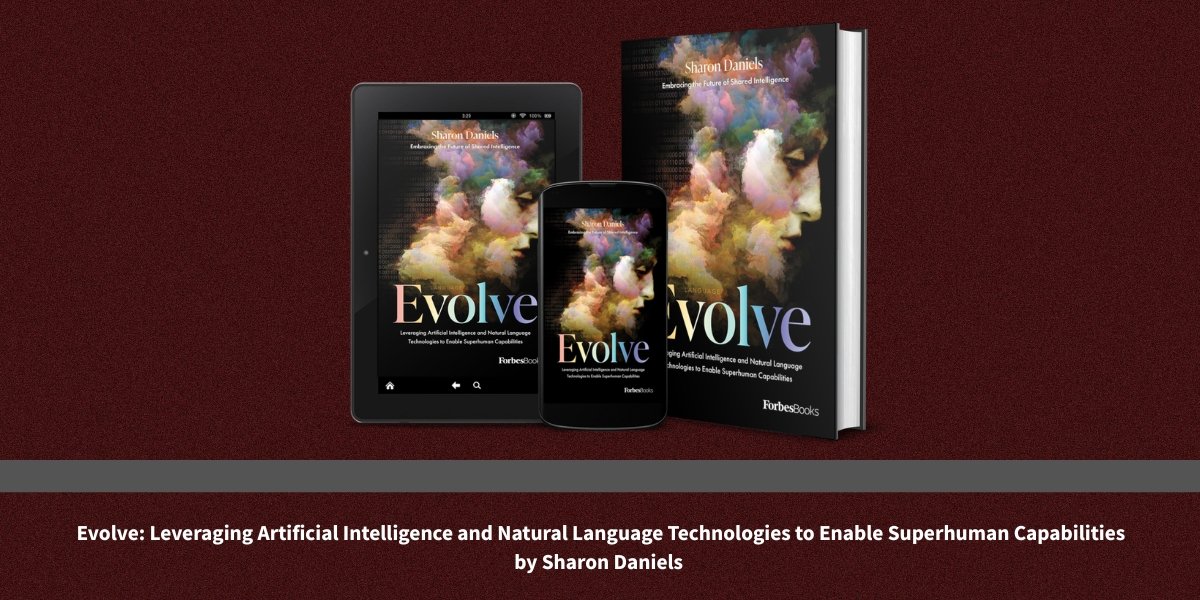
Humanity Is Defined by Language, and Sharon Daniels Just Wrote the Book That Explains What Happens Now That Machines Can Use It Too

By: Vicent Morris

Most books about artificial intelligence start with the technology and work outward toward the human implications. Sharon Daniels starts with humanity, with the specific thing that has always defined us above all else, our capacity for language, and works inward toward the technology from there. That reversal of the usual approach is not a stylistic choice. It is a substantive one, and it produces a book that understands AI in a way that most technology writing never quite manages to achieve, as a development within the long human story of communication rather than as an external force arriving to disrupt it.

Reading this book feels like having a conversation with someone who has genuinely reconciled the excitement and the anxiety that most thoughtful people carry about AI’s rapid advancement, not by dismissing either response but by providing a framework that makes both responses make sense and then shows you what to do with them. Daniels is a Forbes Technology Council member and a technology CEO with more than thirty years of experience building and leading global technology businesses, and that combination of technical authority and business perspective gives the book a grounded credibility that purely philosophical treatments of AI consistently lack. She is not theorizing about what this technology might do. She is describing what it is doing and what it means, from the perspective of someone who has been inside that reality for decades.

The central insight the book builds toward, that adding the power of language to AI’s existing capabilities creates something qualitatively different from anything either humans or machines could produce alone, is one that Daniels develops with real intellectual care rather than simply asserting. The historical journey through language’s role in human evolution, from the first cave paintings to the printing press to the digitization of language itself, gives readers the long view that makes the current moment feel genuinely significant rather than merely exciting. And her treatment of Natural Language Generation as the technology that brings these two streams together, that allows machines to not just process data but to communicate insights from that data in the language that humans actually think and feel and decide in, is the most accessible and most compelling explanation of NLG’s significance available in any single volume.

Daniels writes with a warmth and an optimism that feel earned rather than performed. She has clearly spent enough time watching this technology transform organizations and industries to believe genuinely in its potential to amplify human capability rather than diminish it, and that belief runs through the book as an animating conviction rather than a marketing message. The vision she articulates, of humanity remaining at the heart of AI through the specific vehicle of natural language technology, deserves to be heard widely and taken seriously by everyone navigating the current moment of technological acceleration.

Evolve is the book that shifts the AI conversation from fear or hype toward genuine understanding, and for anyone ready to engage with that understanding seriously and practically, it is exactly the guide they need.

If you are ready to move beyond the fear and the hype surrounding AI and engage with what is actually happening at the intersection of human intelligence and machine capability, Evolve by Sharon Daniels is the book that takes you there with clarity, authority, and genuine warmth. Pick up your copy on Amazon and start understanding the most consequential technological development of our time through the most human lens available.