Economic Insider

Paul Davis Restoration of Mobile, AL Offers Insurance Experience as Gulf Coast Hurricane Season Peaks

By: Grace Walker

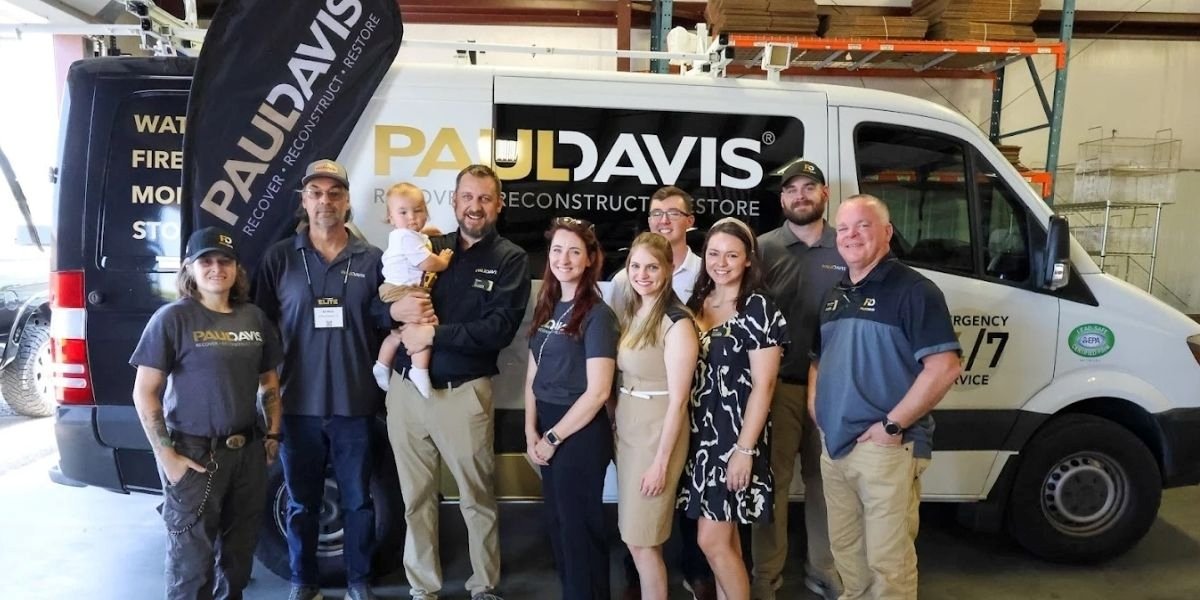
Late summer marks the peak stretch of hurricane season along the Gulf Coast, and homeowners across Mobile and Baldwin County who file a claim this time of year are often navigating the insurance process for the first time. Paul Davis Restoration of Mobile, AL has built its reputation around a team with direct experience inside the insurance industry. The franchise is veteran-owned and led by Stuart Clark, whose own experience going through a major property loss shaped how the company approaches clients moving through similarly difficult moments.

Insurance Experience During Hurricane Season

Much of the team has hands-on background in claims adjusting, forensic engineering, underwriting, and estimating, giving the company a working knowledge of insurance from multiple angles rather than only the contractor’s side of a claim. Clark also serves as President of the Mobile Claims Association, a role that keeps the team in contact with the field adjusters who may review their work, which the company says helps hold it to a high standard.

That responsiveness shows up in response time as well. The team says it answers when clients call and aims to be on-site within hours, and sometimes sooner depending on location, call volume, and current storm conditions. The company notes that inspections may begin within 45 minutes in some cases and that crews of eight to ten can be deployed to begin water extraction when needed.

In Daphne, a coastal Baldwin County community that sees regular storm activity during hurricane season, that kind of response time can influence whether a loss stays contained or becomes a larger claim. Homeowners with an active claim can find more detail on the process on the assign-a-claim page.

A Team Built on Personal Experience

Clark’s own experience with a significant property loss informs how the company handles new clients, many of whom are suddenly displaced from their homes and unsure what happens next. The team walks clients through the difference between mitigation, which typically moves quickly, and reconstruction, which requires more careful planning to get right, so expectations are set clearly from the start.

“We call back, we show up and never leave a customer feeling like they are left behind or alone,” the team said, describing a standard the company holds itself to even during high call volume after a major storm.

In Spanish Fort, where several recent projects have followed plumbing failures rather than storm damage, that same responsiveness applies regardless of what caused the loss. The residential services page outlines how the company supports homeowners through both phases of a project.

Certified, In-House, and Built for the Long Haul

The company trains and certifies its technicians and managers across the areas they handle, from asbestos supervisor certification to water and fire mitigation, a level of credentialing the team says is not always consistent across the broader industry. Contents storage, ultrasonic cleaning, and equipment are all housed and managed in-house, which the company says helps keep projects efficient, even though advanced equipment can make some jobs costly.

For property managers and rental companies, the team says it can break a larger job into phases and coordinate with in-house maintenance staff to help manage costs. In Saraland, where humidity following a water event can create fast-moving mold risk, that in-house equipment access may shorten the time between initial inspection and active remediation. The company offers a 12-month workmanship warranty and says it also honors longer warranty terms provided by certain insurance carriers when applicable.

A Team With Personality

Beyond the technical side, the company leans into a distinct, personable culture. The team describes itself as hospitality-focused and available when clients need help, a reflection of both the company’s Southern roots and its emphasis on responsiveness.

Staff backgrounds range from military service to food service to other industries entirely, a mix the company says shows up in how the team connects with clients from different walks of life.

What Mobile Bay Area Clients Are Saying

Recent client feedback consistently points to thoroughness and compassion. Sarina W. described a technician who inspected her crawl space as professional, knowledgeable, and honest, taking the time to explain findings in a way that was easy to understand. Seema B. praised a team member as competent, kind, and attentive to every concern during a large restoration project. Marion K. said she could not have navigated her water damage without the team’s expertise, adding that the crew got to work right away and handled the mitigation process with confidence.

Frequently Asked Questions

Does the Mobile team have direct insurance industry experience?

Yes. Several team members have backgrounds in claims adjusting, forensic engineering, underwriting, and estimating, and the owner serves as President of the Mobile Claims Association.

How quickly can homeowners expect a response during hurricane season?

The company aims to begin inspections quickly, with some inspections starting within 45 minutes depending on location, call volume, and storm conditions. It can also deploy crews of eight to ten people when needed to begin water extraction.

What warranty comes with completed work?

The company offers a 12-month workmanship warranty on completed work and says it also honors longer warranty terms provided by certain insurance carriers when applicable.

What areas does Paul Davis Restoration of Mobile, AL serve?

The franchise serves Mobile, Daphne, Saraland, Spanish Fort, Semmes, Bay Minette, and surrounding communities throughout Mobile and Baldwin counties in Alabama.

Stay Connected With Paul Davis Restoration of Mobile, AL

For project updates and local news, homeowners can follow Paul Davis Restoration of Mobile, AL on Facebook, Instagram, and LinkedIn.

50% Canada Tariffs Put Supply Chains on Notice

New 50% Canada tariffs covering nearly $20 billion in selected imports are scheduled to take effect August 19, putting U.S. buyers and Canadian suppliers on a tighter timeline. The duties reach products from furniture and cement to wine and sporting goods, bringing sourcing, pricing and inventory decisions into sharper focus.

Key Takeaways

  • Additional 50% duties on selected Canadian goods are scheduled to begin at 12:01 a.m. ET on August 19, 2026.
  • The affected imports total nearly $20 billion, or about 5.2% of the goods the United States imported from Canada in 2025.
  • Covered categories include wine, furniture, cement, dairy products, clothing, fishing equipment and hockey equipment, among other goods.
  • Covered products can face the new duty even when they otherwise qualify for preferential treatment under the U.S.-Mexico-Canada Agreement.
  • U.S. importers may need to reassess landed costs, supplier contracts, inventory timing and alternative sourcing.

The U.S. measures impose an additional 50% duty on specified Canadian products entering for consumption, or withdrawn from warehouse for consumption, beginning at 12:01 a.m. Eastern time. Official guidance says the duties cover different sets of Canadian imports and apply regardless of whether covered goods originate under USMCA.

The affected trade is substantial without encompassing the entire U.S.-Canada commercial relationship. The U.S. Trade Representative’s office has placed the covered imports at nearly $20 billion, equal to about 5.2% of the $383 billion in goods imported from Canada during 2025.

Products identified in the measures include wine, cement, dairy products, furniture, clothing, fishing rods, hockey equipment and additional consumer and industrial goods. Energy, potash, certain fish and critical minerals, along with products already subject to specified Section 232 measures, are excluded from this round.

For businesses, the immediate issue is not simply the headline tariff rate. The larger operational question is how an additional duty changes the total cost of goods that may already be ordered, moving through transportation networks or scheduled for delivery after the effective date.

USMCA Treatment Adds a New Supply Chain Variable

One of the more significant elements for importers is the treatment of goods that qualify under USMCA.

Covered products do not receive an exemption merely because they meet the agreement’s origin requirements. That distinction separates the latest action from some previous U.S. tariff measures affecting Canadian goods and gives customs classification and product-level review greater importance.

North American businesses already operate across closely connected production and distribution networks. USTR describes Canada as consistently ranking among the top two U.S. trading partners and notes particularly deep supply-chain integration in automotive production, textiles and energy. The broader USMCA framework supports nearly $2 trillion in regional goods and services trade.

That integration means tariff exposure can extend beyond the company listed as the importer. A distributor facing higher costs on Canadian furniture, for example, may have downstream relationships with retailers, commercial buyers, warehouses and transportation providers.

Similar considerations apply to cement used in construction, imported food and beverage products, and sporting goods moving through seasonal retail channels.

The new duties also arrive as companies are following broader North American trade negotiations that could influence future sourcing decisions across the region.

For procurement teams, the result is a more detailed product-by-product review. Businesses cannot assume that all Canadian goods face the same tariff treatment, nor can they assume that USMCA qualification removes exposure to the new measure.

U.S. Buyers Reassess Costs, Sourcing and Inventory

50% Canada Tariffs Put Supply Chains on Notice

Photo Credit: Unsplash.com

The 50% rate does not mean that every affected product will rise by an identical amount at the retail level.

A tariff changes the landed cost paid when goods enter the country, but companies can respond differently. An importer may absorb some of the additional expense, renegotiate with suppliers, modify order volumes, reconsider pricing or evaluate other sources.

Those options depend on the product.

Changing suppliers can be relatively straightforward for standardized goods with several available producers. It can be more complicated when companies rely on established specifications, quality requirements, certifications, specialized materials or production schedules.

Inventory timing is another consideration. Goods entering before and after the effective date can carry different cost structures, making entry dates and customs documentation more significant for shipments moving close to August 19.

Businesses may also review contracts to establish which party is responsible for duties and whether pricing terms account for changes in import costs. Long-term supply agreements arranged before the tariff announcement can require particular attention when the economics of an order change before delivery.

The issue extends into manufacturing. Earlier analysis of manufacturing input costs showed how tariffs and other cost pressures can influence material sourcing, production expenses and delivery planning.

For affected U.S. companies, those pressures may be most visible in procurement budgets rather than immediately at the consumer level. How much of the added cost moves further through a supply chain will depend on contracts, margins, competition and the availability of substitutes.

A $719.5 Billion Trade Relationship Raises the Stakes

The tariff action is taking place inside one of the largest bilateral goods relationships in the world.

U.S. goods trade with Canada reached an estimated $719.5 billion in 2025, according to USTR. U.S. exports to Canada totaled $336.5 billion, while U.S. imports from Canada reached $383 billion.

Canada is also highly dependent on the U.S. market for merchandise exports. Statistics Canada reported that 71.7% of Canadian merchandise exports went to the United States in 2025, down from 75.9% a year earlier.

Those figures help explain why a measure covering about 5.2% of U.S. goods imports from Canada can still carry concentrated consequences for particular industries.

Furniture businesses with a large Canadian supplier base may have a different level of exposure from companies that buy only a small portion of their products from Canada. The same is true for importers of wine, dairy goods, apparel, cement and sporting equipment.

The tariff schedule also does not affect every major U.S.-Canada trading sector in the same way. Energy is excluded from this particular round, while other products can fall under separate tariff measures. That makes broad assumptions about “Canadian imports” less useful than reviewing the specific tariff classification of each product.

For U.S. businesses, the most immediate Canada tariffs questions now center on goods already in transit, customs entry dates, supplier agreements, landed costs and whether sourcing alternatives are practical. With the August 19 effective date approaching, those operational details determine where the new duties are likely to be felt first.

Frequently Asked Questions

When do the new Canada tariffs take effect?

The additional 50% duties are scheduled to apply to covered goods entered for consumption, or withdrawn from warehouse for consumption, beginning at 12:01 a.m. ET on August 19, 2026. The timing can therefore matter for shipments arriving around the effective date.

How much Canadian trade is covered?

The affected products account for nearly $20 billion in annual Canadian imports. That represents about 5.2% of the $383 billion in goods the United States imported from Canada during 2025.

Which products face the 50% duties?

The covered categories include products such as wine, furniture, dairy goods, cement, clothing, fishing equipment and hockey equipment. The measures contain specific product lists, while categories including energy and potash are excluded from this round.

Do USMCA-Qualifying goods avoid the new tariffs?

Not automatically. The Canada tariffs apply to covered goods even when those products otherwise qualify for preferential treatment under USMCA, making product classification particularly important for importers.

As Students Head Back to Class, Paul Davis Restoration of Greater Seattle Highlights Rapid Turnaround for Schools and Commercial Properties

By: Alexander Rivera

With Seattle-area schools preparing to reopen for the new academic year, facilities managers and district administrators have a narrow window to resolve any late-summer water, storm, or fire damage before students return to the building. Paul Davis Restoration of Greater Seattle has built its commercial capability around that kind of tight-turnaround pressure. With 160 employees, 100 vehicles, and more than 100,000 square feet of facility space, the franchise is led by Trevor Poling heading into its 19th year serving the region.

Built for Large-Loss and Commercial Turnaround

Speed under pressure is central to how the company describes its commercial work. The company says its team is structured to respond to urgent situations ranging from schools that need to reopen quickly to overnight emergencies at homes and businesses. That capability is backed by two shifts running per day, staff on duty seven days a week, and an on-call team that can deploy at any hour.

For a large, multi-floor commercial loss, the company says it can put 20 or more people on a single project to triage and dry the space quickly. In Bellevue, home to a dense mix of offices, schools, and retail space, that scale can influence whether a business reopens within days rather than weeks. The commercial services page outlines how dedicated project managers and estimating teams stay consistent across a client’s mitigation and reconstruction work rather than rotating staff between phases.

A Full-Service Model

Unlike restoration companies that subcontract out certain specialized work, Paul Davis Restoration of Greater Seattle handles mitigation, demolition, in-house abatement, full contents restoration and storage, and complete reconstruction under one roof. That includes textiles, electronics, hard goods, and furniture, all cleaned and stored rather than treated as a loss by default.

“We are a people company in the restoration business,” the company said, describing a culture built around tenured staff, some with more than five years at the company and one team member with 17.

In Everett, where many households include finished basements and older plumbing, that in-house range can allow a single team to carry a project from initial water extraction through the final repair without handing it off. The residential services page details how that same full-service model applies to homeowners as well as commercial clients.

Getting It Right the First Time

The company’s approach to warranty support and pricing reflects a similar philosophy. “We get it right or make it right,” is how the team sums up its two-year workmanship warranty, and the company says it has returned to address issues from completed jobs when needed. On the pricing side, the company uses Xactimate for insurance work and T&M Pro for commercial projects, and says it prioritizes restoring materials over replacing them whenever possible to help save time and money for clients.

Daily reports on mitigation jobs and weekly reports on construction projects are standard practice, intended to create accountability throughout a project’s timeline. In Kirkland, where mold remediation scope can shift once a wall is opened, that reporting habit gives clients a clear record of what changed and why.

A Team With Community Roots

Beyond project work, the company points to its fifth core value, “Have Fun on Purpose,” as part of what shapes its culture day to day. That extends into community involvement, with the team supporting organizations including the Red Cross, Rebuilding Together, A Caring Closet, and Coats for Kids. The company says that combination of tenure, culture, and community connection shows up directly in client feedback, which frequently cites the team as personable and invested in the outcome of a project.

What Greater Seattle Homeowners Are Saying

Recent client reviews point to responsiveness and professionalism as recurring themes. Ilan H. said the team showed up a few hours after his call and started mitigation work that same evening, describing the job as fantastic and the communication as excellent throughout. Lynne P. shared her experience after the company took over a project from another firm, calling the professionalism strong and the equipment and communication excellent. Linda O. praised the team’s efficiency and care, noting they protected her floors and walls carefully and handled everything from the first phone call through equipment removal without a single issue.

Frequently Asked Questions

Does Paul Davis Restoration of Greater Seattle handle large commercial losses, including schools?

Yes. The company says it can deploy 20 or more people on a single large commercial project and maintains two daily shifts along with a 24/7 on-call team to help meet tight turnaround needs for schools and businesses.

Does the company handle abatement in-house?

Yes. Paul Davis Restoration of Greater Seattle performs abatement work in-house rather than relying only on outside subcontractors, which the company says can help projects move more efficiently than models that depend on outside abatement crews.

What kind of warranty comes with completed work?

The company offers a two-year workmanship warranty and says it has returned to address issues on completed jobs when needed.

What areas does Paul Davis Restoration of Greater Seattle serve?

The franchise serves Seattle, Bellevue, Everett, Kirkland, Redmond, Bothell, Issaquah, Lynnwood, Edmonds, and dozens of surrounding communities across King and Snohomish counties.

Stay Connected With Paul Davis Restoration of Greater Seattle

For project updates and community involvement, homeowners and businesses can follow Paul Davis Restoration of Greater Seattle on Facebook, Instagram, and LinkedIn.

Salesforce as the Operating System for PE Portfolio Revenue Management

The weekly operating review was supposed to clear things up.

A private equity firm’s portfolio company had impressive pipeline growth, better forecast accuracy, and solid momentum heading into the next quarter. But when operating partners started picking apart the numbers, questions popped up fast.

Why did different sales teams have their own definitions for the same pipeline stages? Why did a forecast report change depending on who wrote it? Why were customer records duplicated across different systems?

It isn’t a software problem. Salesforce is the world’s leading CRM. The problem is how it is configured, who is responsible for it, and how consistently people actually use it.

For private equity firms focused on extracting more value from operations, that difference is significant. Across software and technology portfolios, Salesforce is shifting from a sales tool into a full commercial intelligence platform — one that lets investors see exactly how companies generate, forecast, and manage revenue.

When it’s configured correctly, Salesforce is the one place where management, boards, and investors can find answers they trust. Get it wrong, and the picture only looks coherent — commercial risks surface too late, after performance has already taken a hit.

The Salesforce Paradox

If you work in software, Salesforce is everywhere.

Nearly every operating partner in private equity will say their new portfolio company already uses Salesforce. Yet despite near-universal adoption, results often leave people second-guessing: reporting feels shaky, forecasts swing unexpectedly, and executives end up back in spreadsheets just to check whether the CRM data adds up.

Usually, it’s not a tech problem.

These CRM systems go through all sorts of changes, new processes, leadership switches, acquisitions, endless custom tweaks, and suddenly the system is out of sync with how the business actually works.

Even if you have thousands of customer records and sales opportunities, it’s tough to figure out what’s really happening: how healthy the pipeline is, how conversions are trending, or what revenue growth looks like.

For investors, that is a real problem: visibility into the business only extends as far as the data allows.

Why Operating Partners Care More Than Ever

Private equity firms used to lean heavily on financial reports to gauge portfolio health. Now, operating partners want earlier signals — indicators that point to future performance before it shows up in the quarterly numbers.

Metrics like revenue projections, pipeline activity, customer retention, and sales performance can show where a company’s headed before it’s obvious in those quarterly statements.

That’s why Salesforce matters so much now.

A well-configured environment gives operating teams a clear view across their whole portfolio. They can line up performance, spot risks, and track progress using the same rules, definitions, and language.

It’s not just about logging sales activity. It’s about setting a common standard for how revenue works across the portfolio.

One operating partner from several software deals said it’s like moving from “looking in the rear-view mirror” to watching events unfold in real time.

The Due Diligence Blind Spot

While everyone worries about financial, legal, and technical diligence during acquisitions, commercial data quality barely gets discussed.

That’s changing.

It turns out operators often stumble on major CRM problems right after closing deals. One team uses pipeline stages differently; old records are patchy; customer info is scattered across multiple systems; forecasting approaches jump from team to team.

None of this shows up in a management presentation, but it shapes real decisions.

Sales pipelines look solid until you realize some deals haven’t been touched or updated in months. Forecasts seem accurate, then you learn the definition keeps shifting. Retention metrics skip key customer groups.

So leaders are making decisions based on info that seems trustworthy, but really isn’t.

For private equity, this mess isn’t just an annoyance. It can sabotage growth targets, complicate integrations, and cast doubt on the reliability of reports.

If a company’s value depends on recurring revenue, bad data hits even harder.

Turning CRM into a Commercial Intelligence Engine

The most effective operating teams stopped treating Salesforce as a tool that belongs to the sales department alone.

It is now the central hub for everything tied to revenue: sales, marketing, customer success, finance, and the executive team. Forecasts, board reports, pipeline reviews, and customer tracking all sit on the same underlying data set.

This shift aligns with the rise of Revenue Operations (RevOps), which focuses on aligning teams, processes, and systems to sustain and grow revenue.

This is the layer Habenae Consulting works in directly. As a Salesforce Certified Consulting Partner listed on the AppExchange, with five certified experts on the team, Habenae Consulting reconfigures Salesforce environments for PE-backed software companies in 30–60 days — not to add features, but to restore the consistency that makes the platform trustworthy at board level.

Consistency is the north star.

When everyone uses the same pipeline definitions, reporting standards, and forecasting methods, managers become more confident in their decisions, and investors trust the numbers they receive.

The platform matters less than the discipline of keeping it in shape.

Getting Portfolio Companies On the Same Page

Buy-and-build strategies make the problem bigger.

Acquired companies show up with wildly different CRM setups, reporting formats, sales processes, and customer data standards. Financial integration happens fast, but commercial integration drags.

Without a shared playbook, each company uses its own language to describe revenue.

That’s why operating partners start CRM standardization early, within months of the deal.

The idea isn’t to force everyone into the same sales process. What matters is creating enough consistency to measure and manage at the portfolio level.

Making this work requires both technical depth and a genuine feel for commercial reality — a combination that is harder to find than it sounds.

Laying the Groundwork for Next-Level GTM

AI is speeding things up.

Forecasting tools, pipeline analytics, and customer intelligence apps all rely on solid CRM data. If companies want AI-powered insights, the foundation has to be trustworthy.

For many software firms, Salesforce is step one.

Not because it guarantees better performance, but because it provides the structure needed for real revenue management.

Private equity’s focus shifted a lot over the last decade. Cost cuts and tight financial discipline still matter, but now, value comes from understanding how growth really happens.

That needs transparency.

For most operating partners, Salesforce is how you get that view.

But the real test is making sure what they see actually matches what’s going on, not just looking good on paper.

For Operating Partners managing multiple software investments, that test usually starts with a straightforward audit of the CRM itself — what it says, how it was built, and whether it can be trusted. That is the starting point of a Habenae Salesforce CRM Audit, and it is often the fastest way to find out how reliable the rest of the portfolio reporting really is.