Book Marketing Services for Authors by Author Path Publishers

By: Jay Kt
Finishing your book is a major accomplishment.
Your manuscript is complete, your cover design is ready, your interior formatting looks professional, and your book is available for purchase.
Then comes the difficult question:
How will readers discover it?
Many authors begin thinking about marketing only after publication, when the book is already live and waiting for attention. However, successful book promotion usually begins much earlier.
Effective book marketing services start while your manuscript is still being edited. This gives you time to build awareness, connect with potential readers, prepare launch campaigns, and create momentum before publication day.
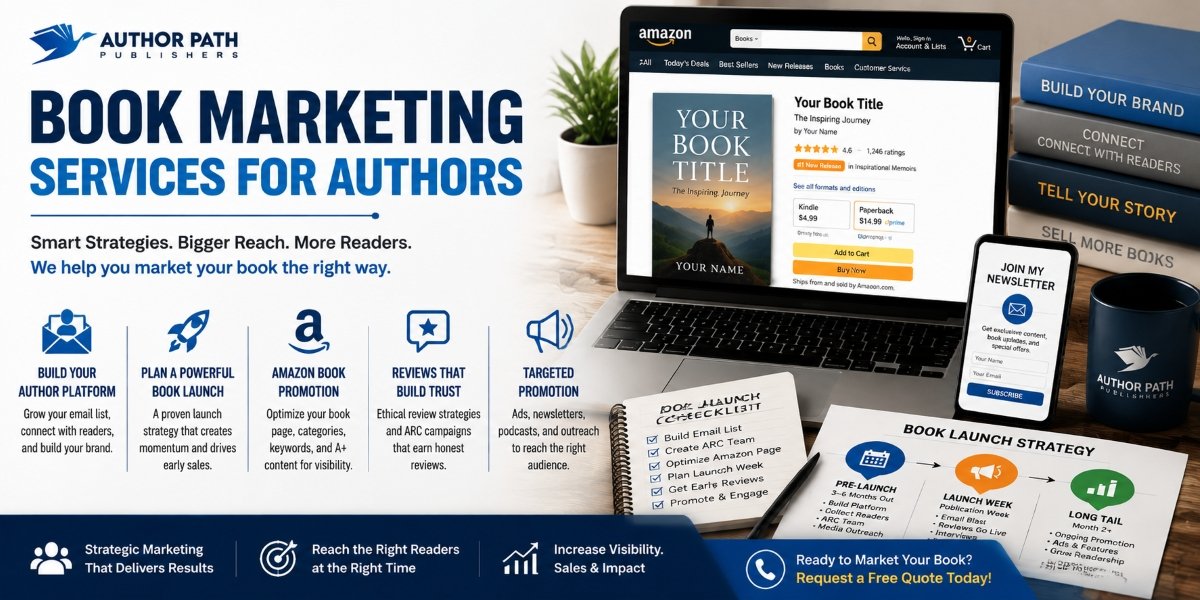
At Author Path Publishers, we help authors develop strategic marketing plans designed to increase visibility, connect with readers, and support long-term book discovery.
Why Book Marketing Should Begin Before Publication
A book launch is not created in a single day.
A successful launch depends on the audience and relationships built before release.
If nobody knows your book exists at launch, there is little opportunity for reviews, recommendations, or reader engagement.
Early marketing helps you:
- Build an interested audience.
- Collect potential readers.
- Create an email list.
- Develop launch support.
- Prepare promotional materials.
Paid advertising can increase visibility, but it works best when you already have a strong foundation.
A group of readers who have been waiting for your book can create stronger launch results than thousands of people who see a single advertisement without previous connection.
Building Your Author Platform
Author platform building means creating assets that allow readers to find and connect with you.
Three important assets include:
1. An Email List
An email list gives you direct communication with readers without depending on social media algorithms.
Authors can encourage sign-ups by offering:
- Sample chapters.
- Bonus content.
- Companion guides.
- Exclusive updates.
A small engaged audience is often more valuable than a large audience that does not interact.
2. An Author Website
Your website becomes your central online location.
A professional author website should include:
- Author biography.
- Book information.
- Purchase links.
- Contact information.
- Media resources.
A website also gives journalists, podcast hosts, and readers an easy place to learn about you.
3. A Focused Social Media Presence
Authors do not need to be active on every platform.
It is better to maintain one or two platforms consistently than create multiple inactive accounts.
Choose platforms where your readers already spend time and focus on sharing meaningful content.
Creating an Effective Book Launch Strategy
A strong book launch strategy usually has three stages:
- Pre-launch.
- Launch week.
- Long-term promotion.
Each stage has a different purpose.
Phase 1: Pre-Launch Preparation
The pre-launch phase usually begins three to six months before publication.
Important steps include:
Establish Your Publication Date
Choose a realistic timeline that allows enough time to prepare.
Build Your Reader List
Start collecting email subscribers and communicating with your audience.
Create an ARC Team
Advance Reader Copies (ARCs) allow selected readers to receive early copies and provide honest reviews after publication.
Contact Media Opportunities
Podcasts, newsletters, and publications often schedule interviews weeks in advance, so early outreach increases opportunities.
Prepare Your Book Materials
Complete:
- Cover design.
- Book description.
- Author information.
- Product page details.
Preparing early prevents last-minute decisions.
Phase 2: Launch Week Promotion
Launch week is about concentrating attention.
During this period, authors can:
- Notify email subscribers.
- Encourage ARC readers to share honest reviews.
- Participate in interviews.
- Share launch content.
- Ensure all purchase links work correctly.
The goal is to create visibility and encourage early reader activity.
Phase 3: Long-Term Book Promotion
A book’s success is not limited to the first week.
Many books continue gaining readers months or years after publication.
Long-term promotion focuses on:
- Updating keywords.
- Improving categories.
- Refreshing descriptions.
- Creating ongoing content.
- Finding new audiences.
A strong marketing strategy helps your book remain discoverable.
Amazon Book Promotion: Optimizing Your Book Page
Successful Amazon book promotion isn’t just about advertising.
Your Amazon product page must convince visitors to become readers.
Important elements include:
Title and Subtitle Optimization
Your title should attract attention, while your subtitle should clearly communicate:
- Who the book is for.
- What readers will gain.
- What problem it solves.
Clear wording helps both readers and search systems understand your book.
Book Description
Your description works as a sales page.
A strong description should:
- Begin with an engaging opening.
- Explain the value of the book.
- Use easy-to-read paragraphs.
- Encourage readers to take action.
Fiction descriptions should create curiosity and emotional connection.
Nonfiction descriptions should clearly explain the problem and solution.
Categories and Keywords
Categories and keywords help readers discover your book.
Effective keywords should reflect phrases real readers search for rather than broad terms with high competition.
Choosing accurate categories helps your book reach the right audience.
A+ Content and Author Central
Professional Amazon optimization may include:
A+ Content
Enhanced visuals and information sections that help readers understand the book.
Author Central
A professional author profile that connects:
- Paperback editions.
- Ebook editions.
- Audiobook versions.
A complete author presence builds credibility.
Building Reviews the Right Way
Reviews provide social proof and help readers make decisions.
However, authors must follow retailer guidelines.
Safe review practices include:
- Sending advance copies to genuine readers.
- Asking for honest feedback.
- Providing review links.
- Thanking readers regardless of their opinion.
Avoid:
- Buying reviews.
- Offering rewards for positive reviews.
- Review exchanges.
- Asking readers to change reviews.
Authentic reviews create long-term trust.
Getting Attention Through Podcasts, Media, and Newsletters
Book promotion is not limited to online ads.
Author interviews can introduce your story to audiences who may not have discovered your book otherwise.
Effective outreach opportunities include:
- Podcasts.
- Local media.
- Industry newsletters.
- Professional associations.
- Community publications.
Instead of simply announcing your book, offer a meaningful discussion topic related to your expertise or story.
A professional media kit should include:
- Book cover.
- Author photo.
- Short biography.
- Book summary.
- Suggested interview questions.
Paid Advertising and Measuring Results
Advertising can support book discovery, but it works best after your foundation is ready.
Before spending on ads, ensure you have:
- A strong product page.
- A clear book description.
- Proper keywords.
- A reader destination.
Start with manageable budgets and measure results.
Useful metrics include:
- Email subscribers gained.
- Website visits.
- Book page conversions.
- Review growth.
- Monthly sales trends.
Follower numbers alone do not show whether readers are connecting with your book.
Frequently Asked Questions
When should I start marketing my book?
Ideally, marketing should begin three to six months before publication while your manuscript is being prepared.
If your book is already published, you can still begin building visibility through long-term marketing.
How much should I spend on book marketing?
There is no universal budget.
Marketing costs depend on your goals, genre, audience, and promotional methods.
A good approach is to build your foundation first and test advertising gradually.
Do I need social media to sell books?
Social media can help, but it is not the only option.
An email list, website, interviews, and reader connections can also support book sales.
Can I pay someone to get Amazon reviews?
No.
Paid reviews, incentivized reviews, and review exchanges violate retailer policies.
The best reviews come from genuine readers sharing honest opinions.
Start Your Book Marketing Plan With Author Path Publishers
Knowing how to promote your book and having the time to execute a strategy are two different challenges.
The book marketing services at Author Path Publishers help authors build visibility through:
- Author platform building.
- Amazon optimization.
- Launch planning.
- ARC campaigns.
- Review strategies.
- Media outreach.
- Advertising guidance.
We help first-time and experienced authors create marketing plans designed for long-term discoverability.
Your manuscript remains confidential, you maintain full ownership rights, and your book receives professional marketing support throughout the publishing journey.