
Sultan Sobhi Batterjee Thinks Many High Achievers Invest Their Lives Worse Than They Would Ever Invest Their Money.

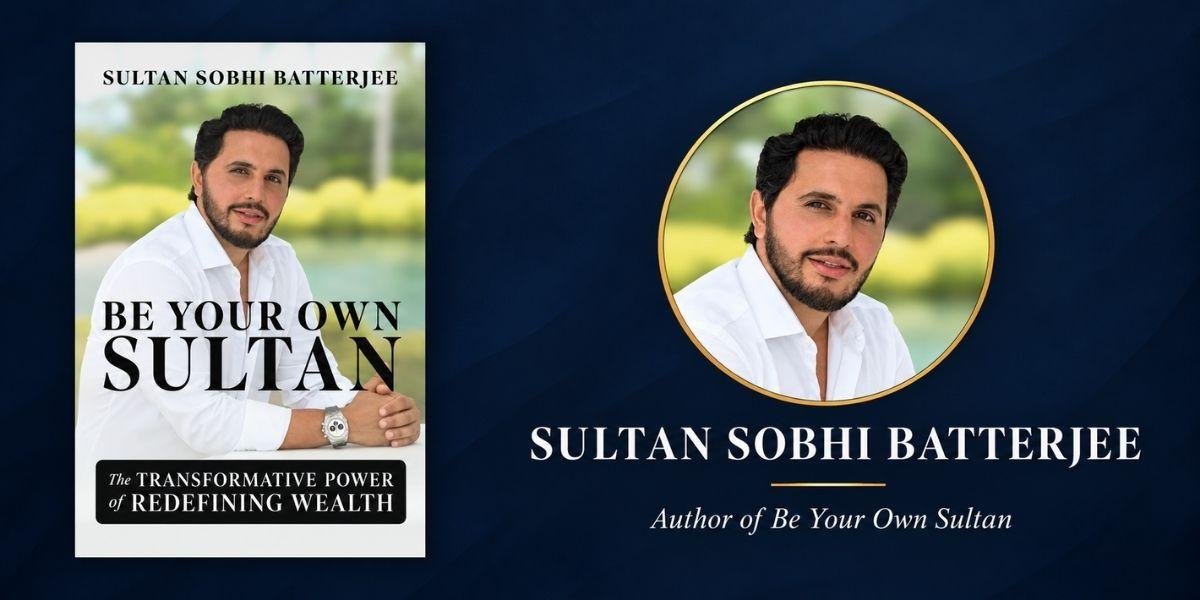
Sultan Sobhi Batterjee sees a contradiction in the way ambitious people think about wealth. Anyone with serious investment experience understands the danger of concentrating everything in a single asset. Diversification is basic financial logic. Yet when it comes to life itself, many successful people do exactly what they would never recommend financially.
They put almost everything into work.
Career gets the best hours, the most energy, and the greatest emotional attention. Health, family, friends, personal development, and community receive whatever remains.
Then, somewhere along the way, people start using the word balance as though occasional attention to the rest of life can compensate for years of concentration risk.
In Be Your Own Sultan: The Transformative Power of Redefining Wealth, Sultan offers a different framework. He calls it the Wealth Pie, and the concept begins with the same logic a portfolio manager might apply to capital.
If the things that matter in life are genuine assets, they require deliberate investment.
Start With Your Eighty-Fifth Birthday
The exercise begins unusually far in the future.
Sultan asks readers to imagine their eighty fifth birthday in vivid detail. Who is there? What relationships survived? What kind of health do you have? What work are you proud of? How do people closest to you experience your presence in their lives?
The point is not nostalgia. It is to use the future as a filter for present priorities.
When Sultan did the exercise himself, his Wealth Pie included family, business, financial security, community, friends, self improvement, and health. Those were his wedges.
Someone else’s list may look completely different. That difference is intentional.
Sultan does not want the Wealth Pie to become another rigid definition of what a good life should look like. The framework exists to help people identify the areas they themselves consider essential and then compare that answer with where their time and energy are actually going.
Current Wealth and Forecasted Wealth
One of the more practical parts of Sultan’s framework is the distinction between current wealth and forecasted wealth.
Different periods of life require different allocations.
A business may need unusually intense attention during a major expansion. A health issue may temporarily need more time. A young family may change the balance again.
Sultan does not argue that every wedge should receive equal attention every day.
He argues that the allocation should be conscious.
That is very different from the way many executives operate. Work expands because it always can. There is always another meeting, opportunity, project, or problem available to absorb time. Other parts of life are expected to wait patiently until business finally becomes less demanding.
For many leaders, that moment never arrives.
The Wealth Pie forces a different conversation. If one area is receiving a disproportionate share today, what is being built for later? What are the consequences of that allocation if it continues for five years, ten years, or twenty?
The Wedge Sultan Says Everyone Needs
There is one part of the framework Sultan insists should appear in every version.
He calls it the “I” wedge.
It is the allocation of time and energy toward yourself.
That idea took Sultan years to accept because he had spent much of his life associating self sacrifice with responsibility. Work harder for the business. Give more to the family. Keep carrying the load.
What he eventually learned was that neglecting himself did not make him more generous.
It simply meant there was eventually less of him available to give.
Sultan describes this as the oxygen mask principle. Taking care of your own energy, health, and personal development is not necessarily selfish in the negative sense. Done properly, it can make you more present as a husband, father, leader, and friend.
Wealth Is Not Evidence
Sultan’s proximity to healthcare also shaped this philosophy. As a board member connected to Saudi German Hospitals Group and Batterjee Medical Colleges, he is regularly reminded that the body has limits and that the timeline is not guaranteed.
That changes the question.
If wealth is only accumulation, then more can always be accumulated.
If wealth is meant to support the actual living of life, the measurement becomes more complicated.
The family dinner matters. The afternoon with your children matters. Health matters before there is a crisis. Friendships matter before the invitations stop coming.
A Portfolio Nobody Else Can Build for You
Sultan is careful not to prescribe the contents of someone else’s Wealth Pie. That would defeat the point.
His own life comes with resources, responsibilities, and circumstances that will not resemble those of most readers. He acknowledges that directly. The framework is designed to transfer because it is based on questions rather than his personal answers.
The objective is not to live like Sultan. It is to stop allocating your life by accident.
Because if time is the capital behind every other form of wealth, then where it goes may be the most important investment decision a person ever makes.
For readers ready to build their own definition of wealth, Be Your Own Sultan by Sultan Sobhi Batterjee is available now on Amazon.