Economic Insider

How Book Marketing Helps Authors Reach More Readers


Writing a book takes months. Sometimes years. Publishing it takes another round of editing, design, and formatting before the title finally goes live on a retailer page. Then comes the part many first-time authors do not plan for. A published book does not find readers on its own, and this is where professional book marketing services change the outcome.

Book marketing is the work of putting a finished title in front of the people most likely to want it. It covers the listing, the pricing, the cover, the description, the ads, and the author’s own presence online. Each piece feeds the others. A strong cover pulls a reader in, and a clear description keeps them reading long enough to click buy.

Why Publishing Is the Starting Line

Retail platforms carry millions of titles. A new release enters that catalog with no reviews, no ranking history, and no search visibility. Readers browsing a category will not see it unless something puts it there.

Book promotion services address that gap directly. They build early momentum through launch planning, reader outreach, and paid placement, so the book has a reason to surface in search results and recommendation feeds. Authors who treat publication as the finish line often watch a good book sit quietly. Authors who plan promotion alongside production give the title a real chance.

Choosing Channels That Match the Book

Not every channel suits every title. Before spending anything, an author needs to answer four questions. What genre is this. Who reads that genre. What else competes for those readers. What does success look like in the first ninety days.

Those answers shape the plan. Amazon book marketing services tend to carry the most weight for fiction and genre nonfiction, since Amazon functions as a search engine for books. Amazon Ads let authors bid on keywords and competing titles, which places the book in front of readers already shopping in that category.

Memoir and inspirational titles often respond better to public relations outreach and podcast placement, where the author’s story does the selling. Children’s books lean on visual platforms and school or library outreach. Business nonfiction benefits from email marketing and an author website built to capture subscribers.

Advance reader copies deserve a mention of their own. Sending ARCs to reviewers and early readers weeks before release builds a base of honest reviews, and reviews influence both reader trust and platform visibility. Book launch marketing works best when this groundwork happens before the release date, not after.

Building the Author Platform

An author platform is the direct line between a writer and their readers. It usually includes a website, an email list, and one or two social accounts the author can actually maintain.

The website carries the most long-term value. Author website optimization means clear navigation, a book page for each title, a working buy link, and content that search engines can index. The email list matters even more. Social platforms change their rules constantly, but an email list belongs to the author.

Author branding ties it together. A consistent voice, a recognizable visual identity, and a clear sense of what this writer offers help readers remember the name between releases. Digital marketing for authors works best when every touchpoint points back to the same identity.

Measuring Results and Staying Visible

Campaign tracking separates book marketing for authors from guesswork. Ad spend, click-through rates, sales rank movement, email open rates, and review velocity all tell part of the story. An author who reviews these numbers monthly can shift budget toward what works.

Visibility also fades without maintenance. Online book promotion continues well past launch week through seasonal campaigns, price promotions, refreshed keywords, and new content that keeps the title in circulation.

Working With a Publishing Partner

Author Publishing Solution supports writers across fiction, nonfiction, memoir, inspirational titles, and children’s literature. The company offers ghostwriting, editing and proofreading, cover design, illustration, formatting, printing, audiobook production, author websites, video book trailers, and article publishing.

Its book advertising services help authors explore options suited to their genre, audience, and budget, including Amazon Ads, launch campaigns, ARC strategy, public relations outreach, social promotion, and promotional content creation. Authors preparing a release or promoting an existing title can reach out to the team to discuss an approach that fits their goals.

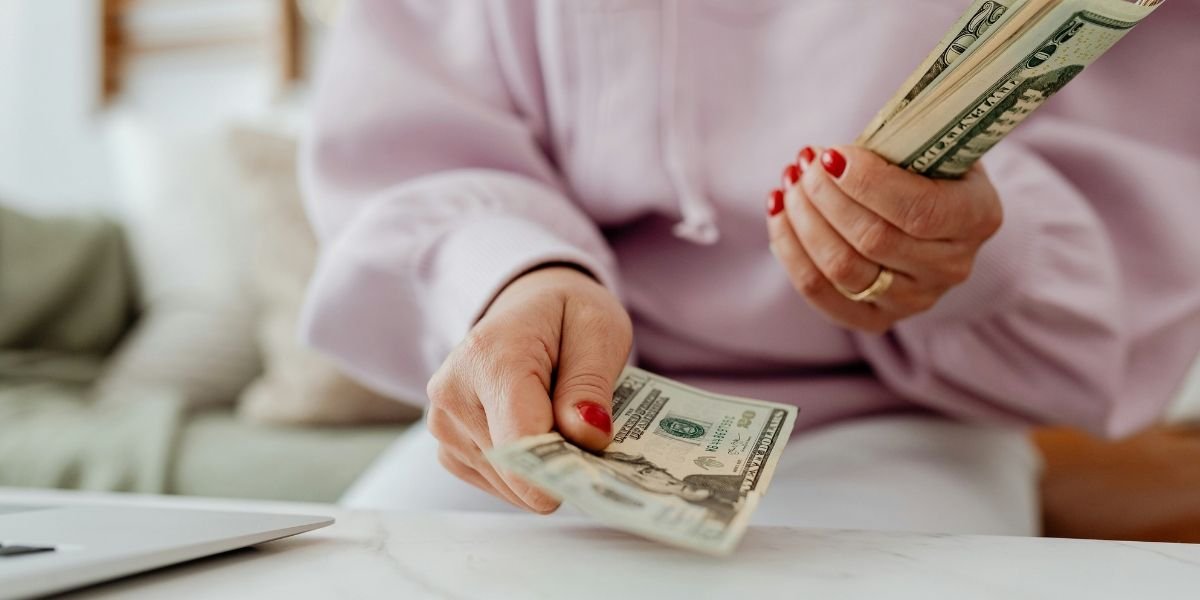
US Savings Rate Falls to 3.8% as Consumer Spending Outpaces Income

The US savings rate declined to 3.8% in September 2026 as consumer spending grew faster than personal income, according to federal data released October 29. The figures show how rising prices absorbed most of the monthly spending increase and why higher dollar spending did not translate into a comparable rise in purchasing power.

Key Takeaways

  • The personal saving rate fell to 3.8% in September from 4.0% in August and 4.5% in July
  • Consumer spending increased 0.5% in September, compared with 0.2% growth in personal income
  • Inflation-adjusted spending increased less than 0.1%, while real disposable income declined 0.3%
  • The personal consumption expenditures price index rose 3.6% over the year through September

US Savings Rate Drops as Spending Rises Faster Than Income

The Bureau of Economic Analysis reported a $113.1 billion increase in personal consumption expenditures in September, compared with a $54.5 billion rise in personal income. Those dollar changes are seasonally adjusted annual rates, not the total additional amount spent or earned during September alone.

Disposable personal income, which measures income after personal taxes, increased 0.2% from August. Personal outlays, a broader measure that includes consumption, personal interest payments and personal transfers, rose $113.0 billion at an annual rate. Together, the figures help explain the decline in the share of income remaining after spending.

September’s 0.5% increase in consumer spending followed a 0.9% rise in August. Although spending growth slowed, it continued to exceed the growth in income. The US savings rate declined by 0.7 percentage points from July to September, according to the agency’s revised monthly series.

The BEA estimated personal saving at $911.1 billion in September on an annualized basis. The figure is part of the national income accounts. It does not represent $911.1 billion deposited into savings accounts during the month, nor does it describe the amount held by a typical family.

The agency said income growth primarily reflected compensation and government social benefits. Private wages and salaries led the increase in compensation, while Medicare was the leading contributor among social benefits. The release did not identify a single household group as responsible for the lower national saving rate.

Higher Prices Limit the Increase in Actual Purchases

The spending figures look different after accounting for inflation. September’s personal consumption expenditures price index increased 0.5% from August and 3.6% from a year earlier. After the price adjustment, real consumer spending rose by less than 0.1%, indicating little change in the overall quantity of goods and services purchased.

Real disposable personal income fell 0.3% in September even though its current-dollar measure increased 0.2%. The difference shows a decline in purchasing power at the national level during the month. It does not mean every household experienced the same change.

Services accounted for $78.1 billion of the increase in current-dollar spending, while goods accounted for $35.1 billion, both at annual rates. The split measures the value of purchases, rather than proving that consumers acquired substantially more services or products.

Separate Bureau of Labor Statistics data illustrate the uneven movement in household costs. The Consumer Price Index increased 0.6% in September, with gasoline prices rising 9.1%. Grocery-store food prices edged down 0.1% during the month. The CPI and the BEA’s price index measure inflation differently, so their monthly readings are not identical.

Excluding food and energy, the personal consumption expenditures price index rose 0.3% during September and 3.1% over the preceding 12 months.

The relationship between inflation and pay raises provides another measure of purchasing power. The BLS reported that inflation-adjusted average hourly earnings for private nonfarm employees fell 0.5% in September and 0.7% from a year earlier. Those wage figures cover employees, not all sources of personal income.

National Savings Figures Do Not Describe Every Household

The personal saving rate is calculated using nationwide totals. A rate of 3.8% means that $3.80 remained after personal outlays for every $100 of aggregate disposable income. It is not the share of Americans who made a savings deposit, and it is not a measure of the balance in household emergency funds.

National figures also cannot show how families with different earnings, housing arrangements or medical costs managed their monthly budgets. Broader cost of living pressures vary by region and household circumstances, while the September BEA release provides no breakdown of which groups contributed most to the decline in the national saving rate.

A separate BLS report issued October 29 estimated average annual expenditures of $81,905 per consumer unit in 2025, up 4.3% from 2024. Food spending increased 4.6% and housing spending 5.8%. Those figures describe the previous full year and cannot be used to explain precisely what changed in September 2026.

The BEA also updated July and August personal income figures using revised employment information. Such revisions affect comparisons across months, which is why the latest 3.8% savings rate should be read as a national economic estimate rather than a definitive account of how individual Americans handle money.

Frequently Asked Questions

What was the US savings rate in September 2026?

The US savings rate was 3.8%, down from 4.0% in August and 4.5% in July, according to the BEA. It measures the share of disposable personal income left after personal outlays across the economy.

Why did the savings rate fall?

Consumer spending increased 0.5% in September while personal income grew 0.2%. The national figures show spending increasing faster than income, but do not establish the reasons behind individual households’ decisions.

Did Americans purchase more goods and services in September?

Spending rose 0.5% when measured in current dollars. After adjusting for higher prices, real consumer spending increased less than 0.1%, indicating little change in the total volume purchased.

Does a 3.8% rate reveal how much families have saved?

No. The personal saving rate measures the relationship between nationwide income and outlays, not bank balances, emergency funds or the financial position of a particular household.

Declan Lohan’s Business Role in the Financial and Commercial Development of Virtuosi Racing

Motor-racing teams are built around budgets as much as lap times. A Formula 2 operation must fund cars, engineering, travel, personnel, and equipment while meeting the commercial demands of an international championship. Virtuosi Racing’s early business model emphasized controlling those commitments. The team was founded in 2012 by Declan Martin Lohan, Andy Roche and Paul Devlin, after Roche and Devlin brought their racing experience and Lohan became involved on the business side. Its record included the 2017 FIA Formula 2 Teams’ Championship and three successive runners-up finishes from 2019 to 2021. Lohan’s contribution was mainly on the financial and organisational side of that development.

Accounts of the team’s early years describe a cautious approach to spending. Motor Sport Magazine reported that Lohan, Roche and Devlin questioned whether they needed to buy equipment and used rental arrangements where possible. Trucks were rented for race weekends, a trailer was sourced rather than bought, and the team initially rented premises on a month-to-month basis. The same account said the founders bought cars at auctions and sold them on to help balance the books. Lohan later said he continued to look after the finances and wanted the operation to pay its own way. These decisions were made during Auto GP, before its move into GP2 and Formula 2.

Circumstances outside the circuit also shaped the financial pressure. Lohan has described the period in which he became involved with Roche and Devlin as one affected by the banking crisis. He said he had assets but limited access to cash because banks were not prepared to fund against them. The founders therefore had to structure the operation around available cash. Their first Auto GP season in 2012 included a €500,000 contract for Pål Varhaug, with €65,000 required up front and the remaining €435,000 spread across the season. The example shows why driver funding and payment schedules mattered to the young organisation.

The move into GP2 increased the business’s scale. In 2015, Virtuosi took over the service contract for Russian Time, replacing iSport in managing the team. Motor Sport Magazine later reported that the deal was worth about £3 million. Russian Time covered the costs associated with its cars. By 2017, the Virtuosi-run team had won the FIA Formula 2 Teams’ Championship, with 13 race wins and 38 podiums during its four-year Russian Time association, according to the team owners when UNI-Virtuosi was announced. In 2018, it recorded four wins and eight podiums before moving in-house for 2019. Lohan’s role remained tied to ownership and financial management rather than race engineering.

Commercial partnerships became another part of the organisation’s development. In 2019, UNI-Virtuosi entered Formula 2 with the same engineering staff and structure used under Russian Time. The team finished second in the Teams’ Championship in 2019, 2020 and 2021, while retaining its operating structure. In 2022, Virtuosi added a British Formula 4 programme, adding another level to its wider organisation. Technical partnerships also formed part of the business model. AVL RACETECH announced a partnership with Virtuosi for the 2022 Formula 2 season as a continuation of their established relationship.

Lohan’s executive responsibilities became more visible as Virtuosi developed its commercial relationships. In February 2023, Invicta Watch Group became a title partner of the Formula 2 operation. The announcement identified Lohan as Virtuosi Racing’s CEO. In December 2023, Invicta acquired an ownership stake, and the Formula 2 team was renamed Invicta Racing for 2024. Lohan said the partnership had increased the team’s presence and competitiveness. Contemporary reporting also identified him as CEO, while photographs from the 2023 Formula 2 season described him as Team Principal of Invicta Virtuosi Racing. The title reflected a wider executive role than in the team’s early years.

The later ownership change ended that phase. In 2024, Invicta Racing won the FIA Formula 2 Teams’ Championship, and Gabriel Bortoleto won the Drivers’ Championship. In March 2025, Invicta Watch Group completed the acquisition of the operation from its founders. Formula Scout reported that Lohan, Roche and Devlin stepped aside from the Formula 2 team, with Roche remaining as a consultant for team operations and driver development. James Robinson became CEO and Team Principal, while Geoff Spear became Team Manager. The change ended Lohan’s day-to-day F2 role after more than a decade. His role is best defined by the business functions behind Virtuosi’s expansion from Auto GP to Formula 2.