
Todd Gross’s Who Decides? Examines an Overlooked Leadership Problem and the Challenges of Organizational Decision-Making

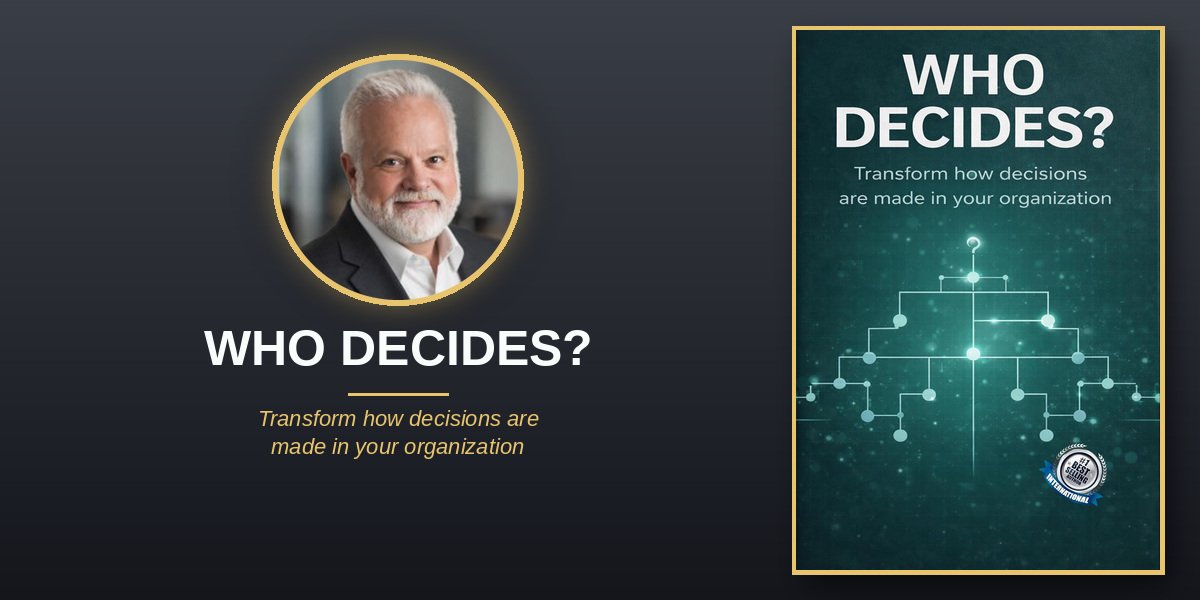
The leadership development industry has become extraordinarily good at teaching culture, communication, and emotional intelligence, and considerably less interested in a question so fundamental it feels almost embarrassing to ask: who, exactly, is supposed to make this decision?
That embarrassment is part of the problem. Organizations assume the answer is obvious. They create org charts, establish reporting lines, write job descriptions with accountability language, and then watch in confusion as decisions get made by the wrong people, delayed by the wrong approval loops, or never made at all because everyone assumed someone else owned them. The org chart documented hierarchy. It did not create decision clarity. Those are not the same thing.
Todd Gross has been watching this gap widen for thirty years. He has worked inside organizations as an executive advisor, a turnaround CEO, and a leadership coach, and he has watched talented teams lose months of productive capacity to decision confusion that nobody wanted to name as such because it felt too simple to be the real problem. Who Decides? Transform How Decisions Are Made in Your Organization names it anyway, with the precision that comes from watching the same root cause produce different symptoms across enough organizations to stop being fooled by the symptoms.
The Five Levels of Decision-Making framework generates a specific, useful frustration the first time a reader encounters it: the frustration of recognizing that something this clear should have been in place years ago. The five levels give organizations a shared vocabulary for decision ownership, covering the full spectrum from independent authority to complete delegation. When a leader and a team member are operating from different mental models of what kind of decision they are working on, they are not disagreeing about substance. They are talking past each other about something more fundamental, and they will continue to do so until someone gives them language capable of naming it.
Gross gives them that language and then goes further, because vocabulary without architecture is just terminology. The choke point framework is where the book sharpens into something diagnostic. Most leaders can name their organization’s recurring stalls immediately. What the choke point framework asks is that they stop treating those stalls as performance problems and start treating them as design signals. The person at the choke point is usually not the problem. The ambiguity around what they are empowered to own is. That reframe alone shifts the remediation from pressure on a person to clarity in a system, and the outcomes are categorically different.
The decision severity sections address one of the most common organizational failure modes: applying the same scrutiny to every decision regardless of consequence. Gross provides a practical calibration approach that makes deliberation proportionate to stakes, which is how both reckless speed and analysis paralysis get addressed at their actual source rather than managed after the fact.
The emotional pressure chapters may be the book’s most honest contribution. Real decisions happen under real conditions. Gross builds his guidance around those conditions rather than around an idealized version of leadership, which is why the framework holds under pressure rather than only in planning sessions.
Who Decides? is for leaders who have been watching the same failures recur long enough to stop blaming the people and start questioning the design.
Get your copy of Who Decides? On Amazon and stop treating the symptom when the structure is the cause.