By: Paolo Bonetti, Founder and CEO, Hybrid Digital Consultancy
Why human judgment, not technical speed, is becoming the scarcest asset in the AI economy.
Every generation of technological change produces the same misreading. When electricity arrived in factories, the assumption was that winning companies would be the ones with the most powerful motors. When the internet arrived in commerce, it was the ones with the most sophisticated websites. Both assumptions were wrong. The technology became a commodity. What separated winners from losers was the quality of the decisions made about how to use it.
Artificial intelligence is following the same pattern. The businesses that grasp this early will have a real advantage over those still trying to out-execute the machine.
I build companies for a living. As founder and CEO of Hybrid Digital Consultancy, an integrated team of around one hundred specialists across strategy, software development, content, and data, I work with founders and executives making real decisions: how to structure their operations, where to invest, how to grow. Over the past several years, I have watched AI move from a peripheral curiosity to a central operational reality. What I have seen is not the story most people are telling about this technology.
The dominant narrative is about replacement: roles eliminated, workflows automated. That story is real, but it is the smaller one. The larger story is about where value is going, and most organizations have not caught up with it yet.
In software development, a pattern called vibe coding has taken hold. The developer is no longer the person who writes every line of code. They are the person who defines what the code needs to accomplish and why. AI handles execution. The human holds the frame. Code has become faster and cheaper to produce, and technical skill, while still necessary, has stopped being the deciding factor.
What has replaced it is harder to teach and impossible to automate: the ability to read a real problem clearly, to tell the difference between a technically impressive solution and one that actually solves something, to decide what is worth building at all. These are judgment calls. And judgment does not scale the way execution does.
“In the AI economy, code becomes abundant. Human judgment becomes scarce.”
That scarcity has real consequences. Organizations that separate the people who decide what to build from the people who build it are running a risk they may not see until the cost arrives. The danger is not that the technology fails. It is that it succeeds at solving the wrong problem. Misdirected execution is one of the most expensive things a business can produce.
I think of what remains after automation as judgment capital, the quality of thinking that precedes and directs execution. When code production becomes cheap, judgment capital becomes the constraint. At Hybrid Digital Consultancy, we structured the organization around this reality: strategy, development, content, and data under unified governance, so that decisions and execution stay aligned rather than drifting apart. The gap between teams that have built this way and those that have not is becoming visible in outcomes.
I identified this shift before it showed up in market data, which gave me time to build a specific way of working with clients around it. The conversation I have with organizations is not about explaining what AI is. Most leaders understand the technology well enough. It is about finding where, in their particular structure, human judgment is worth the most. Where to stop executing and start choosing. Where handing off to a machine actually frees up the thinking that matters.
That is a different conversation from the one most AI consultants are having. It starts with the organization, its structure, its decision points, where it gets stuck, and works back to find where intelligence, not processing power, is the real bottleneck.
My forthcoming book, Inside the Artificial Revolution, frames this moment not as a replacement story but as a transition, from the Anthropocene, the epoch shaped by human impact on the planet, toward what I call the Hybridocene: a phase in which humans and AI systems coexist in shaping economic and social structures. They are not competing for the same work. They operate according to different logics, and the organizations that learn to combine those logics with intention will outlast those that treat AI as a faster version of what they were already doing.
For business leaders, the question is no longer whether to adopt AI. That has been settled by your industry, your competitors, and your customers. The question is what kind of organization you are building around it.
If you are optimizing for faster execution, you are building for a world AI is already leaving behind. Speed of output is becoming a commodity. The organizations that hold ground will be the ones that have built for better judgment, teams, and processes designed to direct AI, not just deploy it.
The shift from knowing how to do, to knowing what to do, is already the terrain competition is moving onto. The businesses that see it now will be building the next economy. The others will be refining the one that is ending.
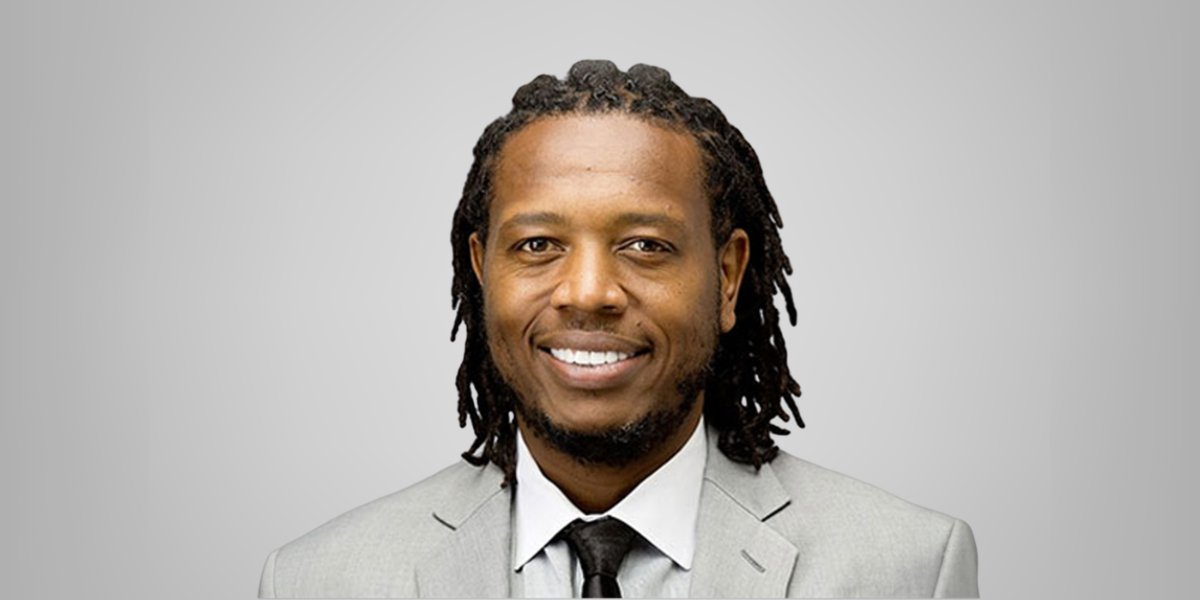
Paolo Bonetti is a management engineer, entrepreneur, and digital strategist. He is the founder and CEO of Hybrid Digital Consultancy, an integrated team of around one hundred specialists in strategic consulting, software development, content production, and data analysis. He works with founders and executives on how organizations redesign decision-making in the age of generative AI. He is the author of Inside the Artificial Revolution, a forthcoming book on the coexistence of humans and artificial intelligence in contemporary economies.