Youth sports training in the United States expanded significantly during the late 1990s as private academies began supplementing school and recreational baseball programs. This period saw increased demand for year-round indoor facilities that could support structured skill development outside seasonal competition. Baseball and softball training centers became more common in suburban regions where access to space, equipment, and coaching resources supported private instruction models. Many of these facilities operated on a hybrid structure combining lessons, cage rentals, and team training. The growth of such systems was linked to broader changes in youth sports participation and specialization trends during this period.
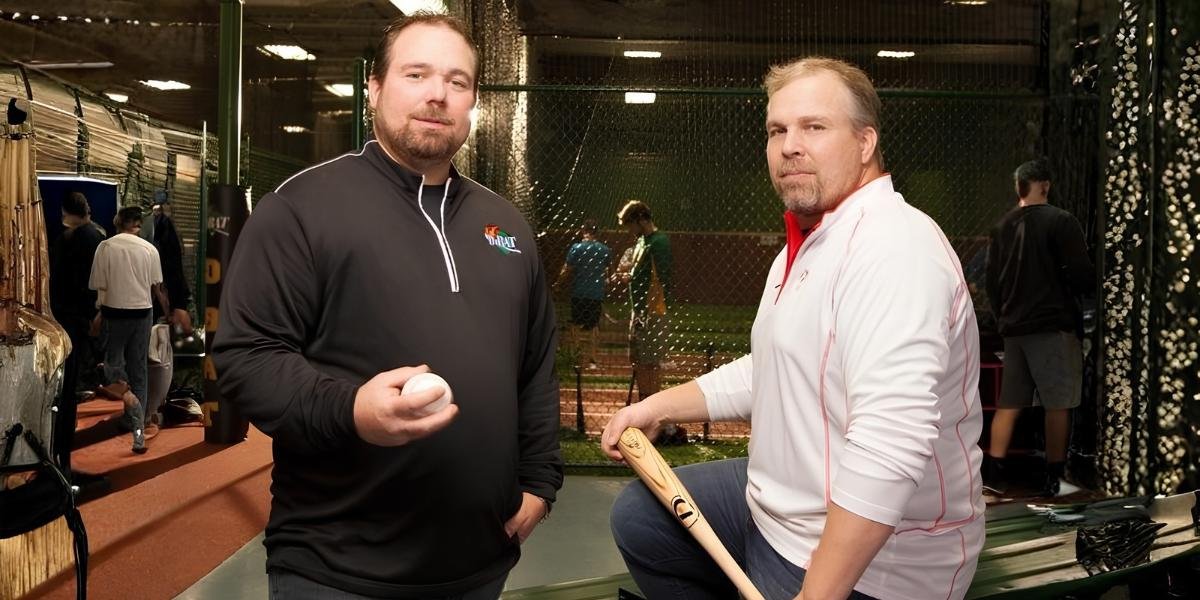
Within this environment, a small number of privately funded training facilities emerged in North Texas. One of these was D-BAT, formally established in 1998 in Addison, Texas. The organization was founded by Cade Griffis alongside Kyle Griffis and Craig Penfold. According to published accounts, the initial concept was centered on creating a controlled indoor environment for baseball and softball instruction, rather than relying solely on outdoor seasonal play. Early operations were based on private instruction and team development, with an emphasis on repeated skill training and structured practice sessions.
The financial structure of the early operation has been described in reporting as self-funded, with one account referencing an initial investment in the range of approximately 180,000 to 185,000 dollars to launch the first facility. This capital was directed toward facility setup, training equipment, and basic operational infrastructure required for indoor batting and instruction. The first location was established in the Dallas metropolitan area, where demand for year-round baseball training was already developing among youth players and amateur athletes. Early programming included individual lessons, team sessions, and batting cage access.
Operationally, D-BAT was structured as a combined training academy and equipment-focused business. Alongside instructional services, the organization developed a manufacturing and distribution component under D-BAT Sports. This segment included the production of baseball bats and related training equipment. Reports indicate that this manufacturing arm expanded beyond local distribution over time, supplying equipment to domestic and international buyers. The integration of training services with equipment production created a dual revenue model that linked player development activities with sports product sales.
The early organizational structure relied heavily on instructor-led sessions and scheduled training blocks. Private lessons were a central component of the model, allowing coaches to work directly with players on hitting mechanics, fielding technique, and game preparation. Group training and team-based instruction were also incorporated to support competitive development. The facility environment was designed for continuous use, with batting cages and practice areas available in time-segmented sessions. This structure reflected a broader shift in youth sports toward repeated technical instruction rather than seasonal participation alone.
As operations developed, D-BAT introduced more standardized systems for instruction delivery and facility management. These systems included repeatable lesson structures, scheduled programming, and consistent coaching frameworks across sessions. The goal was to maintain uniform training outcomes regardless of instructor or location. This approach later became relevant to franchising, as standardized processes are typically required for replication across multiple sites. The early emphasis on consistency also supported scalability, allowing similar training models to be implemented in new facilities without major structural changes.
By the early 2000s, the organization had expanded its equipment production capabilities under the D-BAT Sports division. This included manufacturing wooden bats and distributing equipment through broader sales channels. Industry reporting from the period indicates that the equipment side of the business reached external buyers beyond Texas, including international markets. While this manufacturing component later shifted in relative importance, it formed part of the early business structure that supported overall operations.
The development of D-BAT also included early exposure to team-based competitive programs. One documented element of the organization’s activity in its early years was the formation of youth baseball teams connected to the academy structure. These teams participated in regional and national tournaments, providing additional training environments for players enrolled in the program. This competitive layer functioned alongside instructional services and contributed to the organization’s broader training ecosystem.
The founding group structure, consisting of Cade Griffis, Kyle Griffis, and Craig Penfold, reflected a division of operational responsibilities. Published accounts identify Kyle Griffis as part of the leadership structure and Craig Penfold as an early investor involved in organizational development. This partnership supported both the instructional and administrative aspects of the academy during its initial growth phase. The combination of coaching, management, and investment roles allowed the organization to operate with a multi-functional internal structure from its early stage.
The system built in Addison, Texas, was later positioned for replication as demand for indoor training facilities increased. The combination of structured lessons, standardized instruction formats, and integrated equipment production created a model that could be reproduced in additional locations. This framework later supported the transition toward franchising, which expanded the organization beyond its original facility. However, during its founding phase in 1998, the focus remained on establishing a stable operational base and refining training delivery methods within a single location.
By the end of its initial development period, D-BAT had established itself as a structured indoor baseball and softball training facility with both instructional and equipment-related operations. The early system emphasized repeatable training methods, centralized facility management, and a combined service model that linked player development with product supply. Cade Griffis, alongside Kyle Griffis and Craig Penfold, was involved in the formation of this structure in Addison, Texas, in 1998.