Major U.S. technology companies are investing heavily in the facilities that power artificial intelligence. A report from WIRED notes that Microsoft, Alphabet Inc., Meta Platforms, and Amazon.com, Inc. together plan to spend roughly $370 billion in 2025 on AI infrastructure and data-center expansion. This marks one of the largest coordinated investments in computing capacity to date.
The build-out underscores how essential physical infrastructure has become to artificial intelligence. Yet it also raises questions about energy use, labor demand, and financial sustainability. Understanding these effects helps clarify how AI growth is shaping the broader economy — not just within tech companies but across supporting industries.
Why Energy and Power Demand Matter
Data centers are specialized facilities that house vast numbers of servers, storage drives, and networking systems. These systems require stable, continuous power to run and to cool. As AI workloads become more complex, power consumption grows. Reuters reported that U.S. data-center construction spending reached a record annualized rate of around $40 billion by mid-2025, driven largely by the surge in AI-related demand.
This pace has brought renewed attention to how electricity is sourced and distributed. If several large facilities begin operating in the same region, the local grid can come under pressure, prompting utilities to upgrade transmission lines and substations. Some states are already reviewing zoning and energy policies to support stable growth in this sector.
While these challenges may appear daunting, energy experts emphasize that both utilities and technology companies are actively coordinating to reduce impact. Co-location near renewable sources and improvements in cooling efficiency are helping balance demand, keeping consumer power costs relatively stable even as capacity expands.
Labor and Operations Behind the Build-Out
Beyond servers and power supplies, the AI infrastructure build-out is also reshaping employment. Engineers, data-center operators, construction workers, and logistics specialists all play roles in keeping these facilities running. The shift toward AI-optimized hardware — particularly clusters of graphics processing units (GPUs) and custom accelerators — requires new technical expertise in both installation and maintenance.
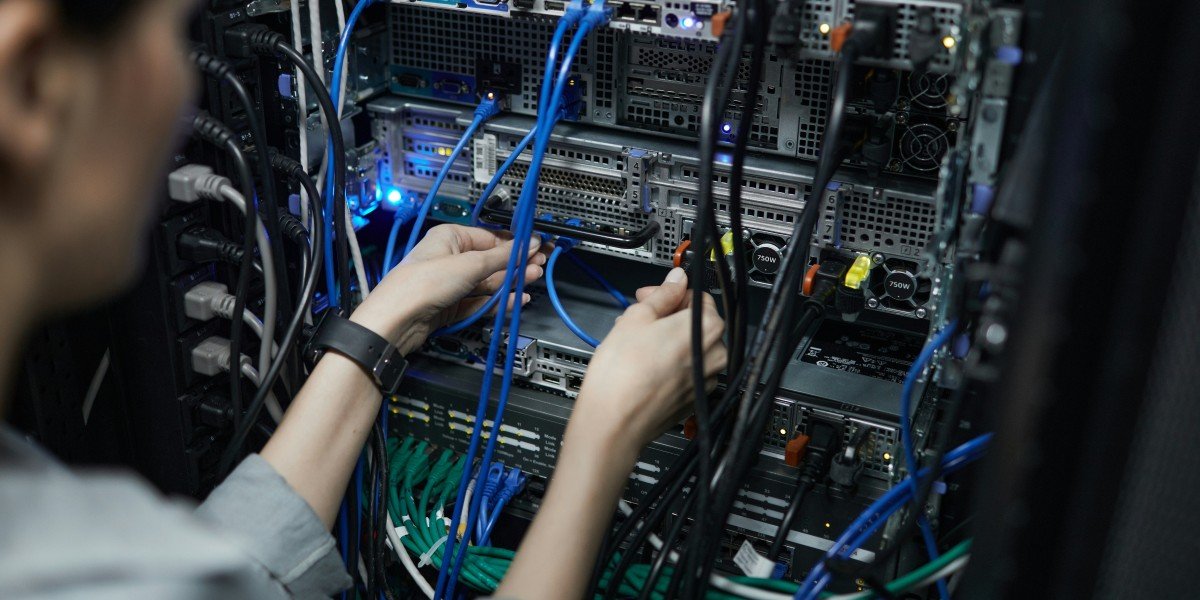
Photo Credit: Unsplash.com
Research from McKinsey & Company estimates that global investment in AI-optimized data centers could exceed $5 trillion by 2030, highlighting the sustained labor and operational commitment needed to support artificial intelligence. That figure encompasses design, construction, software integration, and eventual hardware refresh cycles.
For local economies, the near-term effect is job creation. Many facilities are being built outside traditional tech hubs, bringing construction and IT employment to regions where large-scale technology investment was previously limited. The combination of skilled and semi-skilled roles suggests a broad employment benefit that extends beyond developers and engineers.
Cost, Supply Chain, and Risk Considerations
Infrastructure spending of this magnitude introduces several risks. As WIRED observed, one is financial: if the expected demand for AI compute slows, utilization rates could fall short of projections, reducing the return on these investments. Another is logistical: AI chips and high-speed networking components depend on tightly constrained supply chains, and any disruption can delay construction timelines.
Environmental and regulatory risks also play a role. Cooling systems, water consumption, and emissions associated with energy generation are under increased scrutiny from state and local governments. Some projects may face new permitting requirements or conditions that extend build schedules and raise costs.
Even with those constraints, companies are adopting mitigation strategies. Diversifying suppliers, entering long-term power purchase agreements, and designing modular data centers that can scale incrementally are among the measures helping reduce exposure to both cost and capacity shocks.
What Consumers Should Keep in Mind
Though massive data centers may feel distant from everyday life, they shape many of the digital services people use daily. AI infrastructure powers applications from voice assistants to search tools, logistics platforms, and health-data analysis. As infrastructure efficiency improves, the result can be faster, more reliable performance for end users.
Energy experts say household electricity rates are unlikely to see sharp changes because of these projects, as many utilities spread infrastructure costs over long regulatory periods. Meanwhile, communities near construction sites may benefit from expanded employment and training programs connected to ongoing operations.
Overall, this investment wave represents the foundation for future computing services. While it introduces complexity around energy and supply chains, the coordinated planning underway across utilities, builders, and governments suggests a steady, rather than disruptive, path ahead.
Key indicators of progress include the pace at which new facilities become operational, how efficiently they’re used, and whether local grids can support sustained load growth. Reports tracking data-center utilization and hardware refresh cycles will give insight into whether demand aligns with expectations.
For policymakers, energy planners, and the public, the central theme is balance — ensuring that infrastructure growth matches the country’s energy and workforce capabilities. AI is transforming computation, but its infrastructure story is one of steady expansion rather than unchecked acceleration.