
By: Izzy Grace
In the fast-paced rhythm of New York City, sunlight is often taken for granted, welcomed on morning commutes, enjoyed in parks, and rarely questioned as a long-term health risk. For UX designer Yijing Wang, however, the invisible dangers of ultraviolet (UV) exposure have become the focus of a deeply personal and professional mission: using design to turn prevention into an everyday, intuitive experience.
Wang is the lead UI/UX designer behind UVfree, a preventive healthcare app concept that recently received three international design honors, including the K Design Award (Winner), the New York Product Design Award (Silver), and an Honorable Mention from the International Design Awards (IDA). Designed with a small interdisciplinary team and refined through iterative design reviews and expert feedback from a healthcare company, UVfree helps users understand and manage long-term UV exposure through real-time feedback, intuitive visuals, and gentle behavioral guidance.
“Most people know the sun can damage their skin, but the risk feels abstract,” Wang explains. “UV is invisible. You don’t feel it the way you feel heat or pollution. As a designer, I wanted to ask: how can we make something unseen become emotionally and cognitively real?”
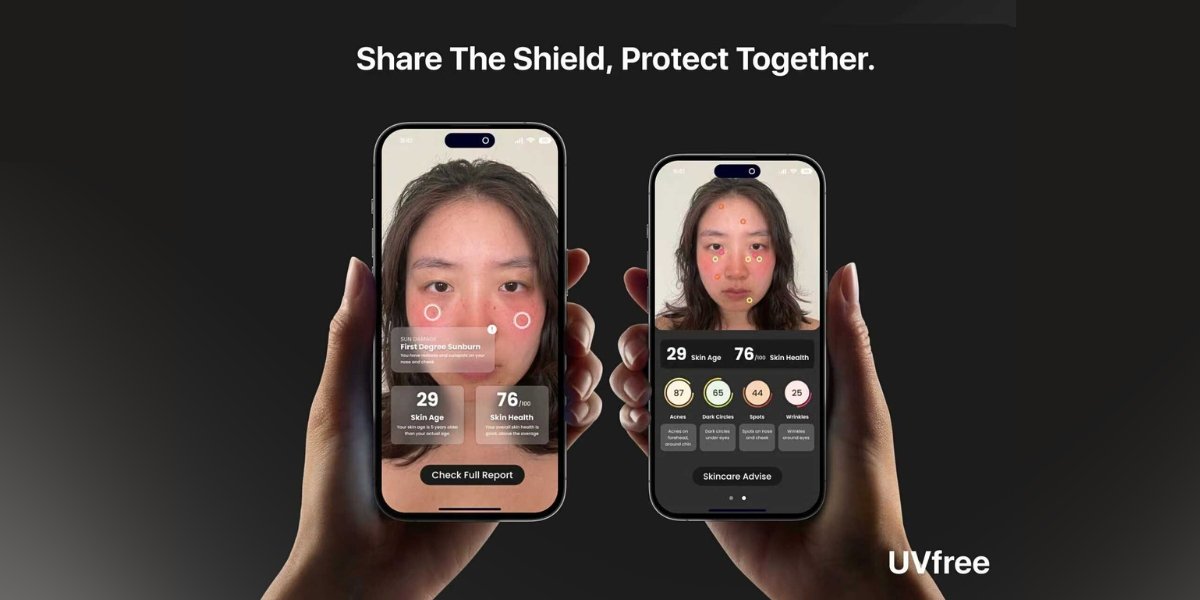
Rather than presenting users with technical UV index numbers, UVfree translates exposure into visual cues, progress indicators, and timely alerts that communicate both current intensity and accumulated dose. A lightweight wearable sensor detects UV levels, while the mobile interface turns raw data into a simple, human-centered narrative: when it’s time to seek shade, reapply sunscreen, or take a break outdoors. This approach reframes environmental risk communication from abstract data into an actionable, emotionally intelligible design, an area increasingly critical in preventive healthcare UX.
The project began with extensive user research. Wang led surveys and interviews to uncover why people often neglect sun protection in daily life, despite being aware of long-term risks. The findings revealed a common pattern: low motivation, poor understanding of UV metrics, and a lack of tools that fit seamlessly into everyday routines.
Through journey mapping and co-design workshops, Wang and her team explored how users naturally interpret risk and respond to reminders. “People don’t want to feel controlled or overwhelmed,” she says. “They want support that is quiet, respectful, and personal. Prevention should feel like care, not like an alarm.”
These insights shaped UVfree’s design language, minimal, accessible, and emotionally reassuring. The interface favors soft color transitions over harsh warnings, and concise micro-interactions over dense data dashboards. “Good healthcare design doesn’t create fear,” Wang notes. “It builds awareness and trust.”
“Technology should empower people to understand their own bodies,” Wang says. “Especially for women, design can help remove fear, confusion, and social silence around health topics. It can replace them with clarity and confidence.”
The international recognition of UVfree has affirmed the value of this philosophy. The K Design Award jury praised the project’s balance of aesthetics and functionality, while the New York Product Design Awards highlighted its clarity, innovation, and real-world impact. For Wang, the awards are not an endpoint but encouragement to continue exploring how UX can operate at the intersection of science, empathy, and everyday life.
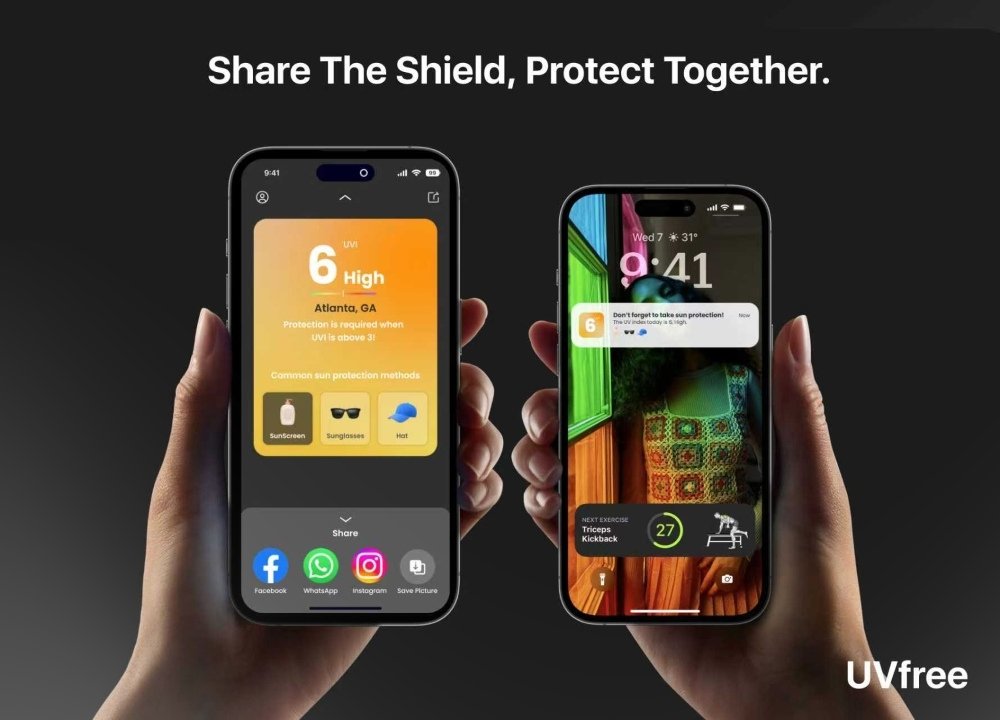
Photo Courtesy: Yijing Wang
Now based in New York, Wang designs complex fintech platforms while continuing her research and independent work in preventive health and wellness UX, where design is not merely about usability but about long-term well-being. As a female designer, Wang brings a particularly sensitive perspective to issues of the body and long-term health. Her broader research interests extend beyond skin protection. In 2024, her study on an augmented reality, guided breast self-examination app, designed to support women in early detection and self-care, was published and presented at the International Conference on Pervasive Computing Technologies for Healthcare (Pervasive Health 2024). “I believe the future of digital health is preventive, not reactive,” she reflects. “If design can quietly guide someone to take care of themselves before a problem becomes serious, then it has already done something meaningful.”
With UVfree, Yijing Wang has demonstrated how thoughtful interaction design can transform an invisible environmental threat into a visible, understandable, and manageable part of daily life. In doing so, she reminds us that often the most powerful role of design is not to dazzle, but to protect, gently, consistently, and humanely.