
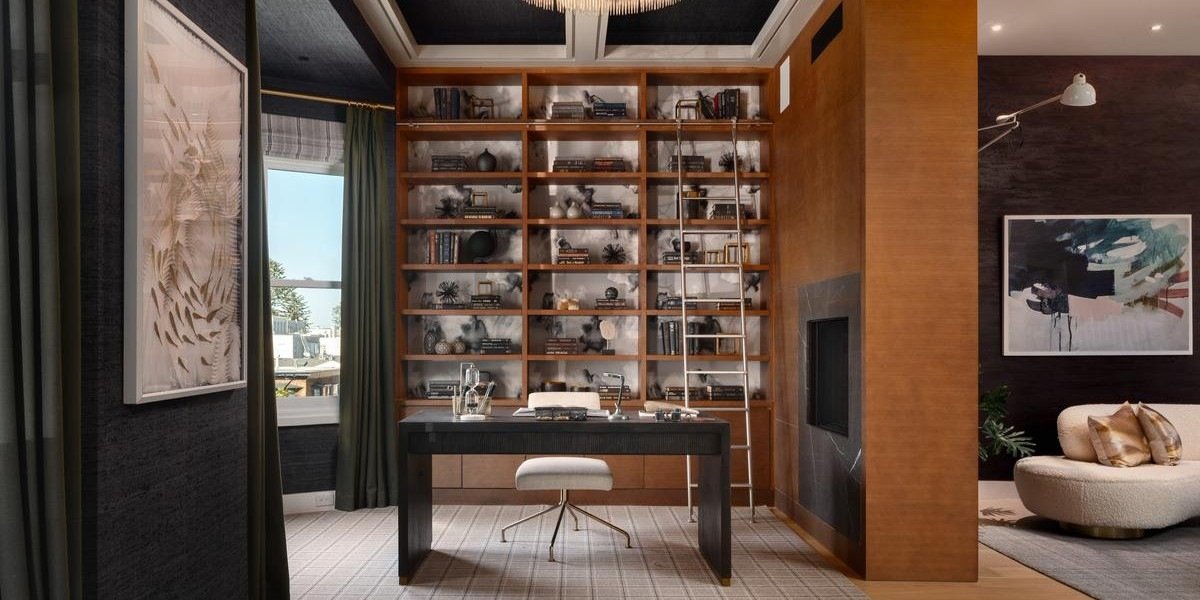
Throughout the global architecture industry, businesses are increasingly required to strike a balance between aesthetic aspirations and environmental considerations. The American Institute of Architects has indicated a steady increase in the demand for sustainable and energy-efficient architecture in the last decade or more. This trend is more evident in urban areas where the availability of land for development is a critical constraint. People increasingly require spaces that support their living needs, adapt to technological advancements, and remain useful for an extended period. In this context, the design philosophy assumes greater importance.
EAG Studio has developed a design methodology based on the integration of contemporary living with timeless design. The San Francisco-based architecture firm was founded by Vincent Léger in 2002. The company operates with over two dozen employees and serves various states in the United States. The EAG Studio office is located in the heart of the San Francisco neighborhood known as the SoMa. The company’s methodology integrates design aesthetics with regulatory considerations, construction planning, and sustainability. The founder of the company, Vincent Léger, developed the firm during a period of rapid growth in the San Francisco Bay Area.
In the early 2000s, the San Francisco metropolitan area was witnessing a period of rapid development. The company’s founder developed the EAG methodology by integrating architecture, interior, and landscape design as a single process. In 2023, Michael Terndrup joined the company’s management team with an established background in entitlement and permitting.
Central to EAG Studio’s approach is the understanding that good design is not just about how it looks but about how it functions in the long term. They stress the importance of how people move through spaces, how rooms function, and how materials will last in the long term from the very beginning of the process. Building Information Modeling and 3D modeling are employed from the very beginning of the process to ensure performance before any construction begins. This approach allows architectural decisions to align with structural, mechanical, and environmental considerations.
Another important consideration in EAG Studio’s approach is biophilic design. This is an established approach in architectural theory that involves incorporating elements of nature into the built environment to improve the human condition. EAG Studio has successfully employed biophilic design in projects such as the Sonoma Hillside Ranch House in Glen Ellen, California. This is an off-grid energy system and water management system that was integrated into the client’s hillside compound. In the wake of the 2017 Sonoma County wildfires, there has been an emphasis on resilient design in rebuilding efforts in the region. This is in line with an overall shift in the architectural industry toward climate-resilient planning.
Community-based planning also manifests itself in the descriptions of their projects. The mixed-use and urban infill projects are designed with considerations for the community, walkability, and zoning. In the San Francisco areas of the Marina and Russian Hill, where the urban landscape is dense, the design of the Coastal Modern residence and the 2030 Leavenworth Street renovation were vertically organized to fit the existing buildings. These are examples of how the design intent was aligned with the zoning requirements.
However, sustainability involves more than the production of power. EAG Studio is said to focus on locking in long-lead materials early, using prefabricated parts, and planning inspections simultaneously to reduce waste. The U.S. Green Building Council points out the fact that buildings account for about 40 percent of the world’s total carbon emissions. EAG Studio integrates cost-effective resource management with a set sustainability objective.
Accessibility is integrated into the design by adhering to relevant commercial interior design regulations, as seen in the Anthem San Francisco stores in Corte Madera, Marin, California. The design of the interior aims to support flexible modes of working. For residential buildings, the firm considers the structure’s accessibility in relation to the occupants’ lifestyle. The firm points out the fact that commercial remodels can take weeks for approval, whereas landmark projects can take anywhere from three to six months.
The firm uses technology in a practical sense rather than for show. In the Panda Ranch project in Jackson Hole, Wyoming, high-end lighting and audiovisual systems are integrated with the structure. These systems are integrated into the structure’s design. In addition, the firm uses digital modeling to identify conflicts between design ideas and technology.
This same approach has guided the path to recognition. EAG Studio has received multiple industry awards for both design quality and client service over the years. The firm’s work has also been featured in California Home + Design Magazine (Nov 2017, Mar 2023), Robb Report (Aug 2020), Mansion Global (Jan 2018), and Inhabitat (Oct 2017).
Twenty-plus years into the practice of architecture, EAG Studio continues to be guided by a consistent set of principles connecting modern design with long-term performance. The methodology developed by Vincent Léger and expanded by Michael Terndrup emphasizes coordination, sustainability, and regulatory issues. In a crowded field of architectural designers influenced by the pressures of the environment and the urban landscape, EAG Studio demonstrates the power of a design philosophy to balance aesthetic appeal with operational functionality.