
How Space Exploration Created the AgTech Revolution

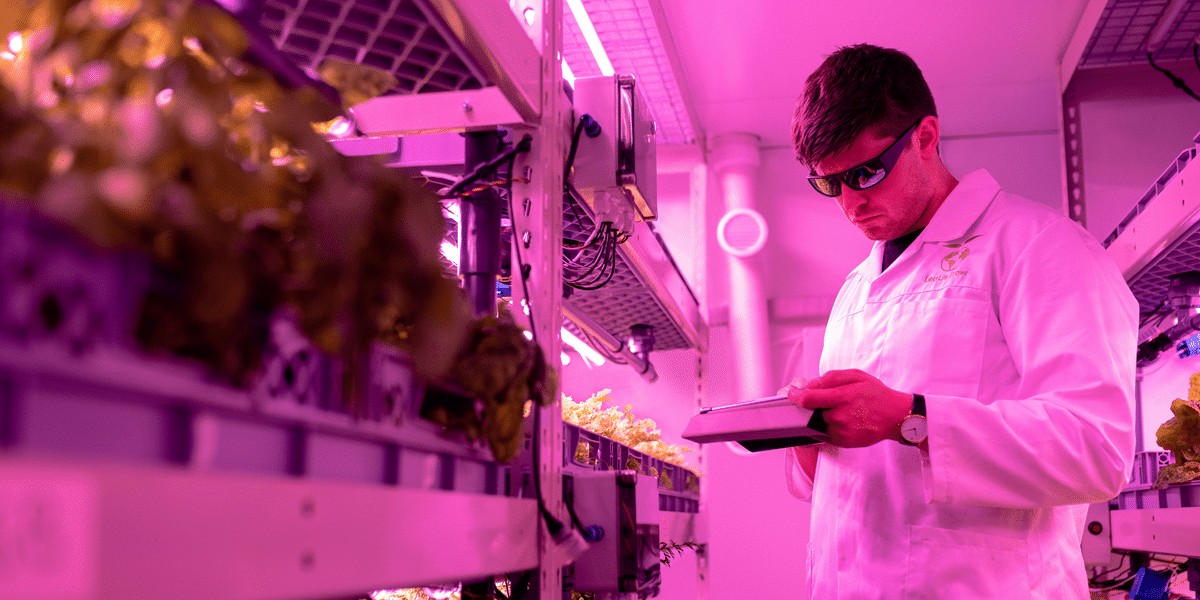
Image commercially licensed from: Unsplash
From healthcare to telecom, innovations created in space have filtered down and transformed various sectors across the globe. One industry that many people often don’t realize that space technology is helping to transform is agriculture.
Dylan Taylor, the CEO and co-founder of Voyager Space and a leading thought leader in the space sector, has offered his firsthand knowledge of how important space technology is to AgTech’s evolution.
“The value that space innovation has already created here on Earth is immeasurable,” says Taylor.
How exactly, then, has space helped advance agriculture technology here on Earth? Quite simply, space technology allows us to look down at the entire surface of our planet to see what is happening on the surface and in the skies above. We can do this with great precision in ways that human eyes cannot see. We can do this 24/7/365 and transmit this data to any farm on Earth.
Through innovative space technologies we have developed new ways grow food in enclosed environments with limited resources in space, on the surfaces of the worlds human explorers will visit, and in a myriad number of places on Earth where agriculture is problematical.
Vertical Farming
Vertical farming is a multi-story building with layers of crops growing in each section. It was first created by Dr. Dickson Despommier, a Columbia University environmental health sciences professor and his large team of graduate students. Around this time, NASA also began to utilize LED lights which became a game changer for growing vertical farming to help deliver specific, preferred wavelengths for each different crop and deliver optimum growing conditions.
The benefits from vertical farming are numerous. For one, vertical farms have higher yields than ordinary farms and can produce an equivalent around 4-6 soil-based acres. Vertical farms offer a year-round growing season, protected from poor weather, droughts or pests.
According to Dylan Taylor, “Vertical farms are also much more sustainable – both for the crops themselves and the Earth. They operate without the need for pesticides or herbicides, and since they don’t need farm equipment, use (and produce) minimal fossil fuels.”
Vertical farming is now one of the fastest-growing innovations in agriculture and experts are looking to grow more crops within them in the future, including wheat, corn and soy, preserving farmland and resources, mentions Taylor.
AgTech Tools
The Apollo Moon landings helped foster new protocols for food safety and storage.
Almost everyone in the agriculture field has since adopted the Hazard Analysis and Critical Control Point (HACCP) system. Created for astronaut food during the Apollo missions, it focuses on hazard analysis, identifies critical points and determines how hazards are preventable, controlled or eliminated. This helps monitor those points with frequent measurements. Now, this same model helps food companies to deliver safe, quality food assurance to everyday citizens.
Dylan Taylor says, “We are now seeing tremendous potential for research and technological advancement for AgTech in space. These applications will both enable future prolonged extraterrestrial habitation, as well as improve agricultural practices here on Earth.”
Seed Film and Novel Seeds
NASA is currently bioengineering seeds aboard the International Space Station (ISS) to learn how to develop plants that can better thrive in the space environment. Seed film is an impressive innovation involving a water-soluble polymer placed into the seed. It allows for many seeds to be stored and controlled at once, with nutrients added to help stimulate growth. Seed films can then help protect crops from stressors present in the microgravity of space.
One example of how advanced technology, agricultural science, private investment, and educational research are coming together in space is StarLab Oasis. Starlab Oasis is an agricultural research firm acquired by Voyager Space company that is using the space environment’s unique microgravity environment microgravity, deep space radiation, and launch vibrations tool to develop crop seeds with novel, beneficial traits. China Aerospace Science and Technology Corporation reports that in-space crop breeding with seeds exposed to cosmic radiation in space, has produced “over 200 plant and fruit varieties, including rice, wheat, cotton, and tomatoes; that’s $29.9 billion over 1.3 million tonnes of food”.
If implemented, seed film technology and novel seeds developed via the space environment, can become viable options for farmers on Earth looking to ensure that crops stay resilient and guard against environmental stress. More efficient and productive crop plants will help mitigate waste, energy and also help provide a cleaner environment that could potentially provide more food.
Artificial Photosynthesis And Plants That Grow In The Dark
The process whereby plants convert sunlight into energy that can be used for metabolism, photosynthesis, has now been tamed by space scientists. A recent study in the journal Nature Communications describes how the biological process has been installed on a special computer chip to create an artificial photosynthesis device. This could be used as part of a life support system on the Moon or Mars – or – it could be used in remote locations on Earth.
A research paper in the journal Nature Food also describes novel agricultural innovations with dual space-based and Earth-based applications. Researchers at the University of California Riverside have come up with a way to grow plants without sunlight – using chemical nutrients instead. Again, this has great potential for use on the Moon and Mars as well as in harsh locations on Earth in polar regions where sunlight is often limited for long periods.
The Promise of AgTech And Space Technology
Taylor explains, “The list of AgTech innovations from space that can benefit Earth is extensive and will continue to grow as resources and research opportunities increase. Space will certainly play a pivotal role in helping us create affordable and sustainably nutritious food for all humanity.”
With an increasing number of space stations pursuing space life science and agricultural research in space, the pace of this resource will only hasten with even greater potential benefits to the farmers of Earth – and the consumers of their crops.
Oh yes – we’re going back to the Moon – to stay and then on to Mars. These same agricultural advances will also serve to support our explorers as they set foot on new worlds.