Economic Insider

Optimizing Pipeline Tariff Management With NatGasHub gTARIFF

By: Emily Tran

The natural gas industry is no stranger to complexity. Nowhere is this more evident than in the labyrinthine world of pipeline tariffs, where thousands of line items span hundreds of pipelines and utilities, subject to constant shifts in regulation and rate structures. For market participants—traders, schedulers, producers, and utilities—manual tariff management has long been a costly, error-prone process, hindering efficiency and creating obstacles to swift decision-making. The recent debut of NatGasHub’s Automated Gas Pipeline Tariffs (gTARIFF) system marks a transformative moment for companies seeking a smarter, streamlined approach to tariff data management.

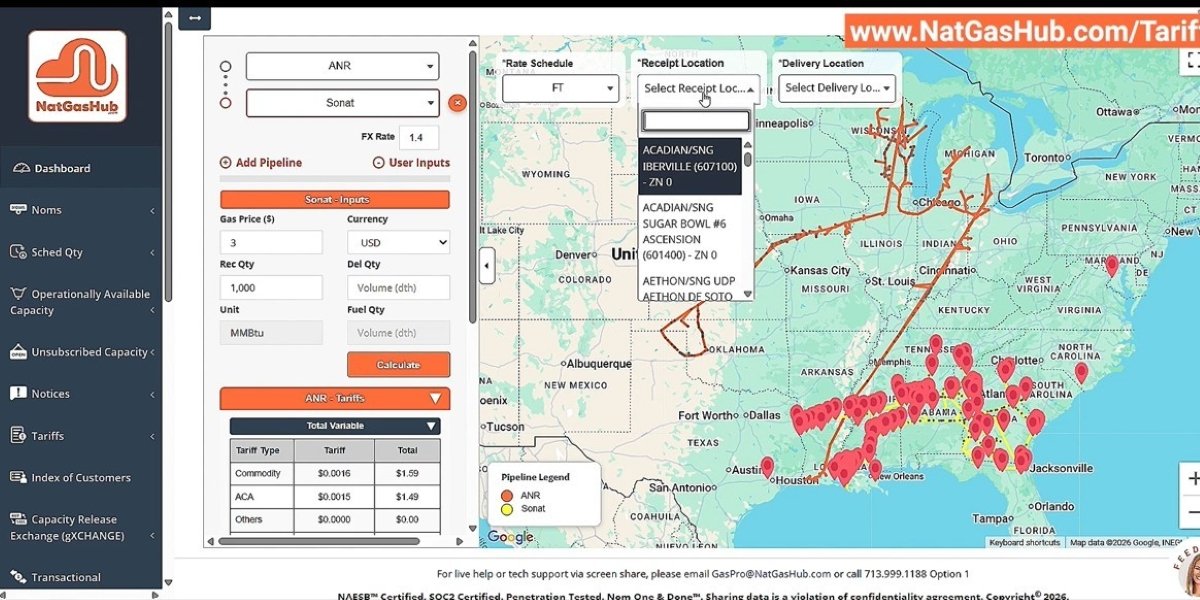
Built under the leadership of Jay Bhatty, NatGasHub’s gTARIFF is being called the “Google Maps” of natural gas pipeline tariffs. This advanced platform offers a single, automated source for tariff data, pulling information from over 215 interstate and intrastate pipelines and more than 490 gas utilities across the United States and Canada. By consolidating disparate regulatory data into one system, NatGasHub is removing a significant operational burden and sharply reducing the risk of human error.

The core value of gTARIFF lies in its real-time digital feed, which delivers daily updates from the latest regulatory filings directly into subscriber systems. Every relevant tariff element—reservation and demand charges, commodity fees, fuel percentages, ACA surcharges, and more—is meticulously standardized, regardless of whether a utility relies on mileage-based, zone-to-zone, or hybrid pricing models. This level of standardization and coverage has been elusive for an industry that, until now, has wrestled with the hassle of scraping rates from proprietary portals or juggling numerous spreadsheet reconciliations.

A defining advantage of NatGasHub’s platform is its daily automation cycle, with all tariff information updated before 6:00 AM Central Standard Time. This scheduling ensures traders and operational teams begin each day with a fresh, regulator-approved data set. For gas traders, real-time tariff data provides the accuracy required for pricing strategies, hedging decisions, and margin calculations. Small errors in tariff inputs can translate into significant financial discrepancies, and the platform’s automation virtually eliminates these costly mistakes.

Compliance is another bedrock feature. U.S. natural gas pipelines are governed by the Federal Energy Regulatory Commission (FERC), while their Canadian counterparts follow distinct provincial frameworks. NatGasHub’s gTARIFF platform verifies each data update against filings from these bodies, flagging pending rate adjustments and instantly integrating newly approved tariffs. For subscribers, this delivers unparalleled confidence in both the accuracy and legitimacy of the data supporting their operations.

Supporting these benefits is NatGasHub’s commitment to security and data integrity. The system adheres to the North American Energy Standards Board (NAESB) certification for seamless integration and SOC2 compliance for cybersecurity hygiene. With corporate and regulatory scrutiny of digital infrastructure at an all-time high, this compliance posture is indispensable for organizations relying on tariff automation to inform financial transactions and operational planning.

Optimizing Pipeline Tariff Management With NatGasHub gTARIFF

Photo Courtesy: NatGasHub

Integration into enterprise environments is effortless. Each tariff line item is mapped through a unique identifier compatible with existing energy trading and risk management (ETRM) tools. This automated workflow means scheduling and accounting processes receive instantaneous tariff data, banishing the drudgery of data entry and manual updates. Preview mechanisms within the platform let clients review upcoming changes, providing transparency and preserving user control throughout the integration process.

gTARIFF also brings intelligent monitoring and alerting into play. Automated tools constantly track tariff changes, fuel cost adjustments, and regulatory updates, sending real-time notifications to users. This proactive design lets companies immediately adapt their transportation models or adjust operations in response to market shifts, improving both agility and long-term cost management.

Visualization is another standout element. Borrowing a familiar map-based user interface, NatGasHub’s solution allows users to graphically query pipeline routes and simulate transportation costs, utilizing customizable parameters like volume, contract terms, and pricing assumptions. This empowers traders and schedulers to conduct sophisticated scenario modeling—turning raw tariff data into actionable market insights.

The industry-wide advantages of such a platform are clear. For trading desks, rapid access to standardized tariff data supports more accurate pricing and expedites transaction cycles. For schedulers, it streamlines pipeline nominations and reduces the time spent on reconciliation and error correction. For producers and utilities, the ability to track pending as well as approved tariff filings delivers a forward-looking edge, letting organizations prepare for regulatory changes before they impact the bottom line.

Beyond individual efficiency gains, NatGasHub is introducing a new level of transparency and standardization to the natural gas sector. Previously, companies operated amid fragmented data sources and proprietary portals, each with unique data formats and limited visibility. With gTARIFF, they now have a unified environment that supports not only operational efficiency but also strategic decision-making.

Driving this wave of innovation is the vision of Jay Bhatty, whose combined use of artificial intelligence and human oversight provides both the speed and reliability the market demands. Machine learning aids in the rapid detection and processing of changes, while expert validation assures that only accurate and regulatory-compliant data flows through the system.

While NatGasHub is not a public data repository, focusing instead on delivering structured tariff feeds to subscribers via API or integrated interfaces, its role as an enterprise-grade data service is more critical than ever. For energy companies navigating a rapidly evolving marketplace—where regulation, market prices, and infrastructure dynamics can change overnight—the ability to automate, standardize, and trust tariff data is a strategic necessity.

The launch of NatGasHub’s Automated Gas Pipeline Tariffs platform is a defining moment in the modernization of natural gas infrastructure data management. Centralizing and automating what was once a cumbersome, manual process, the gTARIFF system delivers sharper operational efficiency, deeper market insight, and stronger regulatory compliance for the entire natural gas value chain. As the industry moves further into a digital future, solutions like NatGasHub’s promise to be foundational for companies eager to thrive in a dynamic, data-driven energy landscape.

What to Expect From a Drug Distribution Charge

Drug distribution charges are among the more serious types of drug-related accusations a person can face in criminal court. Unlike simple possession charges, distribution allegations suggest that the government believes a person may have been involved in selling, delivering, transporting, or otherwise transferring controlled substances to someone else.

A relatively small amount of drugs, combined with other surrounding facts, can sometimes be sufficient to trigger a distribution allegation. A conviction can carry significant consequences, including the possibility of jail or prison time, fines, probation, a criminal record, and potential long-term effects on employment, housing, education, and professional opportunities.

How Are Drug Crimes Classified in Different States?

Drug crimes are not handled exactly the same way in every state. Each state has its own criminal code, sentencing structure, and rules for classifying offenses. In one state, a particular drug distribution charge may be treated as a felony of a certain degree. In another, the same basic conduct may fall under a different category with different sentencing ranges.

Even with those differences, many states use similar standards to prosecute drug crimes. For example, the type of substance can make a meaningful difference in how seriously a case is treated. Charges involving drugs that lawmakers consider especially dangerous often tend to carry harsher penalties.

When Does Drug Distribution Lead to Federal Charges?

Not every drug distribution case becomes a federal case. Many are handled in state court. Federal charges are generally more likely when the alleged conduct crosses state lines or has some connection to a larger network. Cases involving substantial quantities, multiple defendants, or coordinated investigations may also attract federal attention.

Federal authorities may also become involved when the investigation includes agencies such as the DEA, FBI, Homeland Security, or postal inspectors. In some situations, a case begins locally and later becomes federal after a broader investigation appears to uncover additional evidence. In others, state and federal authorities may work together from the beginning.

Federal charges are often considered especially serious because federal sentencing rules can be strict, and federal prosecutors usually handle cases they believe are important, well-developed, or tied to broader enforcement priorities. That does not mean every federal case results in a conviction, but the stakes may be higher than a state-level offense.

What Does “Intent to Distribute” Mean?

“Intent to distribute” generally means that the government is accusing someone of possessing drugs with the purpose of selling, delivering, or transferring them to another person. This distinction is important because it does not always require proof that a completed sale actually happened. Prosecutors often try to show intent through the surrounding circumstances.

For example, law enforcement may point to the quantity of drugs, how they were packaged, the presence of scales, large amounts of cash, messages on a phone, or other items that prosecutors believe could suggest sales activity. A substance divided into multiple small packages may be treated differently from the same substance kept in a single container. Likewise, statements made during an arrest or during recorded communications may become part of the government’s case.

Still, intent is not something a prosecutor can simply assume. It must be supported by evidence. In many cases, the dispute centers on whether the evidence adequately supports an intent to distribute or whether the government is reading too much into circumstances that may have another explanation. That issue can become one of the more heavily contested parts of a drug case.

What Factors Can Make Drug Distribution Charges More Serious?

Several factors can increase the seriousness of a drug distribution charge. Carrying a weapon during the commission of the offense often results in stricter penalties, even if nobody was hurt. Allegations involving minors can also lead to significantly stricter treatment, whether the accusation involves distributing drugs to a minor, using a minor in a drug operation, or engaging in alleged drug activity near places where children are likely to be present.

Another important factor is whether the case involves conspiracy allegations. A conspiracy charge allows prosecutors to argue that multiple people were working together toward a shared illegal goal. That can widen the scope of the case relatively quickly. A person may end up facing allegations not only for his or her own conduct, but also for conduct the government claims was part of a broader plan. In practice, that can make a case more complicated and potentially more serious.

What Do Prosecutors Need to Prove in a Drug Distribution Case?

Although the exact legal elements vary by jurisdiction, prosecutors generally have to prove several core points in a drug distribution case. First, they usually must prove that the substance at issue was in fact a controlled substance under the applicable law. Laboratory testing often plays a key role here.

Second, prosecutors usually must prove that the accused person knowingly possessed, transferred, sold, delivered, or intended to distribute the substance. In general, the government must show more than mere proximity. Being near drugs is not always the same as knowingly controlling them. That distinction can become very important in cases involving vehicles, shared homes, or multiple people at the scene.

Third, prosecutors must prove the conduct beyond a reasonable doubt. That is the highest standard in the legal system. The prosecution must present sufficiently reliable evidence strong enough to eliminate reasonable doubt in the minds of jurors or satisfy the judge in a bench trial.

Finally, the government must prove that the investigation itself complied with constitutional rules. Search and seizure issues, the reliability of witnesses, the handling of evidence, and the accuracy of law enforcement assumptions can all affect the overall strength and credibility of a case.


Disclaimer: This article is provided for general informational purposes only and does not constitute legal advice. The information presented reflects a broad overview of drug distribution laws and procedures, which may vary by jurisdiction and individual circumstances. Nothing in this article should be interpreted as a substitute for professional legal guidance. Readers are encouraged to consult a qualified attorney or legal professional for advice tailored to their specific situation.


Feeding the Economy: Agriculture’s $10.4 Trillion Impact on the U.S. Economy

The newly released 2026 Feeding the Economy report shows that U.S. agriculture and related sectors are projected to generate a cumulative $10.4 trillion in economic activity. This economic impact spans food production, energy, trade, and rural development, reinforcing agriculture’s crucial role in driving national economic growth.

Key Drivers of Agriculture’s Economic Growth

The Feeding the Economy 2026 report identifies several major factors contributing to agriculture’s growing economic footprint. Key drivers include technological advancements, shifts in global trade, and evolving consumer demands. Technological innovations, such as AI-driven crop management and precision farming, are significantly enhancing farming efficiency. At the same time, the report highlights the ongoing transition to sustainable practices as vital for mitigating climate risks and ensuring long-term industry viability.

Additionally, increased demand for healthier and locally sourced food products, combined with a focus on sustainable production methods, is reshaping both domestic and international supply chains. As a result, U.S. agriculture stands poised to capitalize on emerging market opportunities and build resilience in a changing global economy.

Impact on Employment and Regional Economies

Agriculture continues to be a major source of employment in the U.S., with the food and agriculture sector supporting around 49 million jobs nationwide. This includes direct employment in farming, food processing, retail, and foodservice industries. The report underscores that food and agriculture sectors collectively account for a significant portion of the U.S. economy, supporting nearly one in five jobs.

The $10.4 trillion economic impact, however, is not evenly distributed across regions. The Midwest and Great Plains, known for their crop production and biofuel industries, are expected to see the largest economic gains. Coastal states are also positioned to benefit from their strengths in specialty crops, seafood, and global export hubs. As diverse sectors of the agriculture industry expand, regional economies are expected to experience growth that reinforces agriculture’s foundational role in economic stability.

The Growing Influence of Global Trade and Exports

The report also emphasizes the continued importance of global trade in the agricultural sector. U.S. food and agricultural exports remain a key driver of growth, despite facing challenges in international markets. The report notes that U.S. agricultural exports reached over $177 billion in 2025, making agriculture one of the nation’s largest export sectors.

Expanding international markets, especially in emerging economies, is vital to achieving the $10.4 trillion target. As new trade agreements and partnerships are forged, U.S. agriculture’s global influence is poised to continue growing, ensuring access to wider markets and increased demand for U.S. products.

Policy and Industry Response to Growth Projections

Federal policymakers and industry leaders have expressed mixed reactions to the findings of the Feeding the Economy report. While the potential for growth is seen as a powerful opportunity, challenges such as labor shortages, climate change impacts, and supply chain vulnerabilities remain persistent concerns.

The report stresses the need for targeted investments in research, workforce development, and infrastructure to support the growth of agriculture-related industries. Sustainable agricultural practices and technological innovation are also central to ensuring that growth remains both economically and environmentally viable in the long run.

The Role of Technology in Agriculture’s Future

Advances in technology are expected to be pivotal in driving future growth in agriculture. Automation, AI-driven systems, and precision farming are all expected to significantly boost production efficiency. The adoption of cutting-edge technologies, including AI-powered crop management and satellite-guided farming equipment, are transforming the agriculture landscape by making farming more efficient, data-driven, and environmentally sustainable.

Further, the integration of sustainable technologies, such as renewable energy systems and eco-friendly farming practices, will play an essential role in mitigating climate change risks while ensuring that agriculture remains a vital sector of the economy. These technological innovations not only help farmers but also ensure a more sustainable future for the entire agricultural ecosystem.

Future Outlook for U.S. Agriculture

The agriculture industry faces both opportunities and risks. The projected $10.4 trillion economic impact represents an ambitious vision for agriculture’s growth. However, economists caution that volatility in global markets and the unpredictable nature of climate change may present significant challenges to achieving these projections.

For the agriculture sector to meet these ambitious growth targets, continued investments in technology, sustainability, and market expansion will be critical. Policymakers, industry stakeholders, and communities alike must work collaboratively to overcome these hurdles, ensuring that the benefits of agriculture’s growth are broadly shared and equitably distributed.

How Yusef-Andre Wiley Blends Faith and Policy in His Reform Approach

Public conversations about leadership often center on metrics, policy frameworks, or institutional reform. Yet a growing number of influential leaders are demonstrating that sustainable change frequently begins with something deeper: values.

Across nonprofit sectors, faith-driven organizations, and social reform initiatives, values-based leadership is emerging as a powerful force shaping public policy and community transformation. Among leaders helping illustrate this evolution is keynote speaker and social impact strategist Yusef-Andre Wiley, whose work blends personal conviction, faith, and practical action to address complex social challenges.

For more than 25 years, Wiley has worked at the intersection of leadership development, community reform, and social advocacy. Through keynote presentations, nonprofit initiatives, and consulting engagements, he has consistently championed the idea that leadership grounded in purpose can catalyze lasting change.

What Does Leadership Anchored in Purpose Look Like?

Values-driven leadership is hardly a new concept. Many historical reform movements, from civil rights initiatives to community development programs, were inspired by leaders whose personal convictions informed their public actions.

What distinguishes today’s movement is how leaders are integrating those values into modern organizational structures and policy conversations.

Wiley represents this shift through his leadership of Timelist Group, Inc., a nonprofit organization focused on helping individuals reenter society after incarceration. Founded to serve justice-involved individuals who often lack access to critical services, the organization provides housing assistance, employment resources, leadership development, and education programs designed to support long-term stability.

Under Wiley’s direction, Timelist Group has evolved into more than a traditional nonprofit service provider. It functions as a strategic hub that connects mentorship, personal development, and systemic advocacy, demonstrating how values can guide both operational decisions and broader reform initiatives.

How Does Faith Serve as a Strategic Foundation?

Faith-inspired leadership sometimes carries misconceptions, particularly within policy discussions where secular frameworks dominate. However, many modern reform leaders are demonstrating that faith-based perspectives can complement evidence-driven policy approaches.

Wiley’s philosophy reflects that balance. His speaking engagements frequently emphasize the idea that faith is not simply a belief system but a leadership principle rooted in accountability, service, and responsibility to others.

That philosophy resonates strongly with organizations seeking leadership development rooted in character as well as competence. Through partnerships with leadership communities, including the John Maxwell Team, and speaking engagements across professional audiences, Wiley has shared insights on how leaders can align personal values with organizational strategy.

The result is a leadership model that focuses not only on policy outcomes but also on human transformation.

Bridging Personal Experience and Policy Conversations

Another defining element of Wiley’s approach lies in storytelling and lived experience. Effective social reform leaders often bring personal narratives that humanize systemic issues, making complex policy discussions more accessible.

Through his writing, Wiley has explored themes of growth, reflection, and resilience. His book If I Knew Then What I Know Now offers readers lessons drawn from personal experience and leadership insights, encouraging individuals to approach life decisions with intentionality and purpose.

His more recent publication expands on similar themes, reinforcing the idea that leadership development is a continuous process shaped by experience and reflection.

These works have become extensions of Wiley’s broader mission: helping individuals recognize their potential while encouraging organizations to rethink how leadership is cultivated.

Reimagining Leadership for Modern Social Challenges

Society currently faces a wide range of complex issues, from criminal justice reform and workforce reintegration to housing stability and economic mobility. Addressing these challenges often requires collaborative leadership capable of bridging diverse perspectives.

Values-driven leaders like Wiley argue that purpose can act as a unifying force across sectors. When leaders anchor decisions in principles such as accountability, compassion, and service, policies tend to focus more directly on long-term outcomes rather than short-term fixes.

Timelist Group’s work with returning citizens illustrates this principle in action. Programs emphasize employment readiness, mentorship, and leadership development, helping participants rebuild stability while contributing positively to their communities.

Across business, government, and nonprofit sectors, conversations about leadership are increasingly shifting toward purpose and impact. Organizations are beginning to recognize that ethical leadership and values-driven strategy are not opposing forces but complementary ones.

Leaders such as Yusef-Andre Wiley continue to demonstrate how faith, purpose, and policy can work together to produce measurable social progress. By combining personal conviction with practical action, values-driven leadership offers a compelling framework for addressing some of society’s most persistent challenges.

As communities and institutions search for solutions to complex issues, this approach suggests that the future of leadership may depend not only on innovation and strategy but also on the values guiding those decisions.