Economic Insider

Audrey Faust Wants to Help Women Rethink Wealth by Examining the Identity Behind Success


By: Maya Towers

For many entrepreneurs, the search for financial growth begins with another strategy, another course, another productivity system, or another attempt to work harder. Audrey Faust believes a meaningful shift often starts somewhere much deeper.

Behind every business decision, every price point, every sales conversation, and every investment choice is a set of beliefs about money, success, and personal worth. Those beliefs may operate quietly in the background, shaping outcomes before entrepreneurs even realize they are there.

That idea became the foundation behind Audrey Faust’s book You Are an Abundant B, a guide designed to help women examine their relationship with abundance, identity, and financial success.

For Audrey, abundance is not something someone earns after reaching a certain revenue goal or achieving a specific milestone. It begins with a decision about who you choose to become.

Redefining What It Means to Be Abundant

The title You Are an Abundant B intentionally leaves the final word open.

Audrey created that space because she wanted every woman who picked up the book to stop and ask herself a question before even turning the first page: What does that mean to me?

The answer is personal.

The “B” can represent the identity a woman chooses for herself, rather than a label handed down by expectations, society, or financial results. Audrey believes identity is not something people have to wait for permission to claim.

Many entrepreneurs unknowingly tie their confidence to external proof. They believe they can call themselves successful once the business grows, once the money arrives, or once they feel completely ready.

Audrey challenges that idea.

She believes the decision comes first, and the evidence may follow.

When women stop measuring their power only through their bank accounts, they may begin showing up differently. They may make clearer decisions, communicate their value more confidently, and become more willing to invest in themselves and their businesses.

The Hidden Beliefs That Shape Financial Outcomes

One of Audrey’s key messages is that financial struggles are not always caused by a lack of knowledge or effort.

Many entrepreneurs know what they should do. They understand marketing. They have strategies. They take action. Yet they may continue running into the same limitations.

Audrey believes the missing piece is often found in subconscious beliefs.

She describes these beliefs as background software that may influence behavior without conscious awareness. They can affect how much someone charges, how they handle rejection, whether they follow up with potential clients, and even whether they are comfortable looking closely at their own financial numbers.

A woman can be working consistently while still carrying beliefs that create resistance against the success she wants.

For Audrey, changing financial outcomes may require looking beyond external action and understanding the internal patterns driving those actions.

Moving Beyond the Hustle Mentality

The traditional message in entrepreneurship has often been simple: work harder, put in more hours, and success may follow.

Audrey sees a problem with that approach.

After years of working as a CFO and observing business owners, she noticed many talented women were exhausting themselves while their financial results remained unchanged.

The issue was not always effort. It was often clarity, capacity, and alignment.

Audrey believes the “work harder” mentality can distract entrepreneurs from asking better questions.

Instead of constantly asking, “How can I do more?” she encourages women to consider, “How can I work in a way that creates better results?”

Her approach combines mindset work, neuroscience, and financial strategy to explore why people repeat certain patterns and how they can create new ones.

The brain is designed to recognize patterns and predict outcomes based on previous experiences. If someone’s internal expectations around money are limited, they may continue recreating those patterns even while trying to grow.

The goal is not simply doing more. It is becoming someone who can receive and manage more.

Why the Nervous System Matters in Business

Entrepreneurship often celebrates constant movement. The busy schedule, the long hours, and the endless hustle can look like signs of commitment.

Audrey believes there is another side of the conversation that deserves attention: the role of the nervous system.

When entrepreneurs operate under constant stress, their ability to think clearly can change. They may overlook opportunities, make reactive decisions, or approach business conversations from fear instead of confidence.

Audrey views nervous system regulation as more than a personal wellness practice. She sees it as a business consideration.

When someone feels grounded and secure, they may be able to make decisions from a place of confidence rather than urgency.

That difference can influence everything from client conversations to negotiating opportunities.

Creating a Practical Path Through the T.E.A. Framework

To help women apply these concepts, Audrey created her “Dishing the T.E.A.” framework, which focuses on Thoughts, Energy, and Alignment.

The process begins with thoughts because beliefs influence the way people interpret situations and make decisions.

Next comes energy, which Audrey believes affects how entrepreneurs show up and how others experience them. Confidence, uncertainty, excitement, and fear can all influence interactions in ways people often underestimate.

The final piece is alignment.

Audrey believes entrepreneurs need to examine whether their choices match the future they are trying to create. When thoughts, energy, and actions are moving in different directions, growth can become more difficult.

The framework gives women a way to pause, reassess, and return to a more intentional mindset.

Building Success From the Inside Out

At the heart of You Are an Abundant B is Audrey Faust’s belief that business growth is connected to personal transformation.

Success is not only about revenue numbers or external achievements. It is also about developing the confidence, awareness, and self-trust that may help someone handle the opportunities that come with growth.

Audrey’s message is not about waiting for abundance to appear. It is about recognizing the ways people may already be blocking themselves from receiving it.

By changing the identity behind the business, entrepreneurs may begin creating decisions, habits, and strategies that reflect where they truly want to go.

For Audrey, abundance is not just a financial destination.

It is a way of showing up.

Ready to rethink the way you approach success, money, and personal growth? Discover Audrey Faust’s You Are an Abundant B on Amazon and explore how identity, mindset, and strategy can work together to support wealth creation.
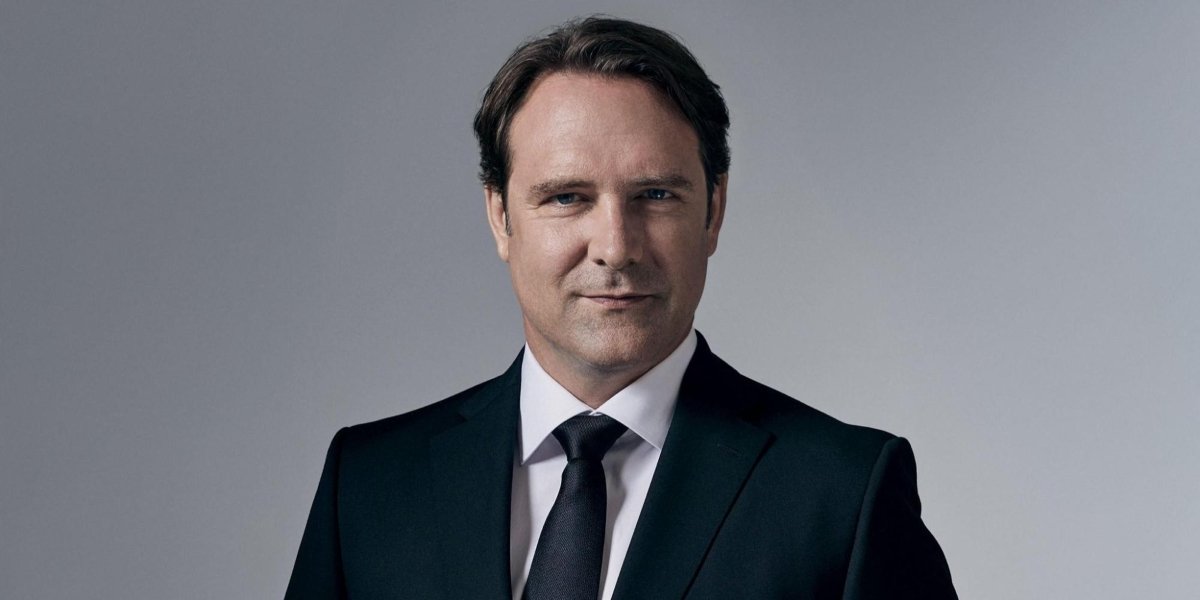
Christian Marcolli Works with High-Profile Performers on Major Stages. Now He’s Teaching CEOs the Same Principles That Can Help Create Champions.

By: Laura Zeller

Most leadership books are written by people who have studied leadership. Christian Marcolli’s Winning Match was written by someone who has lived inside high-performing environments in competitive sports and global business for over twenty years, and who spent that time asking the same question in both places: what actually separates the leaders who can help create meaningful outcomes from the ones who settle for ordinary ones?

The answer he keeps arriving at isn’t talent density or strategy or even culture in the broad sense. It’s something more specific. It’s whether the leader in the room knows how to recognize a Game Changer when they see one, and whether they have the tools to build the kind of relationship that can help that person develop toward what they’re capable of.

What a Game Changer Actually Is

The term gets used loosely in business circles, but Christian is precise about what he means by it. A Game Changer is not simply a high performer. High performers are valuable and necessary and deserve investment. Game Changers are a subset of that group, the individuals whose combination of intellect, energy, and unconventional thinking has the potential to reshape an organization from the inside.

They tend to challenge assumptions. They push boundaries. They can be uncomfortable to manage through conventional means because conventional means were not designed for people who operate the way they do. Generic development programs leave them flat. Standard assessment tools often miss what makes them distinctive. And leaders who try to manage them the same way they manage everyone else may risk losing them, either to disengagement or to a competitor who is willing to offer them something more.

The first job of a Leadership Champion, in Christian’s framework, is to identify them clearly.

Leadership Sparring as a Daily Practice

Once a leader has identified someone with genuine Game Changer potential, the real work begins. Christian’s framework centers on a practice he calls Strategic Leadership Sparring, and it’s worth understanding what it is and what it isn’t.

It isn’t mentoring in the classical sense, where a senior person imparts wisdom to a junior one. It isn’t coaching in the traditional sense, focused primarily on the individual’s ideas and experience. Leadership Sparring is a dynamic, ongoing, constructive interaction in which a leader actively challenges a Game Changer to develop the insights, thinking, and capabilities they may need to perform at a high level.

It covers immediate challenges and long-horizon strategic questions. It is deliberately incremental, building over time rather than delivering a single intervention and walking away. And it requires a specific kind of leadership to do it well, one who is genuinely invested in the Game Changer’s development rather than simply in managing their output.

Christian calls that leader a Leadership Champion, and developing into one is the central transformation the book invites readers to make.

Why Lightness Matters More Than Many Leaders Think

One of the more counterintuitive ideas in Winning Match is Christian’s argument about high performance and pressure. The conventional image of peak performance involves relentless intensity, extreme discipline, and a culture where the stakes are always visible and always felt. Christian pushes back on that image directly.

Permanent high pressure in an overall negative context wears down even highly capable people. It may not produce sustained performance. It can contribute to burnout, risk aversion, and the quiet exit of the people a company would prefer to retain.

What may help sustain strong performance over time, he argues, is the deliberate integration of lightness. Playfulness. Positive humor. The ability to tackle hard things without making every hard thing feel like a crisis. Leaders who model productive lightheartedness may create environments where people can take intelligent risks, recover from setbacks, and stay connected to the work in a way that keeps their strong qualities available.

This isn’t softness. It’s a performance-oriented idea dressed in more human language.

The Paradigm Shift That Makes Everything Else Possible

Christian is clear that becoming a Leadership Champion isn’t a simple skill acquisition. For some leaders, it requires a genuine paradigm shift in how they understand their role. The traditional model of leadership as authority, control, and the setting of direction runs deep. Moving from that model to one defined by active partnership, individualized development, and the willingness to deviate from standard procedures for people with meaningful potential asks something real of the people making the transition.

But the outcomes, he argues, may justify the discomfort of the shift. When a company has leaders who can identify Game Changers, build genuine Winning Match relationships with them, and create the conditions for those people to perform at levels that may outpace expectations, the results may build over time in ways that conventional talent strategies may not always replicate.

He has watched versions of it happen in boardrooms and on playing fields across multiple decades and multiple countries. The pattern appears frequently. The methodology is designed to be applied.

Winning Match is his attempt to make it teachable.

It stands among notable leadership books of recent years. It has the potential to influence leadership discussions in the next decade.

Available worldwide through major online booksellers, including Amazon.

Oil Prices Fall as Middle East Supply Concerns Ease

Energy markets entered the final week of June with oil prices moving lower after concerns over potential supply disruptions in the Middle East subsided. Investors redirected their attention to upcoming U.S. economic data, central bank policy signals, and other scheduled market events that could influence inflation expectations and interest rate decisions during the second half of 2026. The decline in crude prices followed months of heightened volatility that had pushed energy costs sharply higher during periods of geopolitical uncertainty. As immediate supply concerns eased, traders increasingly shifted their focus from geopolitical developments to macroeconomic indicators expected to shape monetary policy in the coming months.

The adjustment in market sentiment comes after an eventful first half of the year, during which energy prices played a significant role in financial market movements. Earlier geopolitical tensions involving Iran contributed to a sharp increase in crude prices, with oil briefly reaching around $120 per barrel. 

Higher energy costs complicated inflation forecasts because they raised transportation, manufacturing, and business operating expenses across multiple sectors. The recent moderation in oil prices has reduced one of the most closely watched sources of inflation pressure, even as investors continue monitoring developments that could affect global energy supplies. Market participants are now weighing whether softer energy costs will influence broader inflation readings while awaiting additional economic data from the United States and other major economies.

Federal Reserve Policy Remains a Primary Market Focus

Attention has increasingly centered on the Federal Reserve after policymakers adopted a firm stance on inflation during their June policy meeting. Investors continue evaluating the possibility of another interest rate increase later this year, with market pricing indicating that additional monetary tightening could begin as early as September. Expectations surrounding future policy decisions remain closely linked to incoming economic data, particularly reports that provide insight into inflation and labor market conditions.

The upcoming U.S. employment report has become one of the most closely watched economic releases on the calendar. Because the Independence Day holiday falls on Friday, the June nonfarm payrolls report will be released one day earlier than usual, giving investors an updated view of hiring activity before the holiday weekend. Employment data is considered a key measure of economic strength because it helps policymakers assess labor market conditions alongside inflation trends.

Recent labor market figures have pointed to continued resilience in hiring. The May nonfarm payrolls report marked the third consecutive month of solid job gains, reinforcing expectations that the U.S. economy has continued expanding despite elevated borrowing costs. Consistent employment growth has also supported consumer spending, which remains an important driver of overall economic activity.

Market participants are closely monitoring whether another strong employment report could reinforce expectations that inflation pressures remain persistent enough to justify additional monetary tightening. Conversely, any signs of softer hiring could influence expectations for the timing of future policy decisions. Along with employment data, investors will continue watching inflation reports, consumer spending figures, and statements from Federal Reserve officials as they assess the outlook for interest rates through the remainder of 2026.

Lower Energy Costs Could Influence Inflation Outlook

Energy prices remain an important component of inflation calculations because they affect transportation, manufacturing, and consumer fuel expenses across the economy.

Earlier in 2026, geopolitical conflict involving Iran contributed to a sharp rise in crude prices, with oil reaching approximately $120 per barrel during the period of heightened uncertainty. Those price increases reduced expectations that global central banks would be able to ease monetary policy quickly.

The recent decline in oil prices has reduced one of the immediate inflationary pressures facing policymakers. While energy costs represent only one element of overall consumer prices, movements in crude oil often influence broader inflation expectations because they affect business operating expenses throughout multiple industries.

Investors continue to evaluate whether lower oil prices will provide additional support for inflation moderation while recognizing that central banks remain focused on a wider range of economic indicators before making policy decisions.

Central Bank Meetings Add to Market Attention

International monetary policy discussions are expected to receive additional attention as central bankers gather in Sintra, Portugal, for the European Central Bank’s annual conference.

Federal Reserve Chair Kevin Warsh is scheduled to participate in the event, marking his first international central banking gathering since assuming leadership of the U.S. central bank.

Financial markets are expected to closely follow his public remarks for additional insight into the Federal Reserve’s policy approach. During his first press conference after taking office, Warsh emphasized that controlling inflation remains a priority, reinforcing expectations that policymakers are prepared to maintain restrictive monetary policy if price pressures remain elevated.

European Central Bank President Christine Lagarde is also expected to speak during the conference. Investors will additionally monitor June euro zone inflation data for indications of whether policymakers in Europe may also consider further interest rate increases.

The Sintra gathering provides central bank officials with an opportunity to discuss monetary policy and global financial conditions while markets continue evaluating the outlook for inflation and economic growth.