Economic Insider

Joel Yi Says Majority of AI Conversations Focus on Capability Instead of Execution

There is a particular kind of conversation about artificial intelligence that Joel Yi hears constantly, and it frustrates him. It centers on what AI can do, on its expanding capabilities and its dazzling potential. Joel Yi, the founder of DeployAIBots, argues that this focus on capability misses the point. The real question, he insists, is not what artificial intelligence can do but whether companies are actually using it to do anything.

Joel Yi has watched the discourse around AI fixate on possibility. Each new advance prompts a wave of discussion about what the technology might enable, what problems it could theoretically solve, and how powerful it is becoming. Joel Yi does not dispute that the capabilities are impressive. His objection is that capability has stopped being the bottleneck. The tools are already powerful enough to transform how most businesses operate. What is missing is execution, the actual work of putting those capabilities to use inside a company.

This is why Joel Yi keeps redirecting the conversation toward implementation. He has argued that the biggest gap in the market is not a shortage of capable technology but a shortage of people actually delivering outcomes with it. There are many voices discussing artificial intelligence, running workshops, and offering advice about its potential. Far fewer are getting working systems into operation. The conversation, in his view, is stuck on capability when it should have moved on to execution.

DeployAIBots reflects this priority. The Miami-based company builds agentic AI that executes operational work such as scheduling, customer communication, and internal coordination, rather than dwelling on what the technology might someday accomplish. Joel Yi describes the company’s role as getting into a business and actually deploying systems that produce results. The emphasis is deliberate. By focusing on execution, Joel Yi positions DeployAIBots against a market he sees as overly enamored with capability for its own sake.

Joel Yi argues that the obsession with capability actually holds companies back. When a business is constantly told about the expanding potential of artificial intelligence, it can fall into a posture of waiting, always anticipating the next breakthrough rather than using what already exists. The conversation about what AI will be able to do tomorrow distracts from the question of what it can do for the company today. Joel Yi believes many organizations are paralyzed by this, perpetually impressed but never actually implementing.

His own history pushes him toward execution. Joel Yi studied computer science, earned recognition for his work in artificial intelligence at Pacific Lutheran University, and built an early machine learning model in 2018 that identified rare plant species. He later became one of the first cyber officers in the United States Army cyber branch. Across that path, the value was always in what the technology actually did, not in what it might theoretically be capable of. That orientation shapes his impatience with capability-focused talk.

Joel Yi also connects the issue to how companies measure artificial intelligence. A conversation about capability has no natural endpoint, because there is always more the technology might do. A conversation about execution, by contrast, is grounded in results. Joel Yi has insisted that everything DeployAIBots does connects to a measurable outcome, and he believes shifting the conversation toward execution naturally brings measurement back into focus. The question becomes not how powerful the tool is but what it accomplished and how that can be verified.

He points to his own company as an example of execution over capability. DeployAIBots reports reclaiming more than 150 hours of work each week through its own technology. That figure is not a statement about what AI can theoretically do. It is a record of what a specific deployment actually did. Joel Yi treats this kind of concrete result as the proper subject of conversation, far more useful than abstract discussions of potential.

For Joel Yi, the path forward is to change the question. Instead of asking what artificial intelligence is capable of, he urges companies to ask whether they are using it to execute real work. The capabilities, he argues, are already here. The advantage now belongs to those who stop marveling at potential and start deploying systems that deliver. From its Miami base, DeployAIBots is built for the companies ready to have that second conversation.

How Neck Flex Built a Patented Cervical Training System

For much of the twentieth century, cervical strength training remained a highly specialized area within sports performance and rehabilitation. While athletes in wrestling, boxing, rugby, American football, and motorsports routinely incorporated neck exercises into training programs, the equipment available for direct cervical resistance training changed relatively little over several decades. Traditional methods generally relied on weighted head harnesses attached to chains and free weights, manual resistance techniques administered by coaches or therapists, or large stationary neck machines typically found in institutional athletic facilities. As sports medicine research increasingly examined the relationship between cervical strength, athletic performance, rehabilitation, and injury management, demand grew for training systems capable of accommodating a wider range of movement patterns and training environments.

Scientific interest in cervical strength has expanded substantially over the past two decades. A systematic review published in The Physician and Sportsmedicine in 2021 documented growing research into neck strength measurement and conditioning among collision sport athletes, particularly in rugby union. More recent systematic reviews have examined the role of cervical exercise interventions in rehabilitation settings and persistent concussion management, while researchers continue to investigate how neck musculature influences head and cervical biomechanics during athletic participation. Although evidence remains mixed regarding direct causal relationships between neck strengthening and concussion reduction, studies consistently demonstrate that targeted cervical exercise programs can increase neck strength and endurance.

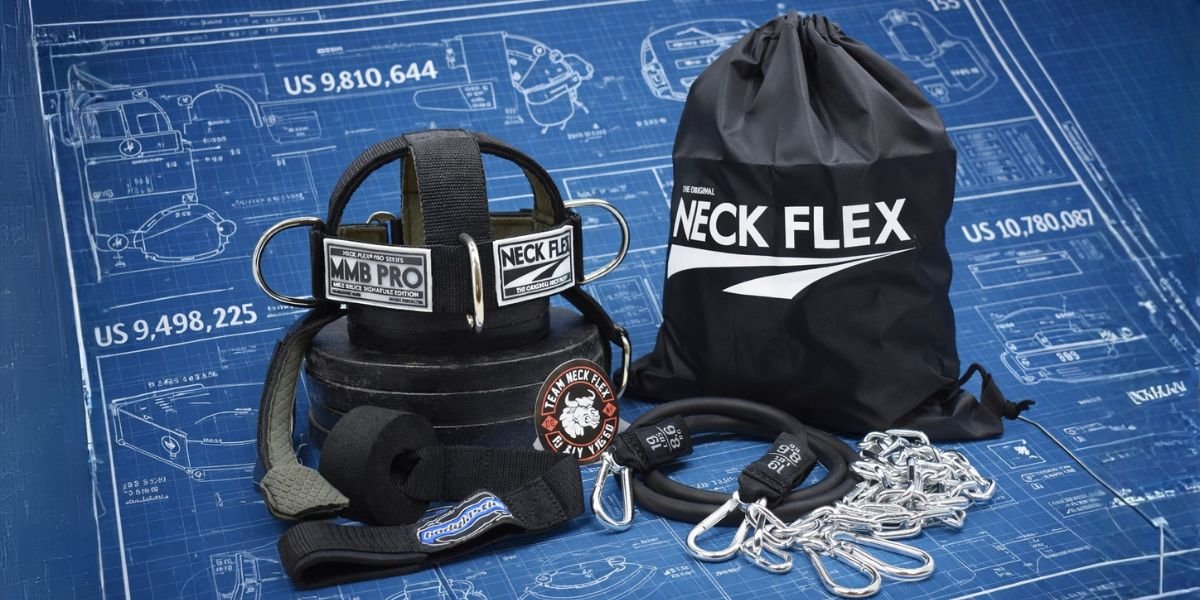
It was within this broader context that Neck Flex emerged in Leesburg, Virginia, in 2010. Founded by Thomas Harrison Hunt and Zachary Wyatt Elam, the company sought to address what its founders identified as practical limitations in existing neck-training equipment. According to patent records and company materials, Hunt, a former wrestler and coach, and Elam, a multidisciplinary designer and former United States Army engineer, began developing an alternative cervical training system centered on elastic resistance rather than traditional chain-loaded harnesses. Their objective was to create a portable training device capable of facilitating multidirectional cervical movement patterns, including flexion, extension, lateral flexion, and rotation, while avoiding some of the spatial and mechanical constraints associated with existing equipment.

According to the company’s published development history, the design process extended over approximately two years and involved the construction of nine complete prototypes before a commercially viable product was finalized. Early concepts reportedly incorporated improvised equipment configurations and hand-sewn harness assemblies. The resulting system, introduced commercially in 2012, employed resistance bands attached to a head harness through multiple attachment points positioned around the circumference of the device. This arrangement permitted resistance to be applied from different angles while maintaining portability, an attribute that distinguished the system from many traditional cervical exercise devices available at the time.

The engineering concepts underlying the original Neck Flex system subsequently became the subject of several United States utility patents awarded to Gonza LLC. The first and most widely discussed of these patents, U.S. Patent No. 11,007,405 B2, issued in May 2021, covers a neck exercise device and system utilizing a head harness with multiple attachment members arranged to facilitate multidirectional resistance training. The patent documentation describes the limitations of conventional chain-based neck harnesses, which typically rely on two attachment points and offer comparatively limited movement configurations. The patented design incorporates multiple vertically oriented attachment members positioned around the head harness to enable resistance application during flexion, extension, lateral movement, and rotational exercises.

Additional patents expanded upon this initial framework. U.S. Patent No. 11,413,491 B2 addressed structural stabilization systems intended to improve dynamic cervical training. U.S. Patent No. 11,638,850 B2 covered universal attachment interfaces designed to accommodate resistance bands, cables, and chains. U.S. Patent No. 11,638,851 B2 focused on ergonomic load distribution and comfort features, while U.S. Patent No. 12,029,936 B2 addressed advanced load-management systems applicable to both athletic and rehabilitative settings. Collectively, these patents reflect an engineering strategy centered on modularity, multidirectional resistance application, and adaptability across multiple training environments.

The emergence of patented cervical training systems coincided with broader developments in sports science and rehabilitation research. A systematic review published in Archives of Physical Medicine and Rehabilitation in 2021 identified growing interest in standardized methods for evaluating cervical muscle strength and endurance. Similarly, rehabilitation researchers have increasingly examined the role of cervical exercise interventions in treating chronic neck pain, cervical dysfunction, and persistent post-concussion symptoms. Although no consensus currently exists regarding optimal cervical training protocols across all populations, scientific literature continues to support the importance of measurable and reproducible approaches to neck-strength assessment and training.

Neck Flex’s product development strategy appears to have reflected this emphasis on adaptability and application-specific training. The company’s HALO Series retained the multidirectional resistance architecture of the original system while incorporating heavy-duty nylon webbing and metal attachment hardware. Subsequent product lines, including the Ballistic Kevlar Series and the MMB Pro Series, developed in collaboration with Mike Bruce, introduced alternative construction materials, additional resistance modalities, and modified loading configurations. The company’s Revolver Rotation Attachment further expanded the system’s capabilities by introducing rotational resistance through a steel-braided cable mechanism designed to facilitate continuous movement patterns.

The company’s engineering and intellectual property strategy later attracted national attention through federal patent litigation involving competing cervical training products. In 2021, Gonza LLC filed a lawsuit against Mission Competition Fitness Equipment LLC in the Western District of Texas, alleging infringement of U.S. Patent No. 11,007,405. In December of that year, United States District Judge Alan Albright granted Gonza a preliminary injunction after finding that the company was likely to succeed on its infringement claim. Legal commentators noted at the time that preliminary injunctions of this kind are uncommon in patent litigation. The parties later resolved their dispute, and the litigation between the two companies concluded without a final ruling on the merits, with the last of the related cases dismissed by stipulation in March 2024.

More than ten years since its founding, Neck Flex is still one of the companies existing at the crossroads of sports performance, rehabilitation science, and engineering of exercise equipment that attracts more and more researchers’ attention. With new studies of cervical biomechanics, injury prevention, rehabilitation procedures, and athletic conditioning being constantly conducted, Neck Flex becomes a notable example of efforts by specialized equipment manufacturers to respond to emerging scientific interest.

Disclaimer: This article is for general informational purposes only and does not constitute medical, rehabilitation, fitness, or legal advice. Cervical exercises and resistance-training equipment may not be appropriate for everyone. Individuals with neck pain, previous injuries, neurological symptoms, or other medical conditions should consult a qualified healthcare professional before beginning a neck-strengthening program. References to patents and legal proceedings are based on publicly available records and should not be interpreted as legal conclusions or endorsements. Individual experiences and training outcomes may vary.

Editorial Visibility and External Listings of Top Bike Tours Portugal Across Cycling Tourism Platforms

Tourism research in Europe often highlights a simple reality. Small operators do not grow through one channel. They appear across many. A mention in a guide. A listing on a review site. A short feature in a niche travel publication. None of these alone defines visibility. Together, they shape how travelers discover services in the first place.

Portugal sits firmly inside that pattern. The country recorded more than 31 million guests and over 80 million overnight stays in 2024, according to Turismo de Portugal. International visitors accounted for most of that demand. The volume matters, but so does distribution. Travelers are not only concentrated in Lisbon or Porto anymore. They move across regions, often planning trips through online platforms long before arrival.

That shift has changed how cycling tourism operators are seen.

Top Bike Tours Portugal operates within that digital environment. Founded in Porto in 2013 by Sérgio Marques, the company runs cycling tours across Portugal and appears across several external platforms that document or list active travel providers. Its visibility is not limited to one source. It spreads across editorial features, travel directories, and user review platforms that function differently but overlap in reach.

One of the more structured forms of exposure comes from editorial coverage in cycling-focused media. Epic Road Rides has published features on cycling in Portugal that include references to routes and regions connected to the company’s tours. These pieces focus on terrain, route conditions, and travel logistics rather than company promotion. That distinction matters in cycling media. Editorial platforms typically separate destination analysis from operator descriptions, even when both appear in the same article.

The effect is indirect. Readers arrive for route information. They leave with awareness of operators working in those regions.

TripAdvisor adds a different layer. It is one of the largest travel review platforms globally, with hundreds of millions of user-generated reviews across attractions, tours, and accommodation listings. Within that system, Top Bike Tours Portugal appears as a listed operator. The platform does not function as editorial coverage. It functions as accumulated traveler feedback. Short reviews. Ratings. Service comments. Sometimes detailed accounts of multi-day cycling trips.

TourRadar operates in a more structured travel marketplace format. It aggregates multi-day tours across adventure categories, including cycling. Operators listed there are typically grouped by destination and trip type. Users compare itineraries, durations, and included services in one place. The platform has become a common reference point for travelers planning longer active holidays rather than short excursions.

Cycle Tours Global and similar directories serve a narrower but more focused audience. These platforms are not general travel hubs. They are indexed collections of cycling operators across different countries. Listings usually include route types, regions covered, and general service descriptions. The audience is smaller, but more targeted. People browsing these directories are already looking for cycling-specific travel.

Trustpilot introduces another dynamic. It is not about listings or packages. It is about feedback. The platform collects user reviews and organizes them into ratings based on experience. For tourism companies, especially those managing logistics-heavy services like multi-day cycling trips, these reviews often reflect operational detail more than destination appeal. Timing of luggage transfers. Condition of bicycles. Clarity of communication. Small things that shape the overall experience.

Each platform captures something different. None of them provides a full picture on its own.

That is the point.

Sérgio Marques, who founded the company in 2013, is rarely visible on these platforms directly. Most listings focus on tours rather than leadership. Still, the company’s origin in Porto and its transition from Fold n’ Visit to a structured cycling tour operator in 2017 appear across multiple external references. These include directory histories and archived travel listings that track how operators evolve over time.

Editorial networks also play a role in shaping regional awareness. Epic Road Rides, for example, has covered cycling routes in the Douro Valley and broader Portuguese cycling conditions. These references are not promotional in tone. They tend to focus on geography, terrain, and travel structure. But they still contribute to how destinations are understood by international readers.

That matters in Portugal, where cycling tourism is closely tied to geography. The Portuguese Camino alone recorded more than 100,000 pilgrims in 2025, according to route statistics. Porto remains a major departure point. As that route has gained international visibility, so too has northern Portugal as a starting region for long-distance cycling travel.

Visibility spreads outward from there.

A traveler reading about the Camino might move to TripAdvisor. Another might compare tours on TourRadar. Someone else might land on a cycling directory listing. Each step introduces a different layer of information. None of it is centralized. It is fragmented, and that fragmentation is typical of the cycling tourism sector.

Top Bike Tours Portugal sits inside that system of distributed visibility. Its presence across editorial platforms, review sites, and travel directories reflects how smaller tourism operators are discovered in practice, not through one campaign or one channel, but through repeated appearances across unrelated systems.

The company’s internal structure, led by Sérgio Marques with operational roles including Diana Fernandes and technical management by Alberto Sousa, is not usually the focus of these platforms. Instead, external visibility centers on routes, regions, and traveler feedback.

Still, those internal roles shape what appears externally. Route design determines listings. Operational delivery shapes reviews. Maintenance affects reliability scores. Communication affects written feedback. Over time, those elements accumulate into the digital footprint that defines how the company is seen from outside.

It is not a single narrative. It is a collection of references scattered across platforms that do not always agree on how to present tourism businesses.

That is how visibility works in cycling tourism now.

Wall Street Rotates Ahead of Big Tech Earnings and Fed Meeting

Investors adjusted their market positions ahead of quarterly earnings reports from Microsoft, Apple, Amazon, and Meta while awaiting the Federal Reserve’s latest policy decision. The combination of corporate earnings and monetary policy expectations is influencing equity markets, interest rate outlooks, and sector performance across Wall Street.

Key Takeaways

  • Investors shifted portfolio allocations before major technology companies released quarterly earnings.
  • Microsoft, Apple, Amazon, and Meta are scheduled to report financial results during a closely watched earnings week.
  • The Federal Reserve’s upcoming policy decision remains a central focus for financial markets.
  • Interest rate expectations continue to influence equity valuations and sector performance.
  • Market participants are also monitoring upcoming inflation data for additional policy signals.


Wall Street rotates ahead of big tech earnings and Fed Meeting as investors repositioned portfolios before a pivotal week featuring quarterly results from several of the largest U.S. technology companies and the Federal Reserve’s July monetary policy decision. The combination of corporate earnings, interest rate expectations, and upcoming economic data has become the primary focus for investors assessing the near-term outlook for U.S. financial markets.

Trading reflected a cautious approach as investors evaluated whether earnings from leading technology companies would support current equity valuations while considering the potential impact of the Federal Reserve’s policy announcement. Market participants also monitored developments in energy prices and inflation expectations that could influence monetary policy decisions later in the week.

The scheduled earnings reports from Microsoft, Apple, Amazon, and Meta are expected to provide updated information on corporate performance, capital spending, and demand across key technology segments. At the same time, investors continue to assess the outlook for interest rates ahead of the Federal Reserve’s policy statement and subsequent economic data releases.

Market Positioning Shifts Ahead of Key Economic Events

Portfolio adjustments across Wall Street reflected investor efforts to balance exposure before two of the week’s most significant market events. Quarterly earnings from several of the largest publicly traded technology companies are scheduled alongside the Federal Reserve’s latest monetary policy announcement.

Major equity indexes posted mixed performances as investors reduced exposure to some growth-oriented sectors while increasing allocations to defensive industries. Consumer staples and information technology recorded gains, while energy shares declined following a sharp drop in crude oil prices. Recent strong jobs report and Fed expectations have also contributed to continued scrutiny of interest rate prospects.

The technology sector remained a central area of focus because of its significant weighting within major stock indexes. Earnings from large-cap technology companies have the potential to influence broader market sentiment due to their contribution to overall corporate profits and index performance.

Investors also continued to monitor market valuations before the earnings releases. Corporate results are expected to provide updated information on revenue growth, operating margins, and spending priorities, particularly for companies investing heavily in artificial intelligence infrastructure.

Big Tech Earnings Take Center Stage for Investors

Microsoft, Apple, Amazon and Meta Reporting Schedule

Microsoft, Apple, Amazon, and Meta are scheduled to release quarterly financial results during one of the busiest weeks of the earnings season. Their reports are expected to provide updated information on business performance across cloud computing, digital advertising, consumer technology, e-commerce, and enterprise software.

Because these companies represent a substantial portion of the S&P 500’s market capitalization, their financial results often influence broader equity market performance. Investors will evaluate reported revenue, earnings, operating expenses, and management commentary regarding future business conditions.

Technology companies have remained at the center of investor attention following significant investments in artificial intelligence infrastructure. Recent earnings from other major technology firms raised questions about capital expenditures and profitability, while ongoing discussion about AI capital investment trends has reinforced investor attention on spending efficiency.

Investor Focus on Earnings and Capital Spending

Capital spending has become one of the primary areas of interest during the current earnings season. Investors continue to evaluate how major technology companies are allocating resources toward artificial intelligence development, cloud infrastructure, and data center expansion.

Corporate guidance regarding future investment plans is expected to receive close attention alongside reported financial results. Market participants are assessing whether continued spending aligns with revenue growth and long-term business objectives.

Technology shares also continue to influence overall market direction because of their size within benchmark indexes. Earnings reports from the sector frequently affect investor sentiment across growth-oriented industries and can contribute to changes in sector allocation.

Federal Reserve Decision Remains a Primary Market Focus

Interest Rate Expectations

The Federal Reserve’s July policy meeting remains one of the week’s most closely watched events for investors. Financial markets continue to assess whether policymakers will maintain current interest rates or adjust monetary policy in response to recent economic conditions.

Interest rate expectations influence borrowing costs, equity valuations, corporate financing, and investment decisions across multiple sectors. Investors have been evaluating incoming economic data alongside Federal Reserve communications to better understand the central bank’s policy outlook. Recent remarks about Federal Reserve inflation policy have continued to shape expectations surrounding future monetary decisions.

Market pricing before the meeting reflected expectations that policymakers could leave interest rates unchanged while remaining attentive to inflation developments. Investors continue to evaluate the balance between inflation risks and economic growth when assessing potential policy outcomes.

Treasury yields and broader fixed-income markets also remained sensitive to changing expectations surrounding Federal Reserve decisions. Movements in bond markets often influence equity valuations, particularly for growth-oriented sectors such as technology.

Inflation Data Ahead of Policy Outlook

Beyond the Federal Reserve meeting, investors are also monitoring upcoming inflation data expected later in the week. Inflation reports remain important because they provide additional information regarding price pressures across the U.S. economy.

The Personal Consumption Expenditures Price Index is among the economic indicators frequently considered by Federal Reserve policymakers when evaluating inflation trends. Market participants continue to analyze inflation data alongside employment and consumer spending reports to assess the direction of monetary policy.

Inflation expectations also influence corporate financing costs, household borrowing, and business investment decisions. Updated economic data later in the week may contribute to changing expectations regarding future interest rate decisions.

Sector Performance Reflects Changing Investor Sentiment

Sector performance during the trading session demonstrated varying investor responses across industries. Consumer staples and information technology recorded gains, while energy companies experienced declines following lower crude oil prices.

Oil markets moved lower after geopolitical developments contributed to easing concerns over potential supply disruptions. The decline in energy prices affected shares of major oil producers and reduced support for the energy sector during the session.

Semiconductor companies also remained under pressure as investors continued to evaluate competitive developments within the global chip industry. Technology hardware and semiconductor shares have experienced increased volatility during the current earnings season as market participants assess demand, investment spending, and valuation levels.

Defensive sectors attracted additional investor interest during the session. Consumer staples benefited from portfolio adjustments as investors balanced exposure ahead of major corporate earnings and monetary policy announcements.

Market participants also continued to monitor volatility indicators, trading volumes, and sector rotation as part of broader portfolio management decisions. Changes in investor allocations reflected differing expectations regarding corporate earnings, economic conditions, and interest rates.

Frequently Asked Questions

Why are investors rotating portfolios ahead of Big Tech earnings?

Investors often adjust portfolio allocations before major earnings releases to manage exposure to potential market volatility and incorporate changing expectations for corporate performance.

Which technology companies are reporting earnings this week?

Microsoft, Apple, Amazon, and Meta are among the major U.S. technology companies scheduled to report quarterly financial results during the current earnings week.

Why is the Federal Reserve meeting important for financial markets?

The Federal Reserve’s policy decisions influence interest rates, borrowing costs, bond yields, and equity valuations across the U.S. financial markets.

How can corporate earnings influence Wall Street performance?

Quarterly earnings provide updated information about company performance, profitability, and future business outlooks, which can affect individual stock prices and broader market indexes.

Which economic data releases are investors watching alongside the Fed?

Investors are closely monitoring inflation data, including the Personal Consumption Expenditures Price Index, along with other economic indicators that may influence future monetary policy decisions.

Paul Davis Restoration of the Delmarva Peninsula Expands Emergency Recovery and Remodeling Services Across Delmarva Region

By: Alexander Price

Rapid property restoration and reconstruction services meet demand in Salisbury, Millsboro, and Cambridge.

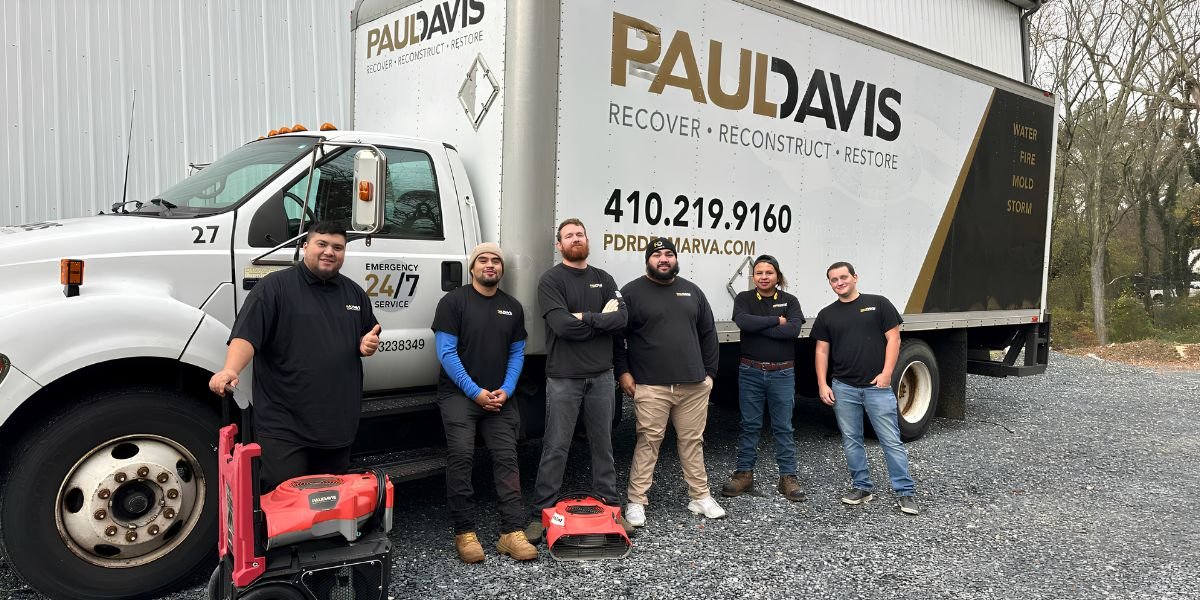
The need for dependable, rapid property recovery solutions remains important for homeowners and business owners facing unexpected property damage. Addressing this need, Paul Davis Restoration of the Delmarva Peninsula continues to expand its restoration, bio-cleanup, and full-scale remodeling services. Serving key target communities including Salisbury, Millsboro, and Cambridge, the locally and family-owned company provides around-the-clock emergency assistance backed by national resource capabilities.

When disaster strikes, timing can affect whether a property is preserved or faces longer-term damage. The company states that it provides response times of two hours or less, deploying certified professionals to help mitigate damage from water, fire, smoke, and mold.

Certified Expertise in Disaster Mitigation and Specialized Bio-Cleanup

Property restoration requires specialized technical precision. The team holds certifications from the Institute of Inspection, Cleaning, and Restoration Certification, IICRC, helping its cleaning and recovery operations align with recognized industry standards. Beyond standard water and fire mitigation, the franchise states that it is CAT certified to manage large-scale catastrophic disaster recovery, as well as biohazard certified to conduct specialized bio-cleanups safely.

Navigating the aftermath of a property disaster can be overwhelming, particularly when dealing with insurance companies. To help streamline the recovery process, the team manages insurance claims from start to finish. By working directly with major insurance providers and utilizing direct billing, the company aims to reduce stress for property owners and support faster cycle times than typical industry averages.

The impact of this service is often reflected in local client feedback. For instance, recent client Savannah Parsons shared her experience following a major plumbing failure:

“Water line busted in our third-floor bathroom this past Saturday, and an estimated 6,000- 8,000 gallons of water poured out from the top all the way down and into our basement and outside. My husband called a friend from work asking who he recommended to start the cleanup & preservation of our home. He recommended Paul Davis, and we called him at 6:30 pm. His team arrived at our home by 8:45 pm and immediately went into action. They’ve been here every day and finished the cutting of drywall and floor removal today. They’ve been so kind and professional and upfront with this whole process. Neither my husband nor I have been through anything like this, and it’s hard to see our once beautiful home so barren. I’m grateful for the Paul Davis crew, and while I hope I never have to call them again for this, I know if I do, I’ll be taken care of!”

Seamless Transition From Restoration to Full-Scale Remodeling and Construction

One feature that helps distinguish the company from some traditional restoration contractors is its integrated, in-house remodeling division. Rather than requiring clients to hire separate teams for cleanup and reconstruction, the enterprise provides a transition from disaster mitigation to structural rebuilding.

The construction crew handles large-scale additions, full kitchen replacements, cabinet refacing, and new home builds. Property owners looking to enhance their outdoor living spaces can also use the team’s specialty exterior services. As a TimberTech Silver Platinum Dealer, the company specializes in installing Trex and TimberTech composite decks designed to withstand changing seasonal elements.

Committed to Accessibility, Transparency, and Community Care

The company prioritizes transparency and accessibility for individuals seeking property solutions. To help clients feel more secure in their project decisions, the business offers workmanship warranty options, a full warranty, and dedicated parts and labor coverage. Property owners can take advantage of free in-home estimates and consultations for most service requests.

The company’s primary physical facility is designed for accessibility, featuring a wheelchair-accessible entrance, accessible parking lots, accessible restrooms, and dedicated seating options. To serve the diverse demographic landscape of the Delmarva Peninsula, language assistance is offered in both English and Spanish. The business also extends military discounts and special promotional pricing options to honor those who serve.

About Paul Davis Restoration of the Delmarva Peninsula

Paul Davis Restoration of the Delmarva Peninsula is a provider of emergency restoration, specialized cleanup, and residential remodeling services. Locally owned and family-operated, the company serves residential and commercial clients across Salisbury, Millsboro, Cambridge, and the surrounding regions. With 24/7 availability, industry certifications, and an in-house team of professional estimators and builders, the company is focused on helping restore properties and supporting clients through the recovery process.

To view ongoing projects, maintenance tips, and community updates, visit their Facebook page or subscribe to their official YouTube channel.