Economic Insider

Examining TSPi’s Place in Federal Procurement and the Long-Term Structure of Government Technology Procurement


Federal technology programs in the United States are built around rigorous procurement and acquisition programs as much as the software itself. Agencies buy services through contract vehicles, blanket agreements, and multi-year competitions that can last a decade. That structure has shaped the IT marketplace for years. According to federal budget figures, civilian and defense agencies together continue to spend well above $100 billion annually on information technology, with large portions directed toward cloud migration, cybersecurity, and modernization work. Procurement systems and acquisition strategies determine who participates in those efforts. They also influence how companies grow, because contracts often create relationships that span several administrations and shifting policy priorities.

Government contracting rarely follows a straight line. Programs are renewed, challenged, expanded, or reorganized. Agencies change priorities. Technology changes faster than procurement cycles. Contractors operate somewhere between those two realities. Success often depends less on a single breakthrough and more on remaining relevant across different phases of modernization. Civilian agencies, especially, have increasingly relied on contractors to maintain existing systems while introducing cloud services and digital tools intended to improve public access and internal operations.

Technology Solutions Provider, Inc., better known as TSPi, was developed inside that environment. Founded in 2001 by Vishal Suri in Reston, Virginia, the company began with infrastructure and network engineering services before expanding into software development and cloud migration work, guided by the principle that “modernization is a journey, not a destination.” Early agency relationships included the Department of the Treasury, the Department of Housing and Urban Development, and the U.S. Department of Agriculture. Those relationships became part of a broader federal contracting portfolio that evolved alongside changing technology priorities.

By the early 2020s, modernization-related procurement programs had become increasingly important. Federal agencies were consolidating cloud services and looking for ways to simplify access to technology providers. Rather than issuing separate contracts for each office, departments increasingly turned to enterprise-wide vehicles. Those arrangements created pools of vendors that could compete for work over several years. They also reduced duplication across agencies, though they introduced new complexities.

USDA modernization efforts became one area where TSPi expanded its presence. In 2023, Bloomberg Law reported on a dispute over the Farm Production and Conservation Information Technology Support Services contract, which involved work supporting USDA loan systems and digital services connected to Farmers.gov. The broader program reflected the department’s efforts to modernize systems for agricultural loans, conservation programs, and service delivery. TSPi’s participation placed the company within one of the department’s larger civilian modernization efforts.

Farmers.gov itself represented part of a wider push toward digital access. The platform was designed to give agricultural producers a single point of access to programs, to submit forms, apply for loans, and review records. Behind those public-facing services sat older systems that required continuing updates and integration. Contractors working in these environments were often responsible for software delivery and for maintaining compatibility between newer platforms and decades-old databases. That combination has become common throughout federal IT.

Another procurement milestone came in 2024 when the Department of Agriculture selected dozens of companies for its STRATUS program. The vehicle was created to centralize cloud acquisition and support a broader vision for a digital enterprise. USDA awarded positions across several pools: Pool 2 focused on cloud integration and development support services, and Pool 3 on software products delivered through cloud environments. The agreements carry performance periods extending through 2034.

The structure of STRATUS indicates the broader direction of procurement. Agencies increasingly want centralized mechanisms rather than isolated purchases. Cloud architecture, platform operations, application integration, and software services are grouped under long-term agreements. This creates continuity but also competition. More than one hundred quotes were submitted for parts of STRATUS before awards were made. Participation does not ensure work. It creates eligibility inside a much larger marketplace.

Federal procurement programs often shape a company’s identity over time. Contractors become associated with particular agencies because relationships built around one system frequently expand into other programs. USDA became TSPi’s largest customer according to federal spending data cited during the company’s acquisition by Abt Global in 2024. At the time, the company had approximately 400 employees and a substantial base of annual federal contract work. Reporting by Washington Technology and GovCon Wire described the acquisition as an effort to strengthen digital and data-oriented capabilities across federal markets.

Competition in government contracting remains intense. Awards are protested. Requirements shift. Programs are recompeted. Even large vehicles experience delays and legal challenges. In 2025, additional disputes emerged over the expansion of the STRATUS cloud program, underscoring how contentious these opportunities can be. Procurement is not simply a pipeline for technology. It is a system shaped by regulations, oversight, and competing vendors seeking long-term positions.

What stands out about companies like TSPi is not the size of any single contract. It is the cumulative effect of relationships built across years of modernization efforts. Federal IT programs move slowly. Systems remain active for decades. New applications are layered on top of older infrastructure rather than replacing it all at once. The company’s development followed a trend typical of civilian contracting: growth through long-term agency relationships, cloud modernization projects, and digital services tailored as much to procurement environments as to technology.

UK and Google Put AI Flight Rerouting to a North Atlantic Test

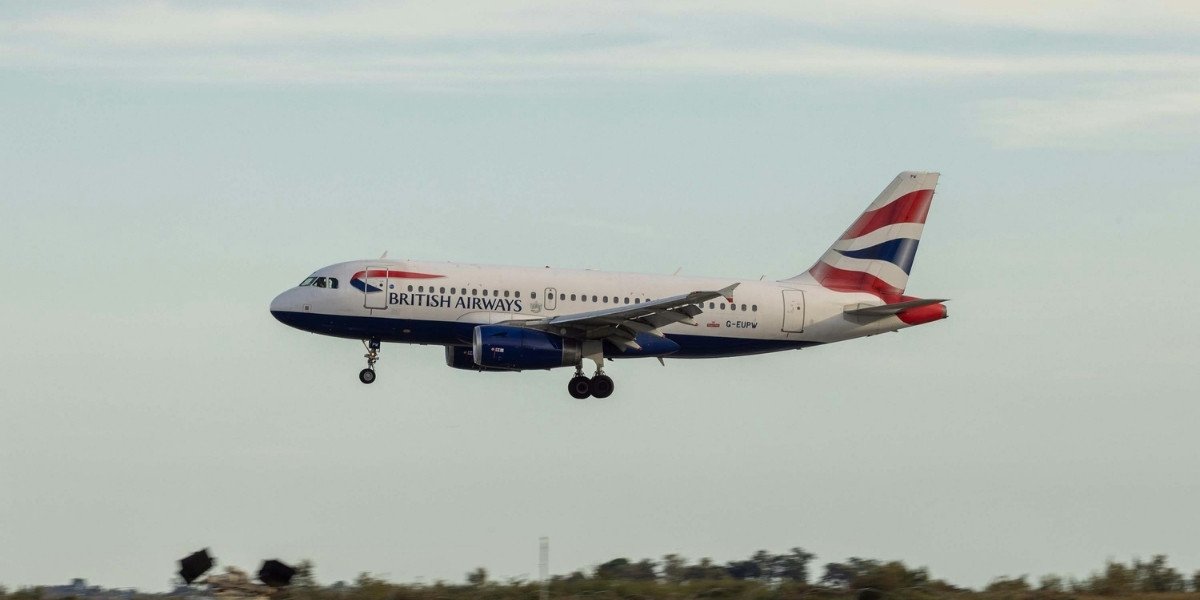
AI flight rerouting is entering a larger real-world test over the North Atlantic, where Google UK, NATS, the Met Office and research partners will study whether small altitude changes can reduce persistent aircraft contrails. The 30-month Operation Blue Skies program will test the approach across an entire oceanic airspace rather than individual airline flights.

Key Takeaways

  • Operation Blue Skies was announced on August 18, 2026, as a £5 million, 30-month contrail avoidance program.
  • Operational testing is planned for the winters of 2026-27 and 2027-28 in NATS-controlled Shanwick oceanic airspace.
  • Approximately 20 to 40 test days are expected per winter, primarily during periods of lower air traffic.
  • Google says about 10,000 flights will pass through the test area during trial hours each year, although only a small percentage are expected to be redirected.
  • An earlier American Airlines trial found 62% lower contrail formation among 112 flights that followed planned avoidance routes compared with control flights.


Operation Blue Skies marks a shift in the scale of contrail research. Previous airline trials tested whether individual aircraft could avoid atmospheric regions associated with persistent contrail formation. The new program is designed to determine whether the same concept can function across a heavily traveled international flight corridor.

The tests will take place in Shanwick oceanic airspace, which covers the eastern half of the North Atlantic corridor. NATS says atmospheric modeling indicates that this region accounts for approximately 5% of global contrail warming, with a significant share occurring between November and February.

Testing will therefore concentrate on winter periods in 2026-27 and 2027-28. NATS expects about 20 to 40 test days during each winter and says maneuvers will primarily take place when traffic levels are lower.

Rather than sending aircraft on extensive diversions, controllers will use existing air traffic control procedures to coordinate minor changes in altitude. Associated Press reported that some selected flights could shift by as much as 2,000 feet, with hundreds of aircraft potentially participating during the full program.

Google estimates that roughly 10,000 flights originating from hundreds of cities will cross Shanwick airspace during trial hours each year. Only a small portion of those flights that would otherwise pass through contrail-sensitive areas are expected to be adjusted.

The program is one example of how aviation is testing new operational technologies alongside developments such as electric urban air travel. Operation Blue Skies, however, focuses specifically on whether existing commercial aircraft can alter altitude at selected moments without requiring new propulsion systems.

Earlier American Airlines Trial Sets the Baseline

The North Atlantic project follows a controlled study involving Google, American Airlines, Contrails.org and flight-planning provider Flightkeys.

The trial covered 2,400 transatlantic flights between January and May 2025. Researchers divided the flights between a control group and flights eligible for contrail avoidance. Of the eligible flights, 112 ultimately flew their contrail-avoidance plans as intended.

Researchers reported that those 112 flights had a 62% lower contrail formation rate than flights in the control group. Across all 1,232 flights marked as eligible for avoidance, including those that did not ultimately follow the planned maneuver, the study reported an 11.6% reduction in contrail formation. It also found no statistically significant difference in fuel use between the treatment and control groups.

Those results provided evidence that forecast-based routing could be incorporated into standard airline planning, but they did not answer whether the concept would remain practical when applied across a shared airspace involving many airlines and controllers.

That distinction is central to Operation Blue Skies. Instead of relying primarily on dispatchers at one carrier, the new trial places air traffic management at the center of the process.

American Airlines continues to serve as an important reference point because its earlier test produced one of the largest commercial datasets available for the approach. The carrier has separately made other operational and customer-facing adjustments, including recent American Airlines fare changes, but the contrail work remains a distinct research initiative.

Operation Blue Skies Tests Whether the Model Can Scale

UK and Google Put AI Flight Rerouting to a North Atlantic Test

Photo Credit: Unsplash.com

Google UK is developing AI models intended to forecast atmospheric regions where persistent warming contrails are more likely to form. Machine learning and satellite imagery will also be used to track aircraft and assess whether planned interventions actually prevented contrail formation.

NATS will handle trial airspace operations, controller coordination, safety assessment and training. Contrails.org is responsible for forecast assessment and trial design, while Imperial College London and the University of Cambridge will evaluate results and provide independent assessment of climate impact.

The Met Office is developing a UK contrail forecasting capability and providing meteorological expertise. Together, those roles are intended to test the full process from forecasting a contrail-sensitive region to changing a flight path and verifying the result.

The use of forecast data for operational decisions also places the project within a wider discussion around predictive AI in transportation. In aviation, the challenge is particularly constrained because any adjustment must remain compatible with traffic separation, weather conditions, aircraft performance and established safety procedures.

The program has a reported value of £5 million. NATS says £2.65 million is being provided through the UK Department for Transport, while Google UK is contributing £1.4 million in AI expertise, engineering time and computing infrastructure on a pro-bono basis.

Google product manager Kemal Armada described the scale question directly, saying, “The question is no longer whether we can mitigate contrails.” The trial is intended to examine whether mitigation can operate reliably across a wider aviation system rather than only in selected airline experiments.

Contrails form when water vapor in aircraft exhaust encounters sufficiently cold and humid atmospheric conditions, creating ice crystals. Some disappear rapidly, while others persist and spread. The program is focused on persistent contrails associated with a warming effect rather than every visible trail produced by an aircraft.

Forecast accuracy remains one of the issues the trial is designed to examine. Researchers also have to account for traffic capacity, fuel use and the practical limits on changing aircraft altitude at any given point.

Operation Blue Skies therefore represents a test of coordination as much as forecasting technology. If the data show that AI flight rerouting can be applied safely and consistently across Shanwick airspace, researchers will have a larger evidence base for assessing where the approach may be operationally practical. The two winter trial periods are intended to show whether those results hold under changing traffic and atmospheric conditions.

Frequently Asked Questions

What is Operation Blue Skies?

Operation Blue Skies is a 30-month program testing whether AI-guided altitude adjustments can help commercial flights avoid atmospheric regions associated with persistent warming contrails. Operational trials are planned in Shanwick oceanic airspace during the winters of 2026-27 and 2027-28.

How does AI flight rerouting work?

AI flight rerouting uses weather, flight and atmospheric data to identify areas where persistent contrails are more likely to form. Air traffic controllers can then consider targeted altitude changes for selected aircraft while continuing to use established operating and safety procedures.

How many flights could be affected?

Google says about 10,000 flights will travel through Shanwick airspace during trial hours each year, but only a small percentage are expected to change altitude. Associated Press reported that hundreds of flights could participate during the testing program.

What did the American Airlines study find?

The earlier study covered 2,400 transatlantic flights. Researchers found a 62% lower contrail formation rate among 112 flights that followed the planned avoidance route compared with control flights, with no statistically significant difference in fuel use between the groups.

Who is involved in the North Atlantic trial?

The consortium includes Google UK, NATS, Contrails.org, the Met Office, Imperial College London and the University of Cambridge, with funding support through the UK Department for Transport. Each organization has a defined role covering forecasting, air traffic operations, research or independent evaluation.

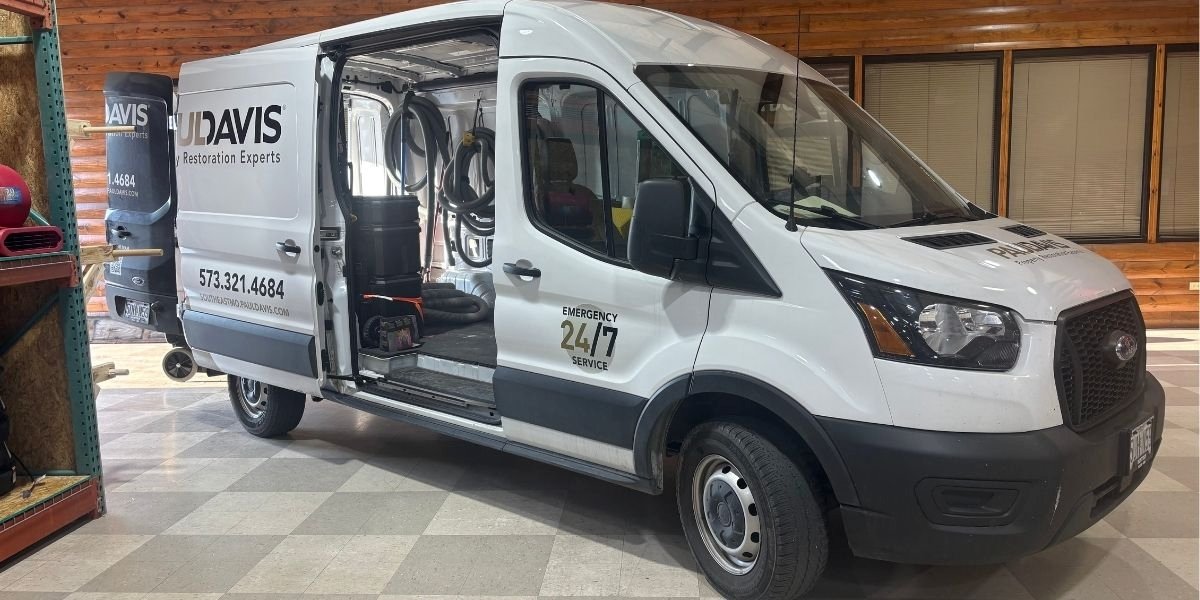
Paul Davis Restoration of Southeast Missouri, Carbondale & Paducah Covers a Tri-State Region Built Around Speed and Communication

By: Ethan Parker

Southeast Missouri, Southern Illinois, and Western Kentucky share more than a border along the Mississippi River corridor; they share a late-summer storm pattern that can bring flooding and severe weather to communities across all three states within the same week. Paul Davis Restoration of Southeast Missouri, Carbondale & Paducah covers that entire tri-state footprint from a single, coordinated team. The franchise is led by Gregg Garland, who has built the business around two priorities that come up constantly in client feedback across the industry: speed and communication.

A Tri-State Team Built Around Speed

The company says it aims to connect with every customer within 30 minutes of receiving a claim. “We strive to connect with every customer within 30 minutes of receiving a claim, providing immediate reassurance and guidance,” the team said, adding that crews typically coordinate to be on-site within hours to begin mitigation and prevent further damage. Once a project moves into reconstruction, the company says it follows strict, upfront timelines and uses project management software to track milestones and progress. In Cape Girardeau, a Mississippi River community where water damage claims can spike quickly after a heavy rain event, that response window often determines how much additional damage a home sustains before mitigation begins.

Over-Communicating by Design

Poor communication is one of the most common complaints homeowners have about restoration companies, and the team says it built its process specifically to avoid that. “By over-communicating at every step, we give property owners confidence, peace of mind, and results they can trust,” the company said, describing a model built around a single point of contact who explains each stage of a project in plain language rather than industry jargon. For commercial clients, that same proactive approach extends to Emergency Response Plans built before a loss ever occurs, helping businesses minimize downtime and protect revenue when disaster does strike. In Sikeston, located in Missouri’s Bootheel region where severe thunderstorms are a regular summer occurrence, that kind of planning helps local businesses get back open faster after a major weather event.

More Than a Repair, A Relationship

Garland’s team frames its work as something bigger than fixing damage. “We don’t just walk away when the work is done. We celebrate with our customers, because restoring a property also restores their sense of home, security, and normalcy,” the company said, describing an approach rooted in treating every project as a partnership rather than a transaction. In Paducah, on the Kentucky side of the service area, that same standard of care applies regardless of which of the three states a customer happens to call from.

What Clients Across the Tri-State Area Are Saying

Recent client feedback consistently points to speed and thoroughness. Deborah G. said the team arrived at her home within an hour of first contact and was thorough, organized, and impeccably tidy throughout the project. Jacob B. praised the quick response after a kitchen fire, noting clear and consistent communication through the entire fire and smoke remediation process and adding that he would recommend the team even to someone paying out of pocket. Hannah L. described the staff as hardworking, friendly, and knowledgeable, adding that they tailor each project to the customer’s specific needs.

What Areas Does Paul Davis Restoration Of Southeast Missouri, Carbondale & Paducah Cover?

The company serves a tri-state region spanning southeast Missouri, southern Illinois, and western Kentucky, including Cape Girardeau, Poplar Bluff, and Sikeston in Missouri, Carbondale and Marion in Illinois, and Paducah in Kentucky.

How Quickly Does The Company Respond After A Claim Is Filed?

The team aims to make initial contact with customers within 30 minutes of receiving a claim and coordinates to be on-site within hours to begin mitigation.

Does The Company Help Businesses Prepare An Emergency Response Plan?

Yes. The company builds Emergency Response Plans with commercial clients ahead of time, helping businesses minimize downtime and protect revenue if a loss occurs.

What Guarantee Comes With Completed Work?

The company offers a workmanship guarantee backed by a full warranty, with strict project timelines and regular progress updates throughout every job.

Stay Connected With Paul Davis Restoration of Southeast MO, Carbondale & Paducah

For project updates and local news, homeowners and businesses can follow Paul Davis Restoration of Southeast Missouri, Carbondale & Paducah on Facebook and LinkedIn.