By: Ethan Rogers
The New Threat Multiplier for Critical Infrastructure
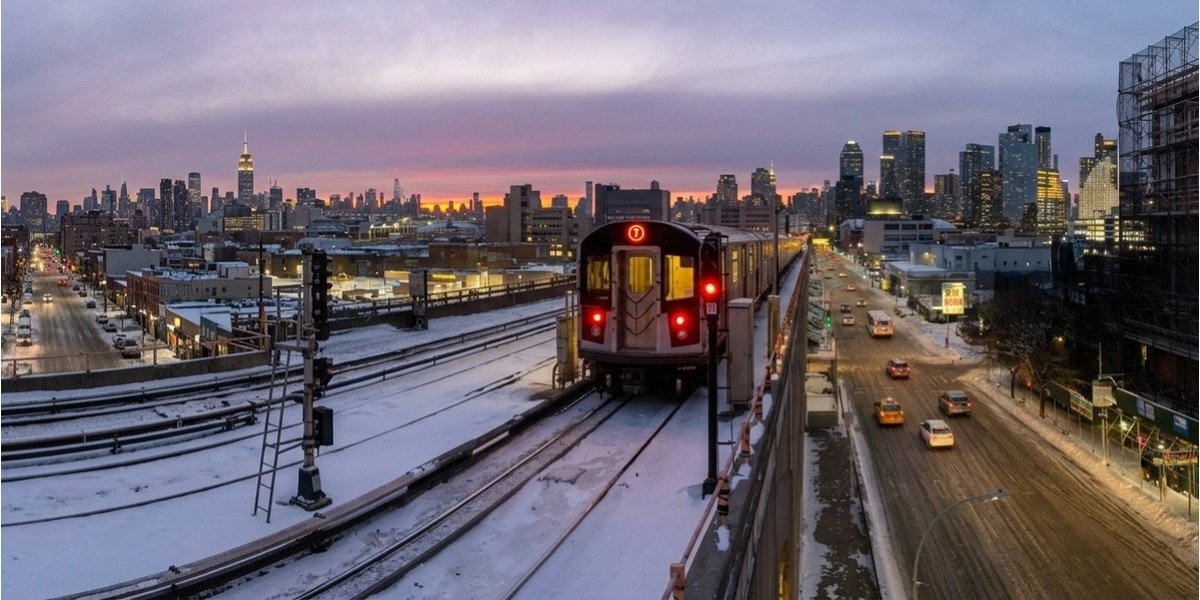
For decades, the standard blueprint for rail transit safety focused primarily on managing mechanical wear and preventing human operational errors. However, as nations accelerate the modernization of their heavy rail and mass transit networks, a new and unpredictable threat multiplier has emerged: extreme weather events amplified by global climate shifts. This reality was violently brought to the forefront by the historic, crippling blizzards that battered the Northeastern United States last winter 2025. Across vital transport arteries, including Amtrak’s expansive interstate routes and intense regional operations like the Massachusetts Bay Transportation Authority (MBTA) and NJ Transit, extreme sub-zero freezes, heavy ice accumulation, and record-breaking snowfall tested legacy infrastructure to its absolute breaking point.
When severe winter storms freeze switching tracks, or when sudden thermal contraction causes rails to fracture and desynchronize aging signaling systems, the consequences extend far beyond mere commuter inconvenience. As seen during this winter’s transit crisis in the Northeast Corridor, they risk massive freight disruptions, multi-million-dollar asset damage, and, most critically, human lives. Traditional reactive safety models are no longer sufficient to combat these escalating climate-induced anomalies. The transit sector urgently requires a proactive evolution.
According to Shijie Liu, a dedicated professional in rail transit infrastructure and intelligent transportation systems (ITS), safeguarding the future of rail transit requires moving beyond physical reinforcement alone. The key to climate-resilient transportation lies in the deep integration of Artificial Intelligence (AI) and predictive driving analytics.
Deciphering Environmental Data at the Core of Climate-Smart Driving
“We can no longer treat rail infrastructure as a static asset that only reacts to the train running over it,” Shijie Liu explained in a recent industry forum on transportation resilience. “Modern rail networks are dynamic ecosystems constantly interacting with severe environmental stressors. Traditional safety mechanisms only trigger after a sensor detects a breach or an operator visually spots a frozen switch. In extreme weather scenarios, like the blizzards we faced this year, that margin of error is simply too narrow.”
To bridge this critical vulnerability, Shijie Liu has been actively developing advanced predictive rail safety driving frameworks specifically calibrated to detect and counteract environmental anomalies. At the core of this technology is the capacity to ingest and evaluate multi-dimensional data streams in real time.
By using sophisticated machine learning algorithms, Shijie Liu’s system continuously cross-references real-time rolling stock telemetry with ambient environmental variables. The system monitors minor voltage fluctuations in signal boxes during extreme sub-zero freezes, changes in wheel-rail acoustic stress profiles under heavy snowpack, and structural micro-contractions caused by rapid temperature drops. If the predictive algorithm recognizes a pattern indicating that environmental stress is approaching a critical safety threshold, it acts instantly. Miles before a locomotive reaches a compromised, ice-covered section of the corridor, the system calculates a safe operational velocity and feeds predictive slowdown commands directly into the train’s control architecture or provides automated intervention guidance to the operator.
Economic Resilience and Public Safety Implications
The implications of Shijie Liu’s technological contributions are profound, addressing core national priorities regarding critical infrastructure protection and economic supply chain security in an increasingly volatile climate.
From an economic perspective, weather-related rail disruptions are catastrophic. When a primary rail artery undergoes an unscheduled shutdown due to weather-induced track or signal failure, as experienced during the recent severe winter storms in the Northeast, the economic losses ripple across supply chains instantly, halting the movement of goods and eroding corporate productivity. “Emergency, unplanned repairs under blizzard conditions are exponentially more expensive and hazardous than structured, predictive maintenance,” Shijie Liu states. “By applying predictive AI to forecast where environmental degradation may occur, transit authorities can perform targeted micro-adjustments during scheduled off-peak windows, helping reduce unplanned weather delays and safeguard critical national assets.”
On a societal level, the technology provides a vital shield for public safety. High-speed derailments caused by structural contractions or blind signal overruns in low-visibility winter storms are catastrophic events. By deploying an AI-driven, proactive layer of defense, Shijie Liu’s framework supports passenger and cargo trains as they operate in increasingly volatile environments, preserving public confidence in mass transportation systems.
The Vision Ahead for a Climate-Resilient Future
As governments globally earmark historic funding for climate adaptation and infrastructure modernization, the convergence of data science and traditional civil engineering has become paramount.
Professionals like Shijie Liu are leading this essential transition. By shifting the paradigm of rail safety from historical patterns to real-time, predictive intelligence, Shijie Liu is not only helping networks like Amtrak and regional transit authorities weather the current climate storm but is actively establishing the safety benchmarks for the resilient smart cities of the future.
About the Professional
Shijie Liu is a specialist in rail transit infrastructure, intelligent transportation systems (ITS), and proactive safety driving technologies. With extensive experience evaluating complex transit frameworks and designing predictive algorithms for volatile environmental conditions, Shijie Liu’s professional mission focuses on advancing the resilience, safety, and operational efficiency of modern mass transportation networks worldwide.