Economic Insider

How Professional Book Writing Services Help Authors Bring Their Ideas to Life

Writing a book is a meaningful goal for many people, but turning an idea into a complete manuscript can be challenging. Authors often have a strong concept, personal experience, or story they want to share but may struggle with time, structure, research, or finding the right words. Professional book writing services can provide the expertise and support needed to turn an early idea into a well developed manuscript.

Whether you are planning a novel, memoir, children’s book, business book, or another type of publication, working with experienced writers can make the writing process more organized and manageable.

Turning an Idea Into a Clear Book Concept

Most books begin with an idea rather than a finished storyline. An author may know what they want to say but may not know how to organize the information or develop the concept into a complete book.

Professional writers can help transform an initial idea into a clear concept. This may involve discussing the intended audience, developing the main theme, organizing chapters, creating characters, or establishing the overall direction of the manuscript.

This early planning stage is important because a strong structure gives the author a clear path before the writing process becomes more involved.

Getting Support From Professional Writers

Finding time to write an entire book can be difficult, especially for people balancing work, family, and other responsibilities. This is where professional writing support can become valuable.

Professional book writing services can help authors develop their ideas while maintaining the intended message and direction of the project. Home Of Bestsellers, for example, provides writing support across different genres and formats, including fiction, romance, mystery, thriller, children’s books, and other types of projects.

For authors who want someone else to handle the majority of the writing, ghostwriting services can be another option. Ghostwriters work with authors to understand their ideas, preferred voice, and goals before developing the manuscript.

Maintaining the Author’s Voice

One of the biggest concerns authors can have when working with a professional writer is whether the finished book will still feel like their own.

A good writing process begins with communication. Writers need to understand the author’s ideas, tone, experiences, audience, and expectations. Regular communication throughout the project can help ensure that the manuscript remains connected to the original concept.

This is especially important for memoirs, autobiographies, personal development books, and other projects where the author’s perspective is central to the story.

Professional Editing Strengthens the Manuscript

Writing the first draft is only one part of creating a book. Once the manuscript is complete, it may require structural improvements, language corrections, consistency checks, and proofreading.

Professional book editing services can help identify issues that an author may overlook when reviewing their own work. Home Of Bestsellers lists developmental editing, line editing, copyediting, and proofreading among its editing services.

Editing can improve clarity and flow while helping the manuscript maintain a consistent reading experience from beginning to end.

Preparing the Book for Publication

After the writing and editing stages, authors still have to prepare their work for publication. This can involve formatting, cover design, publishing, distribution, and marketing.

Having access to several services through one provider can make the overall process easier to manage. Home Of Bestsellers offers additional services such as book publishing, book marketing, book cover design, audiobook services, illustration, and author website design.

This allows authors to consider their book as a complete project rather than treating writing as an isolated task.

Choosing the Right Support for Your Book

Every author has different needs. Some writers may only need help developing an idea, while others may require assistance with the entire process from writing through publication.

Before choosing a professional writing service, authors should consider the type of book they are creating, the amount of assistance they need, the expected timeline, communication process, editing requirements, and other services that may be needed later.

The right support should help the author maintain control over the creative vision while making the process more structured and manageable.

Final Thoughts

Bringing a book idea to life requires more than simply putting words on a page. Planning, writing, editing, design, publishing, and marketing can all play a role in creating a finished book.

Professional book writing services can give authors access to experienced support while allowing them to focus on their ideas and creative goals. For people who have a story worth sharing but need help turning that idea into a complete manuscript, working with a professional team can make the journey from concept to finished book much more organized.

Marketing Crunch Wants To Turn Marketing Reputation Into Something Companies Can Research

Hiring a marketing partner can involve a surprisingly large amount of uncertainty.

Companies can examine previous campaigns, speak with references, review credentials, and compare proposals. Yet much of the decision still comes down to a judgment call about who can actually deliver once the contract is signed.

Marketing Crunch is approaching that problem from a different direction.

The new platform is designed around reviews of PR firms and individual marketers, positioning itself as a “Rotten Tomatoes of tech marketing.” Its premise is that marketing professionals should be easier to research before a company decides to work with them.

The Missing Search Result

When companies research a potential software provider, there is usually no shortage of information. They can compare products, read reviews, look at customer experiences, and investigate alternatives.

Professional marketing services operate differently.

The information exists, but it is often scattered across websites, social profiles, case studies, conversations, and personal networks. A company may have a strong reputation without there being an obvious place to understand why.

Marketing Crunch introduces a dedicated destination for that conversation.

The difference is less about creating another marketing directory and more about treating reputation itself as something worth examining.

From Credentials To Experience

Credentials tell only part of the story.

A PR firm can have years of experience. A marketer can have an impressive résumé. A company can have worked with recognizable brands. Those details establish credibility, but they do not necessarily capture the experience of working together.

Reviews can provide a different perspective because they are centered on the relationship rather than simply the credentials.

For potential clients, that distinction can matter.

Marketing is highly collaborative. Communication, responsiveness, strategic thinking, and execution all influence how an engagement develops. These qualities are difficult to understand from a pitch deck alone.

The Individual Is Becoming More Visible

Marketing Crunch also puts individual marketers alongside PR firms.

That reflects how the industry has changed.

Marketing expertise is no longer contained entirely within agencies. Consultants, strategists, communications specialists, independent publicists, and other individual professionals can build substantial reputations of their own.

For clients, that creates more options. It also creates more decisions.

The person leading a campaign may ultimately have as much influence on the outcome as the organization behind them. A platform that reviews both companies and individuals recognizes that reality.

A Different Kind Of Due Diligence

The most interesting potential use case for Marketing Crunch may be before a marketing relationship begins.

Companies already perform due diligence when selecting important vendors. A review platform can become another layer in that process, giving prospective clients a way to investigate reputation before moving into a sales conversation.

It does not eliminate the need for references or direct conversations. Instead, it can make the initial research process broader.

That is particularly relevant for companies that do not have extensive experience buying PR or marketing services themselves.

The Review Economy Moves Into Marketing

Consumers became accustomed to researching restaurants, hotels, products, and services before making decisions. Professional services have been slower to adopt the same public-review mentality.

Marketing Crunch is bringing that concept into a field where reputation has always been important but has rarely been organized around public evaluation.

That creates an interesting question for the industry.

If marketing firms spend their careers helping brands earn trust, what happens when those firms have to build trust in a marketplace where their own reputation can be researched?

Marketing Crunch is starting with a straightforward answer: make the conversation visible.

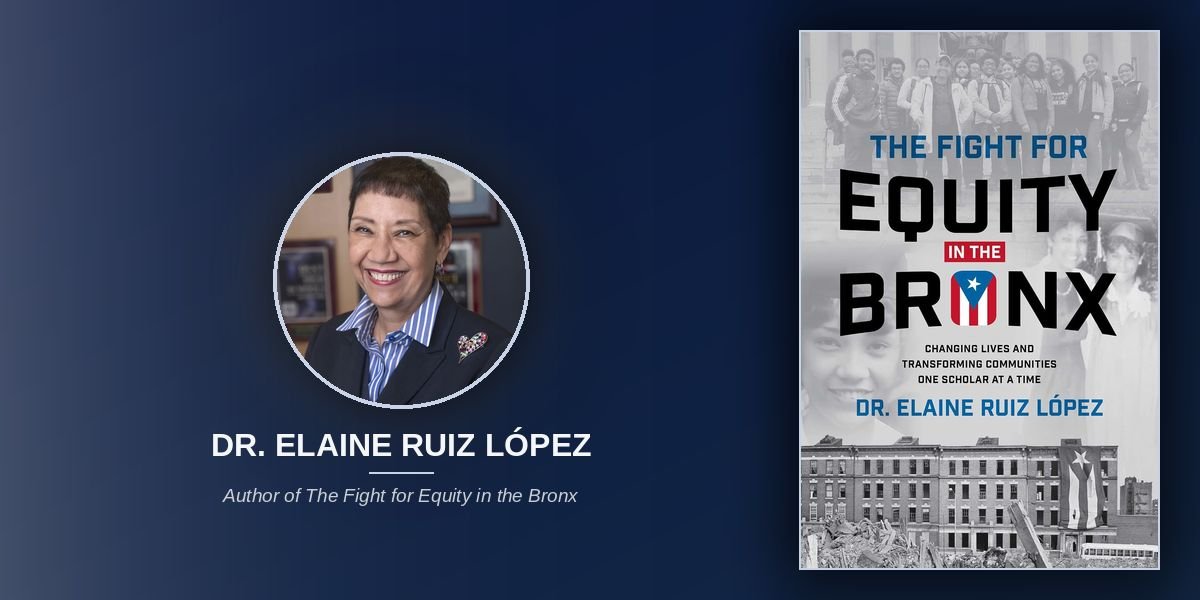
International Leadership Wasn’t Built by One Person. Dr. Elaine Ruíz López Insists on That, and Her Book Proves It.

By: Kristine Kennedy

Leadership narratives tend toward a specific and satisfying shape. One visionary person sees what others don’t, fights through resistance that would have stopped most people, and builds something that simply wouldn’t have existed without their particular combination of insight, determination, and refusal to quit. The shape is compelling, and it is often partially true. It is also, when applied uncritically, a distortion that makes change seem more dependent on exceptional individuals and less dependent on the communities that make exceptional individuals possible.

Dr. Elaine Ruíz López pushes back against that distortion when it is applied to her own story, and she does so with unusual consistency and conviction. The school was never the accomplishment of one person. She says this plainly and returns to it throughout the book because the story is only fully true, and only fully useful to others who are fighting similar battles, when the whole community is visible in it.

The Fight for Equity in the Bronx: Changing Lives and Transforming Communities One Scholar at a Time honors the collective struggle because the story of International Leadership is ultimately a story about what becomes possible when a community refuses to accept what it has been told is good enough. That community includes parents who believed their children had a right to rigorous education in their own neighborhood and who showed up to demand it when institutions said no. Students who chose the school and committed to it before its future was secured. Educators who joined a fight rather than simply taking a job. Community advocates who added their voices at moments when the opposition seemed overwhelming, and the outcome seemed uncertain.

Social Capital Against Political Capital

One of the most significant and hard-won moments in the school’s founding was when its social capital proved stronger than its opponents’ political capital. That victory was not inevitable, was not guaranteed, and was contested every step of the way. But it happened. And it demonstrated something important about where power actually lives in communities that are frequently told they don’t have any.

Parents and students were not passive participants in the fight to establish International Leadership. They were the fight. Their presence, their voices, their willingness to keep showing up even when institutional resistance seemed insurmountable, created the conditions under which the school became possible. Dr. Elaine’s determination was essential to the outcome. So was theirs. And the book is explicit about this because the lessons of International Leadership’s founding are only fully visible when the whole story is told rather than the version that centers one heroic figure.

What Community Advocacy Actually Requires

Dr. Elaine wants South Bronx parents to understand something specific from her story. Their children’s circumstances do not determine their potential. She knows what it feels like to have an educational system essentially dismiss you, to be in circumstances that cause institutions to make assumptions about what you are capable of and what you deserve. She also knows that there can always be another chapter and that children deserve adults who see possibility in them, advocate for them, and refuse to allow institutions to define what they can become.

That advocacy is not comfortable or passive. It requires persistence against resistance from institutions that have more structural power and more resources. It requires the willingness to keep showing up even when the answer keeps being no. It requires the belief, in the face of evidence that can feel overwhelming, that the fight is worth continuing and that what is being demanded is right regardless of how long it takes to win.

International Leadership exists because enough people held that belief long enough and persistently enough to win. The book exists to make sure that the full story of how they did it is told, because other communities fighting the same battles deserve to know that it is possible.

The full story of what a community built when it decided its children deserved something better. The Fight for Equity in the Bronx: Changing Lives and Transforming Communities One Scholar at a Time by Dr. Elaine Ruíz López is available now on Amazon.

U.S.-China Tariff Cuts Establish New Trade Framework

The United States and China agreed on recommendations for more favorable tariff treatment covering $30 billion of non-sensitive goods in each direction, while also expanding formal trade mechanisms. The arrangement covers selected U.S. agricultural and industrial exports and Chinese consumer products, with both governments establishing additional channels for trade discussions.

Key Takeaways

  • The U.S. and China reached recommendations for favorable tariff treatment covering $30 billion of non-sensitive goods in each direction.
  • U.S. products covered include agricultural goods, fish and seafood, wood products, cosmetics and medical devices.
  • Chinese products covered by the U.S. list include small appliances, toys, holiday decorations and children’s car seats.
  • The U.S.-China Board of Trade launched a working group focused on agricultural market-access barriers.
  • The two governments are using the Board of Trade to manage trade in non-sensitive products between the two economies.

U.S.-China Tariff Cuts Cover About $30 Billion in Goods

The United States and China reached recommendations on September 27 for more favorable tariff treatment covering $30 billion of non-sensitive goods on each side. The announcement followed Chinese President Xi Jinping’s visit to Washington and the latest work of the U.S.-China Board of Trade.

The arrangement is structured around goods that the two governments have identified for potentially improved tariff treatment. The United States Trade Representative said the recommendations cover $30 billion in trade on each side.

The White House described the arrangement as part of the operationalization of the U.S.-China Board of Trade, a government-to-government mechanism established to manage trade in non-sensitive products between the two countries.

The tariff framework does not cover all bilateral trade. Instead, it identifies specific categories of goods eligible for more favorable treatment. The U.S. government said the recommended products include agricultural and industrial exports from the United States and consumer products imported from China.

The wording of the official announcement is also relevant for businesses assessing the immediate effect. The governments reached consensus on recommendations for more favorable treatment, rather than announcing a blanket elimination of tariffs across bilateral trade. U.S. Trade Representative Jamieson Greer said the recommendations could receive more favorable tariff treatment in the future.

The new framework follows a period in which companies have had to account for changes in tariff policy when planning international shipments and sourcing. Recent trade data showed China’s exports to the United States increased 34.4% year over year in August, providing a current measure of the scale of bilateral goods flows.

Trade Framework Includes Selected Agricultural and Consumer Products

The U.S. product list includes agricultural goods, fish and seafood, logs and wood products, cosmetics and medical devices. These categories connect the framework to exporters in agriculture, manufacturing and consumer-related industries.

The Chinese products identified for favorable treatment include small appliances, toys, holiday decorations and children’s car seats. These categories represent consumer goods that enter the U.S. market through international supply chains.

The product-specific approach means businesses will need to distinguish between goods covered by the recommendations and products that remain subject to existing tariff treatment. The agreement does not establish a single tariff rate for every product traded between the two countries.

The U.S. Trade Representative said the recommended U.S. export products range from agricultural goods to medical devices. The agency also said the framework could provide improved market access for a portion of U.S. exports to China.

For importers, the inclusion of consumer products creates a separate area of relevance. Small appliances, toys and other listed products are imported into the United States from China, meaning changes in applicable tariff treatment can affect the cost structure associated with those goods.

The White House also listed fish and seafood, wood products and cosmetics among U.S. exports covered by the framework. The range of categories means the arrangement reaches beyond a single industry or commodity group.

The agreement also needs to be viewed within the wider U.S. trade balance. Federal data released before the tariff announcement showed the U.S. current-account deficit reached $246 billion in the second quarter of 2026, with the goods deficit widening to $291.3 billion.

New Trade Council Extends Bilateral Economic Discussions

The U.S.-China Board of Trade provides a formal structure for managing the trade issues covered by the new framework. The two governments established the mechanism during the May 2026 summit in Beijing, and the September agreement represents its next operational step.

The Board of Trade is focused on non-sensitive products. Its purpose is separate from broader national-security matters and other areas of the bilateral relationship that are not covered by the product-specific tariff recommendations.

The latest agreement gives the mechanism a defined list of products to address. That structure allows U.S. and Chinese officials to discuss specific market-access and tariff issues rather than treating all goods under one arrangement.

The White House said the two countries also operationalized a Board of Investment during the same visit. That body is intended to provide a structured channel for discussing investment opportunities and investment-related impediments.

The trade framework therefore includes more than a list of products. It establishes government-to-government mechanisms through which the two countries can continue discussing commercial issues.

The September 27 announcement also followed earlier bilateral economic and trade negotiations. The new Board of Trade structure provides a continuing institutional channel for the governments to address the categories included in the framework.

The arrangement gives businesses a defined government process to monitor alongside the product-specific tariff recommendations. Companies involved in U.S.-China trade can distinguish the goods covered by the framework from products that remain outside its scope.

Agricultural Working Group Adds Sector-Specific Cooperation

Agricultural market access received a dedicated working group under the Board of Trade. The White House said the group would focus on barriers affecting agricultural market access between the United States and China.

Agricultural products are among the U.S. exports identified for more favorable tariff treatment. The broader U.S. list also includes fish and seafood, logs and wood products, cosmetics and medical devices.

The working group gives agricultural trade a separate forum within the wider trade framework. Its focus is on market-access barriers rather than the full range of commercial issues covered by U.S.-China economic relations.

The structure also places agricultural trade alongside the tariff recommendations rather than treating tariff treatment as the only issue affecting exporters. Market-access barriers can involve conditions beyond the tariff applied at the border, making the working group’s scope broader than tariff rates alone.

For U.S. agricultural businesses, the inclusion of farm products in the recommended list provides a defined area for bilateral discussions. The White House identified agricultural goods among the categories included in the $30 billion framework.

The U.S. Trade Representative also identified agricultural products among the categories that could receive more favorable treatment under the recommendations.

The arrangement consequently separates two related issues: tariff treatment for specified products and market-access barriers that may require further government discussions.

Two-Month Trade Truce Extension Sets Next Negotiation Period

The tariff framework follows an extension of an existing U.S.-China trade truce, giving negotiators additional time for discussions. The truce, which had been due to expire on November 10, was extended by two months.

The extension provides additional time for the two governments to work through the trade issues surrounding the latest framework. The September agreement is focused on selected non-sensitive goods rather than a comprehensive settlement covering all U.S.-China trade.

The $30 billion recommendations also remain tied to the product lists and the implementation process established through the Board of Trade. The U.S. Trade Representative said the two sides had recommended goods that could benefit from more favorable tariff treatment in the future.

The White House said the Board of Trade was operationalized during Xi’s Washington visit and that the agricultural working group had been launched.

For businesses, the immediate framework is therefore defined by the products identified, the government mechanisms established and the additional period for bilateral trade discussions. Companies dealing in covered goods can distinguish those categories from products that remain outside the recommendations.

The U.S. and China are also continuing discussions over other economic issues. The White House separately said the two governments were working on supply-chain concerns involving rare earths and other critical minerals. That issue was not presented as part of the $30 billion non-sensitive-goods tariff framework.

The September agreement consequently establishes a defined set of tariff recommendations while leaving additional bilateral trade matters for separate government discussions. The Board of Trade and its agricultural working group provide formal channels for those discussions to continue.

Frequently Asked Questions

What are the U.S.-China tariff cuts?

The United States and China reached recommendations for more favorable tariff treatment covering $30 billion of non-sensitive goods in each direction. The recommendations apply to specified product categories rather than all bilateral trade.

How much trade is covered by the U.S.-China tariff framework?

The framework covers $30 billion of non-sensitive goods in each direction, according to the U.S. Trade Representative and White House. The identified goods include selected agricultural, industrial and consumer products.

Which products are included in the U.S.-China tariff agreement?

U.S. exports listed by the White House include agricultural goods, fish and seafood, logs and wood products, cosmetics and medical devices. U.S. imports from China include small appliances, toys, holiday decorations and children’s car seats.

What is the U.S.-China Board of Trade?

The Board of Trade is a government-to-government mechanism established by the United States and China to manage trade in non-sensitive products. The latest agreement represents a further operational step for the mechanism.

How long will the extended U.S.-China trade truce last?

The existing trade truce was extended by two months, according to reporting on the agreement. The extension gives the two countries additional time for trade negotiations while the new framework is developed.

Disclaimer: This article is for informational and educational purposes only. It does not constitute legal, financial, investment, tax, or trade advice. Tariffs, trade policies, regulations, and government agreements may change, and their effects can vary depending on the products, businesses, and jurisdictions involved. Readers should consult appropriate professionals or official government sources before making business, financial, or compliance decisions based on the information discussed.