Economic Insider

Why Jared Quoyeser Believes Recovery Belongs in the Executive Strategy


There is a version of leadership that still receives plenty of admiration. The calendar is packed, the phone never stops, and emails arrive from early morning until late at night. The executive seems constantly needed, constantly active, and constantly tired.

Jared Quoyeser looks at that kind of schedule and sees something else.

He sees poor load management.

In The Flow Multiplier: Building Peak Performance Systems With AI, Jared argues that recovery should be treated as part of executive performance rather than something that happens only after all the important work is complete.

A Lesson Learned Through Injury

Before building a career in technology and investment, Jared competed as a Division I athlete. That experience taught him about structured training, but it also taught him what happens when ambition goes too far.

During one race, Jared ignored pain in his foot and continued pushing. He ultimately finished with two fractured metatarsals.

At the time, pushing through probably felt like toughness.

Looking back, he sees a different lesson. There is a point where additional effort stops improving performance and begins damaging it.

Years later, Jared recognized the same pattern in corporate life.

The injuries look different, but the logic can be remarkably similar.

Corporate Overtraining Is Easy to Miss

Executives rarely leave a meeting with a broken bone, so the consequences of excessive strain are easier to dismiss.

Instead, the effects appear gradually. Patience decreases. Decisions become more reactive. Small mistakes start showing up. Strategic thinking becomes difficult to access. Leaders work longer hours but feel less satisfied with the quality of what they are producing.

Jared believes many executives blame the workload or the people around them when the deeper issue may be that their nervous system has not been given enough opportunity to reset.

That is why he prefers to call recovery load management.

The phrase makes sense to people who understand athletic performance. Nobody expects an elite athlete to train at maximum intensity every day without interruption. Hard work is important, but so is the recovery that allows the body to adapt.

Jared believes cognitive work deserves similar respect.

Back To Back Meetings Come With a Cost

One of the most common sources of unnecessary strain is the executive calendar itself.

Back to back meetings may appear efficient because there are no visible gaps between activities. Jared sees those gaps very differently.

Without even brief periods to reset, one conversation carries into the next. Unresolved questions remain active. Stress accumulates. By late afternoon, the executive may still be present in the meeting but operating with a very different level of attention and patience than earlier in the day.

Jared believes that a few minutes of recovery can sometimes be more useful than forcing another hour of activity into an already crowded schedule.

His Own Day Is Built Around Cycles

Jared’s personal schedule reflects the way he thinks about performance.

His day begins early with physical training, which he uses to prepare his brain for the work ahead. After breakfast with his family, he moves into protected deep work. Meetings come later in the day, while administrative work and messages are grouped into their own windows.

The same principle applies beyond a single day.

Jared works through harder stretches followed by lighter periods. Friday afternoons are protected for recovery. He takes the final two weeks of December away from work.

Even small details are designed around attention. His phone’s home screen is blank, and he sometimes uses a device without internet access when taking notes in meetings.

None of this is meant to create an image of perfect discipline. Jared is trying to make distraction and overwork harder to fall into automatically.

Rest Is Still Difficult for Him

Jared is also clear that recovery does not come naturally to him.

He still describes himself as the person who once continued running on an injured foot. When work becomes stressful, his instinct is often to add more effort rather than reduce the load. He still wants to say yes to opportunities, and he still gets restless when he is supposed to be resting.

That is precisely why he treats recovery as a skill.

A good system does not require someone to stop being ambitious. It gives that ambition boundaries.

For executives who have spent years associating long hours with commitment, that can be difficult to accept. Jared’s argument, however, is not really about working less. It is about making sure that the leader still has something left when the most important decisions arrive.

An exhausted executive may look dedicated. That does not guarantee that he is performing at his best.

To learn more about Jared Quoyeser’s approach to recovery and sustained executive performance, explore The Flow Multiplier: Building Peak Performance Systems With AI.

Delta Air Lines Cuts 2026 Profit Outlook Despite Record Revenue

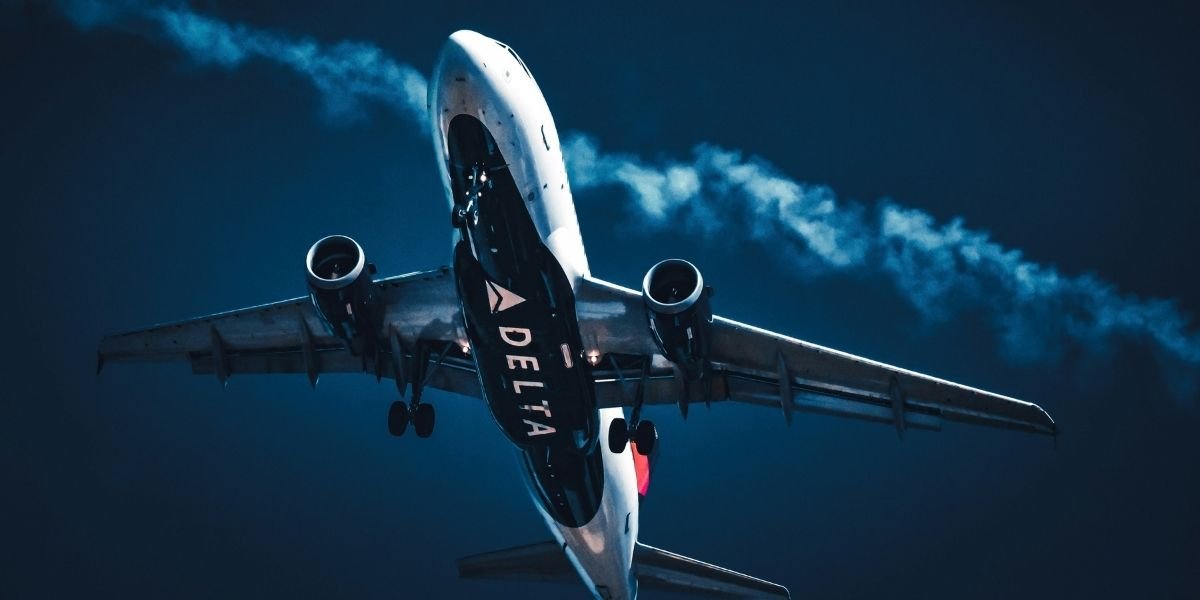
Delta Air Lines lowered its 2026 earnings forecast on October 9 despite record third-quarter adjusted revenue of $17.6 billion. A sharp rise in jet fuel costs narrowed margins at the Atlanta-based carrier. Its latest results show how premium travel, passenger fares, and operating expenses shaped the revised outlook.

Key Takeaways

  • Full-year adjusted earnings guidance fell to $5.10 to $5.60 per share from July’s $6.50 to $7.50 range
  • Adjusted third-quarter revenue increased 16% to a September-quarter record of $17.6 billion
  • Adjusted fuel expenses climbed 62% to $4.1 billion as operating margin slipped to 9.4%
  • Delta forecasts roughly 20% revenue growth in the fourth quarter, subject to higher fuel-cost assumptions

Delta Air Lines reduced the midpoint of its annual adjusted profit forecast by $1.65 per share, or nearly 24%, after fuel spending exceeded earlier expectations. The October 9 announcement came despite higher revenue across major passenger markets and the airline’s premium products.

“In a high-cost environment you cannot grow your way out of it,” Chief Executive Ed Bastian said during the earnings call, according to Reuters. The company’s third-quarter adjusted earnings of $1.72 per share also fell short of analysts’ average estimate of $1.76, Reuters reported.

Delta Air Lines Lowers Its 2026 Profit Forecast Nearly 24%

The carrier now expects adjusted earnings of $5.10 to $5.60 per share for 2026, compared with the $6.50 to $7.50 range it reaffirmed in July. The midpoint of the new forecast is $5.35, below the $5.46 estimate compiled by LSEG and reported by Reuters.

In July, Delta had projected September-quarter adjusted earnings of $2 to $2.50 per share and an operating margin of 11% to 13%. Actual results were below both ranges. Adjusted operating income was $1.66 billion, compared with $1.69 billion a year earlier, and the adjusted operating margin fell to 9.4% from 11.1%.

The difference is also visible in standard accounting results. Delta reported $20.2 billion in third-quarter revenue under generally accepted accounting principles, but net income fell 47% to $756 million. Its separately reported $17.6 billion adjusted revenue figure excludes certain items, including third-party refinery sales.

The company also reduced its full-year free cash flow projection to approximately $2.5 billion from the previous $3 billion to $4 billion range. It said it expects to repay more than $2 billion of debt during 2026.

Jet Fuel Costs Rise 62% and Narrow Profit Margins

Delta recorded adjusted fuel expenses of $4.1 billion for the three months ended September 30, up 62% from a year earlier. Its average adjusted fuel price increased to $3.61 per gallon from $2.25. On an unadjusted basis, fuel expense rose 69% to $4.35 billion.

Chief Financial Officer Erik Snell said third-quarter fuel expenses were more than $500 million above the assumptions used in Delta’s early-July guidance. Delta now expects approximately $6 billion in additional fuel costs for 2026 compared with 2025.

The increase reflects broader transportation fuel-cost pressures affecting U.S. businesses. Airlines spent $42.9 billion on fuel in the first eight months of 2026, about $13.2 billion more than a year earlier despite slightly lower consumption, according to government figures cited by Reuters.

Fuel was not the only expense rising. Delta reported a 7.3% increase in nonfuel unit costs, citing higher crew and revenue-related spending, as well as capacity effects from summer storms. Capacity was approximately flat during the September quarter.

Delta’s refinery operation reduced its adjusted fuel price by 13 cents per gallon in the quarter. For the final three months of 2026, the airline’s forecast assumes an approximately 40-cent refinery benefit and an all-in fuel price of $4.25 per gallon, higher than its third-quarter average.

Premium Travel Growth Lifts Sales as Fourth-Quarter Costs Loom

Delta’s adjusted September-quarter revenue rose 16% year over year, even though capacity was essentially unchanged. Premium ticket revenue increased 18% as premium-seat availability rose 6%. Main Cabin unit revenue grew 17% while seats in that section declined by a low-single-digit percentage.

Domestic unit revenue rose 16%, compared with 12% growth internationally. Latin American routes posted a 22% increase in unit revenue, and transatlantic unit revenue rose 11%. Cargo revenue increased 29%, while maintenance, repair and overhaul revenue climbed 28%.

Delta also reported an 18% increase in loyalty revenue and a 15% rise in remuneration from its American Express partnership. It expects the partnership’s full-year remuneration to exceed $9 billion. In the wider U.S. airline market, American Airlines separately revised basic economy mileage benefits for certain tickets issued beginning in December 2025.

Corporate ticket sales grew by double digits across the sectors Delta tracks. The airline cited banking, technology, and energy among the areas contributing to that increase, alongside demand for premium seats.

For the fourth quarter, Delta forecasts approximately 20% revenue growth from a year earlier with seat growth below 2%, including fewer Main Cabin seats. It expects adjusted earnings of $1.15 to $1.65 per share and an operating margin of 7% to 9%.

Those projections remain dependent on fuel prices and operating costs rather than completed results. Delta Air Lines ended September with $6.9 billion in available liquidity and generated $463 million of free cash flow during the quarter, according to its financial report.

Frequently Asked Questions

Why did Delta Air Lines lower its 2026 profit outlook?

Delta Air Lines cited higher jet fuel expenses, which exceeded the assumptions used in its July forecast. Its adjusted fuel spending rose 62% year over year in the third quarter.

How much revenue did Delta report in the third quarter?

Delta reported $17.6 billion in adjusted operating revenue, a September-quarter record and a 16% increase from a year earlier. Revenue under standard accounting rules was $20.2 billion.

How did higher costs affect Delta’s profit margin?

The airline’s adjusted operating margin declined to 9.4% from 11.1% a year earlier. Adjusted operating profit edged lower despite revenue growth.

What is Delta forecasting for the fourth quarter of 2026?

Delta projects approximately 20% revenue growth and adjusted earnings of $1.15 to $1.65 per share. Its outlook assumes an all-in fuel price of about $4.25 per gallon.

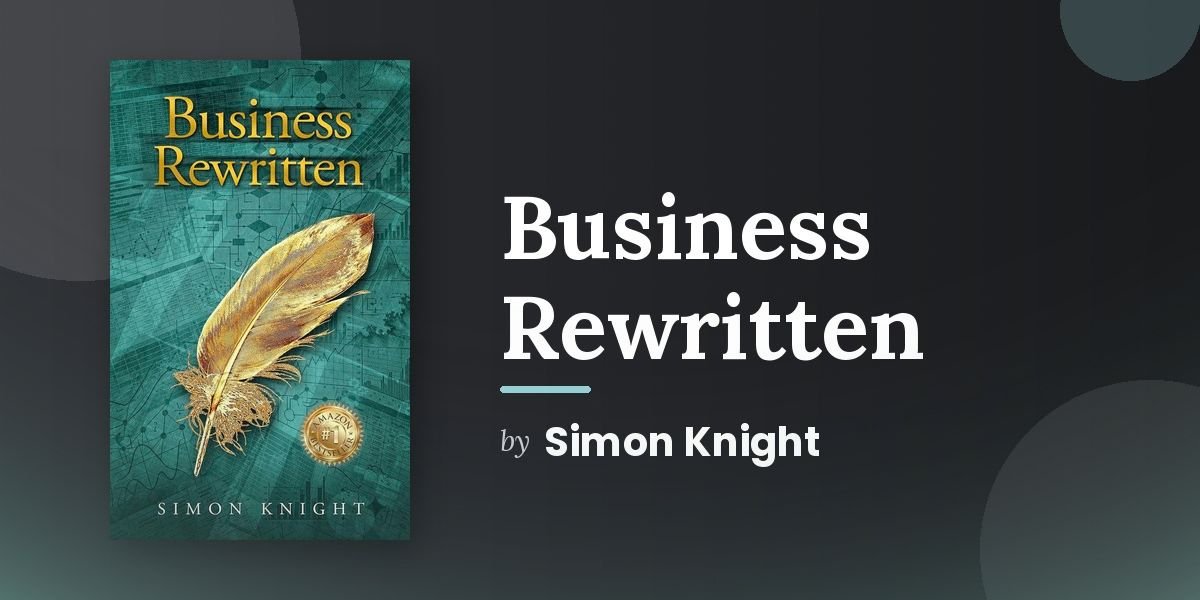
Simon Knight Built His Career Solving the Problems That Conventional Business Tools Keep Missing, and Business Rewritten Is What He Learned

By: Christian Cooper

The most expensive problems in any organization are not the ones that are obviously difficult. They are the ones that look like they should be solvable with the right analysis and the right process and keep resisting both, absorbing resources and management attention across multiple strategic planning cycles without meaningfully changing. Simon Knight has been the person called in to address exactly those problems, leading IT organizations to deliver business value and serving as a Partner CIO and interim executive with a specific focus on the complex, interconnected challenges that internal teams using conventional tools have been unable to crack. Business Rewritten is the book that synthesizes everything he has learned from that work into a framework that any leader can apply to the intractable problems in their own organization.

The Business Rewrite Framework is built around a counterintuitive but ultimately compelling insight: that the most effective way to understand a complex business problem is not to dissect it but to narrate it, to use the power of story to reveal the underlying dynamics that generate the symptoms rather than attacking the symptoms directly. This is not a metaphorical use of storytelling as a communication tool, though the framework serves that purpose as well. It is a genuinely analytical approach that uses narrative structure to surface the patterns and the root causes that conventional analytical frameworks are systematically designed to miss.

Knight’s argument for why conventional tools fail complex problems is one of the more practically useful insights in the book, and it is worth taking seriously. SWOT analyses, Six Sigma processes, strategic planning frameworks, and AI-assisted analysis are all designed to work with what can be measured, categorized, and optimized. Complex, interconnected organizational problems are frequently not primarily problems of measurement or categorization. They are problems of understanding, of missing the pattern that connects the symptoms, of treating the visible expressions of a deeper issue as the issue itself. The Business Rewrite Framework is designed specifically to reveal that deeper pattern, to help leaders understand what is really making their business tick at the level that actually matters.

The book’s explicit attention to AI reflects Knight’s awareness of the specific challenge facing organizations navigating a technological revolution that is reshaping not just what they do but what they are. Applying the Business Rewrite Framework to an AI transformation is not the same as applying strategic planning to it, because the framework is designed to surface the narrative of what the business has been and what it needs to become rather than to optimize the transition between two fixed states.

Business Rewritten has reached number one as a new release in business leadership training, a trajectory that reflects both the genuine need it addresses and the quality of what it delivers.

If you are facing complex, interconnected organizational problems that have been resisting conventional analysis and conventional solutions, Business Rewritten by Simon Knight is the framework that approaches those problems from a fundamentally different and more productive angle. Pick up your copy on Amazon today and start understanding what your business is actually about at the level that generates the problems you have not been able to solve.