Economic Insider

Brooklyn Lease Signings Are Rising Again: How Same-Day Movers Help You Move Fast When You Win the Apartment


Imagine the scene. It’s noon on Tuesday, you’ve been checking listings for weeks, and now the broker texts you, “Got it. Keys will be in your possession tomorrow.” Awesome news, but now comes the reality check: you have no truck, have packed zero boxes, and need to vacate your current apartment by the weekend. It’s not an uncommon scenario in Brooklyn, and it’s Tuesday.

Why Same-Day Movers Exist

The market conditions are like this. As per The Real Deal’s October rental report, Brooklyn saw annual growth of new leases signed of 7%, which is the first time such growth has occurred since June 2025, despite a dramatic decrease in listing numbers. Less housing stock, and less good apartments. Once you secure one, the landlord is typically ready to see you in right away, leaving you only a few days, and sometimes even hours. This is precisely what same-day movers were invented for.

How One Renter Made It Work

So, how do last-minute moves happen? Here’s a reasonable game plan. Let’s start the clock when you get the green light:

Photo Courtesy: Movers Not Shakers – Google Gemini AI

Take the time period as an illustration, because every structure and every schedule varies. What is important is that such a strategy works provided that you go through the necessary steps one by one and don’t attempt to rush things all at once.

Building Regulations Never Have a Day Off

Photo Courtesy: Movers Not Shakers / Google Gemini AI

And this is what gets New Yorkers into trouble. In many Brooklyn buildings, cooperatives, condominiums, as well as large apartment rental buildings, movers will have to present a certificate of insurance before letting anyone into the building. Elevator time has to be reserved, and most buildings have time slots for the move. A walk-up move faces its own set of problems, with its narrow staircases and sharp corners. Call your building right away upon approval of your request, because the bureaucracy may drag on longer than your move itself.

What “Affordable” Really Means

Everyone is after affordable moving services, but not necessarily the cheapest deal in town. The most economical quote may have hidden clauses such as short-term validity, additional charges for stairs or other specific circumstances, and fees added when the truck is already packed. Get a written estimate and clarify what exactly it covers. An adequate quote from a well-prepared team is better than an economic deal becoming a street fight right after.

Criteria of Choosing a Same Day Moving Company in New York

Here are the criteria to choose a same day moving company in New York:

  • Professional license and insurance: Insist on a certificate, because it is a requirement at some buildings.
  • Good availability information: Same day service depends on availability of a moving team, thus be honest.
  • Expertise in local buildings: Your movers should know all about COI, elevators, and loading zones.
  • Accurate estimate: Clarify what is included, what is not, and what factors could affect the price.
  • Packing assistance: If you need it, do not forget to discuss it.

Advantages of the Local Moving Crew

Photo Courtesy: Movers Not Shakers / Google Gemini AI

That’s how a moving crew in Brooklyn makes their living. Since 2002, Movers Not Shakers has been relocating New York residents, bringing decades of experience with walk-ups, insurance certificates, and strict load-in times, essential details when looking for local movers in Brooklyn when time is of the essence. Availability changes rapidly, so get in touch early to secure affordable movers for your moving date. Even the best moving crew has scheduling limitations, so the sooner you reach out, the better.

Packing When Time Is Short but Not Nonexistent

There is no way you can pack up an entire apartment in a matter of hours, but there is a way to do it efficiently. Start with all those items you cannot live without, such as medications, documents, chargers and a few days’ worth of clothes. Strip down the beds, empty out all the drawers, and tape the doors of anything that opens. Don’t stockpile a bunch of cardboard at the last second, either, ask your movers what else they have, since they may have more durable bins to pack in or help you pack. Plus, don’t forget a bag with all the essentials that you keep with yourself, not on the truck.

Consider Storage Solutions If Timing Doesn’t Work

If your move-in date is before the date your old place is free and vice versa, you will need temporary storage. In this case, it is worth considering getting one while requesting an estimate.

Just One More Thing

Once you’ve won the apartment in this city, breathe deeply and prepare yourself for the challenges ahead. Make calls to the building, to the moving company, and get those papers processed. Rapid moves can be extremely stressful, but with proper planning, they don’t have to become disasters. Good luck with your new place, and remember to lock up at the old one!


AI Impact on U.S. Jobs: White-Collar Employment Falls Below Projections

The AI impact on U.S. jobs is drawing scrutiny following the release of a report from the Burning Glass Institute, produced for RAISE US. Researchers estimate that major white-collar industries employ approximately 1.5 million fewer workers than their pre-pandemic growth trajectory projected, with early-career hiring weakening in industries that use AI extensively.

Key Takeaways

  • U.S. white-collar employment was approximately 1.5 million jobs below its projected pre-pandemic growth trajectory in August 2026
  • Among occupations highly exposed to AI, roles where the technology primarily supports workers added 1.4 million jobs between 2023 and 2025
  • Occupations where AI can perform a substantial share of the work lost 820,000 jobs during the same period
  • The share of entry-level job postings in industries with widespread AI use was 3% to 8% below its historical average
  • Researchers identified 98 career transition pathways associated with typical pay increases of 35%
  • Workers without bachelor’s degrees hold 80% of the jobs that researchers consider most vulnerable to AI-driven automation

U.S. White-Collar Employment Falls 1.5 Million Below Projections

The Burning Glass Institute’s November 2026 report, Fewer Rungs, New Bridges, examines employment patterns, recruitment and occupational mobility across the United States as employers expand their use of artificial intelligence.

Drawing on federal employment statistics, job advertisements and the career histories of millions of workers, the research identifies employment changes across finance, insurance, information, and professional and business services.

These industries employed approximately 31.9 million people in August 2026, compared with an estimated 33.4 million had employment continued along its 2005–2019 growth trajectory.

The resulting shortfall of 1.5 million jobs represents a gap between actual and projected employment rather than a documented number of layoffs. Researchers identified slower recruitment as a significant factor while acknowledging that AI may not fully explain the divergence.

Other economic developments, including higher interest rates and adjustments following pandemic-era hiring, may also have contributed to weaker employment growth.

The findings complement research examining AI-related employment risk scenarios, which considers how different rates of technological adoption could influence productivity, wages and employment.

AI-Assisted and Automation-Exposed Jobs Show Different Outcomes

Employment patterns varied considerably within the third of U.S. occupations most exposed to artificial intelligence. The Burning Glass Institute classified these occupations based on whether AI primarily supports employees or can independently perform a substantial portion of their work.

Between 2023 and 2025, employment in occupations where AI predominantly assists workers increased by 1.4 million. Meanwhile, occupations more exposed to automation recorded a decline of 820,000 jobs.

Office and administrative support positions accounted for approximately 780,000 job losses during the same period, Semafor reported on November 23.

The occupational comparisons indicate that AI exposure alone does not determine whether employment in a particular profession will expand or contract. The nature of the tasks involved and how employers apply the technology may also influence workforce requirements.

These figures describe observed employment changes across occupational categories rather than establishing that AI directly created or eliminated every job included in the analysis.

Entry-Level Hiring Weakens in Industries With Widespread AI Use

During the 12 months ending in June 2026, the share of entry-level job postings in industries using AI extensively was between 3% and 8% below its 2021–2026 average.

The Burning Glass Institute found that the proportion of postings available to early-career applicants remained relatively stable across the broader economy, indicating that weaker recruitment was concentrated in certain industries rather than occurring uniformly across the labor market.

Administrative duties, document preparation, data entry and other routine assignments have traditionally helped junior employees develop professional experience. As AI becomes capable of performing some of these tasks, employers may reconsider how they recruit and train new workers.

Reduced access to junior positions could also affect how employees acquire the experience required for advanced roles. This concern is reflected in broader AI workforce preparation recommendations addressing education, training and changing employment requirements.

Maintaining opportunities for supervised work and professional development may help employers address potential gaps in early-career training as job responsibilities change.

Stanford Research Finds a 19% Employment Gap for Young Workers

Separate research from the Stanford Digital Economy Lab documents uneven employment outcomes among younger workers.

An August 12, 2026, revision of its working paper, Canaries in the Coal Mine? Six Facts about the Recent Employment Effects of Artificial Intelligence, examined ADP payroll records covering millions of U.S. workers through June 2026.

Employment among workers ages 22 to 25 in highly AI-exposed occupations was 19% below the level it would have reached had it followed the employment growth of less-exposed workers in the same age group.

The researchers identified reduced hiring, rather than increased employee departures, as the primary factor behind the divergence. More experienced workers did not exhibit a comparable employment gap.

However, the Stanford study found no evidence of widespread, economy-wide job displacement. Its authors cautioned that the findings should be interpreted as descriptive employment indicators rather than definitive estimates of AI’s causal effect on the labor market.

Report Identifies 98 Career Pathways and Barriers to Employment

The Burning Glass Institute identified 98 established occupational transitions connecting workers in automation-exposed positions with better-paying jobs where AI is more likely to support human work.

Workers making these transitions typically experienced a 35% pay increase. The proportion of job changers using these pathways also increased by 17% between 2017–2019 and 2023–2025.

Educational requirements remain a significant barrier. Workers without bachelor’s degrees account for 80% of employment in occupations classified as most vulnerable to automation, while many alternative positions typically require a college degree.

The report recommends expanding access to practical AI training, preserving entry-level learning opportunities and recognizing relevant skills when assessing job applicants. Communication, collaboration and problem-solving are among the transferable capabilities identified across occupations.

The documented career transitions provide examples of occupational mobility rather than guaranteed employment or salary outcomes. Access to alternative positions will depend on workers’ experience, qualifications, training opportunities and prevailing labor market conditions.

Frequently Asked Questions

How is AI affecting white-collar jobs in the United States?

The Burning Glass Institute identified weaker employment growth in some white-collar industries and contrasting outcomes between occupations where AI assists workers and those more exposed to automation.

Has AI eliminated 1.5 million U.S. jobs?

No. The 1.5 million figure represents the difference between actual white-collar employment and its projected pre-pandemic growth trajectory. It is not a confirmed count of jobs eliminated by AI.

Why is entry-level hiring declining in AI-intensive industries?

Employers may increasingly use AI for routine assignments traditionally performed by junior employees. Research identifies weaker entry-level recruitment in industries with extensive AI use, although other economic factors may also contribute.

Which jobs are most exposed to AI-driven automation?

Occupations involving routine administrative, clerical and information-processing tasks may face greater exposure to automation. Employment outcomes depend partly on how employers implement AI and whether the technology replaces or supports human tasks.

Can workers move into better-paying jobs as AI adoption expands?

The Burning Glass Institute identified 98 established career transition pathways associated with typical pay increases of 35%. These transitions may require additional training, professional experience or educational qualifications.


What Sara Connell Learned Watching Her Own Brain Waves

By: Holly Ferraro

The Neurofeedback Years

After Sara Connell lost her twins, she worked with a trauma doctor in Chicago and spent years watching her own brain activity on an EEG machine, training in neurofeedback to shift her brain states deliberately. She watched the wavelengths change as she practiced. She learned to recognize the states where insight became available and to return to them when she needed them. Once she could access those states reliably, Downloads followed. She generated the idea for a business she launched without investors. She received the ideas for three books that were subsequently published. She found her way through pivots when the market changed. The Download: Train Your Brain. Unlock Your Genius. Create Miracles. is the product of that experience, combined with years of teaching the techniques to others through her Human Intelligence Project and thought leadership programs. Sara describes nine activators in the book, each grounded in brain science, each designed to shift the nervous system out of the beta analytical state and into the alpha, theta, and gamma frequencies where something new can arrive. The neurofeedback training is not required. The simple practices, a breathing technique, a walk with the right intention and the right silence, a brain prime at the desk before reaching for the AI tool, are available to anyone, free, in a few minutes a day.

What the Human Intelligence Project Has Produced

For over a year while writing the book, Sara ran a group called the Human Intelligence Project, bringing people together twice monthly, once to learn a technique and once to practice it in a group setting. The results she describes are not abstract. A woman whose adult daughter had not spoken to her in years is now planning her daughter’s wedding with her. People doubled their income and had their best financial year. Sara is careful throughout the book not to present these as miracles delivered by the method. They are what happens when people create consistent conditions for the kind of thinking that is otherwise unavailable to them in a life spent entirely in beta. The Human Intelligence Project continues because most people who try it for a month stay for more. The first year’s group renewed for a second year. Sara’s explanation is straightforward: the method works because the brain science behind it is real, and because the community provides the accountability that turns occasional practice into daily practice, and daily practice into a changed capacity.

Thomas Edison and the Pad of Paper

One of the more practical passages in The Download concerns decision-making, and Sara opens it with Thomas Edison’s principle that you should never waste a good night’s sleep. The instruction Edison apparently followed was to put a pad of paper on the nightstand before bed, write down the decision you need to make, tell your subconscious to work on it overnight, and write down the first thing that comes to you when you wake. Sara teaches a version of this as one of the Download activators, because the science of sleep and insight supports it. In 2021, a Paris research team found that people who spent just fifteen seconds in the earliest stage of sleep were far more likely to discover a hidden shortcut in a math problem: eighty-three percent found it, compared with thirty percent of those who stayed awake. The hypnagogic state, the edge between waking and sleep, is a known gateway to the theta brain state, the zone associated with the capacity to rewire subconscious patterns and receive genuinely novel connections. Sara’s broader argument about decision-making is that we face tens of thousands of conscious decisions a day inside a mental environment where approximately ninety percent of our thoughts are negative and eighty percent are repetitive. Conventional problem-solving recycles from that pool. The Download Method gets underneath it.

What Being Irreplaceable Actually Requires

Sara draws on a 2025 MIT Media Lab study in one of the book’s sharpest passages about artificial intelligence. Fifty-four people were split into groups to write essays with ChatGPT, with a search engine, or with their brain alone. The ChatGPT group showed the weakest neural connectivity, and more than eighty percent of them could not quote a sentence from the essay they had just written. Evaluators who did not know which essays used AI called that group’s work soulless. The specific word matters to Sara. Being irreplaceable in an AI economy does not mean doing things faster or more efficiently. It means producing work that has a soul in it, work that carries the fingerprints of a specific brain, a specific history, a specific way of seeing. Nobody else can produce your Download, because it came from the unrepeatable combination of everything you are and everything you have lived. The principle she calls why, try, then AI asks people to insource before they outsource: get your own idea or strategy first, then bring AI in to build systems around it, automate the pieces that can be automated, and extend the reach of what you created. The people who train their creative intelligence while most others outsource it will be the ones who stand out not despite the AI era but because of it.

Making a Ten-Year Plan a One-Year Reality

Sara closes The Download with a vision of what becomes possible when people make the practices consistent. She is not describing an extraordinary outcome available only to exceptional people. She is describing what she has watched happen repeatedly in the Human Intelligence Project when ordinary people commit to a few minutes a day of creating the conditions for their own best thinking. We would make a ten-year plan a one-year reality. We would create the future we want to see. The specific instruction she leaves readers with is minimal: take the couple of minutes already embedded in what you do every day, the shower, the walk, the drive, and instead of defaulting to consuming the feed of everything happening everywhere, make the space, do the activator, and then have the courage to trust and act on the next Download that arrives. The world is not short on information. It is short on people who have kept their capacity for original thought alive in a moment when every tool and habit of modern life is conspiring to replace it. That capacity is what The Download was written to protect.

Pick up your copy of The Download: Train Your Brain. Unlock Your Genius. Create Miracles. by Sara Connell on Amazon today.

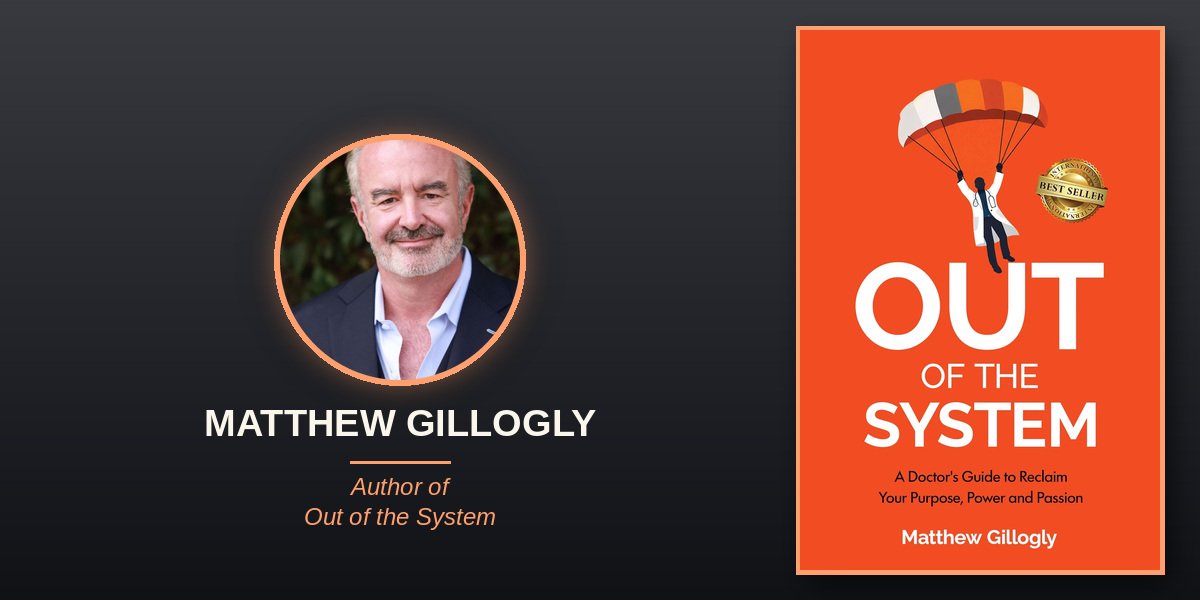
Matthew Gillogly Reframes Physician Burnout as a Business Problem with a Business Solution in the Urgently Needed Out of the System

By: Maya Daughtry

The physician burnout conversation has produced a great deal of content and very little change. Books tell doctors to meditate. Conferences offer panels on resilience. Wellness programs appear in hospital hallways while the conditions producing exhaustion remain unchanged. Matthew Gillogly’s Out of the System: A Doctor’s Guide to Reclaim Your Power, Purpose, and Passion takes a different approach entirely. It stops treating burnout as a coping problem and starts treating it as a structural problem with a structural solution.

Gillogly is a business strategist and the founder of Mavrix, an organization built around one specific thesis: that physicians can exit the insurance-based system, build cash-pay practices that serve them and their patients, and generate more income with less administrative suffering than the conventional model allows. He has more than twenty years of experience working inside the architecture of broken systems and studying how human behavior is shaped by the structures surrounding it. His observations about medicine are not theoretical. They are drawn from repeated, direct contact with the physicians who are living the consequences.

The book opens with a diagnosis that most physicians recognize immediately. The healthcare system was not built to serve physicians. It was built to serve a layered network of intermediaries, each one taking a portion of what physicians generate while adding friction to the process of delivering care. The physician’s role in this arrangement is to produce volume, absorb administrative cost, and accept the resulting income as fixed rather than negotiable. Gillogly argues that the entire premise is negotiable, and that the physicians who understand this are the ones finding their way back to the work they originally chose.

His solution centers on the cash-based practice model, which he presents not as a luxury option for specialists in wealthy markets but as a broadly applicable framework available to physicians across a range of disciplines and geographies. He walks readers through the specific mechanics: how to price services based on value delivered rather than reimbursement schedules, how to structure service offerings around outcomes, and how to communicate expertise to patients in ways that build trust rather than relying on institutional credibility.

One of the book’s most useful contributions is its treatment of physician self-perception. Gillogly identifies what he describes as a systematic conditioning that leads physicians to underestimate their own market value. Years inside a system that treats physician time as a commodity have produced a generation of practitioners who struggle to see themselves as the rare and irreplaceable experts they actually are. That psychological reframe, from interchangeable provider to premium specialist, is not window dressing. It is the foundation on which every practical recommendation in the book rests.

The goal Gillogly has stated publicly is to lead 100,000 physicians out of the system. The book reads like a tool built for exactly that purpose: specific enough to act on, grounded enough to trust, and urgent enough to treat as the kind of reading that cannot wait for a less busy week.

Order Out of the System by Matthew Gillogly on Amazon and get the structural blueprint that turns physician burnout from an endpoint into a starting point.

Moussa Konate and the Global Reach of Konate Group

Moussa Konate is a Congolese- born Senegalese entrepreneur and business executive who is the founder, chairman and chief executive officer of Konate Group, a company with business activities in North America, Europe, Africa and the Middle East. The group’s interests cover commodity trading, construction services, investment management, and technology and engineering. Konate has described its central purpose as strengthening trade in developing economies and stimulating economic growth through targeted business initiatives.

Konate began trading commodities while still in school, working from his family’s warehouse in Dakar, before moving to the United States to study international business and finance at the University of Cincinnati. Alongside building his own companies, he spent close to two decades in corporate roles at banking, chemical, pharmaceutical, consulting and energy management firms, including PNC, Sun Chemical, Merck, Bank of America, Deloitte and Schneider Electric.

He has also held several civic and nonprofit positions, including board and advisory roles with the International House of Charlotte, Rotary International and Entryway, an organization that helps people leave homelessness through work and housing. In 2025, he became a Founding partner in Konate Gold Trading LLC, a wholesale dealer in precious metals and gemstones based in Dubai.

Early life and education

Konate grew up in Dakar, the capital of Senegal, where his family operated a warehouse used for the storage and sale of commodities. In 1995, he began trading goods from the family premises, gaining practical exposure to buying and selling commodities at a young age. He continued this work throughout his schooling, combining his studies with the day-to-day demands of the family trade.

After completing high school in 2002, Konate was sent by his father to the United States to continue his education. He enrolled at the University of Cincinnati in Ohio, where he studied international business and finance, gaining formal training in cross-border commerce, corporate finance and financial analysis.

Career

Early corporate career

Konate entered the American financial services industry in February 2004, when he joined PNC as a business banker, a role he held until July 2006. In May 2006, he moved to Sun Chemical, a manufacturer of printing inks and pigments, as a Business Analyst/CAA. He remained with the company for nearly five years and left in April 2011.

He then joined the pharmaceutical company Merck as a senior business analyst, serving from April 2011 to August 2012. In August 2012, he was appointed senior vice president and operations project manager at Bank of America, which is headquartered in Charlotte, North Carolina. He held that position until July 2013.

Founding of Konate Group

Konate established Konate Group in Wyoming in 2004, the same year he began his banking career. In 2012 he expanded the business and incorporated Konate Group Corporation in North Carolina, with its head office in Charlotte. Under his leadership, the company grew into a multinational operation active in the Americas, Europe, Africa and the Middle East.

Konate Group Corporation presents itself as an intermediary between producers and buyers of energy, industrial and agricultural commodities, offering a range of value-added services alongside the trades it arranges. The products it trades and brokers have included engineered steel, stainless steel and steel products used in the oil and gas industry, as well as coal and agricultural staples such as wheat, sugar, rice and beans. Beyond trading, the group’s portfolio extends into construction services, investment management, and technology and engineering, and it offers recruitment services that connect employers with graduates in technical fields.

KTech-Engine Group

On April 2, 2013, Konate launched the KTech-Engine Group, which is linked to the KTech-Engine Program. The initiative was set up as a network bringing together professionals from a range of backgrounds and connecting them with specialists in technology and engineering. Konate has framed the group as a tool for career development and education, arguing that workers need to acquire additional skills to fill vacant positions and that stronger professional networks can help raise the standard of business practice.

Delos Advisory & Investment

In August 2013, Konate became principal and owner of Delos Advisory & Investment, Inc., an investment management and advisory firm. In this role, he is responsible for the firm’s investment management activity and the advisory services it provides.

Edwards & Solo Construction

Since January 2014, Konate has been the owner, chairman and president of Edwards & Solo Construction, Inc., a company engaged in heavy construction projects with an international reach. Its work sits alongside Konate’s own background in construction management, which includes road building, wastewater treatment and commercial projects.

Consulting and energy management

Konate returned to corporate roles in the early 2020s. From October 2021 to July 2022, he worked as a senior manager consultant at the professional services firm Deloitte. He then served as director of finance and operations at Schneider Electric, the French multinational specializing in energy management and industrial automation, from July 2022 to January 2023.

Konate Gold Trading

In 2025, Konate became a founding partner and executive managing director of Konate Gold Trading LLC, a wholesale trading company based in Dubai, United Arab Emirates. The company deals in gold, silver, diamonds, pearls and other precious stones and is licensed by the Dubai Department of Economic Development. It operates from Burlington Tower on Marasi Drive in Dubai and states that its goal is to link local businesses with international markets. The venture places Konate’s trading activity in a major center for the physical gold trade and builds on his earlier experience in dealing in gold and precious stones.

Areas of expertise

Over the course of his career, Konate has built experience across several heavy industries. In energy, his background covers downstream oil and gas operations as well as both offshore and onshore activities, along with coal mining and clean coal technologies. In commodities, he has worked in the trading of gold and precious stones in addition to industrial and agricultural goods.

His engineering and construction experience includes engineering, procurement and construction (EPC) contracting and construction management. Specific areas of work have included the design of permeable pavement, road construction, wastewater treatment and commercial construction.

On the financial and managerial side, Konate’s skills include investment management, corporate finance and business strategy, together with negotiation, leadership and the management of cross-functional teams. His professional endorsements also highlight his proficiency in SAP FICO, the financial accounting and controlling module of SAP’s enterprise resource planning software.

Civic and philanthropic involvement

Konate has combined his business activities with service on the boards and advisory bodies of several nonprofit organizations, much of it in the Charlotte area.

From May 2014 to July 2017, he sat on the board of the International House of Charlotte, a nonprofit that works to promote the economic empowerment and integration of international residents living in the Charlotte region.

Between January 2014 and December 2018, he served as an advisory member with Rotary International, the global service organization whose humanitarian programs are carried out with partners such as the World Health Organization and the Bill & Melinda Gates Foundation, most notably in the campaign for polio eradication.

Since November 2019, he has been a member of the advisory board of Entryway, formerly known as Shelters to Shutters. The organization helps individuals and families move out of homelessness by securing employment and housing for them through partnerships with companies in the real estate industry.

Konate has also spoken of his commitment to supporting emerging talent around the world and to widening trade opportunities for businesses in developing countries.

Views on technology and education

Konate has commented publicly on the growing demand for technology workers in the United States. He has pointed to a marked rise in the number of computer science degrees, which he attributes to the expansion of technology roles across the economy and to government emphasis on science, technology, engineering and mathematics (STEM) education. In his view, as these jobs become more widespread, employers should build direct relationships with recent graduates in order to fill open positions, a service Konate Group offers through its recruitment activities.

He has also highlighted the gap in educational attainment between students from wealthy and less affluent families. Konate has argued that narrowing this gap requires incentives for students with limited resources, and that those who remain determined to pursue a better education and improve their circumstances despite having fewer advantages should be actively encouraged and recognized.

How Much Does Invoice Factoring Cost?

Factoring doesn’t come with a monthly payment in the usual sense. Your customers pay the factor, and the factor keeps its share. But a business still feels that share every month, so it’s useful to think of it as an effective monthly payment: the total fees you give up on one month’s worth of invoices.

Treat this article like a simulator with sliders. We set a baseline and then move one input per section, leaving all others fixed, so you can see exactly what each slider does. Every number belongs to a fictional staffing company, Ridgeway Staffing, and all terms are illustrative.

Setting the Baseline Dials

Input

Setting

Invoices factored per month

$100,000

Advance rate

85%

Factor fee

3% per 30 days, billed in 15-day blocks

Average days until customers pay

45

Output:

Result

Value

Fee blocks

3 (at 1.5% each)

Effective monthly payment

$4,500

Cash advanced up front

$85,000

Annualized cost on cash advanced

About 42.9%

The annualized figure is a simple one: $4,500 divided by $85,000, multiplied by 365 and divided by 45. It’s a rough tool for comparing with other financing, not a formal APR.

To see how one provider presents these terms, the Fundivi invoice factoring cost page can help you know what to look for in your own offer. Now let’s start moving things.

Moving the Factor Rate

Ridgeway negotiates its rate down from 3% to 2.25% per 30 days. Nothing else changes.

Output

Baseline

New setting

Fee percentage on invoice

4.5%

3.375%

Effective monthly payment

$4,500

$3,375

Annualized cost

About 42.9%

About 32.2%

Change: $1,125 saved each month.

This slider is strong and easy to understand, which explains why salespeople talk about it so much. Keep reading, though, because the others can undo its effect.

When Customers Pay Slower

Ridgeway’s clients drift from 45 days to 60 days.

Output

Baseline

New setting

Fee blocks

3

4

Effective monthly payment

$4,500

$6,000

Annualized cost

About 42.9%

About 42.9%

Change: $1,500 more each month.

The annualized rate hasn’t budged, but the cost has climbed by a third. If your clients pay slowly, the fee keeps running. That’s why who you invoice often matters as much as who you borrow from.

When Customers Pay Just Past a Block Boundary

Next, Ridgeway’s clients improve to 31 days. You’d expect a much lower bill.

Output

Baseline

New setting

Fee blocks

3

3

Effective monthly payment

$4,500

$4,500

Annualized cost

About 42.9%

About 62.3%

Change: Nothing in dollars, despite customers paying two full weeks sooner.

That’s the block trap. Day 31 falls into the third 15-day block, so you pay for 45 days and only use 31. If your invoices tend to land just past a boundary, ask for daily proration or smaller blocks.

If you’re comparing factoring with quicker-decision lending products, this list of business loans to prequalify for online can be useful for scoping alternatives. Convert any offer into a monthly figure before you compare.

Moving the Advance Rate

Move only the advance rate.

Advance rate

Cash up front

Effective monthly payment

Annualized cost

75%

$75,000

$4,500

About 48.7%

85% (baseline)

$85,000

$4,500

About 42.9%

92%

$92,000

$4,500

About 39.7%

Change: None in dollars, assuming the fee is charged on the invoice’s face value.

The advance rate changes how much usable cash you get for the same fee. Don’t compare two factoring offers on fee rate alone. A 2.75% offer with a 75% advance can be worse for your cash needs than a 3% offer with 90%.

Some factors do charge on the advance amount instead, so check which applies. That one detail changes this whole table.

Changing Monthly Volume

Ridgeway wins a contract, and factored invoices increase to $150,000 per month.

Output

Baseline

New setting

Cash advanced

$85,000

$127,500

Effective monthly payment

$4,500

$6,750

Annualized cost

About 42.9%

About 42.9%

Change: $2,250 more per month, but with $42,500 more cash up front.

Higher volume can be a bargaining chip. Now that Ridgeway is a bigger account, it has a good reason to request a better rate, and this is the moment to ask. On the other hand, a contract with a monthly minimum works in the opposite direction: if your volume falls short, you may pay fees on invoices you didn’t factor in.

Switching On the Add-On Fees

Back to baseline, but now we switch on the extras that don’t appear in the headline rate. Ridgeway submits 40 invoices a month at $12 each to process, and there’s a $250 monthly service charge.

Fee

Amount

Factor fee

$4,500

Invoice processing, 40 at $12

$480

Monthly service fee

$250

Effective monthly payment

$5,230

The annualized cost on cash advanced rises from about 42.9% to about 49.9%. That’s a seven-point increase with no change in the advertised rate.

Other possible add-ons include wire charges, credit-check fees on new customers, misdirected payment penalties, and termination fees. Comparison and learning sites such as this business lender comparison marketplace can help you learn which questions to ask.

When a Customer Does Not Pay

So far every invoice has been collected. Now switch on the bad day. Under a recourse agreement, one $12,000 invoice goes unpaid for 90 days, and the factor requires Ridgeway to buy it back.

Line

Amount

Advance to return

$10,200

Fees accrued, 6 blocks at 1.5%

$1,080

One-time cash hit

$11,280

Added to the $4,500 baseline, that month’s outflow would be $15,780. It doesn’t happen every month, but it’s the entry that can turn a manageable fee into a cash crisis. Non-recourse agreements can reduce this exposure, usually for a higher fee and only for specified events, such as a customer’s formally documented insolvency. Read the definition rather than the label.

Credit Quality and Eligibility

Factors tend to focus on the creditworthiness of your customers, though your own file still counts. On the separate question of minimum scores in business finance, this Benzinga notice on no-minimum-score eligibility covers one company’s announcement. An eligibility policy doesn’t promise an approval or any specific pricing.

In Ridgeway’s simulator, moving from strong commercial customers to weaker ones may mean a higher fee or a lower advance. Run those changes through the factor rate and advance rate sections to see the result.

Moving Two Inputs at Once

Real months don’t move one input at a time. Take the negotiated rate cut and combine it with the slower-paying customers. At 2.25% per 30 days and 60 days to payment, Ridgeway pays four blocks at 1.125%, or 4.5% of face value. The effective monthly payment is $4,500, precisely where it began. Two weeks of slower collections has erased the whole negotiated discount.

Change from baseline

Effective monthly payment

Rate cut only

$3,375

Slower customers only

$6,000

Rate cut and slower customers

$4,500

Baseline plus add-ons

$5,230

Which suggests a practical priority: before you spend energy haggling over a quarter point, look at how quickly your customers pay and whether a small early-payment incentive or tighter invoicing could shorten that number.

Your Simulator Worksheet

Gather these inputs from your own offer:

☐ Monthly invoice volume, and any minimum

☐ Advance rate, and whether fees apply to the face value or advance

☐ Fee per period and the size of each billing block

☐ Your actual average days to payment

☐ Every per-invoice and monthly charge

☐ Recourse terms and the buyback deadline

Run your numbers at your average collection time and again 15 days later. Pick an offer you could live with in both cases. Keep the results beside the original quote, so you can see which assumptions proved wrong. Then rerun the worksheet every few months, since customer mix and payment habits drift, and a fee structure that fit last year may no longer suit the invoices you’re issuing today.

Frequently Asked Questions

What’s a typical factoring fee?

Fees often fall around 1% to 5% of invoice value per month, varying by industry, volume, and customer credit.

Is factoring a loan?

Usually it’s a sale of receivables, although contract terms and treatment can differ.

What is recourse factoring?

You generally must buy back or replace invoices that customers don’t pay. Non-recourse covers some, but rarely all, non-payment risk.

When do I receive the rest of the invoice?

After the customer pays, the factor releases the reserve minus its fees.

Can I factor just some invoices?

Sometimes. Spot factoring allows this, but rates may be higher than for a full-ledger agreement.

How can I reduce factoring costs?

Improve customer payment speed, ask for daily proration, and negotiate fees using your volume.

Disclaimer: This content is for general informational purposes only and should not be considered as financial advice. The content is not intended to be a substitute for professional financial advice, investment advice, or any other type of advice. You should seek the advice of a qualified financial advisor or other professional before making any financial decisions.