By: Maya Daughtry
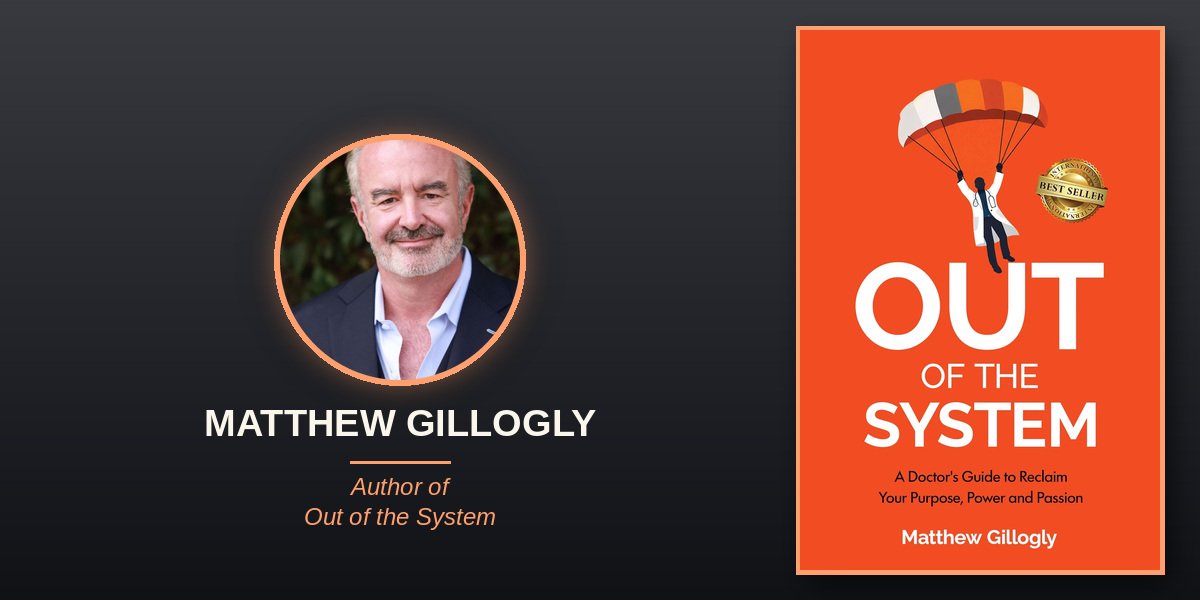
The physician burnout conversation has produced a great deal of content and very little change. Books tell doctors to meditate. Conferences offer panels on resilience. Wellness programs appear in hospital hallways while the conditions producing exhaustion remain unchanged. Matthew Gillogly’s Out of the System: A Doctor’s Guide to Reclaim Your Power, Purpose, and Passion takes a different approach entirely. It stops treating burnout as a coping problem and starts treating it as a structural problem with a structural solution.
Gillogly is a business strategist and the founder of Mavrix, an organization built around one specific thesis: that physicians can exit the insurance-based system, build cash-pay practices that serve them and their patients, and generate more income with less administrative suffering than the conventional model allows. He has more than twenty years of experience working inside the architecture of broken systems and studying how human behavior is shaped by the structures surrounding it. His observations about medicine are not theoretical. They are drawn from repeated, direct contact with the physicians who are living the consequences.
The book opens with a diagnosis that most physicians recognize immediately. The healthcare system was not built to serve physicians. It was built to serve a layered network of intermediaries, each one taking a portion of what physicians generate while adding friction to the process of delivering care. The physician’s role in this arrangement is to produce volume, absorb administrative cost, and accept the resulting income as fixed rather than negotiable. Gillogly argues that the entire premise is negotiable, and that the physicians who understand this are the ones finding their way back to the work they originally chose.
His solution centers on the cash-based practice model, which he presents not as a luxury option for specialists in wealthy markets but as a broadly applicable framework available to physicians across a range of disciplines and geographies. He walks readers through the specific mechanics: how to price services based on value delivered rather than reimbursement schedules, how to structure service offerings around outcomes, and how to communicate expertise to patients in ways that build trust rather than relying on institutional credibility.
One of the book’s most useful contributions is its treatment of physician self-perception. Gillogly identifies what he describes as a systematic conditioning that leads physicians to underestimate their own market value. Years inside a system that treats physician time as a commodity have produced a generation of practitioners who struggle to see themselves as the rare and irreplaceable experts they actually are. That psychological reframe, from interchangeable provider to premium specialist, is not window dressing. It is the foundation on which every practical recommendation in the book rests.
The goal Gillogly has stated publicly is to lead 100,000 physicians out of the system. The book reads like a tool built for exactly that purpose: specific enough to act on, grounded enough to trust, and urgent enough to treat as the kind of reading that cannot wait for a less busy week.
Order Out of the System by Matthew Gillogly on Amazon and get the structural blueprint that turns physician burnout from an endpoint into a starting point.