By: Vicent Morris
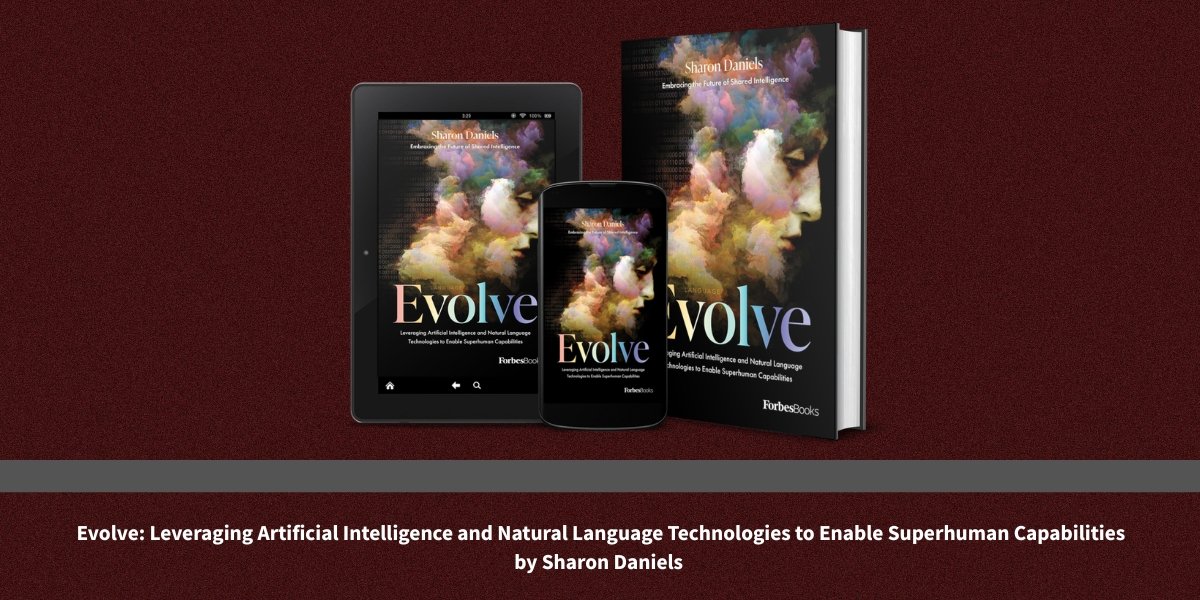
Most books about artificial intelligence start with the technology and work outward toward the human implications. Sharon Daniels starts with humanity, with the specific thing that has always defined us above all else, our capacity for language, and works inward toward the technology from there. That reversal of the usual approach is not a stylistic choice. It is a substantive one, and it produces a book that understands AI in a way that most technology writing never quite manages to achieve, as a development within the long human story of communication rather than as an external force arriving to disrupt it.
Reading this book feels like having a conversation with someone who has genuinely reconciled the excitement and the anxiety that most thoughtful people carry about AI’s rapid advancement, not by dismissing either response but by providing a framework that makes both responses make sense and then shows you what to do with them. Daniels is a Forbes Technology Council member and a technology CEO with more than thirty years of experience building and leading global technology businesses, and that combination of technical authority and business perspective gives the book a grounded credibility that purely philosophical treatments of AI consistently lack. She is not theorizing about what this technology might do. She is describing what it is doing and what it means, from the perspective of someone who has been inside that reality for decades.
The central insight the book builds toward, that adding the power of language to AI’s existing capabilities creates something qualitatively different from anything either humans or machines could produce alone, is one that Daniels develops with real intellectual care rather than simply asserting. The historical journey through language’s role in human evolution, from the first cave paintings to the printing press to the digitization of language itself, gives readers the long view that makes the current moment feel genuinely significant rather than merely exciting. And her treatment of Natural Language Generation as the technology that brings these two streams together, that allows machines to not just process data but to communicate insights from that data in the language that humans actually think and feel and decide in, is the most accessible and most compelling explanation of NLG’s significance available in any single volume.
Daniels writes with a warmth and an optimism that feel earned rather than performed. She has clearly spent enough time watching this technology transform organizations and industries to believe genuinely in its potential to amplify human capability rather than diminish it, and that belief runs through the book as an animating conviction rather than a marketing message. The vision she articulates, of humanity remaining at the heart of AI through the specific vehicle of natural language technology, deserves to be heard widely and taken seriously by everyone navigating the current moment of technological acceleration.
Evolve is the book that shifts the AI conversation from fear or hype toward genuine understanding, and for anyone ready to engage with that understanding seriously and practically, it is exactly the guide they need.
If you are ready to move beyond the fear and the hype surrounding AI and engage with what is actually happening at the intersection of human intelligence and machine capability, Evolve by Sharon Daniels is the book that takes you there with clarity, authority, and genuine warmth. Pick up your copy on Amazon and start understanding the most consequential technological development of our time through the most human lens available.