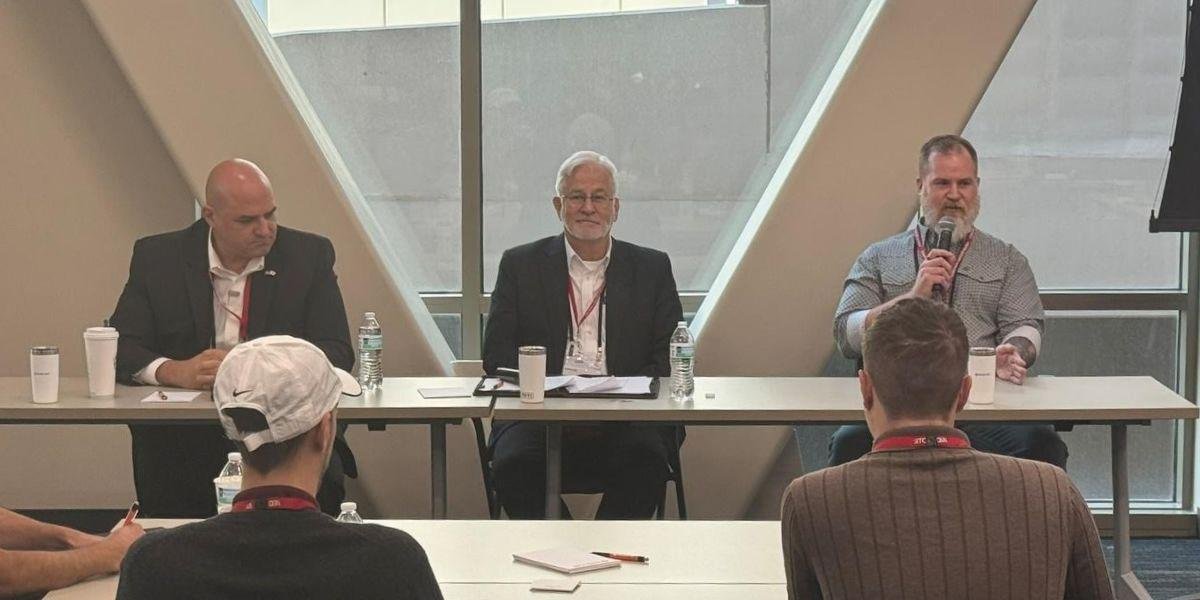
Photo Credits: Brett Arsta
By: Brett Arsta
Brett Arsta grew up in Blodgett, Missouri, a small farming community in the southeastern tip of the state, in a region known as the Missouri Bootheel. It was the kind of place where the land teaches you more about work ethic than any boardroom ever could. He watched his father endure the daily indignity of a narcissistic employer, taking it quietly, without complaint, because the family needed the income. That image never left him. It’s probably the reason Arsta flinches when he sees leaders confuse authority with permission to make people feel small. It was a defining moment that shaped who he became as a professional and, more pointedly, who he refused to become.
That early imprint followed him when a close friend pushed him to take a risk and start something new in a profession dominated by bankers. Arsta took the leap, founding AMS Mortgage in Ridgeland, Mississippi, a boutique brokerage built on the idea that a mortgage is not a transaction. It’s a dream that belongs to someone. “These aren’t just mortgage loans,” he says. “These are the dreams of people being realized. It’s my responsibility to ensure that each and every loan is handled with care and understanding that there is a duty of care involved.” He wore every hat, built every process, and competed against institutions with far deeper pockets. He did it four more times across his career, building companies from the ground up each time, sharpening a perspective on what it actually costs to build something real.
There’s something else he noticed early that stayed with him. Loan officers, he observed, divide cleanly into two types. Some take orders. Others treat the relationship as fiduciary, slowing down to make sure the person on the other side of the desk actually understands what they’re signing and why. “In today’s environment everyone wants fast,” he says, “while they should be taking their time while making these life-changing decisions.” That posture, education over expediency, shaped everything that followed. It also influenced his work in founding PwrTPO alongside his business partner Michael George, another lifelong mortgage industry expert. Now a subsidiary of Lower LLC, PwrTPO reflects their combined industry experience and commitment to supporting mortgage brokers. Arsta continues to contribute his expertise in wholesale mortgage strategy and broker channel development.
His career has run the length and breadth of the industry. As President and CEO of Guaranty Home Mortgage Corporation, he guided the organization through significant operational growth. He brings skills across agency approval structures, Fannie Mae and Freddie Mac seller-servicer relationships, secondary market operations, RESPA-regulated affiliated business arrangements, and mortgage capital markets. The resume is substantial. But ask Brett Arsta about leadership, and he’s more interested in the people than the portfolio.
What Brett Arsta Believes Leadership Actually Means
Arsta doesn’t have a lot of patience for the version of management that passes itself off as leadership. “Many are thrown into management without proper training,” he says, “and then the failure begins when ones that are dedicated to leadership become part of a culture problem.” There’s a distinction he draws carefully between people who chase status and compensation and people who lead with purpose. “Leaders work with a purpose for the greater good versus working for more money and status.”
He’s seen the alternative up close. Companies that classify roles as exempt to avoid overtime, then extract maximum labor from people who can’t push back. He calls it plainly: a sweatshop attitude. “It’s sad to see, however, I see it daily in many professional organizations.” For Arsta, this represents a fundamental failure of leadership, not a strategic inconvenience. The way a company treats its people is not a culture footnote. It’s the whole story.
His antidote is servant leadership, an approach he describes as the model with the strongest chance of producing durable success. Not because it sounds better in a presentation, but because it starts from a different premise entirely. You’re there for the people, not the other way around. He also doesn’t pretend to have all the answers in the room. “I’m definitely not the smartest person in the room,” he says, “and so many people have fantastic ideas.” Creating real channels for employees to surface those ideas, and then actually studying their impact, is how he defines a functioning leadership culture.
How Golf Taught Him to Read People
Brett Arsta plays golf the way he approaches character assessment: with attention and very little sentimentality. “You can learn a lot about people by playing golf, learning who knows the rules but chooses to break them for a better score,” he says. “Those are not my people.”
Cheating on a scorecard is one data point in a larger pattern. It tells you something about how a person handles pressure, and whether they’re committed to getting genuinely better or just to appearing better. He’d rather have someone who swings badly and stays curious than someone who posts clean numbers through selective memory. The golf course, in his view, surfaces the same tendencies that show up in budget reviews and difficult conversations.
He draws similar lessons from Warren Buffett, who he names as his greatest professional inspiration. Buffett’s framework for choosing who to invest time and money in resonates with Arsta’s own instincts. Remove toxic people. Keep your circle honest. It’s advice he also passes to younger professionals: document your meetings, be deliberate about who you let close, and don’t mistake access to someone’s calendar for access to their character.
Mentorship, Mistakes, and What He Passes Forward
Brett Arsta has mentored a meaningful number of professionals throughout his career, and he speaks about those experiences with the kind of candor that comes from decades of results, not theory. Some people grew well beyond what he expected. Others didn’t make it. Neither outcome surprised him.
“The ones who are sincere and open to mentorship have a strong chance at being a great leader,” he says. Openness matters more to him than raw ability. Humility, the willingness to be corrected, to absorb criticism without collapsing, registers as the better predictor of who will still be standing in ten years.
On accountability, he’s equally clear. “I make mistakes and own them fully in order to make sure that I learn and get better.” That standard applies at his level as readily as any other. When a strategy doesn’t deliver, the instinct to find someone to blame is, in his words, useless energy. “Finding solutions and new ways to solve the same problems if it arises again” is what matters. He adds that scared employees don’t build happy workplaces, and that blame-first cultures are usually led by people who’ve never actually had to rebuild anything.
Building a team, he says, comes down to three things: synergy, experience, and attitude. Credentials matter less than whether someone will row in the same direction when things get hard. He evaluates growth opportunities through the same disciplined lens, weighing short, mid, and long-term risks before committing, and making sure no single bet is large enough to compromise the culture or the people inside it.
His view on burnout is similarly direct. Understand it’s real. Don’t sell your soul for a title or a quarterly number. “Take time to smell the roses along your way,” he says, “and don’t forget those who helped you along the way.” Work-life balance is something executives have a responsibility to model, not just mention in a memo.
The Legacy Brett Arsta Is Building Beyond Business
The question of legacy tends to produce polished answers from executives. Arsta’s comes out rougher and more specific. “That I’m a believer in God and Jesus, that I care about people and am fair and passionate about what I do.” He grounds his values not in denominational religion but in something more personal, spiritual beliefs that show up in how he treats people on an ordinary Tuesday, not just in a crisis. Being kind, passing blessings forward, and holding himself accountable to a standard that has nothing to do with a performance review.
He wants to be remembered as someone who stood up for what was right, even when it cost him. “Sometimes it’s a true battle with the bullies that use the legal system as a tool to get what they want.” He knows that terrain personally and doesn’t soften it.
He coached boys and girls youth sports teams for over 20 years, watching kids build self-confidence one practice at a time. When Nashville flooding devastated families in his community, he organized crews to demo water damage so households could qualify for FEMA relief faster. He housed a classmate of one of his children for more than a year after that family lost their home, providing both shelter and a vehicle.
That’s the version of Brett Arsta’s executive leadership philosophy that doesn’t fit in a professional summary. Success, by his definition, is simple. “When you end each day feeling like you made someone smile and helped humanity.” It’s not a quarterly number. It’s whether the people around him are better off than they were before he showed up. In an industry that can reduce human aspiration to a rate sheet, that distinction is the one worth keeping.
Disclaimer: This article is for informational purposes only. The views, opinions, and statements expressed are those of the individuals featured and do not necessarily reflect those of the publication. The content should not be considered professional advice or an endorsement of any individual, organization, product, or service.