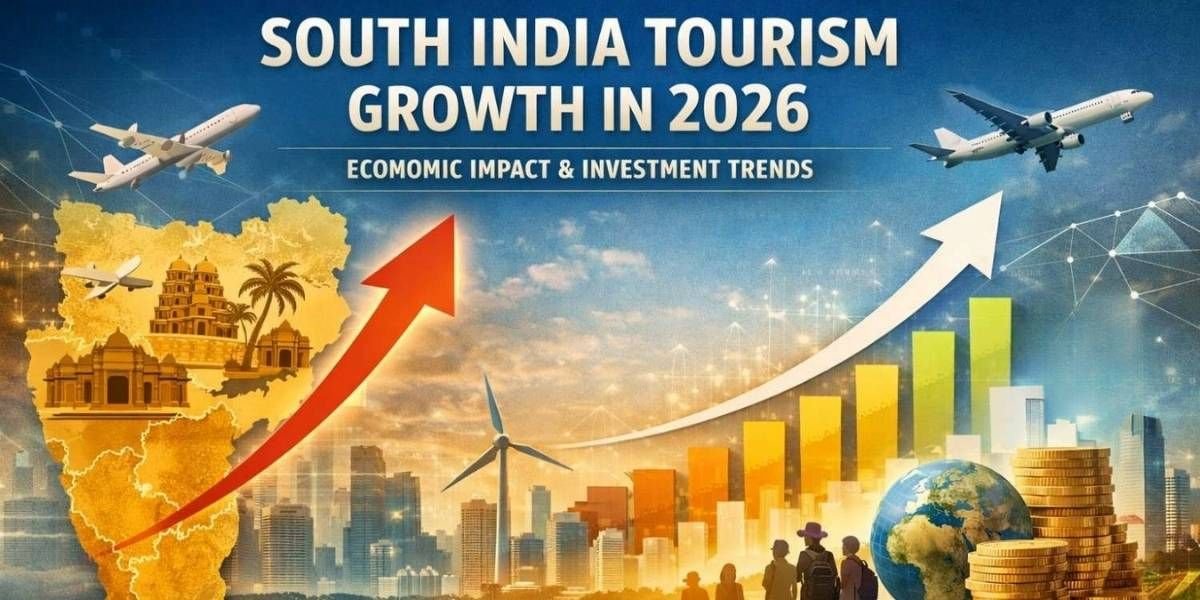
Tourism in India is no longer driven only by destination popularity; it is increasingly shaped by structured travel ecosystems, digital accessibility, and curated experiences. In 2026, South India stands out as one of the fastest-growing regional tourism markets, not just culturally, but economically. A major driver behind this growth is the rapid evolution of organized tour packages in South India, which are transforming fragmented travel routes into integrated tourism corridors.
From heritage tourism in Tamil Nadu to eco-tourism in Kerala and coffee tourism in Karnataka, South India’s travel economy is shifting from unorganized travel patterns to professionally structured tourism models, creating sustainable income systems for communities, businesses, and infrastructure development.
This transformation is no longer anecdotal; it is measurable, structural, and long-term.
The Shift from Destination Travel to Experience Economies
Earlier, tourism was centered around iconic landmarks. Today, it is driven by experiences, accessibility, and structured itineraries. South India has benefited more than any other region from this evolution due to:
- Diverse geography within short distances
- Multi-state connectivity
- Cultural density
- Religious tourism circuits
- Year-round travel viability
- Strong domestic demand
Tour packages are no longer limited to transport and hotels; they now integrate wellness, food tourism, eco-tourism, spiritual tourism, and cultural immersion into complete experience models.
This shift has converted tourism from a seasonal business into a year-round regional economic engine.
Infrastructure Development as a Growth Multiplier
South India’s tourism growth is directly tied to infrastructure expansion:
Key Enablers:
- Highway corridor development
- Airport modernization
- Regional airport connectivity
- Smart city tourism planning
- Railway modernization
- Digital booking ecosystems
- Tourism startup growth
Tour packages leverage this infrastructure to create predictable, scalable travel flows, enabling consistent tourism demand rather than sporadic seasonal surges.
This creates economic stability, not just tourism spikes.
Regional Employment Generation and Skill Development
The tourism package ecosystem directly contributes to:
- Local employment
- Transport services
- Hospitality staffing
- Artisan economies
- Local food industries
- Cultural performers
- Eco-tourism guides
- Wellness professionals
- Rural tourism enterprises
Instead of centralized profit models, structured tourism now supports distributed revenue models, particularly in Tier-2 and Tier-3 destinations.
This is critical for regional economic inclusion, not just urban tourism growth.
Digital Platforms and Market Accessibility
Technology has democratized tourism access. Digital booking platforms, travel aggregators, and content platforms have created global visibility for places to visit in South India, converting regional destinations into international tourism products.
This visibility enables:
- International tourist inflow
- NRI travel markets
- Medical tourism growth
- Spiritual tourism circuits
- Remote work tourism
- Wellness retreat tourism
South India now competes globally, not just nationally.
Structured Tour Models and Market Trust
One of the biggest transformations in 2026 tourism growth is trust-based travel planning.
Travelers increasingly rely on structured service providers instead of self-planning complex multi-state itineraries. This has strengthened professional tourism networks, particularly centralized travel hubs that manage large-scale planning and coordination.
Many national tourism flows are now managed by centralized planning hubs, including tour operators in Delhi, who play a strategic role in designing multi-state South India travel circuits, corporate travel flows, international packages, and religious tourism logistics.
This centralized planning model improves service quality, safety standards, and operational efficiency.
Tourism as a Regional Economic Ecosystem
South India tourism now functions as a multi-sector economy, not a single industry.
Economic linkages include:
- Agriculture (food supply chains)
- Handicrafts & cottage industries
- Transport manufacturing
- Construction
- Renewable energy (eco-resorts)
- IT services
- Digital marketing
- Logistics networks
- Wellness industries
Tourism packages act as economic connectors, linking multiple industries into a single value chain.
Rise of Sustainable Tourism Models
2026 tourism growth is sustainability-driven:
- Eco-resorts
- Plastic-free tourism zones
- Community-based tourism
- Village tourism
- Wildlife conservation tourism
- Responsible travel models
Structured packages promote controlled tourism instead of uncontrolled tourism, protecting natural resources while sustaining economic growth.
This ensures long-term viability, not short-term profit cycles.
Investment Growth and Tourism Capital Flow
South India tourism now attracts:
- Hospitality investments
- Resort development
- Eco-tourism funding
- Infrastructure investments
- Startup capital
- International hospitality brands
- Wellness tourism funding
Tourism packages generate predictable demand, making the region attractive to investors and developers.
Predictability is the foundation of economic scalability.
Data-Driven Tourism Planning
Modern tourism planning is data-led:
- Demand forecasting
- Seasonal traffic management
- Pricing optimization
- Route efficiency modeling
- Occupancy forecasting
- Experience personalization
Tour packages now operate like logistics systems, not just travel services.
This improves efficiency and reduces economic waste.
Long-Term Regional Impact
By 2026, South Indian tourism will no longer be just about visitors; it will be about regional transformation.
Long-term outcomes:
- Urban decentralization
- Rural development
- Regional income stability
- Infrastructure equity
- Cultural preservation
- Sustainable employment
- Tourism entrepreneurship
- Community empowerment
Tourism packages have become instruments of regional development policy, not just travel services.
Conclusion: Tourism as Economic Architecture
South India’s tourism growth is not accidental; it is structured, engineered, and system-driven.
Tour packages have transformed tourism into:
- An economic ecosystem
- A development model
- A regional growth strategy
- A sustainability framework
- A social inclusion system
- A long-term investment sector
In 2026, tourism in South India is no longer a lifestyle choice; it is economic architecture.
Structured travel models are the blueprint for this transformation.