By Dr. Tamara Patzer
Few questions worry job seekers more than this one. If machines can write, calculate, and now move through a factory, which paid work is going away, and what is replacing it? The best available answers come from large surveys and government data, and they are more mixed than most headlines suggest.
Key Takeaways
- The World Economic Forum projects 170 million new roles and 92 million displaced roles worldwide by 2030, a net gain of 78 million.
- Postal clerks, bank tellers and data entry clerks are among the jobs expected to decline fastest.
- Stanford’s 2026 AI Index found headcounts for workers ages 22 to 25 fell in software development and customer support, while most older age groups grew.
- Robots perform about 99.9 percent of tasks correctly in controlled factory settings but only about 70 to 80 percent at tasks such as folding laundry at home, according to a robotics federation official.
- New kinds of work, such as reviewing AI output and recording footage for robots, are appearing alongside the losses.
The Big Picture: More Roles Created Than Lost
The World Economic Forum’s Future of Jobs Report 2025, published in January 2025, surveyed more than 1,000 employers representing over 14 million workers in 55 economies. Employers expect 170 million new roles to be created by 2030 and 92 million to be displaced, leaving a net increase of 78 million. The report estimates that 22 percent of jobs will be disrupted in some way.
Net growth does not mean painless change. A displaced bank teller does not automatically become an AI specialist. The report found that nearly 60 percent of the workforce will need upskilling or reskilling by 2030, a sign of how large the transition could be.
Roles Employers Expect To Grow
The fastest-growing roles in the report center on data and technology: big data specialists, financial technology engineers and AI and machine learning specialists. Skills tied to AI, big data, networks and cybersecurity, and technology literacy ranked highest among those expected to rise in importance. These are not the only growth areas, but they show where employers expect to look for people.
Roles Employers Expect To Shrink
On the decline side, the report lists postal service clerks, bank tellers and data entry clerks. The common thread is routine work that follows fixed rules and produces a predictable output. That description, rather than a job title, is the better guide to risk. A task that can be written as a checklist is easier for software to take over than one that requires judgment, accountability or physical presence in an unpredictable space.
What Early-Career Workers Are Seeing
Stanford’s Institute for Human-Centered AI released its AI Index 2026 on April 13, 2026. Its economy chapter reported that between 2021 and 2025, headcounts for workers ages 22 to 25 fell in two occupations, software developers and customer support agents, while most older age groups grew over the same period. CIO Dive’s coverage put the decline for the youngest software developers at nearly 20 percent since 2024.
The same report asked organizations what they expect. According to the survey chart, 32 percent expected AI-related workforce decreases next year, 43 percent expected little or no change, 13 percent expected an increase and 12 percent did not know. Larger organizations were more likely than smaller ones to expect decreases. CIO Dive also relayed a gap in attitudes: 73 percent of US experts said they view AI’s effect on the job market positively, compared with 23 percent of the public.
These numbers describe where hiring pressure is showing up first. Entry-level roles are often the first rung for learning on the job, which makes any shrinkage there worth watching.
What Robots Can And Cannot Do Yet
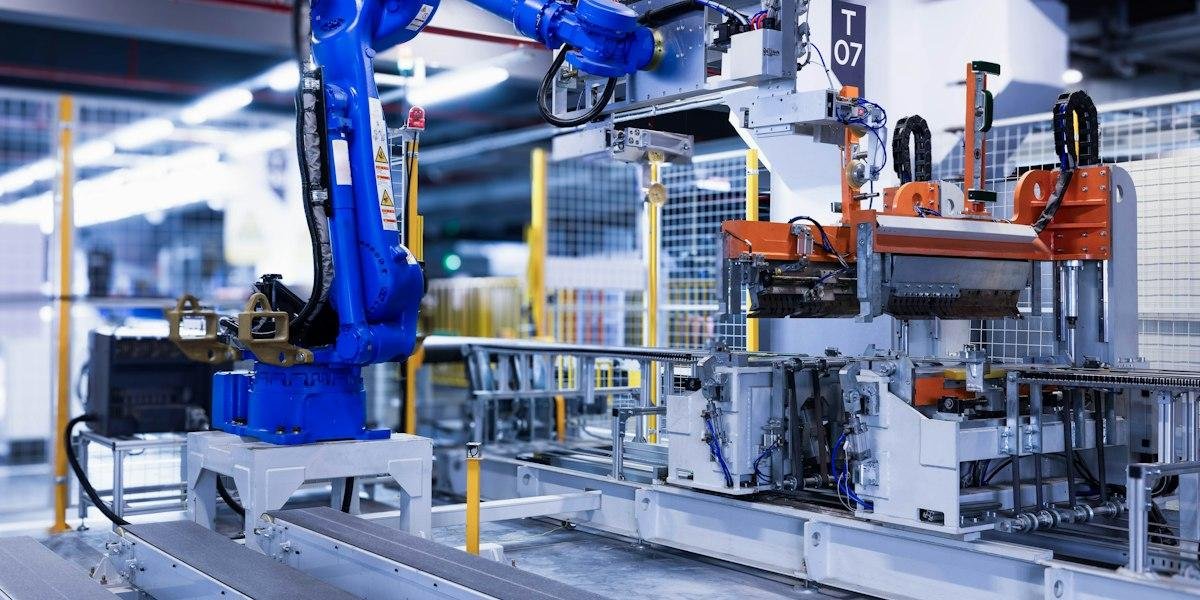
Physical automation tells a different story. In a CNN report by Stephanie Yang on April 5, 2026, Alexander Verl of the International Federation of Robotics said humanoid robots complete their tasks 99.9 percent of the time in controlled factory settings. At home, he said, folding a T-shirt works only about 70 to 80 percent of the time, which is too low for commercial use. Homes are unpredictable, with moving furniture, different appliances, and people and pets wandering through.
That gap is why companies need so much human footage. The same report said micro1 has about 4,000 contractors in 71 countries sending in more than 160,000 hours of video a month to teach machines how people move through chores. Robots are being trained by the very people whose chores they may someday perform, a twist that deserves attention.
New Work Appearing Alongside The Losses
Every wave of automation has produced jobs that did not exist before. This one is creating several already: reviewers who check chatbot answers, bilingual evaluators, specialists who rate medical or legal output, and contributors who record first-person video. The Expert Opportunity Report tracks these in its overview of video annotation and AI training data roles.
These roles carry caveats. Most are contract work; projects start and end, and pay varies widely. They are best seen as additional options and not a replacement for a stable career.
How To Read Your Own Risk
- List the tasks in your job and mark which follow fixed rules and which require judgment or sign-off.
- Note whether anyone is legally accountable for your work, such as a licensed professional.
- Look at which tasks involve people, physical spaces, or unpredictable situations.
- Learn how AI tools handle your tasks, because workers who use them well are often better placed than those who avoid them.
- Build a second skill set in a field that is growing.
Frequently Asked Questions
Will AI Take My Job?
Nobody can say for one individual. Data suggest tasks change faster than whole occupations, with the most exposed work being routine and rule-based.
Are Young Workers More At Risk?
Stanford’s AI Index found falling headcounts for ages 22 to 25 in two occupations, while most older groups grew. That is a trend to watch, not a verdict on any person.
Are Robots Ready For The Home?
Not yet, according to a robotics federation official quoted by CNN, who put home task success at about 70 to 80 percent.
Where Can I Follow New Kinds Of Work?
The free Expert Opportunity Report publishes a regular list of open expert and contributor roles, with the hourly range shown on each posting.
Dr. Tamara Patzer is a publisher and former newspaper editor who writes about AI and business data.
You may reach her through: info@dailysuccessinstitute.com
Sources: World Economic Forum, Future of Jobs Report 2025, January 2025; Stanford Institute for Human-Centered AI, AI Index 2026, economy chapter, April 13, 2026; CIO Dive coverage of the AI Index; Stephanie Yang, CNN, April 5, 2026.
Disclaimer: The author publishes the Expert Opportunity Report and is a referral partner of micro1. This article is information, not a promise of work or income, and not legal or financial advice.