Economic Insider

Global Market Outlook Faces Risk From a Digital Iron Curtain


A growing patchwork of data-localization rules, export controls and technical standards is adding friction to a $5.26 trillion digital-services market. Businesses, regulators and global institutions are tracking the impact as companies redesign cloud systems and technology supply chains. This analysis explains where costs are emerging and why interoperability has become central to the outlook.

Key Takeaways

  • Digitally delivered services exports reached $5.26 trillion in 2025, up 10 percent. The IMF expects world trade growth to slow from 5.0 percent in 2025 to 3.5 percent in 2026.
  • The OECD identified close to 100 data-localization measures across 40 countries by early 2023.
  • OECD-WTO modeling found that full data-flow fragmentation could reduce global output by 4.5 percent.

The digital iron curtain describes the growing separation of data rules, technology standards and digital infrastructure across major markets. It is not one formal barrier. It is a collection of requirements that can determine where information is stored, which technologies may be supplied and how companies prove compliance.

The central issue is cost. A software provider may need separate cloud architecture for different jurisdictions. A manufacturer may face additional cybersecurity reviews, while a financial-services company may have to change where customer records are processed.

The pressure is arriving during an uneven period for the global economy. The International Monetary Fund projects growth of 3.0 percent in 2026 and 3.4 percent in 2027. It expects world trade volume growth to slow to 3.5 percent in 2026 before recovering to 4.3 percent in 2027.

Digital Iron Curtain Moves Into Operating Costs

The scale of digital commerce gives the divide wider economic relevance. The World Trade Organization reported that exports of digitally delivered services reached $5.26 trillion in 2025, a 10 percent annual increase. Those services accounted for 15.2 percent of total world exports of goods and services.

The category includes financial, computer, professional and other services supplied through computer networks. Computer-services trade rose 11 percent in 2025 as demand increased for computing capacity, data processing and software development.

Restrictions on data movement can therefore reach logistics networks, hospitals, retailers, factories and research organizations. Many rely on remote monitoring, digital payments, fraud controls and shared records. When systems cannot communicate under consistent rules, companies may face delays that do not appear as conventional tariffs.

Technical standards add another layer. The World Bank reported that nearly 90 percent of world trade is shaped by nontariff measures, most linked to standards. Compatibility rules matter because they allow separate systems, devices and components to work together.

A common standard can help a payment service or industrial platform operate across several markets. Divergent requirements can force separate product versions, additional testing and country-specific security controls, slowing market entry and raising costs.

Data Localization Raises the Compliance Load

Data-localization measures may require certain information to be stored or processed inside a jurisdiction. Some rules allow transfers under specified safeguards, while others combine local storage with tighter limits on moving information abroad.

The OECD identified close to 100 localization measures across 40 countries by early 2023, with more than half introduced since 2015. More than two-thirds of the measures then in place required local storage and processing without allowing covered data to flow outside the country.

An OECD-WTO business questionnaire found that localization could increase data-management costs by 15 percent to 55 percent, depending on the measure. The range reflects business responses rather than a fixed cost for every rule or company.

The burden can include regional data centers, duplicate cloud contracts and separate incident-response procedures. Similar control questions appear in regulated cloud modernization, where access, logging and evidence requirements affect how workloads move.

OECD-WTO modeling found that full fragmentation, with all economies restricting data flows, could reduce global output by 4.5 percent and exports by 8.5 percent. Removing safeguards entirely also produced weaker modeled outcomes because lower trust could offset lower trade costs.

The strongest modeled result came from systems that kept data moving while applying protections. The analysis did not establish one rule for every sector. Health, payments, public records and routine business data can carry different risks.

Split Technology Rules Reshape Supply Chains

Global Market Outlook Faces Risk From a Digital Iron Curtain

Photo Credit: Unsplash.com

The divide also runs through physical technology. Advanced chips, networking equipment, industrial software and artificial-intelligence systems depend on specialized suppliers spread across several markets. A restriction affecting one layer can force changes in design, sourcing, maintenance or customer support.

The IMF identified Korea, Malaysia, Taiwan and Thailand as the four leading exporters of artificial-intelligence hardware in its July 2026 outlook. Economies tied closely to the global technology value chain were receiving more support from the technology cycle than countries with limited participation.

Long-term chip sourcing strategies show how supplier location, production capacity and component access have become planning variables. The broader issue is whether businesses will need parallel systems for different regulatory zones.

Parallel supply chains may reduce dependence on one route, but they can duplicate testing, software development and supplier qualification. Products may carry different features across markets, and technical teams may need separate tools to maintain each version.

For U.S. companies, the immediate concern is often complexity rather than complete exclusion from a market. Firms moving data, services or equipment across borders may need more country-specific architecture, documentation and testing. That can affect delivery schedules, pricing and the number of markets a company can support efficiently.

The digital iron curtain represents an accumulation of operational barriers rather than one sudden break. Its effect on the global market outlook will depend partly on whether major markets preserve workable connections across data safeguards, technical standards and supply chains.

Frequently Asked Questions

What Does Digital Iron Curtain Mean?

The digital iron curtain refers to the growing separation of data rules, technology standards and digital infrastructure across jurisdictions. It can include localization requirements, transfer limits, export controls and incompatible technical systems.

Why Is the $5.26 Trillion Figure Important?

The WTO estimated that digitally delivered services exports reached $5.26 trillion in 2025 and represented 15.2 percent of total world exports of goods and services. The scale shows why data restrictions can affect industries beyond the technology sector.

How Can Data Localization Affect U.S. Businesses?

Data-localization rules can lead companies to build regional storage systems, review cloud contracts and adjust compliance procedures. The effect depends on the data, jurisdiction and available transfer safeguards.

Is Every Form of Data Regulation Harmful?

No. OECD-WTO modeling found weaker outcomes under both full fragmentation and the complete removal of safeguards. Its results favored protected data flows that preserve trust while limiting unnecessary trade costs.

Betting on the Invisible: How Kiran Krishnan Turned Emerging Microbiome Science Into a Successful Business Before Anyone Else Believed In It

He had no celebrity investors, no massive marketing budget, and was trying to sell clinicians on a concept most had never heard of. What Kiran Krishnan had was the science, the conviction, and the willingness to spend years on the road teaching doctors and practitioners about a revolution that had not yet arrived. It arrived, and built one of the most respected microbiome companies in modern healthcare.

The year was 2013, and Kiran Krishnan was standing in front of a room of healthcare practitioners trying to explain something that most of them found difficult to take seriously: that the trillions of bacteria living in the human gut were not just passengers, but active participants in virtually every system in the body, immunity, metabolism, skin health, hormonal regulation, even cognition and mood.

Most of the clinicians in the room were politely skeptical. A few were openly dismissive. The mainstream medical community had not yet caught up to what the research was already showing, and the word ‘microbiome’ had not yet entered the cultural conversation. Krishnan kept going anyway.

That decision, to build a company around a scientific concept before the market understood it, with minimal outside capital and a strategy rooted in education rather than advertising, became the foundation of Microbiome Labs, one of the world’s leading microbiome companies in functional medicine and healthcare. The company’s growth trajectory, which ended in a nine-figure exit, was not driven by viral marketing or celebrity endorsements. It was driven by the conviction that if you teach people to genuinely understand something, they will act on it.

The Scientist Who Refused to Stay in the Lab

Krishnan was trained in research microbiology at the University of Iowa, but he recognized early that the traditional academic path, publish papers, apply for grants, advance within an institution, was not where he wanted to direct his energy. What fascinated him was not the science in isolation, but the gap between what science was discovering and what was actually reaching patients.

That gap, in his observation, was enormous. Breakthrough research was sitting in journals, waiting years or decades to translate into clinical practice, while the patients who could benefit from it were receiving care based on what was understood a generation ago. He saw entrepreneurship as the fastest vehicle for closing that gap, not as a substitute for scientific rigor, but as a mechanism for accelerating its real-world impact.

Over the past 24 years, Krishnan has designed and overseen more than 35 human clinical trials, become a named inventor on multiple U.S. and international patents, and authored peer-reviewed publications and book chapters on microbiome science. He has also lectured to more than 100,000 healthcare practitioners across the globe, a number that reflects both the scale of his educational mission and the role that mission played in building the businesses he helped create.

“Understanding is believing, and believing breeds action. If you can teach someone to genuinely understand a scientific concept, they will act on it. That is not just a business philosophy, it is a theory of how scientific revolutions actually spread.” – Kiran Krishnan

Building a Business Around What Nobody Believed Yet

When Microbiome Labs launched, the company faced a challenge that is specific to science-first ventures: the product’s value proposition depended on the customer understanding something they had not previously been taught. You could not simply run an ad. You had to change how people thought about human biology first.

Krishnan’s response was to turn education into the company’s primary growth engine. He traveled constantly, speaking at functional medicine conferences, hosting practitioner training sessions, answering clinical questions, and making himself available to the healthcare professionals who were trying to make sense of what the research was showing. The conversations built trust, the trust built relationships, and the relationships built the business. Microbiome Labs grew not through paid acquisition but through a practitioner network that believed in the science because someone had taken the time to explain it thoroughly.

That approach also shaped the product development philosophy. Rather than formulating products based on what would sell, Krishnan and the Microbiome Labs team built around genuine clinical problems, specific gaps between what patients needed and what existing options provided. The result was a line of probiotic, postbiotic, and synbiotic technologies widely adopted across functional medicine and integrative healthcare, continuing to generate clinical research long after they launched.

Identifying the Next Inflection Points

Krishnan’s entrepreneurial philosophy centers on a question he returns to consistently: “What important science exists today that will become standard practice tomorrow?” At Microbiome Labs, the answer was gut microbiome science and its systemic effects. Since then, he has applied the same framework to a portfolio of ventures that collectively map the emerging frontier of health science. EndoAxis Labs focuses on metabolic health and endocrine function. The Biome Learning Center provides practitioner education at scale. PhytoVeda US develops botanical innovations grounded in Ayurvedic science. SIV Care addresses skin health through microbiome-informed approaches.

Each venture begins from the same starting point: a scientific mechanism that has genuine clinical relevance, is not yet widely understood, and represents a significant opportunity to improve patient outcomes. The companies are different in focus, but they share the same operating logic, which is that the biggest opportunities in healthcare tend to cluster around concepts that are scientifically established but not yet culturally accepted.

The concepts Krishnan is currently focused on include gut barrier function, metabolic endotoxemia, systems biology approaches to chronic disease, AI-assisted formulation, and precision nutrition informed by microbiome data. Each of these, in his assessment, is where the microbiome was a decade ago: supported by compelling research, meaningful in clinical practice, and largely invisible to the mainstream healthcare conversation.

Photo Courtesy: Kiran Krishnan

What a Nine-Figure Exit Actually Teaches You

The Microbiome Labs exit was validation of a thesis, not just about the company, but about the strategy behind it. Building with scientific integrity rather than chasing trends, investing in education rather than marketing, and developing genuine clinical trust rather than consumer buzz created something more durable than a fast-growing company. It created a category.

Krishnan is direct about what the exit represents and what it does not. The business success was a result of the philosophy, not the objective of it. Companies built primarily to be sold tend to optimize for metrics that look good in a pitch deck rather than for the deep clinical credibility that creates lasting value, and the irony is that doing the latter tends to produce better outcomes on both dimensions.

The Convergence Ahead

Krishnan sees the next decade as a period of significant acceleration. Artificial intelligence applied to microbiome data is beginning to enable precision nutrition and personalized interventions that were theoretically possible but practically out of reach a few years ago. Systems biology approaches are making it possible to understand chronic disease in ways that single-pathway pharmaceutical models cannot. And the public’s understanding of gut health, still incomplete but growing, is creating demand for solutions grounded in how the biology actually works.

His goal is to continue building companies that make complex biology understandable and actionable, and to help shift the center of gravity in healthcare from disease management toward resilience and prevention. That shift, in his view, represents one of the largest economic and human health opportunities of the next generation, and the entrepreneurs who build around it now, before it becomes obvious, will be the ones positioned to define what that future looks like. The gap between what the science shows and what the market understands is, as always, his starting point.

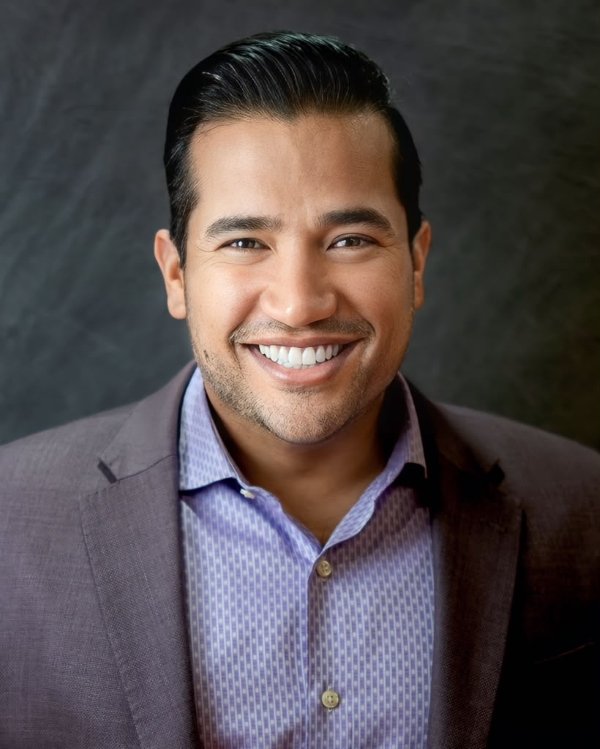
Kiran Krishnan is a research microbiologist, clinical researcher, entrepreneur, and scientific educator. He is the co-founder and former Chief Scientific Officer of Microbiome Labs, and the founder of EndoAxis Labs, The Biome Learning Center, PhytoVeda US, and SIV Care. He has overseen more than 35 human clinical trials, holds multiple U.S. and international patents, and has educated more than 100,000 healthcare practitioners worldwide.