Economic Insider

How Nexus Wealth Management Approaches 401(k) Plans


Most employees never read their 401(k) paperwork. Most employers never revisit the plan after they set it up. The team at Nexus Wealth Management works in the gap between those two facts.

Based in Montana, the firm focuses on employer-sponsored retirement plans and on the families who depend on them. Its three advisors came to the work from different directions, which shows up in how they talk about it.

A Steward and an Educator

Robert Montes began advising in 2006 and spent six years at one of the nation’s largest investment firms. He then stepped away from the industry to serve as an infantryman with the US Army Ranger Regiment, 2nd Ranger Battalion, deploying to Afghanistan during the Global War on Terror.

He returned to advising afterward with a clearer sense of why the work mattered. Robert holds the Certified Plan Fiduciary Advisor designation and concentrates on employer-sponsored retirement plans, particularly 401(k)s. He describes his role in two words. Steward and educator.

“Once people have all the facts, then they can make the best decisions for themselves and their families,” he says.

That framing shapes how he handles plan conversations with business owners. A retirement plan is a document, a set of options, and a group of people who mostly do not understand either one. Robert treats the education part as the job rather than an add-on to it.

Away from the office, Robert spends time with his wife Katie and their children, Addisson and Lincoln. He trains Jiu Jitsu and teaches shooting skills.

Local Roots in the Bitterroot Valley

Josie Allred grew up in Montana and has lived her whole life in its communities, mainly the Bitterroot Valley and Missoula. Those roots are the reason she wanted this work in the first place.

She studied for two years at the University of Montana, then spent four years as an independent contractor in healthcare. The healthcare years taught her something that transferred directly. People make better decisions when someone explains things plainly and does not rush them.

Josie went on to complete a year of intensive financial training, shadowing and interning under Robert. She works as a registered representative and serves local families with an emphasis on integrity and transparency.

Photo Courtesy: Nexus Wealth Management

Why One-Size-Fits-All Does Not Work

Graysen Vukasin entered financial services in 2017 after a career in upper retail management. The schedule in retail was taking his evenings and weekends, and he wanted those back.

Graysen rejects standardized planning. Two business owners with similar revenue and similar headcount can need entirely different retirement plan structures depending on their goals, their workforce, and what they are trying to build. He holds the Certified Plan Fiduciary Advisor designation and is a National Qualified Plan Advisor, which focuses on retirement plans for businesses and their employees.

Outside of work, Graysen is active in his local Boy Scouts of America troop. He earned Eagle Scout himself, and he stays involved because he believes in what scouting builds into young people.

Photo Courtesy: Graysen Vukasin

What Employers Should Understand About Fiduciary Duty

Sponsoring a retirement plan carries responsibilities that many business owners discover late. Plan sponsors have fiduciary obligations under federal law covering how investment options are selected, how fees are monitored, and how plan decisions are documented.

A Certified Plan Fiduciary Advisor designation signals that an advisor has trained specifically in those obligations. For a small or mid-sized employer without an internal benefits department, that distinction matters when questions come up about plan design, provider costs, or participant education.

The Nexus approach puts the explaining first. Employers get a clear picture of what their retirement plan does and what it costs. Employees get someone who will answer the question they were too embarrassed to ask.

More about the advisors is available through the Nexus Wealth Management team page. The firm also produces the Let’s Talk Wealth podcast and shares updates on its Facebook page.

This article is for informational purposes only and does not constitute investment advice, a recommendation, or an offer to buy or sell any securities. Consult a qualified financial advisor for advice specific to your situation.


US Flight Cancellations Expose Cost of Aging Air Traffic Systems

US flight cancellations exceeded 18,500 by Monday morning, November 16, after a nationwide Federal Aviation Administration ground stop disrupted departures on Friday. Analysts estimated a combined $345 million pretax earnings impact on four major U.S. airlines. The disruption raised concerns about aging air traffic infrastructure as carriers restored operations and officials investigated the technical failure.

Key Takeaways

  • More than 18,500 U.S. flights were canceled between November 13 and Monday morning, November 16
  • The FAA suspended nationwide departures for nearly five hours after communications and radar systems became unstable
  • Bernstein estimated a $345 million combined pretax earnings impact on American, Delta, United, and Southwest
  • Unusual network traffic affected FAA facilities across the country, with the underlying cause still under investigation
  • Flight schedules improved significantly by November 16, although some disruptions continued

The FAA’s November 13 nationwide ground stop disrupted airline operations well beyond the initial shutdown. Carriers spent the weekend repositioning aircraft and crews, accommodating affected passengers, and adjusting schedules across major airports.

FlightAware data showed more than 18,500 cancellations involving flights within, into, or out of the United States by 8:47 a.m. Eastern on November 16. The FAA cautioned that not every cancellation during the period was directly attributable to the ground stop.

The disruption also brought attention to the telecommunications equipment supporting U.S. air traffic control, including systems that officials say require modernization.

Airlines Face an Estimated $345 Million Financial Impact

The nationwide disruption created significant financial pressure for major U.S. carriers, with Bernstein estimating a combined pretax earnings impact of approximately $345 million for American Airlines, Delta Air Lines, United Airlines, and Southwest Airlines.

The brokerage placed its estimated range between $270 million and $430 million. These figures represent preliminary projections rather than confirmed losses disclosed by the airlines.

Cancellation rates varied considerably during the recovery period. Bank of America analysts estimated that American Airlines canceled approximately 22% of its Sunday schedule, while JetBlue canceled 28%. Delta canceled approximately 5%, United 3%, and Southwest 4%.

The differences reflect how disruptions can affect airlines unevenly depending on aircraft availability, crew positioning, and flight schedules.

A single cancellation can also affect subsequent departures. Aircraft may not reach their next scheduled airports, crews can approach working-hour limits, and displaced passengers may require alternative arrangements.

The disruption added another financial challenge for airlines already managing elevated operating expenses. Delta Air Lines had previously reduced its 2026 profit outlook in October after reporting higher fuel costs, a separate issue from the November cancellations.

Transportation Secretary Sean Duffy estimated that the broader economic disruption could cost billions of dollars. That assessment included consequences beyond the four largest airlines, although a comprehensive final estimate was not available.

FAA Network Failure Exposes Aging Air Traffic Infrastructure

The FAA reported that technical problems began around 3:30 p.m. Eastern on November 13, when unusual network traffic destabilized telecommunications equipment supporting air traffic operations.

According to the agency, legacy systems became unstable when approximately 1,000 connection attempts reached the network every four to five seconds. The traffic disrupted communications and radar feeds used by controllers.

The instability initially affected 17 of the FAA’s 22 Air Route Traffic Control Centers before spreading to several terminal radar approach control facilities.

Officials suspended nationwide departures as a precaution while technicians worked to identify and isolate the problem. Aircraft already flying continued operating under established safety procedures.

The FAA said some radio frequencies and radar feeds remained functional, allowing controllers to maintain communications and coordinate safe landings throughout the interruption.

Investigators identified two possible sources of excessive network traffic: a radar facility in Amarillo, Texas, and a radio communications facility in El Dorado, Arkansas.

L3Harris, the FAA’s telecommunications network provider, had been performing equipment work at the Arkansas location, including installing a new router.

Isolating the affected locations helped restore network stability. The FAA also disabled a broadcasting function on approximately 60 similar routers as a precaution.

The precise cause remained under investigation, with officials examining whether equipment problems, installation activity, or another technical factor contributed to the incident.

The outage renewed attention to modernization of the national air traffic system. Duffy has called for approximately $50 billion in funding for air traffic control and airport upgrades, although the proposed improvements cover infrastructure beyond the equipment involved in this disruption.

Aviation technology development also includes separate AI flight rerouting trials that examine aircraft coordination in controlled airspace. Those projects address different operational challenges and were not connected to the FAA telecommunications failure.

US Flight Cancellations Decline as Airlines Restore Operations

Air travel conditions improved considerably by Monday, November 16, following three days of widespread cancellations and delays.

FlightAware data showed approximately 300 cancellations and 1,500 delays by 9 a.m. Eastern on Monday. That compared with more than 2,300 cancellations and 11,000 delays on Sunday, indicating a substantial reduction in disruptions.

The Monday figures represented an early snapshot rather than a completed daily total.

American Airlines announced late Sunday that it expected to operate a largely normal schedule on Monday after repositioning aircraft and crews.

The airline maintained flexible travel arrangements for affected passengers, allowing eligible customers to change reservations or request refunds.

Delta Air Lines also extended flexible rebooking options through November 16. The carrier said most flights were operating normally by Sunday, although some customers could continue experiencing delays or cancellations.

Recovering from the nationwide ground stop required more than restarting departures. Airlines had to account for displaced aircraft, crew availability, and passengers whose original itineraries were no longer operating.

The FAA restored nationwide air traffic operations at approximately 8:15 p.m. Eastern on November 13 after technicians stabilized the network.

The agency maintained that established safety procedures remained effective throughout the incident and that aircraft continued landing safely while departures were restricted.

Frequently Asked Questions

What caused the nationwide FAA ground stop?

The FAA reported that excessive network traffic destabilized aging telecommunications equipment, affecting communications and radar feeds. Investigators identified possible originating facilities in Texas and Arkansas, but the precise cause remained under investigation.

How many US flights were canceled?

US flight cancellations exceeded 18,500 between November 13 and Monday morning, November 16, based on FlightAware data. The FAA cautioned that not every cancellation was directly caused by the nationwide ground stop.

How much did the disruption cost major airlines?

Bernstein estimated a combined pretax earnings impact of approximately $345 million for American Airlines, Delta Air Lines, United Airlines, and Southwest Airlines. The figure was preliminary and did not represent confirmed financial losses.

Were aircraft already flying affected by the FAA outage?

Aircraft already in flight continued operating under established safety procedures. The FAA said certain radio frequencies and radar feeds remained functional, allowing controllers to coordinate safe landings.

When did US airline operations return to normal?

The FAA lifted the nationwide ground stop at approximately 8:15 p.m. Eastern on November 13. By November 16, cancellations had declined substantially, although airlines continued resolving individual schedule disruptions.

Jannie Lee Tatum on Finding the Door Instead of the Ceiling

Jannie Lee Tatum finished high school at 16, a full year ahead of her class. She started college at 17. By the time she was done she had earned three degrees, the last of them an MBA on a full scholarship.

By every conventional measure, she had done it right. The credentials were real and the effort behind them was real.

The problem was that none of it led anywhere that fit.

A brain that worked differently

Jannie spent years looking for her place and not finding it.

The traditional corporate structure was not built for the way she thinks, and she is matter of fact about that rather than apologetic. Her brain worked a little differently from the norm. In a system that rewards a particular kind of sameness, that gets treated as a liability even when it should be an advantage.

So the degrees kept stacking up while the fit kept not arriving. She was not short on qualifications. She was short on a place to use them on her own terms.

The ceiling she could not stop noticing

What eventually took hold of her was narrower than job satisfaction. It was the ceiling on what she could earn.

Not the work itself, and not the hours. The fact that somebody else had already decided how high the number could go, and that no amount of effort on her part was going to move it.

Jannie Lee Tatum on Finding the Door Instead of the Ceiling

Photo Courtesy: Jannie Lee Tatum

Jannie describes becoming obsessed with breaking that glass ceiling. It is a strong word and she uses it deliberately. Once she could see the limit clearly, she could not go back to not seeing it.

Finding a different structure

In July 2015, Jannie found network marketing, and the recognition was immediate. She saw what her life could look like inside a structure that did not have the same ceiling built into it.

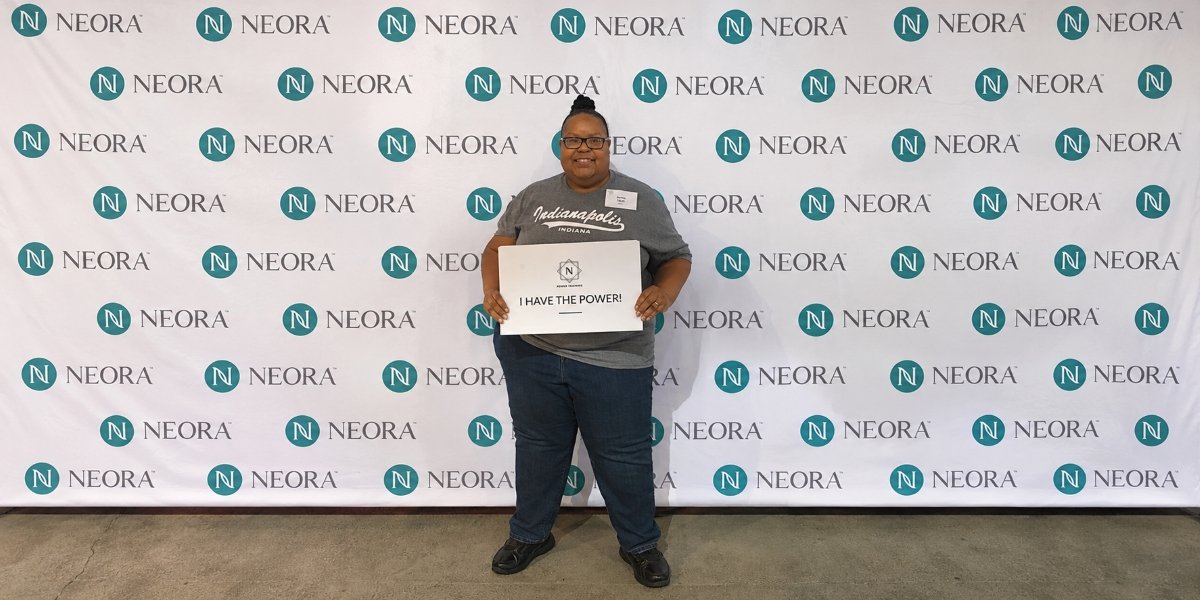
Neora was the first network marketing company she worked with, and eleven years later she is still building with them. Before that, she had never been able to identify a niche, or a company and a role, that matched the choice she needed to make. The search had been long enough that finding the answer registered as a relief.

Today she is based in Philadelphia. She describes herself as excited about her future and passionate about the way this work keeps changing her life.

The line she returns to is about scale. Her dreams are bigger now than they have ever been, and she says it like someone who spent a long time keeping them small on purpose.

What the work means to her

Ask Jannie what she gets from this beyond income and the answer is short and specific.

Servant leadership. Not as a phrase, but as something she practices with every person who comes to her considering joining her team.

Jannie Lee Tatum on Finding the Door Instead of the Ceiling

Photo Courtesy: Robert T. Tatum, Jr.

Her aim is to help as many people as possible make real progress toward their own success. That, more than anything on a statement, is what gives the work meaning for her.

Connect with Jannie Lee Tatum

Jannie Lee Tatum is an independent Neora brand partner. Find her at jleetatum.neora.com and on Facebook.

Disclaimer: Testimonials in this article reflect personal experiences and aren’t guaranteed. Results vary based on effort, experience, and commitment.