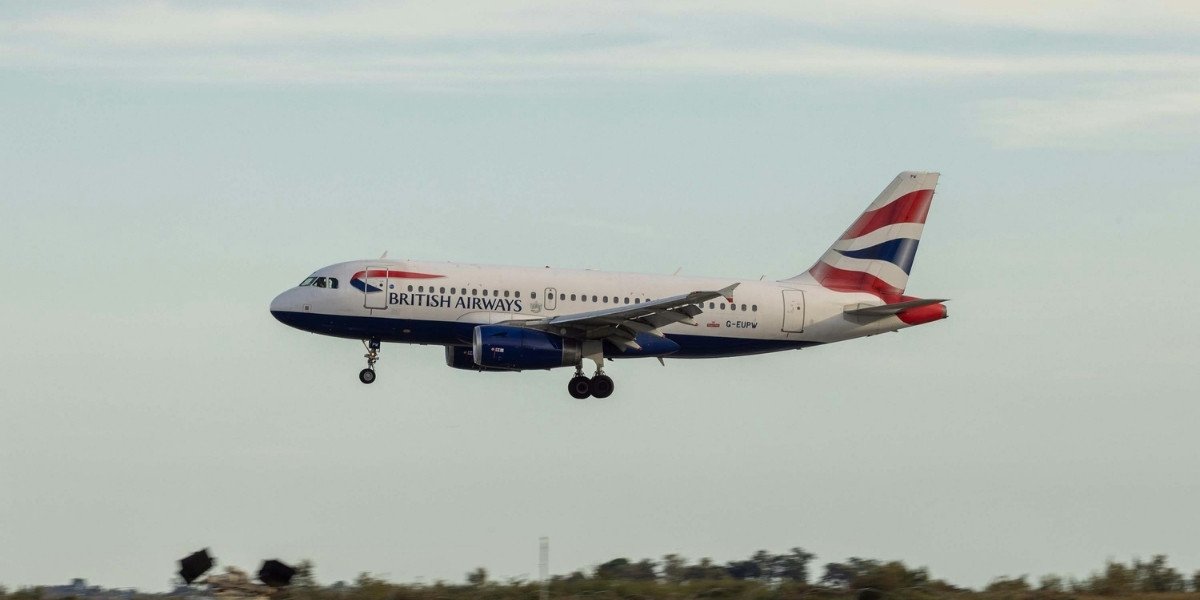
AI flight rerouting is entering a larger real-world test over the North Atlantic, where Google UK, NATS, the Met Office and research partners will study whether small altitude changes can reduce persistent aircraft contrails. The 30-month Operation Blue Skies program will test the approach across an entire oceanic airspace rather than individual airline flights.
Key Takeaways
- Operation Blue Skies was announced on August 18, 2026, as a £5 million, 30-month contrail avoidance program.
- Operational testing is planned for the winters of 2026-27 and 2027-28 in NATS-controlled Shanwick oceanic airspace.
- Approximately 20 to 40 test days are expected per winter, primarily during periods of lower air traffic.
- Google says about 10,000 flights will pass through the test area during trial hours each year, although only a small percentage are expected to be redirected.
- An earlier American Airlines trial found 62% lower contrail formation among 112 flights that followed planned avoidance routes compared with control flights.
Operation Blue Skies marks a shift in the scale of contrail research. Previous airline trials tested whether individual aircraft could avoid atmospheric regions associated with persistent contrail formation. The new program is designed to determine whether the same concept can function across a heavily traveled international flight corridor.
The tests will take place in Shanwick oceanic airspace, which covers the eastern half of the North Atlantic corridor. NATS says atmospheric modeling indicates that this region accounts for approximately 5% of global contrail warming, with a significant share occurring between November and February.
Testing will therefore concentrate on winter periods in 2026-27 and 2027-28. NATS expects about 20 to 40 test days during each winter and says maneuvers will primarily take place when traffic levels are lower.
Rather than sending aircraft on extensive diversions, controllers will use existing air traffic control procedures to coordinate minor changes in altitude. Associated Press reported that some selected flights could shift by as much as 2,000 feet, with hundreds of aircraft potentially participating during the full program.
Google estimates that roughly 10,000 flights originating from hundreds of cities will cross Shanwick airspace during trial hours each year. Only a small portion of those flights that would otherwise pass through contrail-sensitive areas are expected to be adjusted.
The program is one example of how aviation is testing new operational technologies alongside developments such as electric urban air travel. Operation Blue Skies, however, focuses specifically on whether existing commercial aircraft can alter altitude at selected moments without requiring new propulsion systems.
Earlier American Airlines Trial Sets the Baseline
The North Atlantic project follows a controlled study involving Google, American Airlines, Contrails.org and flight-planning provider Flightkeys.
The trial covered 2,400 transatlantic flights between January and May 2025. Researchers divided the flights between a control group and flights eligible for contrail avoidance. Of the eligible flights, 112 ultimately flew their contrail-avoidance plans as intended.
Researchers reported that those 112 flights had a 62% lower contrail formation rate than flights in the control group. Across all 1,232 flights marked as eligible for avoidance, including those that did not ultimately follow the planned maneuver, the study reported an 11.6% reduction in contrail formation. It also found no statistically significant difference in fuel use between the treatment and control groups.
Those results provided evidence that forecast-based routing could be incorporated into standard airline planning, but they did not answer whether the concept would remain practical when applied across a shared airspace involving many airlines and controllers.
That distinction is central to Operation Blue Skies. Instead of relying primarily on dispatchers at one carrier, the new trial places air traffic management at the center of the process.
American Airlines continues to serve as an important reference point because its earlier test produced one of the largest commercial datasets available for the approach. The carrier has separately made other operational and customer-facing adjustments, including recent American Airlines fare changes, but the contrail work remains a distinct research initiative.
Operation Blue Skies Tests Whether the Model Can Scale
Photo Credit: Unsplash.com
Google UK is developing AI models intended to forecast atmospheric regions where persistent warming contrails are more likely to form. Machine learning and satellite imagery will also be used to track aircraft and assess whether planned interventions actually prevented contrail formation.
NATS will handle trial airspace operations, controller coordination, safety assessment and training. Contrails.org is responsible for forecast assessment and trial design, while Imperial College London and the University of Cambridge will evaluate results and provide independent assessment of climate impact.
The Met Office is developing a UK contrail forecasting capability and providing meteorological expertise. Together, those roles are intended to test the full process from forecasting a contrail-sensitive region to changing a flight path and verifying the result.
The use of forecast data for operational decisions also places the project within a wider discussion around predictive AI in transportation. In aviation, the challenge is particularly constrained because any adjustment must remain compatible with traffic separation, weather conditions, aircraft performance and established safety procedures.
The program has a reported value of £5 million. NATS says £2.65 million is being provided through the UK Department for Transport, while Google UK is contributing £1.4 million in AI expertise, engineering time and computing infrastructure on a pro-bono basis.
Google product manager Kemal Armada described the scale question directly, saying, “The question is no longer whether we can mitigate contrails.” The trial is intended to examine whether mitigation can operate reliably across a wider aviation system rather than only in selected airline experiments.
Contrails form when water vapor in aircraft exhaust encounters sufficiently cold and humid atmospheric conditions, creating ice crystals. Some disappear rapidly, while others persist and spread. The program is focused on persistent contrails associated with a warming effect rather than every visible trail produced by an aircraft.
Forecast accuracy remains one of the issues the trial is designed to examine. Researchers also have to account for traffic capacity, fuel use and the practical limits on changing aircraft altitude at any given point.
Operation Blue Skies therefore represents a test of coordination as much as forecasting technology. If the data show that AI flight rerouting can be applied safely and consistently across Shanwick airspace, researchers will have a larger evidence base for assessing where the approach may be operationally practical. The two winter trial periods are intended to show whether those results hold under changing traffic and atmospheric conditions.
Frequently Asked Questions
What is Operation Blue Skies?
Operation Blue Skies is a 30-month program testing whether AI-guided altitude adjustments can help commercial flights avoid atmospheric regions associated with persistent warming contrails. Operational trials are planned in Shanwick oceanic airspace during the winters of 2026-27 and 2027-28.
How does AI flight rerouting work?
AI flight rerouting uses weather, flight and atmospheric data to identify areas where persistent contrails are more likely to form. Air traffic controllers can then consider targeted altitude changes for selected aircraft while continuing to use established operating and safety procedures.
How many flights could be affected?
Google says about 10,000 flights will travel through Shanwick airspace during trial hours each year, but only a small percentage are expected to change altitude. Associated Press reported that hundreds of flights could participate during the testing program.
What did the American Airlines study find?
The earlier study covered 2,400 transatlantic flights. Researchers found a 62% lower contrail formation rate among 112 flights that followed the planned avoidance route compared with control flights, with no statistically significant difference in fuel use between the groups.
Who is involved in the North Atlantic trial?
The consortium includes Google UK, NATS, Contrails.org, the Met Office, Imperial College London and the University of Cambridge, with funding support through the UK Department for Transport. Each organization has a defined role covering forecasting, air traffic operations, research or independent evaluation.