Most authors reach a point where they know, instinctively, that their manuscript needs editing, but knowing which kind of editing it needs is another matter entirely. The terminology alone is enough to confuse anyone: developmental editing, structural editing, line editing, copyediting, proofreading, all sounding vaguely similar and overlapping in ways that aren’t obvious from the outside. Choosing the wrong one wastes time and money and can leave the real problems untouched.
This article cuts through that confusion by explaining what the main types of book editing actually do, how to tell which stage your manuscript is at, and why getting the right edit matters so much. It covers the difference between big-picture and sentence-level editing, how the layers fit together, and how a professional service helps you diagnose what your book genuinely needs. Understanding these distinctions is the first step to spending your editing budget where it will actually improve your book.
Why “Editing” Isn’t One Single Thing
The word “editing” covers a whole range of different jobs that happen at different stages of a manuscript’s life, and treating them as interchangeable is where confusion begins. Some editing addresses the foundations of a book, whether the structure works, whether the pacing holds, and whether the argument or story actually lands. Other editing works at the level of individual sentences, refining how clearly and smoothly the prose reads. These are genuinely different kinds of work requiring different skills and mindsets.
Applying the wrong type at the wrong moment is a common and costly mistake. Polishing the prose of a manuscript that still has major structural problems is wasted effort, because much of that carefully edited text may be cut or rewritten once the deeper issues are addressed. Conversely, a structurally sound manuscript that’s never had a line edit can still read awkwardly. Knowing which job your book needs, and in what order, is essential to editing it efficiently rather than spending money in the wrong place.
Developmental Editing: The Big Picture
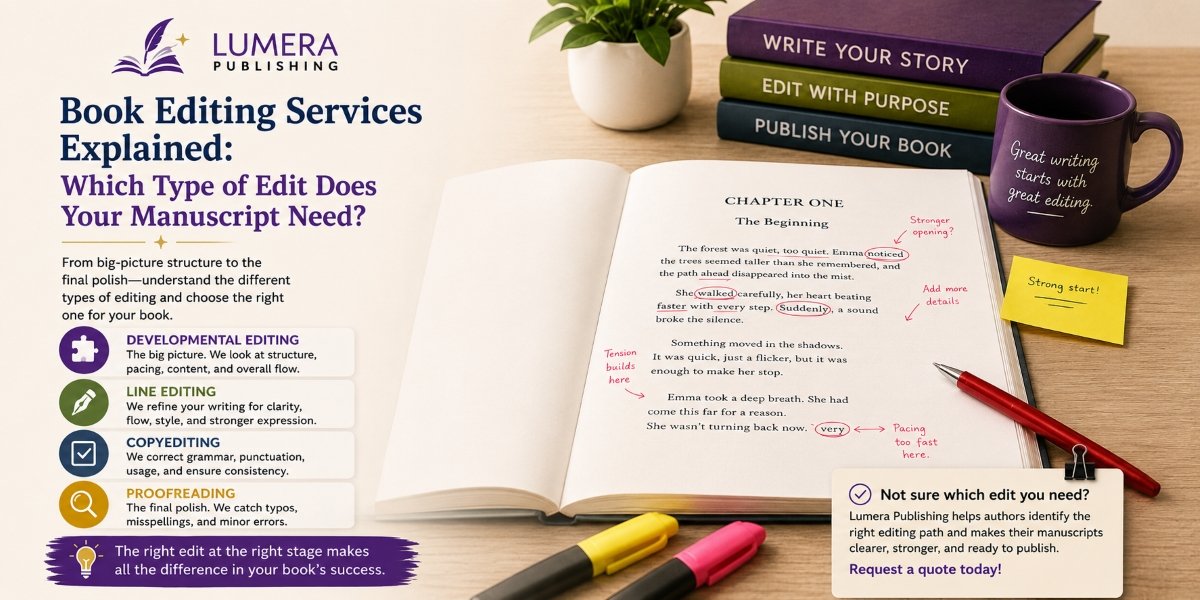
Developmental editing, sometimes called structural or content editing, tackles the foundations of a book. It looks at the largest questions: Is the structure sound? Does the story or argument flow logically and build properly? Is the pacing right, or does the book drag in places and rush in others? For fiction, it examines character, plot, and tension; for non-fiction, it examines whether the ideas are organized and supported in a way that genuinely works for a reader.
This is the deepest and most transformative kind of editing, and it generally comes first because it can reshape a manuscript substantially. A developmental edit might recommend reordering chapters, cutting or expanding sections, or rethinking how a book opens. It addresses the issues that determine whether a book works as a whole, which is precisely why doing it before sentence-level polishing makes sense. Lumera Publishing’s developmental editing focuses on these foundations while preserving the author’s voice and intent throughout.
Line and Copy Editing: The Sentence Level
Once a manuscript’s structure is sound, line editing and copyediting refine it at the level of individual sentences. Line editing focuses on how the prose reads (its clarity, flow, word choice, rhythm, and tone), smoothing awkward phrasing and strengthening weak passages so the writing reads cleanly and confidently. It’s about making the prose itself better, sentence by sentence, while keeping the author’s distinctive voice intact.
Copyediting overlaps with line editing but leans more toward correctness and consistency: grammar, punctuation, usage, and the consistent handling of names, terms, and style throughout the book. Together, these layers turn a structurally solid draft into polished, professional prose. Lumera Publishing provides this sentence-level work as part of its editing services, and because line and copy editing assume the foundations are already in place, they’re most valuable once any necessary developmental work is done, which is why diagnosing the right starting point matters.
How to Know Which Edits Your Book Needs
Figuring out where your manuscript actually stands can be difficult precisely because authors are too close to their own work to assess it objectively. As a rough guide, if you have doubts about whether the structure works, whether the pacing holds, or whether the story or argument truly lands, your book likely needs developmental editing first. If you’re confident in the structure but want the prose to read more smoothly and professionally, line and copy editing are the priority.
In practice, the honest answer is often that a manuscript needs more than one layer, and the layers can be combined sensibly. Lumera Publishing helps authors diagnose which stage their book is at and applies the appropriate level of editing, rather than selling a one-size-fits-all service that may not match the manuscript’s real needs. Getting that diagnosis right is what saves time and money, ensuring the editing addresses the actual problems instead of polishing prose that still has deeper issues underneath.
Why the Order of Editing Matters
Beyond knowing which types of editing your book needs, it helps to understand why the order in which they happen matters so much. Editing generally works from the largest concerns down to the smallest: developmental work on structure and pacing first, then line and copy editing to refine the prose, and finally proofreading to catch any remaining errors. Following that sequence isn’t an arbitrary convention; it reflects the fact that bigger changes ripple outward and affect everything above them.
Reversing the order wastes effort. If you carefully line-edit every sentence and then a developmental edit reveals that several chapters need to be cut or rewritten, much of that meticulous sentence-level work is simply discarded along with the text it polished. Doing the structural work first means the prose you eventually refine is prose that’s actually staying in the book. Lumera Publishing guides authors through this sequence sensibly, applying the right layer at the right time so that each stage of editing builds on the last rather than undoing it.
Getting the Right Edit and What Comes Next
Choosing the right edit isn’t just about quality; it’s about spending your effort and budget where they’ll genuinely improve the book. Investing in a line edit when the manuscript needs structural work, or skipping developmental editing entirely on a book that needs it, leads to a polished but flawed result and wasted money. The right sequence, foundations first and then prose, produces the best outcome for the least waste.
Throughout every layer, Lumera Publishing’s editing preserves the author’s voice and comes with constructive feedback the author can learn from, rather than silent changes imposed without explanation. And once the editing is complete, the company can carry the manuscript through formatting and publishing, so the path from rough draft to finished book is handled coherently. Authors who aren’t sure which edit they need can request a quote from Lumera Publishing to get the right one for where their book actually is.
About Lumera Publishing
Lumera Publishing is a full-service, fee-based book publishing company based in New York, USA. The company offers ghostwriting, editing, formatting, cover design, publishing, and book marketing services for authors across every genre, helping writers self-publish professionally while keeping 100% of their rights and royalties.
Learn more at lumerapublishing.com or call +1 (888) 477-8199. Media contact: info@lumerapublishing.com.