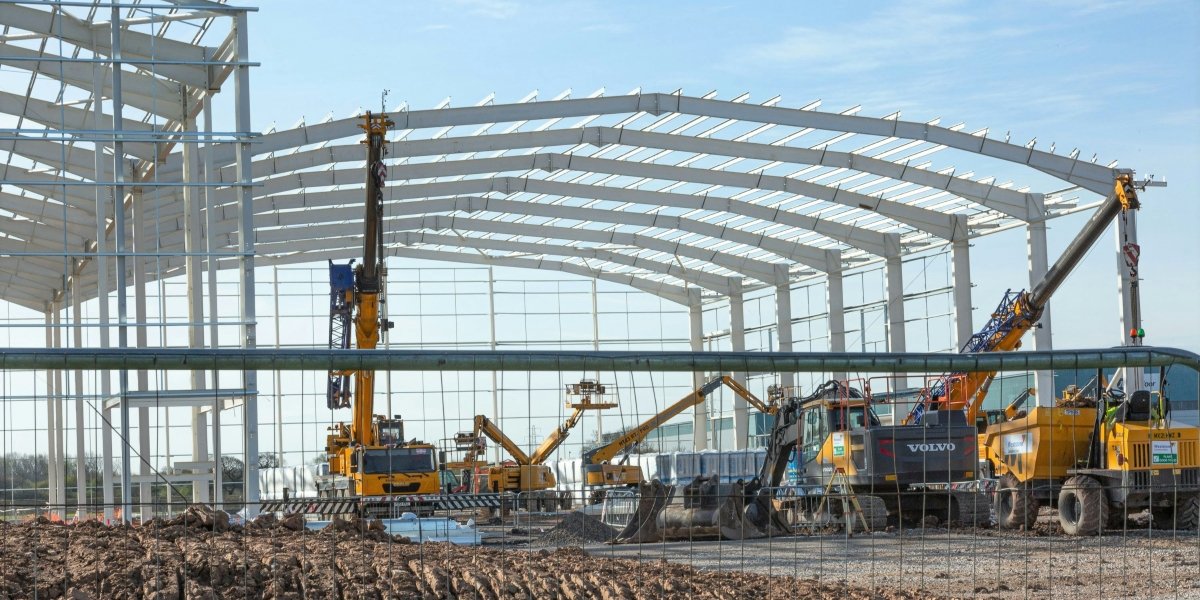
A new manufacturing building now sits on a hill west of Missoula, visible to drivers on Interstate 90. It belongs to Montana Knife Company, a brand that started in a Frenchtown garage in 2020 and grew into a national name in American-made blades.
A facility of that size does not come together by accident. It takes a contractor who can carry a project from budget planning through final landscaping. Carl Construction, a Missoula-based general contractor serving Montana, Wyoming, and the Northwest, filled that role on the build.
Inside the Montana Knife Company Facility Project
Montana Knife Company broke ground at the Wye in October 2024 on a new manufacturing building. KPAX reported that construction ran for more than a year, with the grand opening held on April 11. Owner Josh Smith described the finished building as a point of pride, noting the company started in his garage five years earlier and now runs with 105 employees in the new space.
Carl Construction documents its part in the build on the company’s Montana Knife Company project page, which describes the firm helping develop and general contract the steel building project at 8659 Robbins Road. Steel framing suits manufacturing work because it spans long distances without interior columns. A production floor stays open for equipment layout, and for changes to that layout later.
Industrial projects like this one combine heavy manufacturing space, corporate offices, retail areas, and public-facing amenities under one roof. Each use carries different structural, electrical, and mechanical demands. The general contractor coordinates those systems. Carl Construction approaches that coordination as a single process rather than a series of handoffs.
What Full Scope Contracting Means on a Project This Size
Full scope contracting means one team stays responsible from the first budget conversation to the last punch list item. The owner does not have to manage separate relationships for planning, permitting, construction, and site work.
Carl Construction handles both commercial and residential work under this model. On commercial builds, the scope covers design-build services, bid contracting, planning oversight, project construction, and construction management. That range matters on a manufacturing facility, where production equipment, utility loads, and employee flow all shape the building before a single footing is poured.
Pre-Construction Planning Sets the Budget Early
Many cost problems on a construction project trace back to decisions made before the crews arrive. Pre-construction planning addresses this directly.
The work includes developing project and material budgets, recommending architects and engineers or working with the ones an owner has already chosen, consulting on site preparation, and determining utility and facility requirements. An owner learns what a building will cost and what the site can support while changes are still inexpensive. Carl Construction builds these numbers with input from the design team, keeping the budget tied to the actual drawings rather than a rough estimate.
Utility and facility requirements deserve attention on manufacturing sites. Power demand, water service, and waste handling for a production floor look nothing like those for an office. Identifying those needs early prevents redesign later.
Bid Contracting, Permits, and Site Construction
Some owners arrive with completed plans and an architect already engaged. Bid contracting serves that situation. The contractor works with existing project plans and coordinates with the architects and engineers who produced them.
Planning oversight follows. This includes obtaining the necessary building permits, a step that can stall a project if not managed closely. Permit timelines vary by jurisdiction and by project type. A contractor who tracks those requirements keeps the schedule intact.
Once construction begins, the scope widens. It covers selecting subcontractors, ordering materials, site construction, building construction, paving, curbs and sidewalks, landscaping, and overall quality control. Quality control runs through every other task. A manufacturing floor needs a slab that can carry equipment loads.
A customer-facing retail area needs finishes that withstand traffic. Each element gets checked against the specification before the next trade starts. Subcontractor selection shapes outcomes more than owners often expect. Steel erectors, mechanical contractors, and electricians each control a stretch of the critical path, so choosing firms with the right capacity and a record of showing up keeps a build moving.
Construction Management Keeps the Schedule Moving
Scheduling sits at the center of construction management. On a project running more than a year, dozens of trades need to sequence in the right order with no gaps and no overlap that creates conflict on site.
Weather adds pressure in Montana. Concrete pours, steel erection, and exterior envelope work all have seasonal windows. A schedule built around those windows protects the completion date. When one trade slips, the manager adjusts the sequence rather than letting the delay compound.
Leadership Experience Behind the Work
Steve Ralls serves as president and owner of Carl Construction. He became a partner in Carl Construction in 2006 and took full ownership with his wife Donna in 2020. His background covers general contracting, commercial construction, and project management, with particular depth in steel building construction.
Ralls points to relationships as the practical driver of project performance. He works directly with owners, architects, engineers, subcontractors, and suppliers, and he relies on long-standing connections to assemble teams that already know how to work together. In his view, bringing the right group together early does more for a schedule than any amount of pressure applied later. He stays involved across planning, estimating, budgeting, scheduling, construction, and final completion rather than stepping back once the contract is signed.
Donna Ralls manages operations and accounting, bringing close to two decades of accounting experience to the company. Project Manager Ryan Yarbrough runs large projects from preconstruction through completion, drawing on eight years at Carl Construction and a decade in the lumber industry. More detail on the leadership team is available on the Carl Construction team page.
Building for Montana Businesses
Manufacturing expansion brings jobs, tax base, and visibility to a community. Montana Knife Company opened its 51,000-square-foot facility as the third phase of growth since 2020, and the building now anchors a corridor west of Missoula.
Owners planning a commercial or industrial build can review completed work on the Carl Construction project portfolio or reach the Missoula office at 406-543-3512 to discuss scope and budget.