Precision manufacturing has played a key role in the development of American industry for many years now. In the post-World War II period, innovations in machining, tooling, and industrial manufacturing enabled new industries like automobile manufacturing, aviation, heavy equipment, and defense manufacturing to develop. Firms that could manufacture components according to precise specifications were involved in complex supply chains due to the United States’ investments in major industrial and scientific projects. The manufacturing industry is a major source of revenue for the country. According to NIST, the manufacturing industry generated approximately $2.4 trillion worth of revenue for the US GDP in 2023. There were around 15 million people employed in this industry in 2024.
Donald Richard Mainland built his professional career within that manufacturing environment. Born in 1931, Mainland developed an interest in machining while growing up in Racine, Wisconsin, where he learned tool-and-die work during his youth before graduating from Washington Park High School. After high school, he served four years in the United States Marine Corps. Those years coincided with his early success as a competitive cyclist, including a record-setting bicycle ride across the United States in 1953. While the cycling achievement brought public attention, his long-term career centered on manufacturing, engineering, and business ownership, with practical machining knowledge shaping the direction of each enterprise he later established or acquired.
A turning point came in 1965 when Mainland acquired Letsch Manufacturing, a Racine-based tool-and-die company. The acquisition marked the beginning of a broader manufacturing portfolio that eventually included Pioneer Products and Racine Air. These businesses provided precision machining and contract manufacturing services to customers operating in automotive, heavy equipment, aerospace, defense, and other industrial markets. Contemporary accounts described Pioneer Products as a company known for producing components that required close tolerances while operating alongside Petersen Machine Company at its Racine facility. Rather than concentrating on a single industry, Mainland’s companies supplied specialized manufacturing capabilities across several sectors as industrial demand changed over time.
Among Pioneer Products’ better-documented activities was its participation in manufacturing work connected with major aerospace and defense programs. Company records and local reporting indicate that Pioneer produced components associated with the United States Space Shuttle program as well as military aircraft including the B-2 Spirit, F-111, and F-16. Such work reflected the growing role of specialized machine shops within broader industrial supply chains during the late twentieth century. The Bureau of Economic Analysis has reported that manufacturing accounted for more than one-quarter of the United States space economy’s gross domestic product in 2022, illustrating the continued importance of precision manufacturing in aerospace production.
Mainland’s manufacturing experience also extended into the bicycle industry. Beginning in 1971, Schwinn outsourced part of its Paramount racing frame production to Pioneer Manufacturing in Racine. The company produced Paramount frames during the 1970s, including bicycles used by members of the United States cycling team at the 1972 Summer Olympics in Munich. Mainland’s businesses later manufactured Schwinn Superior frames and supplied tooling to Schwinn through 1990. This work linked his industrial operations with a sport in which he had previously competed. However, the manufacturing activity itself reflected the same emphasis on precision machining and production quality that characterized his broader business interests.
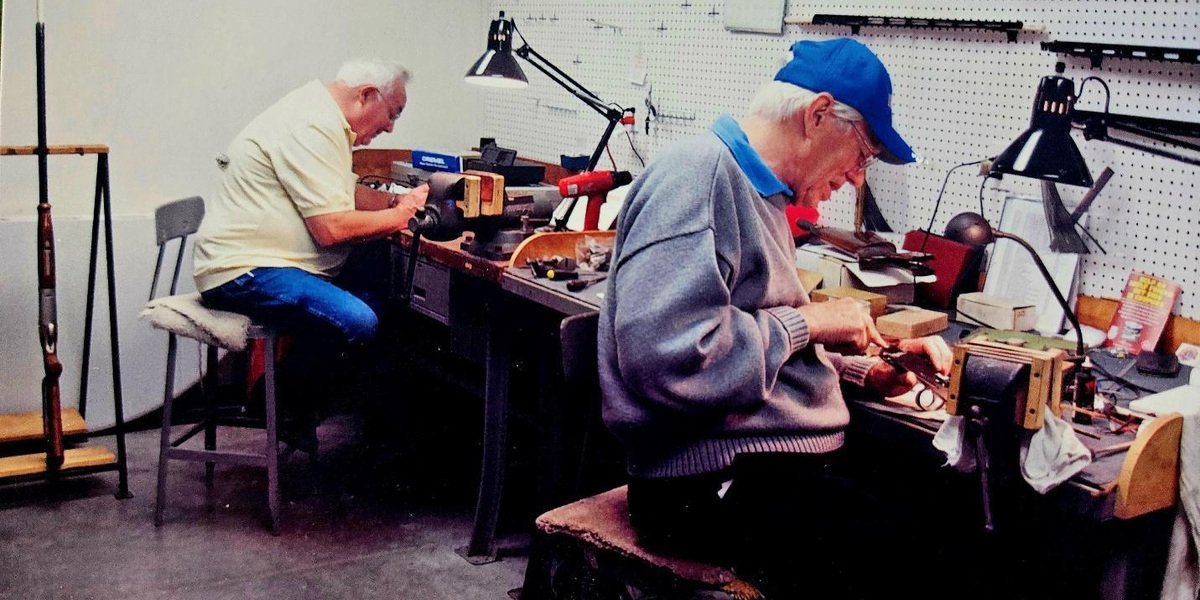
Another stage of Mainland’s career developed through Kolar Arms. During the 1980s, he acquired the sub-gauge tube business established by Larry Kolar and transferred operations to Racine. The company later expanded beyond tube systems into complete competition shotguns. During the 1990s, Kolar produced the Remington 90-T trap shotgun for Remington Arms Company, but he did not introduce Kolar-branded competition shotguns until 1996 for use in trap, skeet, and sporting clays. The firm was mentioned as an inventor or co-inventor of various patents in the United States related to choke assemblies for shotguns, trigger mechanisms, break-action trap shotguns, and shell ejectors and extractors.
Across these businesses, a consistent manufacturing approach emerged. Trade publications and company histories frequently associated Mainland with an emphasis on precision machining, close production tolerances, and producing major components within company facilities whenever practical. This reflected a manufacturing philosophy rooted in practical engineering rather than mass production. His companies served industrial customers, bicycle manufacturers, and competitive shooting markets while relying on many of the same machining principles. In 2019, leadership of Kolar Arms passed to his son Jeffrey Mainland as president and chief executive officer, with grandson Sean Mainland assuming responsibility for operations, sales, and marketing, continuing a family-managed business structure.
Donald Richard Mainland passed away on November 2nd, 2023, at the age of 91. His professional record illustrates how a machinist’s background could develop into a career that crossed several manufacturing fields without departing from the core discipline of precision engineering. His firms engaged in industrial machining, aerospace supply, bicycle manufacture, and firearms manufacture over the course of decades. The recognitions he received from institutions such as the National Skeet Shooting Association in 2011, the Wisconsin State Trapshooting Association Hall of Fame in 2023, and the Amateur Trapshooting Association Trapshooting Hall of Fame in 2024 were a reflection of one aspect of his career, but his real contribution was in proving how particular skills in manufacturing could be used to benefit different industries based on differing engineering needs.