In Europe in the early 2010s, the government subsidies remained prominent in shaping the renewable energy market. The roles of feed-in tariffs and green certificates remained prominent in renewable projects, and utility-scale solar projects mainly relied on policy stability. Meanwhile, the price of photovoltaic cells plummeted as the cost of raw materials decreased and the global learning curve steepened. According to International Energy Agency data, the average cost of solar modules declined by more than 70% between 2010 and 2015, altering the financial landscape for investors. The price decrease paved the way for new schemes to be implemented, although turning plans into reality was a tricky task at this stage.
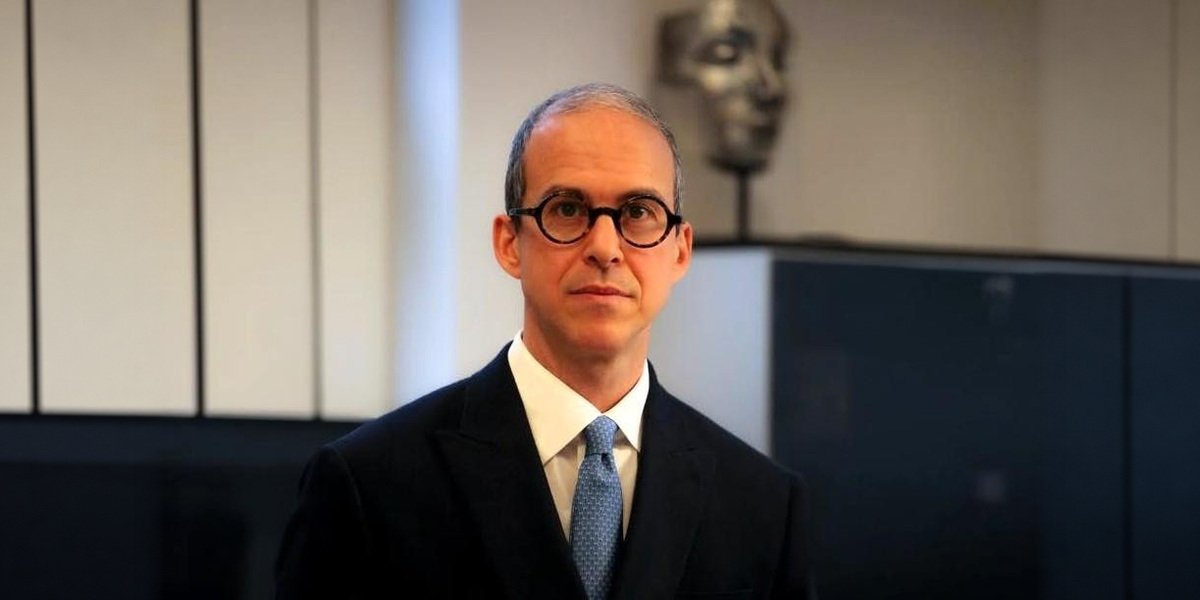
It was in this environment that Giuseppe La Loggia joined Octopus Investments in London in 2012, after earlier roles in legal advisory and in the acquisition, development, and construction of renewable energy projects. Octopus was already active in energy through retail investment products, yet its renewable portfolio operations were still at a very early stage. La Loggia was appointed Head of Portfolio Renewables and tasked with building a team and an asset management platform designed to oversee the construction and operational phase of renewable projects and assets, with a dedicated asset management function. This included recruiting technical, financial, and operational specialists, setting up monitoring systems, and creating processes for construction oversight and long-term performance management across multiple project sites.
During the period from 2012 to 2017, Octopus significantly expanded its renewable holdings, becoming one of the largest non-utility investors in UK renewables. Public disclosures and industry rankings at the time indicated that the firm surpassed 1 gigawatt of installed renewable capacity across solar and wind assets. A large share of that growth came from commercial and utility-scale solar installations in the United Kingdom, France, and Italy. The portfolio included both operating assets and projects under construction, requiring continuous coordination between developers, contractors, lenders, and local authorities.
Beyond capacity growth, attention increasingly turned to project economics. European subsidy programs were being reduced or phased out, and new solar developments faced uncertainty over revenue stability. Within Octopus, work began on testing whether solar projects could be financed without state support, relying instead on market power prices and long-term offtake arrangements. In 2015, La Loggia structured a contractual and financing model that separated equipment procurement, construction management, and operational responsibility, while allowing project companies to contract directly with suppliers and service providers.
This framework differed from traditional turnkey engineering contracts, which often transferred cost and performance risk through fixed price arrangements. Instead, the approach relied on detailed supply agreements, performance guarantees from manufacturers, and strict site-level controls managed by an appointed construction coordinator. Financing structures were adjusted to reflect lower capital expenditure and more flexible leverage profiles. Combined with falling equipment costs, this allowed certain large-scale solar projects to reach financial close without subsidy-backed revenues, an outcome that had been considered unlikely only a few years earlier.
The first applications of this model were tested on utility-scale solar clusters in Italy, where land availability and grid access supported larger installations. Projects were financed based on merchant-price assumptions and conservative output forecasts, with lenders requiring strong operational controls and robust reserve mechanisms. According to industry reporting at the time, these transactions were among the earliest European solar investments to proceed without feed-in tariffs or guaranteed price floors. The projects reached commercial operation and continued to operate under market conditions, providing case studies for future financing.
Market observers began referring to these developments as early examples of grid parity, meaning that solar electricity could compete directly with wholesale power prices without policy support. While grid parity varies by region and depends on grid costs and taxation, the projects demonstrated that, under certain conditions and in some areas with adequate sunlight, unsubsidized solar could meet investor return thresholds. Financial publications and sector analysts noted that this shift influenced both investor appetite and developer strategies, encouraging broader experimentation with merchant exposure and private power purchase agreements.
Within Octopus, portfolio management processes were adapted to support these risks. A more industrial, hands-on approach, energy price forecasting, weather data analysis, and efficient maintenance planning became more central to asset oversight. The renewable team also worked on financing and portfolio optimization, seeking to reduce debt costs once projects reached stable operational phases. By the end of La Loggia’s tenure in 2017, Octopus had established a platform that combined project development exposure with long-term asset ownership, aligning construction decisions with operating performance metrics.
The broader investment community took note of these results, particularly as other European markets moved toward subsidy-free procurement schemes. Competitive auctions began replacing fixed-tariff programs, and developers were asked to accept zero-subsidy bids in exchange for grid access. While policy frameworks still shaped timelines and permitting, financial models increasingly relied on private contracts and market price hedging. The Octopus projects were frequently cited in discussions about whether large-scale solar could become a standard infrastructure asset class comparable to conventional generation.
Throughout this period, La Loggia’s role remained focused on portfolio oversight and transaction structuring rather than public advocacy. Interviews and conference panels often emphasized operational discipline and cost transparency as drivers of bankability. Industry coverage also highlighted the interaction among legal frameworks, financing terms, and technical execution as central to reducing overall project risk. This combination reflected his earlier background in corporate and energy law, now applied within an investment management setting where risk allocation and contract design directly influenced returns.
By 2017, when La Loggia moved on to his next role, the market context had changed noticeably from the conditions of 2012. Solar deployment across Europe had accelerated, and several countries reported annual installations exceeding previous peaks even without generous subsidy programs. According to SolarPower Europe, new solar capacity in the European Union reached approximately 6.3 gigawatts in 2017, up from 5.69 gigawatts in 2016, with a growing share built under competitive or merchant frameworks. Investment strategies were adapting accordingly.
In retrospect, this stage of La Loggia’s career illustrates how financial design and project delivery can move together when managed within a single investment platform. The renewable sector continues to face price volatility, grid constraints, and policy adjustments. Yet, the models tested during this period remain part of current market practice. From his early days as a lawyer to his later leadership in investment management, the Octopus chapter stands as a point where structured finance, operational control, and market pricing intersected in practical deployment. It remains a notable phase in Giuseppe La Loggia’s professional record.