By: Austin McLean
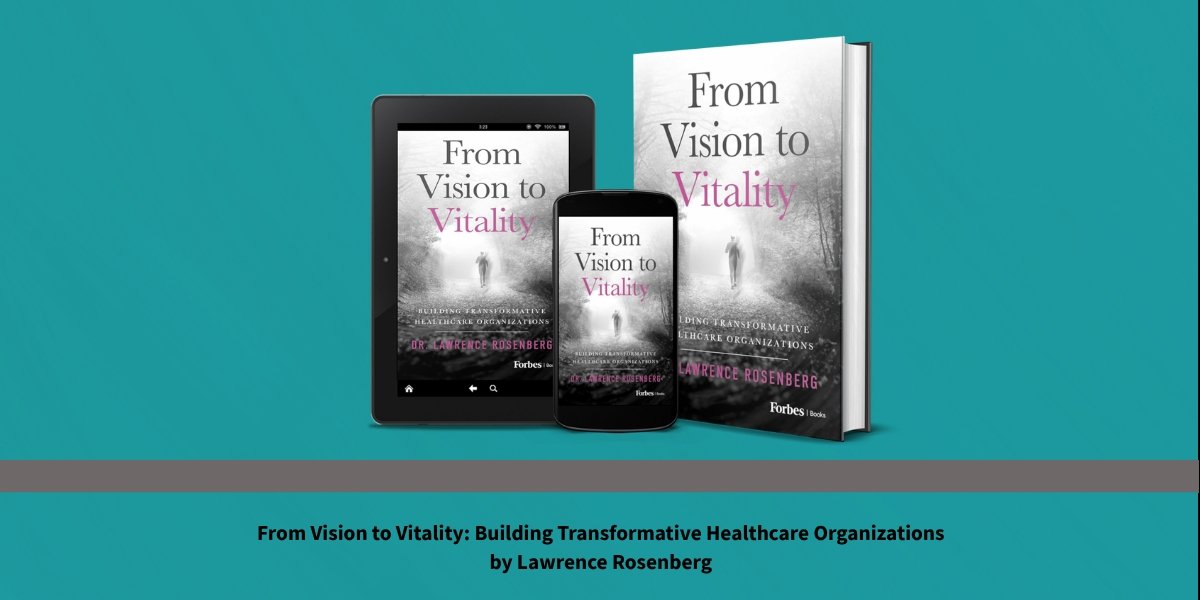
Most books about organizational transformation in healthcare arrive from a comfortable distance, written by people who study systems rather than run them, and that distance shows up in the gap between their elegant frameworks and the messy reality of actually trying to change how a hospital network operates. Dr. Lawrence Rosenberg does not write from that distance. He writes as the president and CEO of one of Canada’s most recognized health systems, a man who has spent over thirty-five years moving between the operating room and the executive suite, and From Vision to Vitality carries the unmistakable weight of someone describing battles he has actually fought rather than theories he finds compelling.
What makes the experience of reading this book genuinely engaging is the way Rosenberg refuses to separate the technical challenge of healthcare transformation from the human and moral challenge underneath it. He is not interested in efficiency for its own sake. He is interested in building systems that are nimble enough and humane enough to actually respond to what patients need, and he insists throughout that those two goals, operational excellence and genuine patient-centeredness, are not in tension but are in fact the same project viewed from different angles. That insistence reframes much of the conventional wisdom about healthcare administration, in which efficiency and compassion are too often treated as competing priorities that leaders must trade off.
The book’s exploration of integrated care across hospitals, long-term care, and community settings is one of its most valuable contributions, particularly because Rosenberg writes about it from direct experience leading exactly that kind of integration rather than from secondhand case study material. His account of building a culture of excellence and accountability inside large, often resistant institutional structures carries real specificity, the kind that comes from having actually navigated the political and bureaucratic obstacles that make this work so difficult in practice. Readers in healthcare leadership will recognize the terrain he is describing even when their own systems look quite different from his.
Rosenberg’s prose has the directness of someone accustomed to making consequential decisions under real time pressure. He does not hedge or over qualify his arguments, but he also does not oversimplify the genuine complexity of the challenges he is addressing. His discussion of artificial intelligence’s role in healthcare’s future is a good example of this balance, treating the technology as a genuine strategic asset for moving toward anticipatory care while remaining clear-eyed about the risks of bias and the need for careful, deliberate implementation rather than uncritical adoption.
This book matters because the stakes of healthcare leadership are unusually high and unusually personal, touching the lives of patients and providers in ways that few other industries can match. Rosenberg writes with the seriousness those stakes deserve, and his combination of clinical credibility and executive experience lends his guidance a weight few other voices in this space can match. For anyone genuinely committed to building healthcare organizations that work better for the people inside and outside of them, this is essential and clarifying reading.
If you are tired of leadership frameworks that sound impressive but fall apart under real pressure, From Vision to Vitality by Dr. Lawrence Rosenberg offers something far more valuable: hard-won wisdom from someone who has actually led the transformation he writes about. Pick up your copy on Amazon and build the kind of patient-centered, integrated healthcare system that genuinely works.