Economic Insider

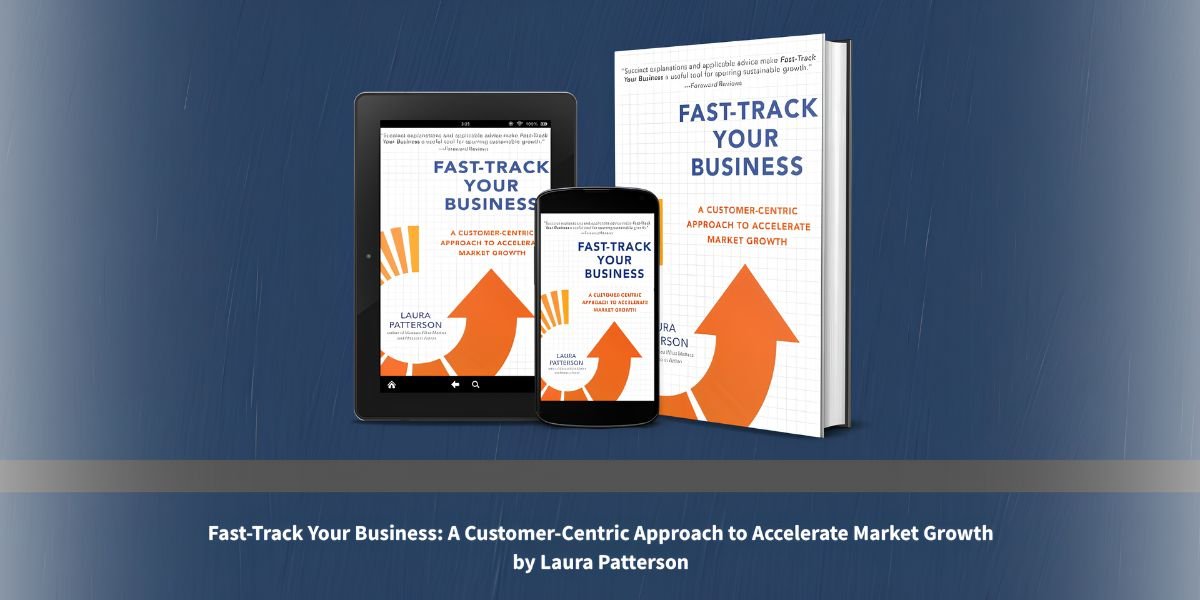
Laura Patterson Has Helped Companies Grow for Twenty-Five Years and Shares Her Framework in One Book

By: Victoria Smith

One of the clarifying things Laura Patterson says in Fast-Track Your Business is that growth doesn’t just occur. That observation, delivered directly in the book’s opening pages, cuts through the comfortable mythology that surrounds business growth, the idea that the right product at the right time in the hands of the right team will naturally generate momentum. Patterson has spent twenty-five years watching that mythology challenge organizations that had genuinely good products, genuinely talented teams, and genuinely favorable market timing, and she has spent those same twenty-five years developing a systematic understanding of what may have been missing in each case. This book presents that understanding, delivered with the directness and the practical specificity that her reputation in the marketing and growth strategy community has been built on.

Reading Fast-Track Your Business feels like having access to the strategic conversation that growth-focused leaders may have with trusted advisors, minus the consulting fees and the custom deliverables. Patterson writes like someone who has had this conversation many times with different leadership teams and has refined through that experience which concepts need careful explanation, which frameworks can generate useful action, and which common mistakes are worth addressing directly rather than tiptoeing around. The result is a book that feels comprehensive and efficient, covering the landscape of customer-centric growth without becoming bloated or repetitive.

The seven-step process at the heart of the Circle of Traction framework is one of the practically useful sequences in current business literature, and its usefulness comes specifically from the way Patterson has designed it around the actual pace and reality of organizational change rather than the idealized conditions of a clean-slate implementation. Each step builds on the previous one with the logic of someone who understands that many organizations are trying to improve their growth approach while continuing to operate their existing business, which means the framework needs to be implementable in conditions of genuine complexity rather than only in carefully controlled pilot programs.

Her concept of Upstream Marketing, the work of deeply understanding customer problems before those problems become product requirements, is one that deserves more attention in the growth conversation than it typically receives. Patterson makes the case for this upstream investment not through abstract argument but through the specific ways it can influence downstream outcomes, giving readers both the strategic rationale and practical tools to begin doing this work in their own organizations.

The patent-holding Accelance software she has developed, which is designed to connect organizational activities directly to measurable business outcomes, reflects the same quality of systematic thinking that makes this book useful. Patterson is not a theorist who has translated her ideas into a consulting practice. She is a practitioner who has developed her ideas through the specific and demanding work of helping organizations pursue growth and then distilled key ideas into a guide that leaders can use. Fast-Track Your Business may be useful reading for anyone responsible for growth and interested in a systematic approach rather than a collection of inspiring ideas.

If you are serious enough about growing your business to want a systematic approach rather than a collection of inspiring ideas that sound compelling and dissolve under real organizational pressure, Fast-Track Your Business by Laura Patterson may be a book to consider. Head over to Amazon and get your copy today. Growth doesn’t just occur, and this book offers a framework designed to help leaders approach it more deliberately.
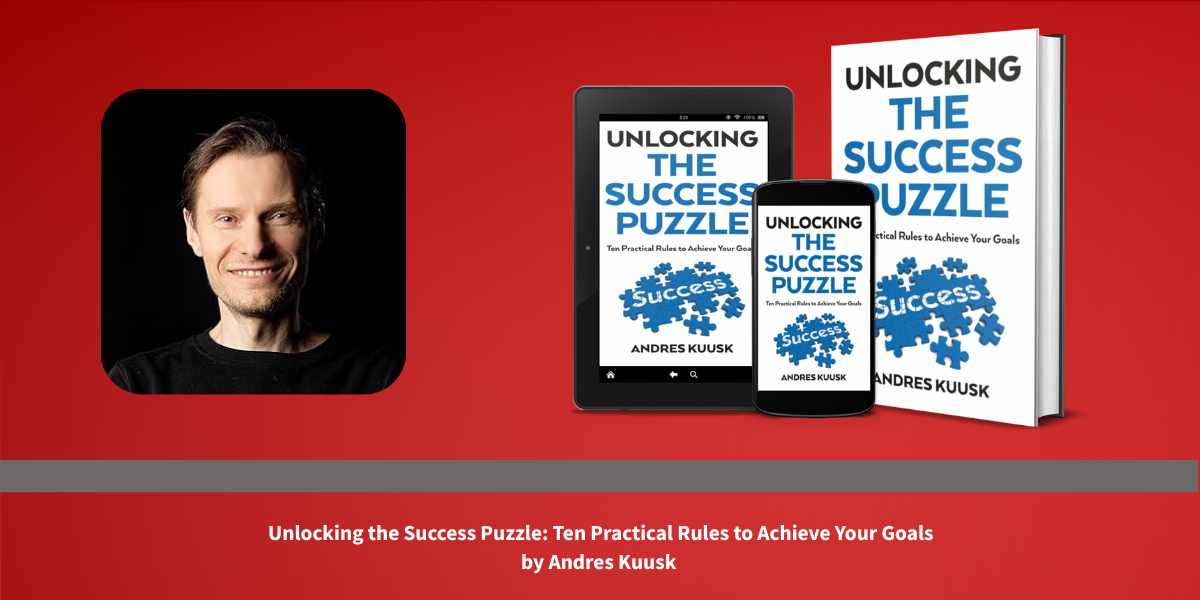

Andres Kuusk Isn’t Trying to Motivate You. He’s Trying to Show You What’s Quietly Blocking You.

By: HM Kingsley

The self-help shelf is full of books that tell you to work harder, want it more, set bigger goals, and think more positively. Andres Kuusk read all of that, lived at the highest levels of competitive and professional performance for decades, and came to a different conclusion entirely.

The problem most capable people have isn’t motivation. It isn’t discipline. It isn’t even knowledge. It’s that something in how they think keeps quietly steering their decisions in the wrong direction, and nobody has ever pointed it out to them clearly enough for them to actually do something about it.

That’s what Unlocking the Success Puzzle is really after. Not another push to try harder. A precise look at the invisible architecture of bad decisions.

The Book Is Not About Success

Andres is deliberate about this. In his own words, the book is not really about success. It’s about eliminating the obstacles that prevent success from occurring naturally.

Most people already know what they should be doing. That’s what makes underperformance so frustrating. The gap between knowing and doing isn’t filled by more information or more inspiration. It’s filled by understanding which cognitive distortions are quietly intercepting the decisions between intention and action.

He reframes the entire conversation away from motivation and toward what he calls decision architecture. Instead of asking how to want it more, he asks which thinking patterns are causing decisions that move a person away from their goals. That shift in question changes everything about how the problem gets approached and what kind of solution actually helps.

What a Board Games Bar Has to Do With Leadership

Andres owns a board games bar in Estonia, and it isn’t a quirky side project disconnected from his serious work. It sits at the center of how he thinks about decision-making and why he takes it seriously.

Games, he says, compress reality. In a well-designed game, decisions have consequences, resources are limited, trade-offs become visible, and feedback arrives fast. The same dynamics operate in business and in life, but the timelines are longer, and the complexity makes it harder to see clearly what’s actually happening.

Games let people study decision-making in a simplified environment. They teach strategic thinking, risk management, adaptation, how to allocate limited resources, and how to lose, learn, and keep going without collapsing. He’s not joking when he says board games might be one of the cheapest leadership development programs ever invented. The patterns that separate strong players from weak ones around a table, he keeps noticing, are remarkably similar to the patterns that separate effective leaders from ineffective ones inside organizations.

The environment changes. Human decision-making doesn’t.

Estonia Shaped More of the Book Than He Realized

Andres grew up in Estonia, a small country that has produced a disproportionate number of world-class thinkers, technologists, and innovators. He thinks that’s less of a coincidence than it might appear.

Small countries can’t rely on scale or abundant resources. They compete through adaptability, education, and the ability to do more with less. The cultural attitude he absorbed growing up was essentially: if something needs doing, figure it out. Self-reliance, curiosity, and a willingness to challenge conventional assumptions aren’t just personal traits. They’re survival instincts for a small nation trying to stay relevant in a world built for bigger players.

Those themes run through every chapter of the book. The ten rules are ultimately about learning faster than the environment changes, staying curious when it would be easier to stop questioning things, and adapting when the comfortable path stops working. He suspects his Estonian background shaped all of that more than he was aware of while he was actually writing it.

He Still Falls Into the Same Traps

Here’s something Andres is clear about, and it matters: writing a book about cognitive distortions does not make you immune to them.

He still catches himself becoming emotionally attached to ideas he has invested time in. He still occasionally underestimates how long things will take. He still notices himself gravitating toward information that supports what he already believes rather than information that challenges it. The distortions don’t disappear because you’ve studied them. They just become easier to catch earlier.

His daily habits are built around that reality. He reviews important decisions regularly. He actively looks for alternative explanations rather than settling for the first one that feels right. He tries to evaluate the quality of his decisions separately from the quality of their outcomes, which is harder than it sounds because results are visible and the thinking that produced them often isn’t.

Curiosity, he says, remains one of the most effective antidotes to cognitive rigidity. He deliberately exposes himself to unfamiliar ideas and perspectives, not because it’s comfortable, but because it’s necessary.

After decades of studying decision-making at the highest levels, he still considers himself a student of the subject.

The One Thing He Wants Readers to Do Differently

If Andres could choose a single change for every reader after they finish the book, it wouldn’t be a new habit or a new system. It would be a new question.

What assumption am I making right now?

That question, applied consistently, has the power to shift an astonishing number of decisions. Not dramatically or all at once. Quietly, persistently, over time.

He doesn’t measure success in book sales. The outcome that would mean the most to him is hearing that someone made a better decision because of an idea they found in those pages. Maybe they pursued something they would otherwise have avoided. Maybe they caught a wrong assumption before it cost them. Maybe they stopped reading early failure as permanent evidence of their limitations.

The quality of a life, he believes, is largely determined by the quality of the decisions made inside it. Even a few better decisions per year, compounded over time, can change where a person ends up entirely.

That’s the whole argument. And it’s a convincing one.

If the way Andres thinks about decisions, distortions, and what actually separates high performers from everyone else resonates with you, Unlocking the Success Puzzle: Ten Practical Rules to Achieve Your Goals is available now on Amazon. Ten rules. One framework. A completely different way of looking at why capable people win or fall short.

Robin Dimond on Why Fractional Marketing Leadership Is Reshaping Modern Business

By: Matthew Kaiser

As businesses navigate rising costs, economic uncertainty, and increasing pressure to demonstrate measurable returns, many are beginning to rethink one of the most traditional positions in the executive suite: the Chief Marketing Officer.

According to Robin Dimond, founder of Fifth & Cor, the future of marketing leadership isn’t necessarily full-time.

It’s fractional.

Over the past several years, Dimond has emerged as one of the leading voices in the growing movement toward fractional marketing leadership, helping businesses gain access to executive-level strategy without the financial burden and long-term commitment of a traditional C-suite hire.

“The assumption has always been that growth requires hiring more people,” says Dimond. “What we’re seeing now is that businesses don’t necessarily need more people. They need the right expertise at the right time.”

That philosophy has become the foundation of Fifth & Cor, the strategic marketing and public relations agency she founded to help businesses bridge the gap between vision and execution. Through the firm’s fractional leadership model, companies gain access to senior-level marketing guidance and benefit from a broader team specializing in public relations, content strategy, partnerships, social media, and brand development.

The approach is resonating with business leaders across industries.

As organizations continue to search for ways to scale efficiently, many are discovering that the traditional executive hiring model carries significant risks. Recruitment can take months, onboarding often takes longer, and even highly qualified executives require time to fully understand the nuances of a business before meaningful results can be achieved.

Dimond believes those realities have accelerated demand for a more agile solution.

“Business moves faster than ever,” she explains. “Companies can’t afford to spend six months waiting for momentum. They need strategic leadership that can step in immediately, identify opportunities, align teams, and start driving results.”

Her perspective is informed by years of helping brands navigate growth, visibility, and market positioning. Through her work, Dimond has observed a common pattern among organizations that struggle to scale successfully.

Many founders remain deeply involved in marketing decisions long after their companies have outgrown that model.

“The clearest sign that a business needs strategic marketing leadership is when the CEO is still acting as the head of marketing,” she says. “When leaders are managing social media, reviewing content, coordinating vendors, and overseeing campaigns themselves, they’re spending time working in the business instead of leading it.”

According to Dimond, the challenge is rarely a lack of effort.

More often, it’s a lack of alignment.

As businesses grow, marketing functions often become fragmented. Agencies, freelancers, consultants, and internal teams may all be working independently, yet few are operating from a unified strategy. The result is wasted resources, inconsistent messaging, and missed opportunities.

A fractional marketing leader serves as the connective tissue, ensuring every initiative supports larger business objectives.

For Dimond, that objective should always be tied to revenue.

“For too long, businesses have evaluated marketing through vanity metrics,” she says. “Followers, likes, impressions. Those numbers have their place, but leadership teams care about growth. They care about revenue. Marketing should be measured by its contribution to business outcomes.”

That focus on accountability has become one of the defining characteristics of her leadership philosophy.

Rather than viewing marketing as a collection of campaigns, Dimond approaches it as a growth system. Every initiative, from public relations and content marketing to strategic partnerships and social media, should contribute to building credibility, generating demand, and driving revenue.

It’s a perspective that has attracted attention from organizations navigating periods of rapid expansion, leadership transitions, and evolving market conditions.

At a time when companies are under increasing pressure to do more with less, Dimond believes fractional leadership offers a practical path forward.

“When economic conditions become uncertain, businesses need flexibility,” she says. “Fractional leadership allows organizations to maintain executive-level strategy without taking on the fixed costs associated with a full-time executive hire. They can scale support based on what the business needs today, not what they anticipated a year ago.”

Looking ahead, Dimond sees the rise of fractional leadership as more than a temporary business trend.

She believes it represents a broader shift in how organizations think about expertise.

“The conversation is changing,” she says. “Business leaders are no longer asking whether someone sits in the office five days a week. They’re asking whether that person can create meaningful impact.”

For Robin Dimond, the answer has never been about titles.

It’s about results.

And as more businesses rethink how they build leadership teams, her vision for flexible, performance-driven executive leadership is helping shape what the future of marketing may look like.

Morgan Stanley Sees AI Investment Shift Toward Hyperscalers

The AI investment shift identified by Morgan Stanley points to investors potentially rotating from semiconductor stocks toward hyperscalers as AI infrastructure spending enters a different phase. The brokerage said changing market conditions, easing expectations for additional U.S. interest rate hikes and lower oil prices are contributing to a broader expansion in market leadership.

Key Takeaways

  • Morgan Stanley said investors may rotate from semiconductor stocks to AI hyperscalers.
  • The brokerage linked the outlook to changing capital expenditure patterns in AI infrastructure.
  • Reduced expectations for additional Federal Reserve rate hikes and lower oil prices were cited as supporting factors.
  • Consumer discretionary, transportation and biotechnology stocks could also benefit from broader market participation.
  • The analysis focuses on sector allocation rather than individual company performance.

Morgan Stanley said investors may begin shifting capital from semiconductor companies to AI hyperscalers as leadership within the artificial intelligence trade changes. The brokerage said recent weakness in semiconductor shares suggests gains are broadening into other parts of the U.S. equity market, with hyperscalers and several non-technology sectors positioned to attract additional investor attention.

The assessment was released in a research note on July 6. Morgan Stanley said the change reflects a rotation within the AI investment theme rather than a retreat from artificial intelligence spending. According to the brokerage, companies investing heavily in data centers could become the next focus as the market reassesses where future returns are likely to emerge.

What Did Morgan Stanley Say About the AI Investment Shift?

Morgan Stanley described hyperscalers as large technology companies making significant investments in data centers and computing infrastructure to support artificial intelligence services. These companies have committed substantial capital expenditures to expand AI capabilities over the past year.

The brokerage said semiconductor stocks have led much of the AI-driven market rally, supported by strong demand for processors and other hardware required for AI infrastructure. However, it noted that recent price movements indicate investors may now be broadening their exposure to other parts of the AI ecosystem. Continued investment in AI infrastructure remains a key driver of demand across the sector, as reflected in recent coverage of AI infrastructure expansion.

Morgan Stanley said hyperscaler stocks have already experienced a period of relative underperformance compared with semiconductor companies. As a result, the brokerage believes investor positioning may begin favoring companies that operate large-scale cloud and AI infrastructure rather than suppliers of AI hardware.

AI Infrastructure Spending Trends

Large technology companies continue allocating billions of dollars toward expanding data center capacity and computing resources needed to support artificial intelligence applications. Those investments have been a major driver of demand for advanced semiconductors.

Morgan Stanley noted, however, that evidence demonstrating AI products can consistently generate returns sufficient to justify those capital expenditures remains limited. The brokerage said investors are increasingly evaluating where future value creation within the AI ecosystem may occur.

Why Could Investor Focus Shift to Hyperscalers?

Morgan Stanley said the next phase of the AI investment cycle may involve greater attention to companies deploying AI infrastructure rather than those supplying the underlying chips.

The brokerage also pointed to the possibility of increased capital expenditure discipline among hyperscalers in the near term. Investors may interpret more measured spending plans as a sign that companies are balancing AI expansion with financial efficiency.

During June, several major technology companies classified as hyperscalers experienced significant selling pressure. At the same time, semiconductor stocks continued to outperform.

That relationship has recently changed. Morgan Stanley noted that the Philadelphia Semiconductor Index gained 11% during June but declined more than 11% over the subsequent two weeks. During that same period, the Roundhill Magnificent Seven ETF recovered part of its earlier losses.

The brokerage said those market movements indicate investors are reassessing sector leadership rather than exiting AI-related investments altogether.

Capital Allocation Across the AI Supply Chain

The AI supply chain includes companies that manufacture chips, operate cloud infrastructure, build data centers and develop AI software and services.

Morgan Stanley’s analysis suggests investors may increasingly evaluate opportunities across that broader ecosystem instead of concentrating primarily on semiconductor manufacturers. Broader discussions around semiconductor supply chains also illustrate how manufacturing capacity and regional production strategies continue to shape investment decisions. Such portfolio adjustments represent changes in sector allocation rather than changes in overall exposure to artificial intelligence.

How Does AI Infrastructure Spending Influence the Market?

Investment in AI infrastructure has become one of the largest sources of corporate capital expenditure among major technology companies.

Large-scale investments in servers, networking equipment, storage systems and data centers have supported demand throughout the semiconductor industry. Those expenditures have also influenced expectations for revenue growth across multiple technology segments.

Morgan Stanley said investors are now examining whether spending on AI infrastructure will translate into commercial returns capable of supporting continued investment at current levels.

The brokerage indicated that market participants are paying closer attention to the companies expected to monetize AI services after infrastructure investments have been made. That consideration could affect how investors value different parts of the AI sector.

What Could the Shift Mean for the Semiconductor Sector?

Morgan Stanley did not suggest that semiconductor companies are losing their role within artificial intelligence development. Instead, it said recent market performance indicates leadership may become more balanced across different industries.

Semiconductor companies remain central suppliers of processors and other hardware supporting AI workloads. Demand for advanced chips continues to depend on ongoing investment in data centers and cloud computing infrastructure.

Morgan Stanley’s analysis focuses on changes in investor allocation rather than a deterioration in semiconductor fundamentals. The brokerage said recent declines in chip shares may reflect profit-taking following a prolonged period of strong performance.

Market Implications for Semiconductor Manufacturers

A broader market rotation could result in investors distributing capital across additional industries while maintaining exposure to artificial intelligence.

Morgan Stanley also identified consumer discretionary companies, transportation firms and biotechnology stocks as sectors that could benefit from expanding market participation beyond semiconductor shares.

The brokerage linked those expectations to improving macroeconomic conditions that may encourage investors to diversify sector exposure.


Frequently Asked Questions

Why does Morgan Stanley expect an AI investment shift toward hyperscalers?

Morgan Stanley said recent weakness in semiconductor stocks, combined with changing capital expenditure expectations and broader market participation, could lead investors to rotate toward hyperscalers.

What are AI hyperscalers?

AI hyperscalers are large technology companies that invest heavily in cloud infrastructure and data centers to support artificial intelligence services and computing workloads.

How does AI infrastructure spending affect market performance?

Large investments in AI infrastructure have supported demand for semiconductors and related technology. Investors also evaluate whether those investments will generate sufficient commercial returns.

What other sectors could benefit from the market rotation?

Morgan Stanley said consumer discretionary, transportation and biotechnology stocks could also benefit as market leadership broadens beyond semiconductor shares.

Disclaimer: This article is for informational and editorial purposes only and should not be considered financial, investment, legal, or tax advice. Readers should conduct their own research and consult a qualified financial advisor before making any investment decisions.

Healthcare Doesn’t Need More Management Theory, It Needs Leaders Like the One Dr. Lawrence Rosenberg Describes in This Book

By: Austin McLean

Most books about organizational transformation in healthcare arrive from a comfortable distance, written by people who study systems rather than run them, and that distance shows up in the gap between their elegant frameworks and the messy reality of actually trying to change how a hospital network operates. Dr. Lawrence Rosenberg does not write from that distance. He writes as the president and CEO of one of Canada’s most recognized health systems, a man who has spent over thirty-five years moving between the operating room and the executive suite, and From Vision to Vitality carries the unmistakable weight of someone describing battles he has actually fought rather than theories he finds compelling.

What makes the experience of reading this book genuinely engaging is the way Rosenberg refuses to separate the technical challenge of healthcare transformation from the human and moral challenge underneath it. He is not interested in efficiency for its own sake. He is interested in building systems that are nimble enough and humane enough to actually respond to what patients need, and he insists throughout that those two goals, operational excellence and genuine patient-centeredness, are not in tension but are in fact the same project viewed from different angles. That insistence reframes much of the conventional wisdom about healthcare administration, in which efficiency and compassion are too often treated as competing priorities that leaders must trade off.

The book’s exploration of integrated care across hospitals, long-term care, and community settings is one of its most valuable contributions, particularly because Rosenberg writes about it from direct experience leading exactly that kind of integration rather than from secondhand case study material. His account of building a culture of excellence and accountability inside large, often resistant institutional structures carries real specificity, the kind that comes from having actually navigated the political and bureaucratic obstacles that make this work so difficult in practice. Readers in healthcare leadership will recognize the terrain he is describing even when their own systems look quite different from his.

Rosenberg’s prose has the directness of someone accustomed to making consequential decisions under real time pressure. He does not hedge or over qualify his arguments, but he also does not oversimplify the genuine complexity of the challenges he is addressing. His discussion of artificial intelligence’s role in healthcare’s future is a good example of this balance, treating the technology as a genuine strategic asset for moving toward anticipatory care while remaining clear-eyed about the risks of bias and the need for careful, deliberate implementation rather than uncritical adoption.

This book matters because the stakes of healthcare leadership are unusually high and unusually personal, touching the lives of patients and providers in ways that few other industries can match. Rosenberg writes with the seriousness those stakes deserve, and his combination of clinical credibility and executive experience lends his guidance a weight few other voices in this space can match. For anyone genuinely committed to building healthcare organizations that work better for the people inside and outside of them, this is essential and clarifying reading.

If you are tired of leadership frameworks that sound impressive but fall apart under real pressure, From Vision to Vitality by Dr. Lawrence Rosenberg offers something far more valuable: hard-won wisdom from someone who has actually led the transformation he writes about. Pick up your copy on Amazon and build the kind of patient-centered, integrated healthcare system that genuinely works.