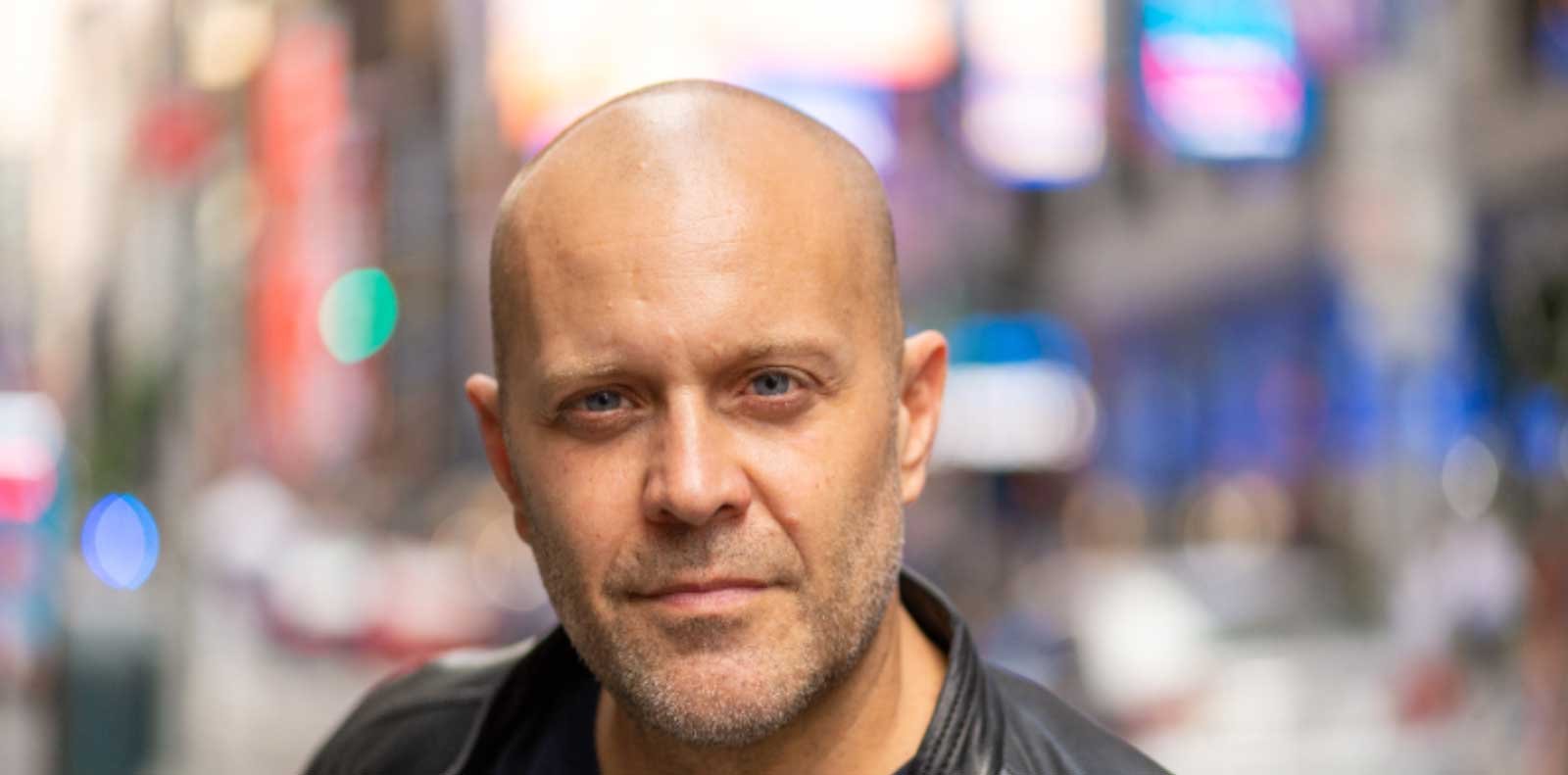
The independent creator economy is experiencing unprecedented growth, with artists increasingly taking control of their narratives across film, television, digital media, and performing arts. For actor, producer, and writer Douglas Taurel, this shift has been nothing short of transformative.
Taurel, the force behind the critically acclaimed solo show “The American Soldier,” has leveraged his personal vision to connect with audiences nationwide. “Control is everything in today’s creator economy,” Taurel says. “You can’t wait for anyone to hand you an opportunity. You have to creat it.”
And create it he did. The American Soldier, a solo performance based on real letters from soldiers and their families, is not only a deeply personal artistic project but also a strategic business venture. By writing, producing, and performing the show himself, Taurel retains complete ownership of his work, controlling both the creative and financial aspects—a move increasingly common among independent artists.
The rise of the independent creator economy is not limited to theater. In 2023, over 65% of working actors reported involvement in creating their own content, up from just 28% five years ago, according to the Creator Economy Research Institute. This surge reflects broader cultural and economic shifts as artists like Taurel capitalize on new avenues for self-produced content.
Taurel’s entrepreneurial approach extends beyond the stage. He recently launched a whiskey line in partnership with Andalusia Whiskey, linking it to The American Soldier brand. A portion of proceeds is donated to veterans’ charities, a strategic move that both deepens his brand’s narrative and creates an additional revenue stream. “I’m telling veterans’ stories on stage and trying to honor them through projects where I can make donations, like through my The American Soldier whiskey,” Taurel explains. “It’s all part of the same mission.”
For Taurel, producing his own work has been both liberating and financially savvy. His one-man show requires minimal production costs, allowing it to be a easier greenlit by theatres since production cost are so much lower than a production with a big set and with multiple actors to pay.” “It’s just me, a WWII Army Trunk, an American flag, a few props nd my acting. That’s it”
This trend of artists taking control of their content is evident across multiple platforms. Streaming services report that creator-led projects now account for 38% of original content acquisitions, compared to just 12% in 2018. Artists like Phoebe Waller-Bridge, Issa Rae, and Michaela Coel have all built lucrative careers by owning their narratives—a strategy that Taurel has similarly adopted.
Taurel’s foray into television further underscores this strategy. In his TV series “Landing Home,” he explores the struggles of a veteran returning to civilian life, a thematic continuation of his solo show. By controlling both the narrative and the production, Taurel ensures that his work remains true to his vision—a crucial factor in building an authentic brand.
“We’re in an era where content is king, but control is the throne,” says Taurel. “And in this new economy, the artists who hold the keys to both will be the ones who will survive and even thrive.”
As the independent creator economy continues to evolve, artists like Taurel are proving that creative control is not just a career strategy—it’s a necessity. And with $4.7 billion in venture capital flowing to creator-led startups in the past 18 months alone, the financial incentives for independent artists have never been more compelling.
Taurel plans to adapt The American Soldier into a feature film and launch a second season of Landing Home. These next steps are a natural evolution of his mission to control his artistic narrative and expand his impact. “I want to keep telling stories that matter to me and to the people who’ve supported my work,” he says. “Turning The American Soldier into a film will allow me to reach a broader audience while preserving the intimacy of the original show. And Landing Home has so much more ground to cover—we’ve only scratched the surface of what veterans and military families go through.
The independent creator economy is expected to generate over $18 billion in direct economic activity by 2025, a figure that underscores the growing economic power of artists who are building their own tables rather than asking for a seat. For Taurel, that approach has been key to his success—and it’s a model that more artists are likely to follow as the industry continues to transform.
Learn more at: www.DouglasTaurel.com
About Douglas Taurel: Douglas has made countless film and television appearances. He most recently portrayed Joe Petito in the upcoming Lifetime movie The Gabby Petito Story. Directed by Thora Birch, the film is based on Gabby Petito’s short life and tragic death. It premiered on the Lifetime Movie Network on October 1, 2022.
The Library of Congress commissioned him to write, create, and perform his second solo show, An American Soldier’s Journey Home. It commemorates the ending of the First World War and tells the story of Irving Greenwald, a soldier in the 308 Regiment and part of the Lost Battalion. He has performed the play twice at the Library of Congress and the Hoboken Museum.
Follow him on social media
Instagram @DouglasTaurel
Youtube: Douglas Taurel
Twitter @DouglasTaurel
IMDB: Douglas Taurel
Landing Home TV Series: https://www.landinghomewebseries.com
The American Soldier: https://www.theamericansoldiersoloshow.com/
Cyclops Productions: https://www.cyclopsproductions.com/
Published by Art B.