By: Victoria Smith
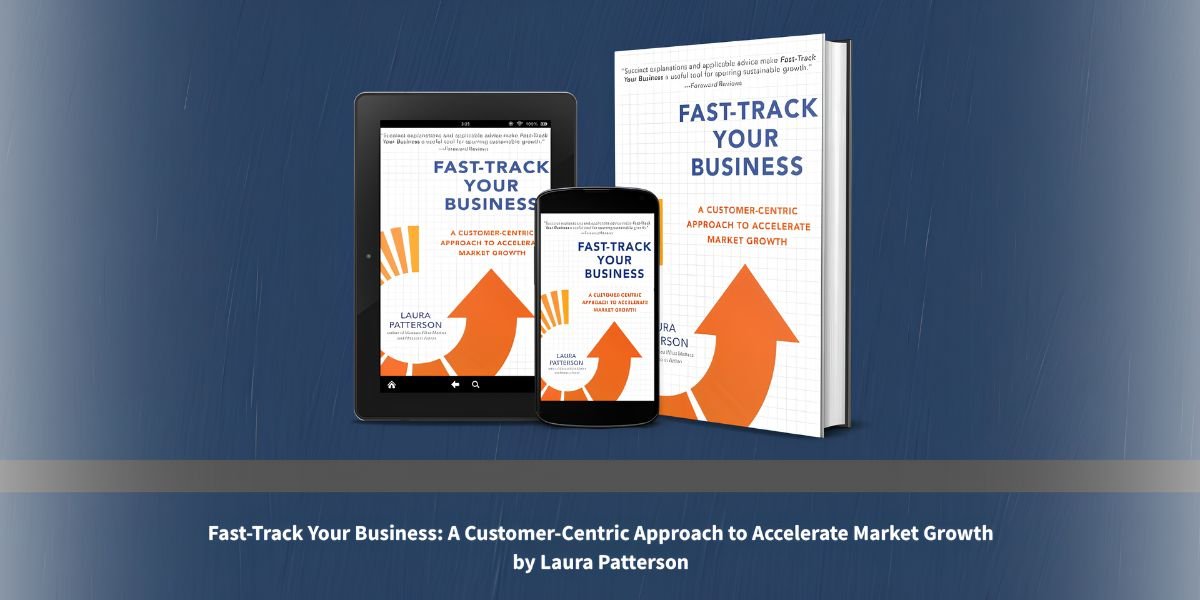
One of the clarifying things Laura Patterson says in Fast-Track Your Business is that growth doesn’t just occur. That observation, delivered directly in the book’s opening pages, cuts through the comfortable mythology that surrounds business growth, the idea that the right product at the right time in the hands of the right team will naturally generate momentum. Patterson has spent twenty-five years watching that mythology challenge organizations that had genuinely good products, genuinely talented teams, and genuinely favorable market timing, and she has spent those same twenty-five years developing a systematic understanding of what may have been missing in each case. This book presents that understanding, delivered with the directness and the practical specificity that her reputation in the marketing and growth strategy community has been built on.
Reading Fast-Track Your Business feels like having access to the strategic conversation that growth-focused leaders may have with trusted advisors, minus the consulting fees and the custom deliverables. Patterson writes like someone who has had this conversation many times with different leadership teams and has refined through that experience which concepts need careful explanation, which frameworks can generate useful action, and which common mistakes are worth addressing directly rather than tiptoeing around. The result is a book that feels comprehensive and efficient, covering the landscape of customer-centric growth without becoming bloated or repetitive.
The seven-step process at the heart of the Circle of Traction framework is one of the practically useful sequences in current business literature, and its usefulness comes specifically from the way Patterson has designed it around the actual pace and reality of organizational change rather than the idealized conditions of a clean-slate implementation. Each step builds on the previous one with the logic of someone who understands that many organizations are trying to improve their growth approach while continuing to operate their existing business, which means the framework needs to be implementable in conditions of genuine complexity rather than only in carefully controlled pilot programs.
Her concept of Upstream Marketing, the work of deeply understanding customer problems before those problems become product requirements, is one that deserves more attention in the growth conversation than it typically receives. Patterson makes the case for this upstream investment not through abstract argument but through the specific ways it can influence downstream outcomes, giving readers both the strategic rationale and practical tools to begin doing this work in their own organizations.
The patent-holding Accelance software she has developed, which is designed to connect organizational activities directly to measurable business outcomes, reflects the same quality of systematic thinking that makes this book useful. Patterson is not a theorist who has translated her ideas into a consulting practice. She is a practitioner who has developed her ideas through the specific and demanding work of helping organizations pursue growth and then distilled key ideas into a guide that leaders can use. Fast-Track Your Business may be useful reading for anyone responsible for growth and interested in a systematic approach rather than a collection of inspiring ideas.
If you are serious enough about growing your business to want a systematic approach rather than a collection of inspiring ideas that sound compelling and dissolve under real organizational pressure, Fast-Track Your Business by Laura Patterson may be a book to consider. Head over to Amazon and get your copy today. Growth doesn’t just occur, and this book offers a framework designed to help leaders approach it more deliberately.