Microsoft introduced its next‑generation quantum computing chip, Majorana 2, at its annual Build conference, unveiling a platform the company says offers qubit reliability improvements unprecedented in its own development efforts and reporting an adjusted timeline for larger quantum systems.
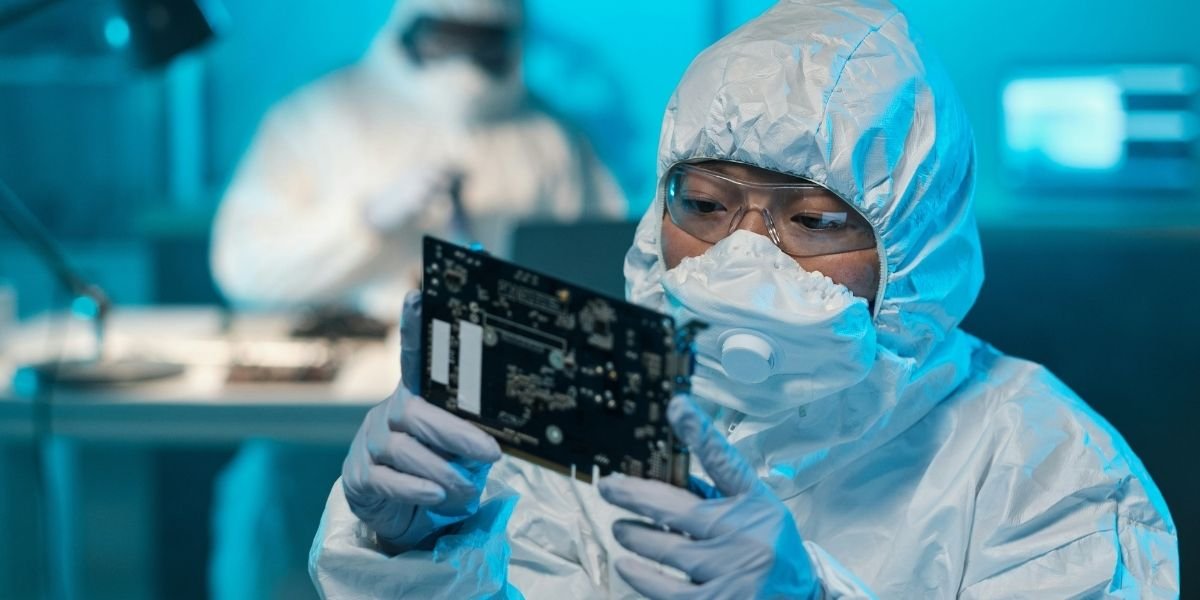
The announcement, delivered during a keynote and a series of technical briefings, centered on the design of Majorana 2, a quantum processor Microsoft describes as featuring qubits with reliability metrics roughly 1,000 times higher than those in its first‑generation prototype.
Majorana 2 Debut Highlights Reliability Advances
Majorana 2 succeeds Microsoft’s earlier Majorana prototype, and it reflects a substantial revision to materials and architectural design that the company says produced much longer qubit “lifetimes”, a measure of how long qubits maintain the delicate quantum states necessary for calculations. Microsoft reported a mean lifetime of about 20 seconds, with some qubits persisting nearly one minute before losing coherence, a notable change from lifetimes measured in fractions of a second in other platforms.
The technology underpinning this advancement includes a new materials stack and integration of tools designed to support experimental design, according to the company’s live Build coverage. These elements combine to produce a system that Microsoft’s quantum team said reduces error rates and enables more sustained quantum operations, long a challenge in the field.
Microsoft also showcased a platform called Microsoft Discovery, which the company says assists in managing complex data and workflows across research and development. The tool is now available broadly and can be paired with a GitHub Copilot account, expanding access to some of the AI‑driven processes touted as critical to Majorana 2’s development.
Materials and Design Choices
Majorana 2 marks a shift in the materials used for superconducting components when compared with some other quantum hardware approaches. Reports noted that Microsoft’s design uses a combination of lead‑based and semiconductor materials, departing from the aluminum superconductors seen in many competing systems. These choices are associated with the enhanced qubit lifetimes and are a focal point of the company’s presentation.
Quantum computing hardware engineers often grapple with a trade‑off between qubit quantity and stability. While other companies have demonstrated chips with larger numbers of qubits, stability, or the ability to maintain a quantum state, remains an industry‑wide constraint. Microsoft’s emphasis on reliability reflects a continuing trend toward designs that can mitigate error rates without overly complex error correction overhead.
Microsoft’s quantum initiative has been years in the making. The original Majorana chip, introduced in early 2025, explored a form of topological qubit intended to reduce susceptibility to certain error sources. That project laid groundwork that the company says has informed the more robust performance of Majorana 2, though the original incarnation itself was an early demonstration rather than a commercial product.
Roadmap Adjustment and Milestone Goals
Alongside technical details of Majorana 2, Microsoft provided updated assertions about its development schedule. The company now frames the path to a larger, fault‑tolerant quantum system as achievable by 2029, a timeline that reflects a contraction relative to earlier projections. This adjustment aligns Microsoft’s projected delivery more closely with timelines shared by other major technology firms pursuing quantum platforms.
Microsoft said the updated chronology stems from confidence in performance improvements and its AI‑assisted research tools, though the company did not set firm dates for public deployment of a fully operational quantum computer. Such machines, if realized, could theoretically handle certain classes of computation that are intractable for classical processors.
Expert Voices on Quantum Claims
Responses from the broader scientific community have varied. Some industry commentators characterize the reported gains as promising and reflective of engineering progress, while others stress that early‑stage hardware announcements often require support from reproducible independent data and peer‑reviewed research before their implications are fully understood. Assertions about qubit performance and underlying physics in complex quantum designs can be difficult to evaluate without access to detailed measurements and external validation.
Those commenting on the wider announcement noted that improvements in quantum device reliability can have a material impact on what kinds of computations are feasible, but also pointed out that many aspects of quantum hardware performance are measured under conditions that differ from expected real‑world use. Transparent benchmarking across platforms remains a point of discussion across research institutions and industry labs.
Emerging Tools for R&D and Collaboration
In addition to hardware developments, Microsoft emphasized tools designed to support research teams. Microsoft Discovery was featured as a platform intended to facilitate AI‑assisted exploration across disciplines, consolidating data, suggesting experimental directions and automating analytical workflows. This tool was made generally available simultaneously with the Majorana 2 announcement.
By broadening access to AI‑enhanced research infrastructure, Microsoft is positioning these capabilities as part of a toolkit for scientific exploration beyond quantum computing itself. The company invited developers and researchers to adopt the platform alongside traditional development frameworks.
As quantum research advances globally, hardware progress such as that reported for Majorana 2 contributes to ongoing comparisons among differing approaches. Companies and research institutions continue to refine architectures and materials, and performance claims will likely be assessed across a range of technical metrics as the field evolves.