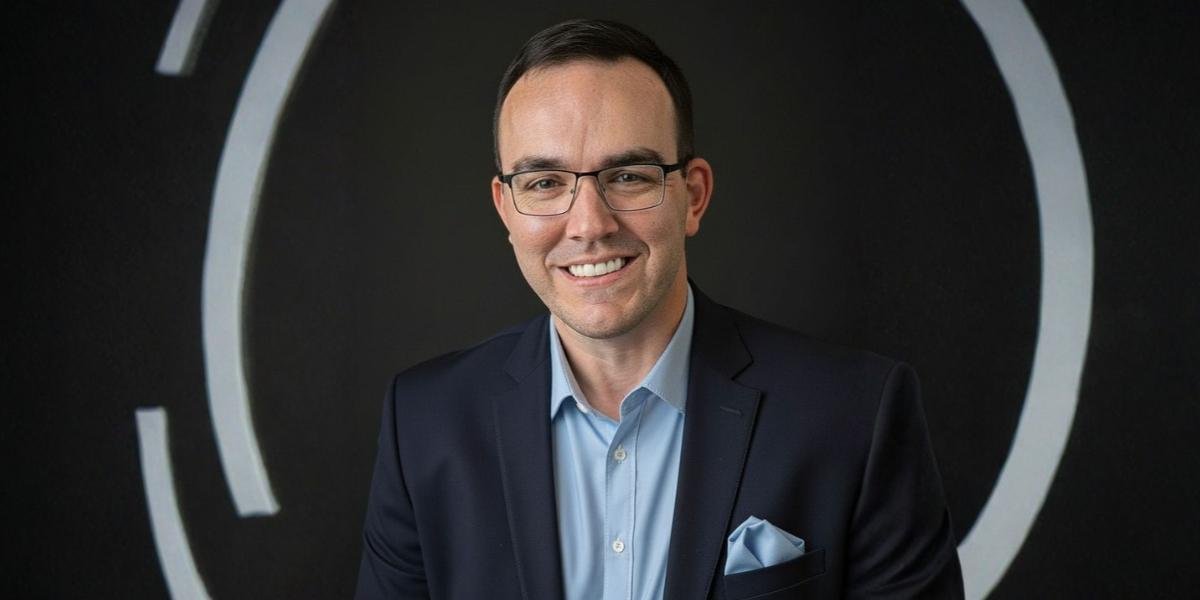
By: Dale J Hobbie, Founder, Managing Member & Chief Scientist, Quantum HPC Infrastructure, LLC
Dale J Hobbie is a citizen of the Cherokee Nation. To him, that is not a footnote to his biography. It is the frame through which he has understood every extractive industry conversation he has ever sat in, and he has sat in a great many of them, on both sides of the table.
So, when the Oklahoma Legislature passed the Data Center Customer Ratepayer Protection Act of 2026 and Governor Stitt signed it into law on May 11, Hobbie’s reaction was not surprise; it was recognition. In his view, Oklahoma had just encoded into state law a principle that the Cherokee people have understood through hard and repeated experience for generations: when a large industry arrives with promises of prosperity and asks to plug into your land, your water, and your power supply, the question is never whether the industry benefits. The question is who bears the cost when the accounting comes due.
HB 2992 requires data centers adding 75 megawatts or more of demand to pay their full utility service costs, no cost-shifting, no quiet embedding of infrastructure upgrade expenses into the residential rate base. In a single piece of legislation, Hobbie argues, Oklahoma’s House and Senate said something most state legislatures have found difficult to say plainly… if you want to consume industrial quantities of power in this state, you bring your economics with you.
That took political will, he notes. The industry lobbying apparatus in this space is well-funded and carries the rhetorical advantage of saying “jobs” and “economic development” in every conversation, while the actual job counts at these facilities, typically measured in dozens rather than thousands, are buried in footnotes. Oklahoma’s Legislature read the footnotes.
But, as Hobbie points out, the national coverage of Oklahoma’s legislation missed something entirely, because it requires knowing a different piece of history than the one that typically gets told about this state.
The same week that media was celebrating the centennial of Route 66, running features about neon diners and the romance of the open American road, Principal Chief Chuck Hoskin Jr. published an opinion piece reminding the country of something the centennial coverage kept leaving out. The towns that define Route 66 in northeast Oklahoma (Vinita, Claremore, Chelsea, Catoosa, and Adair) did not appear because of the highway. They were Cherokee communities, built decades before the asphalt arrived, through governance, determination, and the resilience of a people who had been forcibly removed from their ancestral lands in the Southeast and rebuilt a civilization in Indian Territory.
Route 66 did not create those communities; it ran through them. The road followed paths that Cherokee citizens had already been traveling for generations to connect their towns, conduct commerce, and sustain a nation. More than half of Route 66’s 2,400 miles passes through Indigenous homelands. In Oklahoma alone, the highway weaves through 39 tribal nations. The centennial celebration has been, in many places, a 100-year-old story told without its original characters.
Hobbie raises this not as a historical grievance. He raises it because, in his reading, it is exactly the pattern that the data center industry was attempting to run in northeast Oklahoma, and the Cherokee Nation recognized it and responded with clarity and force.
In February 2026, Chief Hoskin signed Executive Order 2026-02-CTH, establishing a nine-member task force to study data center impacts across the Nation’s 7,000-square-mile reservation. Of the 1,593 Cherokee citizens surveyed, 64% opposed hyperscale data center construction within the reservation. In August 2026, the Nation acted on that finding, banning hyperscale data centers on tribal and trust lands outright, and requiring meaningful consultation for any proposals on non-tribal lands within the reservation.
Hobbie calls that sovereignty applied with precision: a government that did its homework, asked its citizens, and acted on what it heard. As he sees it, the majority of hyperscale data centers are still building on decades-old engineering, dismissing the analysis, redesign, and environmental reckoning being implemented by the smaller players who got ahead of this curve years ago.
The Cherokee Nation Energy and Sustainability Act, signed by Chief Hoskin in May 2026, frames the governing principle: innovation must never come at the expense of who we are as a people, and we take seriously our role as caretakers of this land. That phrase, Hobbie says, carries weight no utility rate schedule can fully capture. It describes a relationship to place and resource that precedes Oklahoma statehood, precedes Route 66, and precedes every extractive industry conversation this territory has ever hosted.
Together, he argues, Oklahoma’s legislative action and the Cherokee Nation’s sovereign action point toward something the national data center policy conversation has not yet fully articulated. The standard incentive model, tax exemptions, rate preferences, cost socialization, was designed for facilities consuming 10 to 15 megawatts that employed 50 to 100 people. The facilities arriving today consume 100 to 500 megawatts and employ 40 people. They require grid infrastructure investments that get amortized across every residential customer in the utility territory, in communities that have historically had the least political power to resist.
Oklahoma’s Ratepayer Protection Act breaks that pattern at the state level. The Cherokee Nation’s ban breaks it at the sovereign level. In Hobbie’s view, both encode the same structural principle: industrial-scale power consumption belongs to the smart and aware industrial-scale consumer. It does not belong to a family in Tahlequah whose electricity bill could rise because a massive hyperscaler decided northeastern Oklahoma had available grid capacity worth borrowing.
The data center operators who are serious about the next decade, Hobbie says, will have to answer a question they have been deferring: “Where does your power come from, and who pays for it?” The operators who arrive with a genuine and thoughtful local solution, with infrastructure economics that do not depend on ratepayer subsidy, will find doors open. The ones who arrive with the same pitch that worked in 2016 will find that Oklahoma already read that playbook…and shredded it.
His people, he adds, have been reading it for a very long time.
D. James Hobbie is the Founder, Managing Member & Chief Scientist of Quantum HPC Infrastructure, LLC, a citizen of the Cherokee Nation and a former mission-critical analyst for the intelligence community.