The last fifteen years have seen consumer electronics continue to double down on its emphasis on interconnected software-led systems. Gone are the days when electronic gadgets would do one thing, only to be upgraded to data collectors, wireless communication-enabled gadgets, and POST-warranty upgrade recipients. Cameras, watch-faces, and navigational aids have joined this procession, and thermographic displays are no exception to this rule. The decline in price points and advancements in computational power in the 2010s saw manufacturers try to incorporate elements of software to bring it into the arena with traditional field instruments.
Within this broader technological climate, Pulsar incorporated feature-level integration into its thermal and digital night vision devices after the brand was established in 2009 under Yukon Advanced Optics Worldwide. Operating from development and production centers in Lithuania with additional facilities in Latvia, the company expanded beyond basic image detection. It began embedding recording, wireless control, and software-driven functions into product lines released throughout the 2010s and early 2020s.
Digital recording became one of the earliest feature integrations. Early thermal optics were limited to real-time viewing through an eyepiece, with no internal storage. As onboard memory became more affordable and compact, selected models introduced video and image recording capabilities. This allowed users to document hunts, field observations, or testing sessions without attaching external cameras. Recording was stored on internal memory or removable media, depending on the model generation. Over time, storage capacity increased in line with general electronics trends, enabling longer recording sessions and higher resolution files.
Wireless device control followed as smartphones became common field tools. By the mid 2010s, many consumer electronics supported Bluetooth or WiFi connectivity, and thermal optics began adopting similar standards. Selected Pulsar models introduced wireless pairing with mobile devices, allowing users to view live images remotely, transfer recorded footage, and adjust settings through companion applications. This reduced the need for physical buttons and enabled firmware adjustments without connecting the device to a computer. Wireless integration also supported easier content sharing, which aligned with the broader growth of digital media platforms.
Onboard image processing software also evolved during this period. Early thermal devices displayed raw heat signatures with limited adjustment. Later generations introduced multiple color palettes, contrast modes, and image smoothing functions. These software tools were designed to improve clarity under varying environmental conditions, such as fog, rain, or dense vegetation. Image processing algorithms were refined across product cycles, allowing devices to distinguish temperature differences better. Although hardware sensors remained central to performance, software increasingly shaped how images were presented to the user.
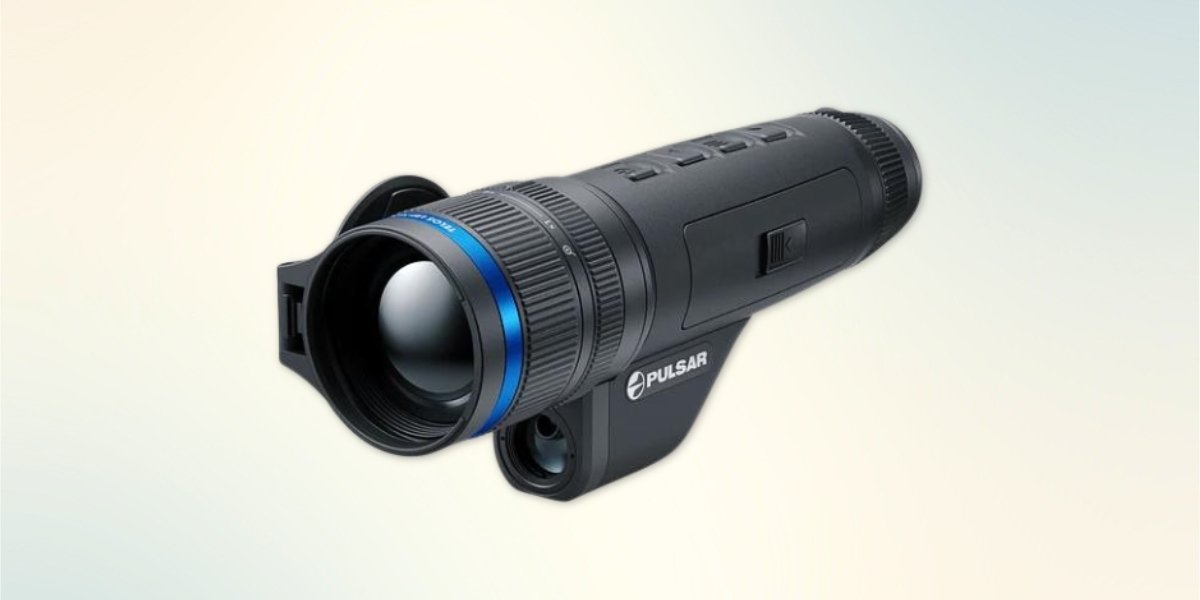
Integrated laser range finding marked another stage in feature development. Range estimation had previously required separate devices or manual calculations. Selected riflescope models within the Thermion series introduced built-in laser range finders, combining distance measurement with thermal targeting. This feature reflected demand from users who wanted fewer separate tools in the field. By incorporating range finding into the optic itself, the device reduced equipment weight and simplified operation. Not all models included this function, but its presence signaled an effort to combine multiple technologies within a single housing.
Recognition from industry organizations during the early 2020s coincided with this period of feature expansion. In 2021, the Thermion XG50 received an optics award from a major firearms publication, and the brand was acknowledged in the 2021 Tactical Retailer Choice Awards. In 2025, another gold-level award was received for thermal and night vision products. While awards focused on overall device performance rather than individual features, the period in which they were granted aligns with increased integration of digital recording, wireless functionality, and advanced software tools.
From a structural standpoint, development remained centered in Lithuania with production support in Latvia under Yukon Advanced Optics Worldwide. This centralized approach allowed coordinated updates across product lines. Firmware improvements could be deployed across multiple series where hardware platforms were shared. As thermal imaging devices became more software-driven, coordination between hardware engineers and software developers became a routine part of the update cycle.
By the early 2020s, feature integration had become embedded in the identity of modern thermal optics. Recording, wireless connectivity, adjustable image processing, and in some cases integrated range finding were no longer experimental additions. They were part of how users evaluated equipment. The move towards no longer purely optical gear and digitally managed gear follows the progression of the wider tech industry as a whole.
The addition of digital features to Pulsar gear follows the wider industry trend of connected and updatable gear. While hardware advancements are still vitally important, software and firmware have reached the same level of importance when it comes to the longevity of thermal imaging equipment. Within this evolving framework, Pulsar’s approach illustrates how thermal optics adapted to changing expectations shaped by the wider digital economy.